
Chimney Repair · Chicagoland, IL
Why Your Brick Fireplace Firebox Is Crumbling — and How It Differs From Chimney Repair
A crumbling firebox — the brick chamber where the fire actually burns — usually means failing high-heat mortar or spalled firebrick, not the same problem as exterior chimney repair. Here's how to tell the difference, why the two are often linked, and what each repair really involves.
2026-07-02
Quick Answer
A crumbling firebox (the brick chamber inside the fireplace) usually means failing refractory mortar or heat-damaged firebrick, which is different from exterior chimney masonry repair. The two are often linked because water from a bad crown or cap runs down and damages the firebox. Emerald Masonry LLC repairs chimneys and masonry across Chicagoland — free estimates (708) 288-1696.
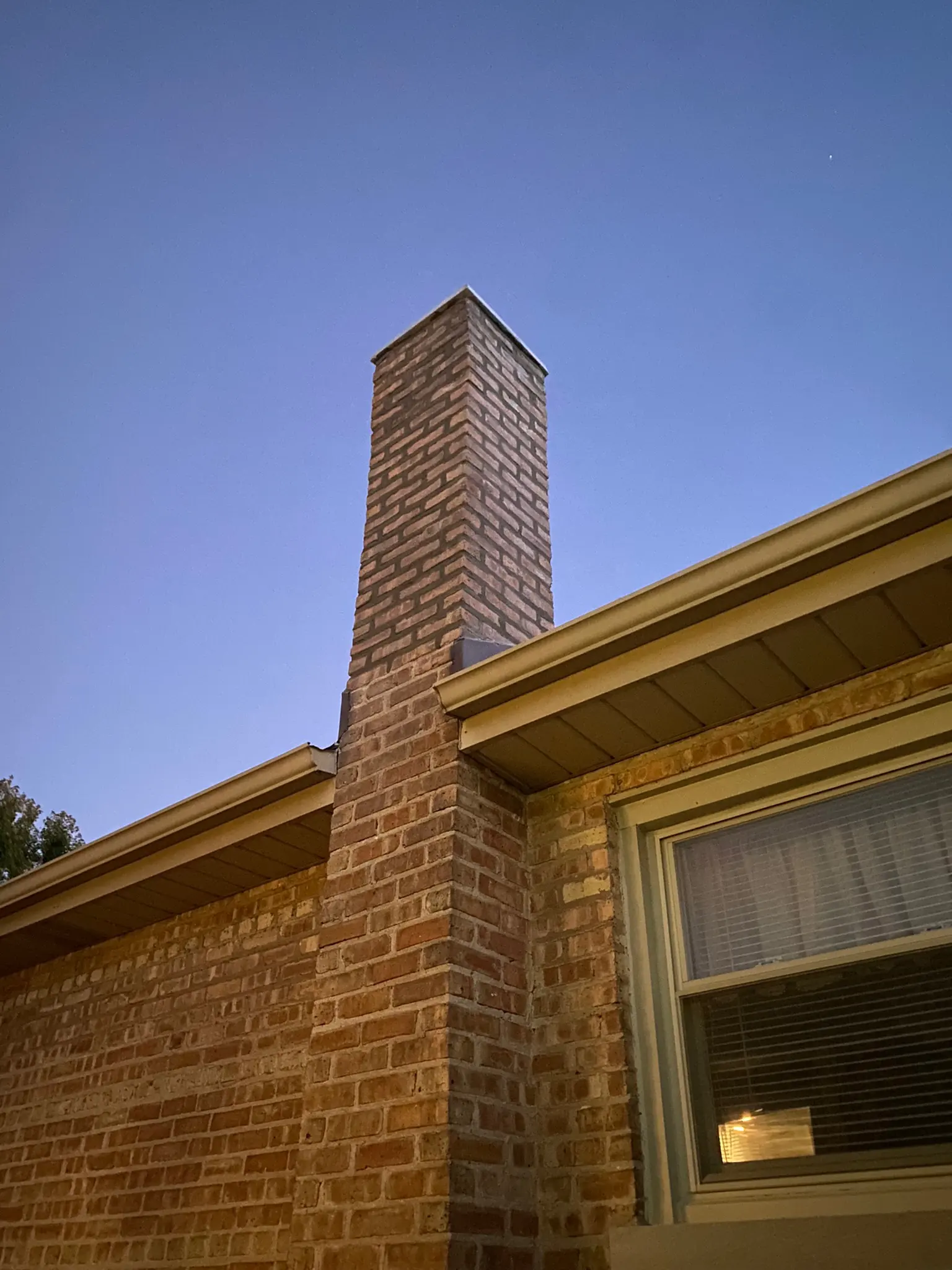
If the brick inside your fireplace is flaking, and mortar is dropping out of the joints where the fire burns, you're looking at a crumbling firebox — and it is usually a different problem than exterior chimney repair. The firebox is the inner brick chamber that actually contains the fire, and it's built with special high-heat (refractory) mortar and firebrick. When it crumbles, the cause is almost always that this refractory mortar has broken down from years of intense heat, or that the firebrick itself has spalled — the faces flaking off — from heat and moisture. That's a repair you make on the inside of the fireplace, not the same job as fixing the masonry stack above your roof.
It's an easy thing to confuse, because most people call the whole thing "the chimney." So before you decide what you actually need, it helps to know the parts.
Firebox vs. smoke chamber vs. flue vs. exterior chimney
Your fireplace and chimney are really four connected systems, and each one fails and gets repaired differently.
- The firebox is the brick-lined box where you build the fire. It's lined with firebrick and joined with refractory mortar rated for extreme heat. This is what's crumbling when you see brick flaking or mortar dropping out inside the opening.
- The smoke chamber sits just above the firebox, funneling smoke up toward the flue. It also sees heat and can deteriorate, but it's harder to see without a light and a mirror.
- The flue is the vertical passage — often a clay tile liner or a metal liner — that carries smoke and gases up and out. Cleaning and relining the flue is chimney-sweep work, not masonry.
- The exterior chimney is the masonry stack you see above the roofline, capped by a crown and often a cap. This is where tuckpointing, crown repair, and rebuilds happen.
Knowing which part is failing tells you which repair — and which trade — you actually need.
Why fireboxes deteriorate
A firebox lives a hard life. Every fire heats that brick to hundreds of degrees, then it cools back down. That constant expansion and contraction — heat cycling — is what slowly breaks the refractory mortar apart. Once the joints open up, the firebrick loses its support, and pieces start to loosen and fall.
Water makes it worse, and in Chicagoland water is almost always in the picture. If the crown or cap at the top of your chimney is cracked or missing, rain and snowmelt run straight down through the structure. That moisture soaks into the masonry, and when our winters swing below freezing, it freezes, expands, and pops the brick faces off — the classic spalling you'll see as flaked, pitted brick. Freeze-thaw is relentless here, and it attacks a firebox from the inside just as it attacks a chimney from the outside.
So a crumbling firebox is often a symptom of two things at once: the heat from years of use, and water coming down from a chimney top that's no longer keeping weather out.
The safety piece you shouldn't ignore
This isn't just cosmetic. The firebox is your fire's containment. When mortar joints open up and firebrick goes missing, there's less material standing between the fire and the combustible wood framing built around your fireplace. Gaps can let heat — and in a worst case, embers or gases — reach that framing. That's why a firebox with real deterioration shouldn't be used until it's looked at. If you're seeing daylight-sized gaps, loose brick, or a soft, powdery mortar you can dig out with a finger, stop burning and get it inspected.
If your fireplace is showing these signs and you're in the Chicago suburbs, our chimney repair team can come take a look and tell you honestly whether it's a firebox repair, an exterior chimney issue, or both — free, on-site, no pressure.
What firebox repair involves vs. exterior chimney work
These are genuinely different jobs.
Firebox repair happens inside the fireplace. Depending on how far gone it is, that can mean re-pointing the firebox with fresh refractory mortar, replacing individual spalled firebricks, or — when the damage is widespread — rebuilding the firebox from the floor up with new firebrick and high-heat mortar. The key is that ordinary masonry mortar won't survive in there; a proper firebox repair uses refractory materials rated for the heat.
Exterior chimney masonry work is what most people picture when they think "chimney repair," and it's outside, up top:
- Tuckpointing — grinding out failed mortar joints in the chimney's brick and packing in fresh mortar to seal the stack against water.
- Crown repair or replacement — rebuilding the concrete slab at the very top that sheds water away from the flue and brick.
- Partial or full rebuild — when the brick above the roofline has spalled or shifted so badly that re-laying it is the right fix. That's brick repair at the structural level.
Here's the link that surprises homeowners: fixing the firebox without addressing a failing crown or cap can be a temporary fix. If water keeps pouring in from the top, it will keep working its way down and re-damage the interior masonry. That's why we often find that interior firebox and fireplace damage traces straight back to an exterior chimney problem — and why we look at the whole system, not just the part you can see from your living room in places like Oak Lawn and Orland Park.
When to call a mason vs. a chimney sweep
Both trades matter, and they're not the same. Call a certified chimney sweep for a Level 2 inspection, flue cleaning, and flue relining — that camera-and-cleaning work is their specialty, and a Level 2 inspection is the right first step after you notice damage or before you buy a home with a fireplace. Call a mason for the brick-and-mortar repairs: rebuilding or re-pointing the firebox, tuckpointing, replacing a crown, or repairing the exterior stack.
To be clear about our own lane: Emerald Masonry does the masonry side — chimney and firebox repair, tuckpointing, crowns, and rebuilds. We don't reline flues or sweep chimneys, and when that's what you need, we'll point you to a certified sweep. Doing the work right means knowing where masonry ends and sweeping begins.
Get an honest look before winter
A crumbling firebox rarely fixes itself, and in our freeze-thaw climate it tends to get worse fast once water is involved. The good news is that a straight answer is easy to get. Emerald Masonry LLC is a non-union, family-owned masonry company with career masons across Chicagoland, licensed, bonded, and insured. We'll come out, look at the firebox and the chimney top together, and tell you exactly what's going on and what it'll take to fix — no upselling into work you don't need.
Call us at (708) 288-1696 for a free on-site estimate, or reach out here. We'll help you figure out whether it's the firebox, the chimney, or both — and get your fireplace safe to use again.
Frequently Asked Questions
Is a crumbling firebox the same as needing chimney repair?
Not usually. A crumbling firebox is the inner brick chamber where the fire burns, and it typically fails from heat breaking down its high-heat refractory mortar and firebrick. Exterior chimney repair deals with the masonry stack above your roof — though the two are often connected because water from a failing chimney crown can run down and damage the firebox.
What causes the mortar in my firebox to fall out?
Fireboxes are built with special refractory (high-heat) mortar and firebrick that endure temperatures ordinary mortar cannot. Years of intense heat cycling and expansion break that mortar down, and water leaking from a bad crown or cap above accelerates it. In Chicago's freeze-thaw climate, trapped moisture then freezes and pops the joints and brick faces apart.
Is a crumbling firebox dangerous?
It can be. Gaps and missing mortar in the firebox can let heat reach the wood framing behind and around your fireplace, which is a fire hazard. A firebox with significant deterioration should not be used until it's inspected and repaired.
Should I call a mason or a chimney sweep?
Call a certified chimney sweep for a Level 2 inspection, flue cleaning, or flue relining. Call a mason like Emerald Masonry for the brick-and-mortar repairs — rebuilding a firebox, tuckpointing, replacing a crown, or repairing the exterior chimney stack. The two trades often work hand in hand.