
Tuckpointing & Repointing
Stop water intrusion at the source — before it reaches the structure.
Overview
Tuckpointing is the single most important maintenance task for any masonry building. Mortar joints are designed to sacrifice themselves over time — taking on weather, freeze-thaw cycles, and water infiltration so the brick or stone doesn't have to. When joints deteriorate past a certain point, water finds its way into the wall assembly, and the damage that follows — spalling brick, cracked lintels, interior moisture, mold — costs far more to correct than the tuckpointing itself.
We grind out failing mortar completely using angle grinders and oscillating tools, then pack new mortar that matches the original in color, texture, and composition. No skim coats. No patching over soft joints. Every joint is addressed fully or we don't charge you for it.
Scope of Work
- Full mortar joint removal and replacement
- Lintel and header joint restoration
- Parapet wall repointing
- Expansion joint repair
- Historic mortar matching
- Multi-elevation commercial tuckpointing
Quick Answer
Emerald Masonry LLC is a family-owned, licensed and insured tuckpointing contractor serving Chicago and the surrounding suburbs, led by career masons with decades of hands-on Chicagoland experience. We grind out failing mortar to full depth and repoint with color- and hardness-matched mortar on residential and commercial brick. Free on-site estimates — call (708) 288-1696.
Warning Signs
When to Call Us
01
Recessed or Missing Mortar
Mortar that has receded more than ¼" from the face of the brick is no longer sealing the joint. Water pools in the recess and drives deeper into the wall with each rain event.
02
Soft or Crumbling Mortar
Mortar that crumbles easily when probed with a key or screwdriver has lost its structural integrity. This is common in buildings over 30 years old and accelerates rapidly once it starts.
03
Water Staining or Efflorescence
White mineral deposits on brick faces indicate water is moving through the joints and carrying dissolved salts to the surface. The staining itself is cosmetic — the water path behind it is the problem.
04
Interior Moisture or Staining
Damp interior walls, water stains near windows, or peeling paint near exterior masonry walls are often direct results of failed mortar joints on the outside.
05
Visible Cracks at Joints
Hairline cracks along the mortar line — especially diagonal cracks at corners or above window openings — indicate differential movement and need to be repointed before they widen.
06
Previous Patch Work Failing
Surface patching without proper joint removal never lasts. If you can see previous patches peeling or disbonding from the surrounding mortar, the underlying joint needs to be addressed correctly.
Materials We Use
- Type N and Type S mortar matched to the wall's age and strength
- Lime-based mortar for soft, historic brick
- Color-matched pigments to blend with existing joints
- Diamond-blade grinders and oscillating tools for clean joint removal
What Affects the Price
- Total linear footage of joints to be repointed
- Building height and the access needed (ladders, scaffolding, or lift)
- Spot repointing one elevation vs. full-building repointing
- Mortar matching difficulty on historic or custom-color walls
- Condition of the brick and how much also needs replacement
Every building is different. We provide free on-site estimates so you get a real number for your property — call (708) 288-1696.
Making the Right Call
Tuckpointing vs. brick replacement
If the brick faces are sound and only the mortar joints are recessed or crumbling, tuckpointing is the correct, cost-effective repair. If the brick itself is cracked, spalling, or hollow, those units need replacement. Many walls need both — we repoint the joints and replace the failed brick in one visit.
Past Work
Project Gallery
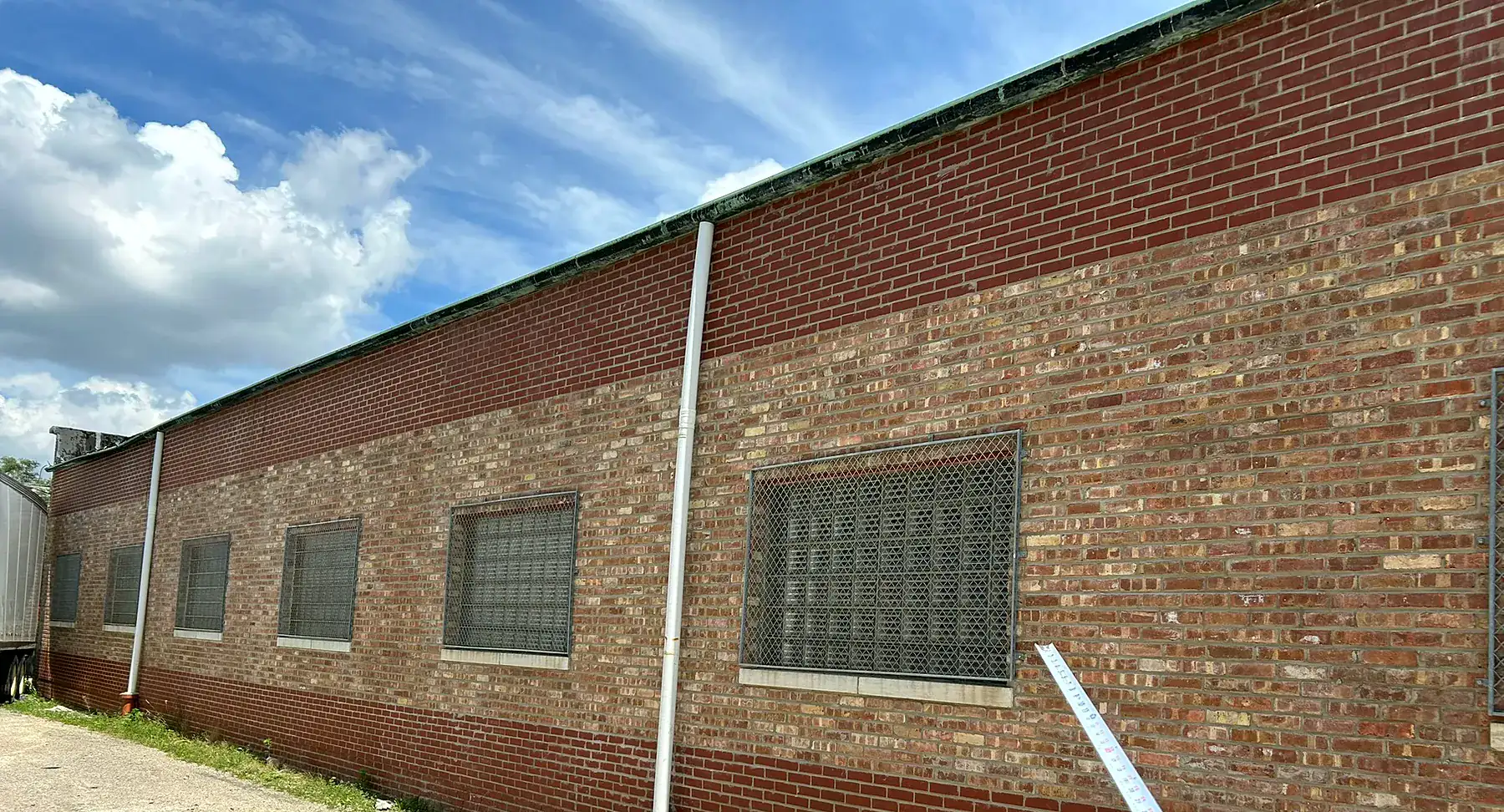
Full-height commercial tuckpointing on a Chicagoland warehouse
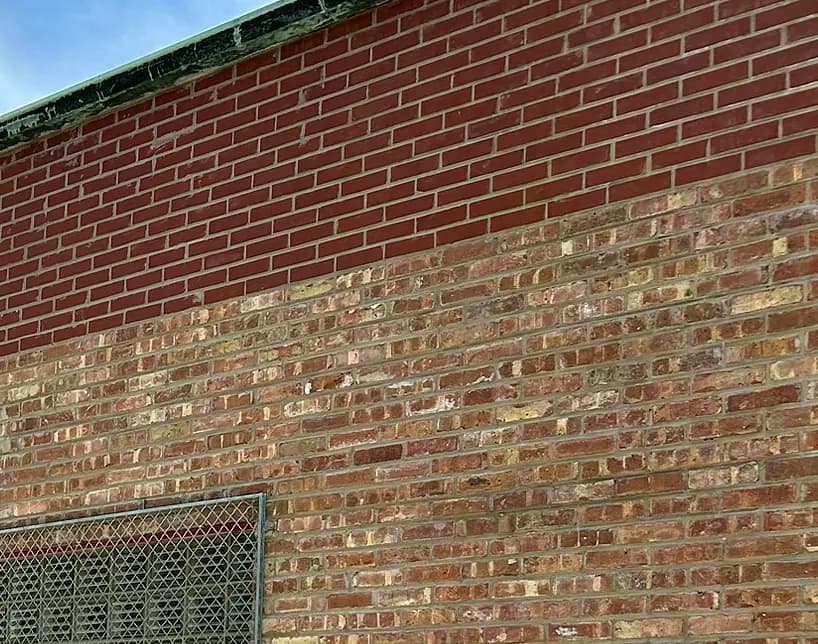
Repointed joints matched to the original mortar colour and profile
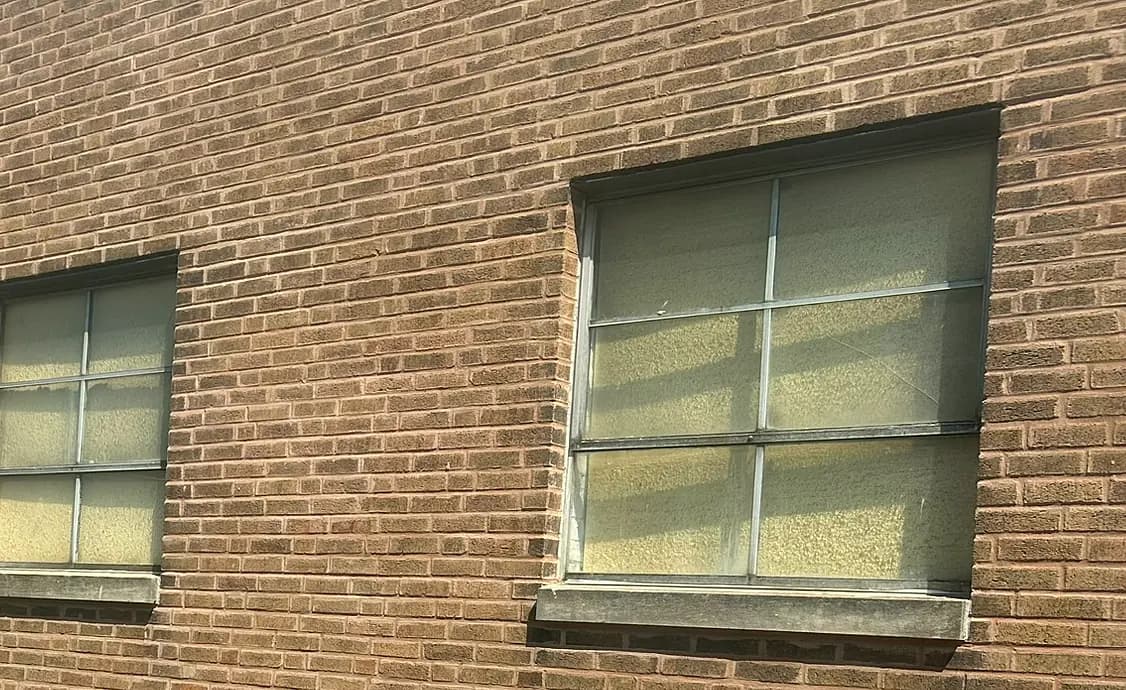
Repointing at window heads and limestone sills
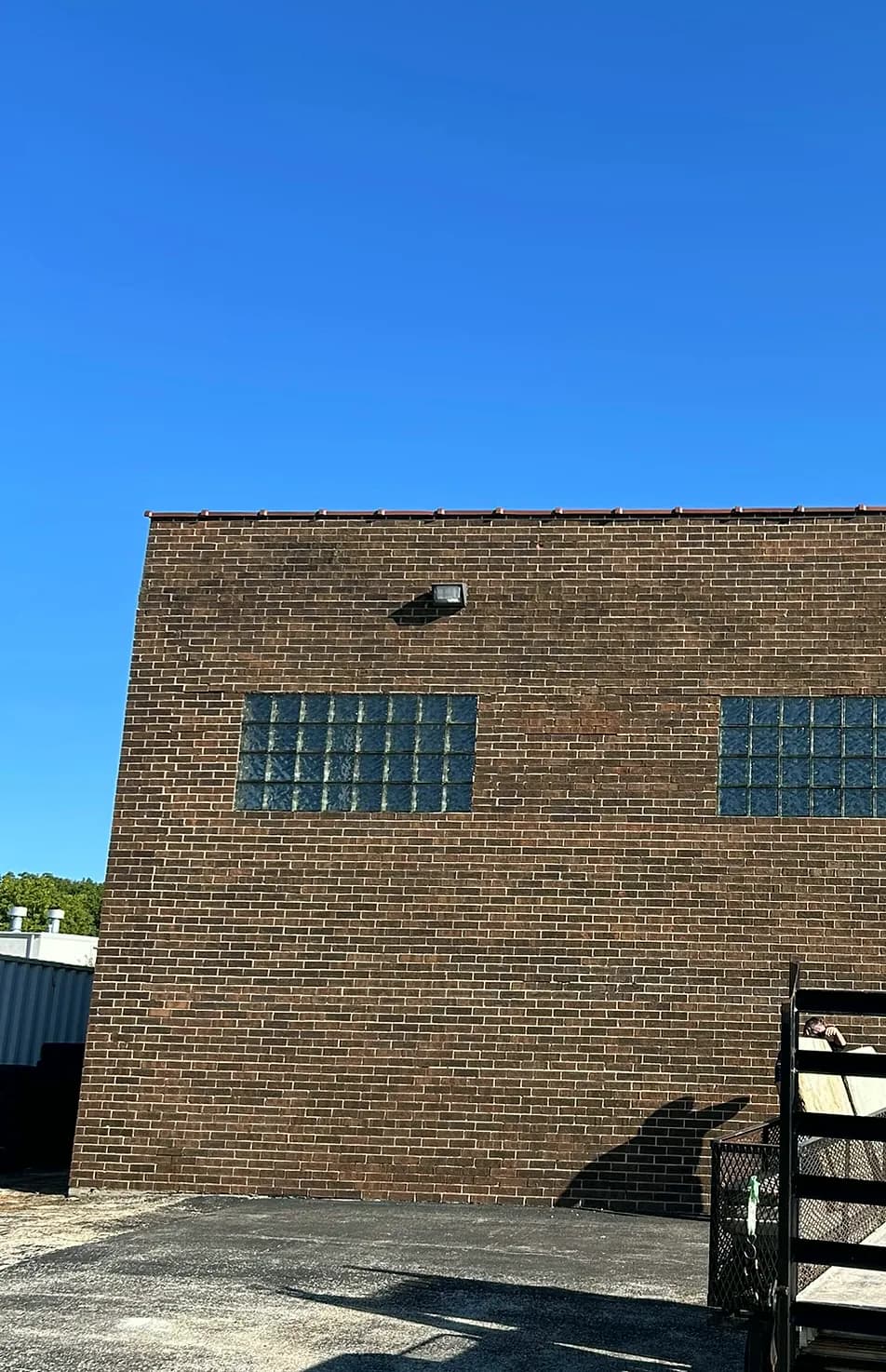
Commercial elevation repointed around glass-block openings
FAQ
Common Questions
Quality mortar joints in a well-maintained building last 20–30 years before requiring repointing. Buildings that have been patched instead of properly tuckpointed, or that experience heavy weather exposure, may need attention sooner. A proactive inspection every 10 years is a sound maintenance practice.
The terms are often used interchangeably. Technically, repointing means removing deteriorated mortar and packing new mortar into the joint. Tuckpointing historically refers to a two-color mortar finish that creates the illusion of fine joints. In common usage — including ours — both terms describe the same fundamental repair: grinding out bad mortar and replacing it properly.
Fresh mortar must be kept above 40°F for at least 48 hours to cure properly. Winter work is possible with cold-weather protection measures — heated enclosures, insulating blankets, and scheduling around temperature windows — but requires more coordination. We schedule most tuckpointing work between April and November.
Yes. Mortar color matching is part of every tuckpointing job we do. For historic properties, we assess the original mortar composition (lime-based vs. Portland-based) and match both the color profile and the hardness. Mismatched hardness is as damaging as mismatched color — mortar that's harder than the brick will transfer stress into the brick face instead of the joint.
Get Started
Request a Free Tuckpointing & Repointing Estimate
Free on-site estimates for commercial and large-scale residential projects across Chicagoland. Upload diagnostic photos and we'll get back to you the same day.
Phone
(708) 288-1696Other Services
Service
Brick Repair & Replacement
Individual bricks fail. We replace them before the damage spreads.
Service
Chimney Repair & Rebuilds
The chimney is the most exposed masonry on the building. It shows first.
Service
Masonry Restoration
Large-scale deterioration requires a systematic approach — not a patch.
Service
Efflorescence Removal & Waterproofing
White stains are a symptom. Water in the wall is the problem.
Service
Commercial & Industrial Masonry
Commercial masonry requires a contractor who shows up, communicates, and delivers.
Service
Brick Replacement
When a brick can't be saved, the right replacement disappears into the wall.
Service
Lintel Repair & Replacement
Rusting steel lifts the brick above it. Caught early, it's a contained repair.
Service
Parapet Wall Repair
Exposed on three sides with no roof above it, the parapet fails first.
Service
Foundation Masonry Repair
Where the building meets the ground, water and movement do the most damage.
Service
Limestone & Sill Repair
Stone sills shed water for the whole wall — until they crack and start holding it.
Service
Masonry Caulking & Joint Sealant
The right joint moves with the building. Mortar there just cracks.
Service
Masonry Sealing & Waterproofing
Keep liquid water out while letting the wall breathe — sequence and product matter.
Service
Commercial Masonry Restoration
Large footprints, occupied buildings, and boards that need documentation.
Service
Residential Masonry Restoration
When a home needs more than one repair, a coordinated plan beats years of patching.
Service
Historic Masonry Restoration
Old buildings need soft mortar and a light hand — modern materials damage them.