
Chimney Repair & Rebuilds
The chimney is the most exposed masonry on the building. It shows first.
Overview
Chimneys take more weather abuse than any other part of a masonry structure — fully exposed on all four sides, including the top, with no roof overhang for protection. Mortar joints fail faster, crowns crack, caps fail, and bricks begin to spall and come loose. What starts as a maintenance item becomes a structural concern faster than most property owners expect.
We handle everything from chimney tuckpointing and crown repair to partial rebuilds and full reconstructions. We assess the entire chimney — from the flashing at the roofline to the crown and cap — and give you a clear scope of what needs to happen now and what can wait.
Scope of Work
- Chimney tuckpointing and repointing
- Crown repair and replacement
- Cap repair and installation
- Partial chimney rebuilds
- Full chimney reconstruction
- Flashing and waterproofing
Quick Answer
Emerald Masonry LLC repairs and rebuilds brick chimneys throughout Chicago and the suburbs — crown repair, tuckpointing, cap and flashing work, and full rebuilds. The chimney is the most weather-exposed masonry on a building, so it fails first. Family-owned, licensed and insured, led by career masons with decades of hands-on Chicagoland experience. Call (708) 288-1696.
Warning Signs
When to Call Us
01
Cracked or Deteriorated Crown
The chimney crown is the mortar or concrete cap that covers the top of the chimney stack, directing water away from the flue. Cracks in the crown allow water to enter directly into the chimney structure — the most vulnerable point. A failing crown is among the most common chimney repairs we perform.
02
Spalling or Missing Bricks
Bricks at the top of the chimney are fully exposed on all sides. Spalling brick faces or missing bricks allow water to penetrate the chimney core. Loose bricks near the top of a chimney are a safety concern and require immediate attention.
03
Deteriorated Mortar Joints
Chimney mortar joints fail faster than wall mortar due to full weather exposure and the expansion/contraction from heat cycling inside the flue. Tuckpointing a chimney every 15–20 years is standard preventive maintenance.
04
Rust Staining on Brick
Brown or orange staining on chimney brick typically indicates a failing metal cap or flue liner. Water is entering the flue and rusting metal components, running down the outside of the chimney.
05
Water in the Firebox
If you're finding water inside the firebox after rain, the crown, cap, flashing, or liner is failing. The water is finding a path down the inside of the chimney. Exterior masonry deterioration often follows interior moisture problems.
06
Leaning or Separated Structure
A chimney that has begun to lean or separate from the house structure has a foundation or structural issue that requires immediate assessment. This is not a cosmetic repair.
Materials We Use
- Poured or pre-cast chimney crowns with proper overhang and drip edge
- Stainless steel chimney caps
- Weather-matched mortar for repointing
- New step and counter-flashing at the roofline
What Affects the Price
- Crown repair vs. partial rebuild vs. full reconstruction
- Chimney height and roof pitch (scaffolding vs. ladder access)
- Amount of spalled brick to replace
- Whether flashing and cap also need replacement
Every building is different. We provide free on-site estimates so you get a real number for your property — call (708) 288-1696.
Making the Right Call
Chimney repair vs. chimney rebuild
If the brick is sound and only joints, crown, or cap have failed, a repair restores it. If bricks are loose or spalling across courses, or the stack is leaning, a partial or full rebuild from a sound course up is the lasting fix. We assess both on-site and recommend the smaller scope when it will actually hold.
Past Work
Project Gallery
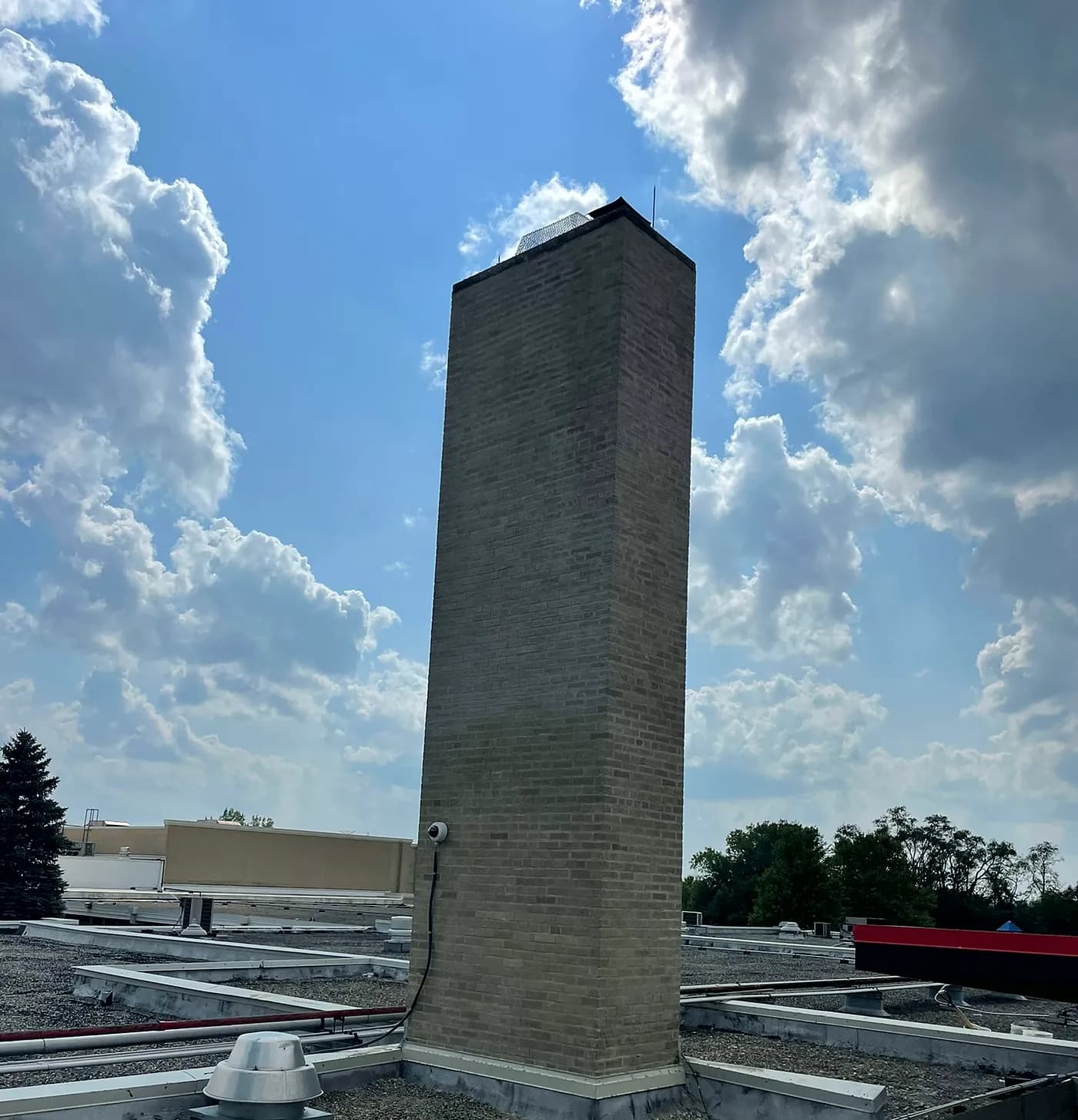
Commercial chimney stack rebuilt above the roofline
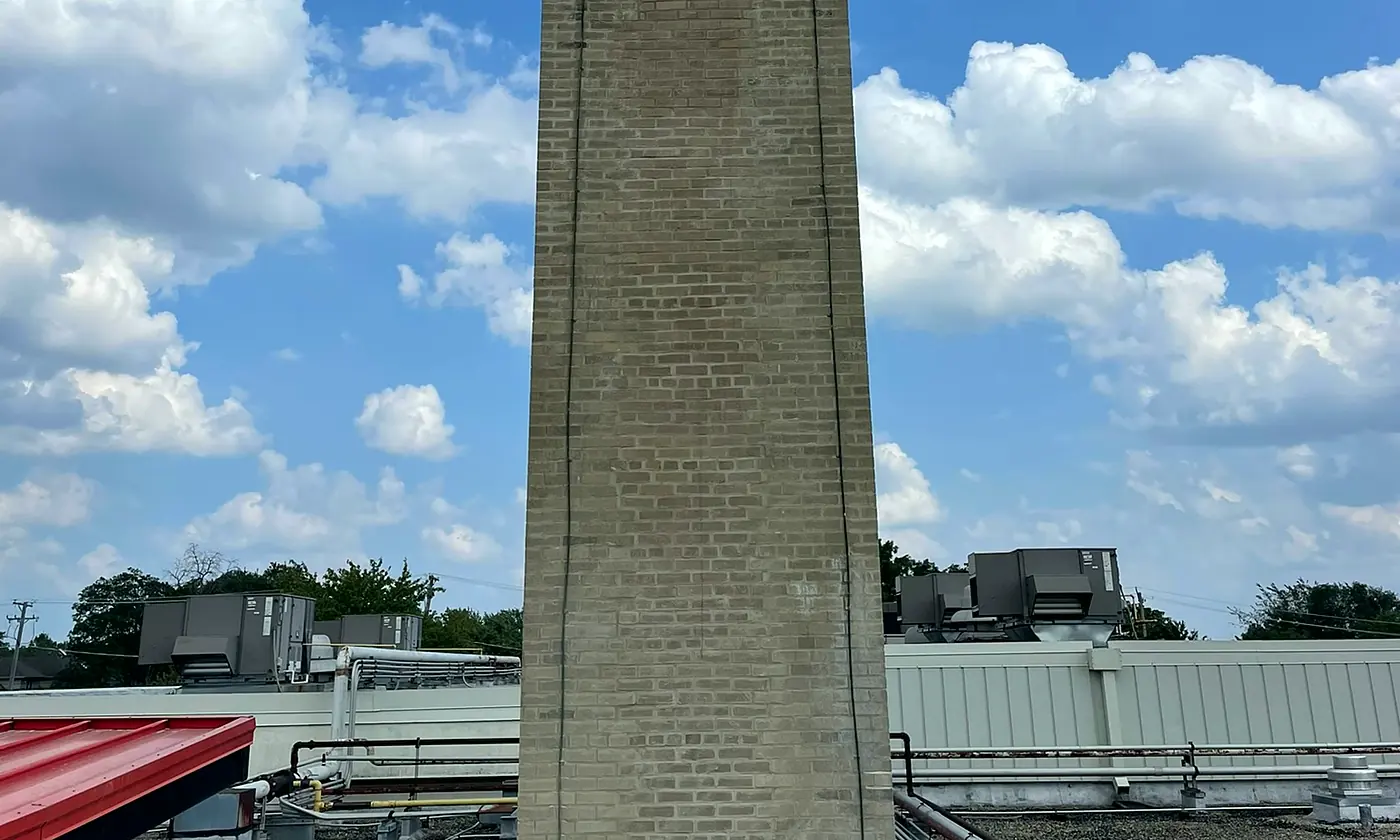
Rooftop stack rebuilt on an occupied commercial building
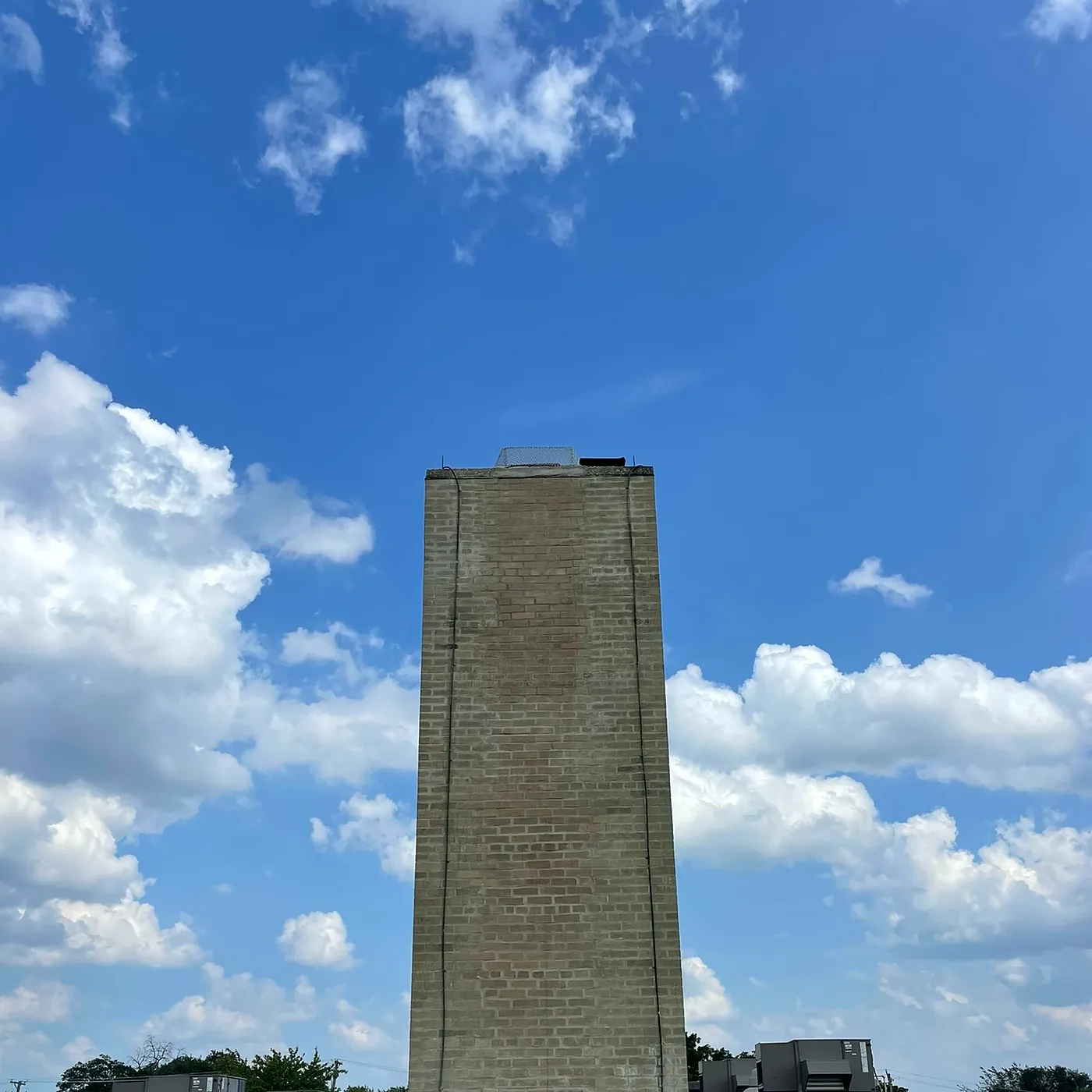
Stack repointed and recapped, Chicagoland
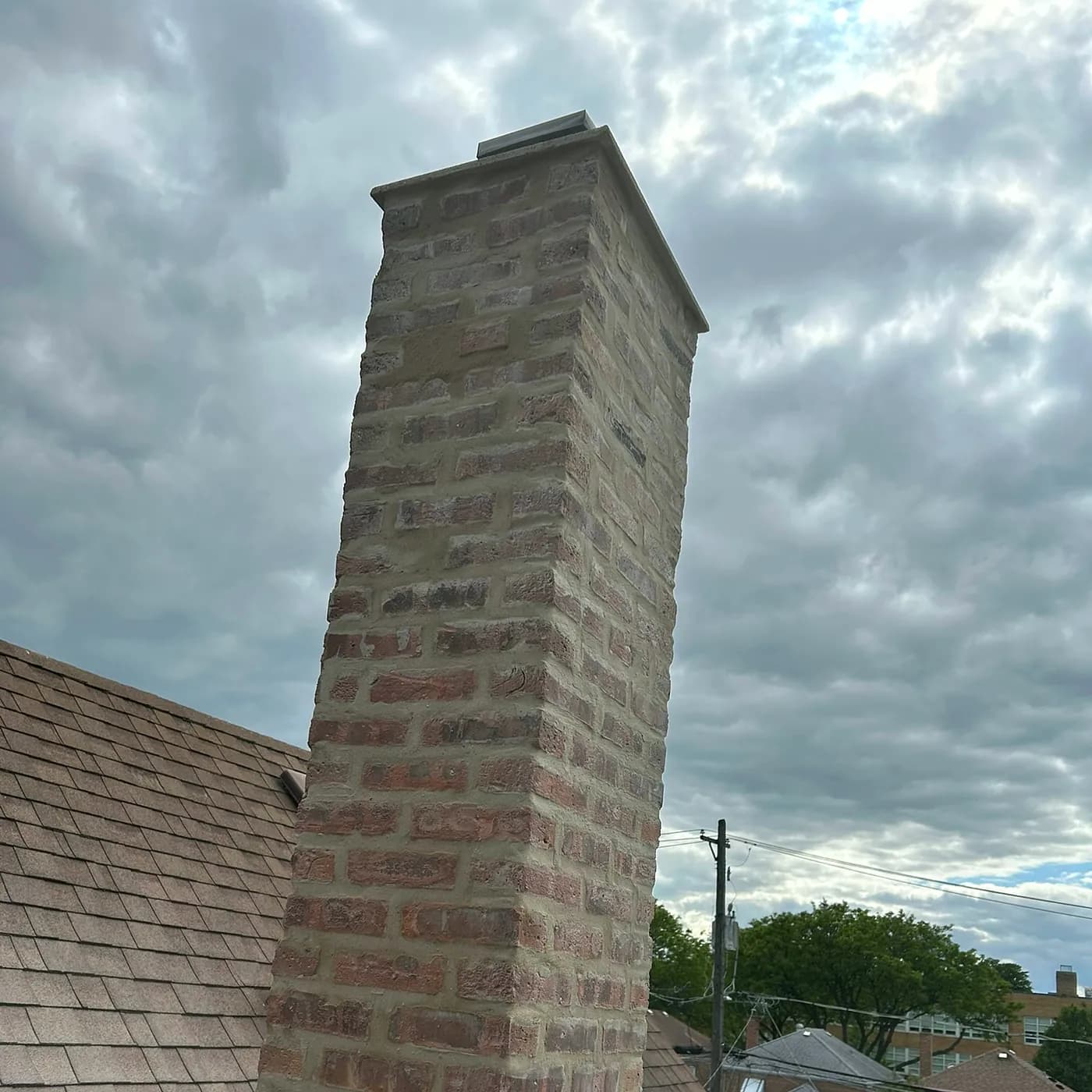
Chimney rebuilt from the roofline up with a new crown
FAQ
Common Questions
If the brick is structurally sound and only the mortar joints have deteriorated, tuckpointing is the right repair. If bricks are loose, spalling significantly, or the chimney has begun to lean or settle, a partial or full rebuild is likely necessary. We assess both scenarios on-site and give you a clear recommendation.
Shorter chimneys and lower-slope roofs can sometimes be accessed safely with ladder staging. Taller chimneys or steep-pitch roofs require proper scaffolding for safety and quality. We build the scaffolding — it's factored into the project scope.
The crown is the mortar or concrete surface that caps the top of the chimney stack, sloping away from the flue to direct water off the chimney. A cracked crown lets water in directly at the most exposed point of the structure — it's usually the first component to fail and the most cost-effective early repair.
Yes. Unused chimneys are still exposed to weather on all four sides, and mortar still deteriorates from freeze-thaw cycles regardless of heat cycling from the flue. If anything, unused chimneys are sometimes more neglected because the interior warning signs — smoke problems, water in the firebox — aren't noticed.
Get Started
Request a Free Chimney Repair & Rebuilds Estimate
Free on-site estimates for commercial and large-scale residential projects across Chicagoland. Upload diagnostic photos and we'll get back to you the same day.
Phone
(708) 288-1696Other Services
Service
Tuckpointing & Repointing
Stop water intrusion at the source — before it reaches the structure.
Service
Brick Repair & Replacement
Individual bricks fail. We replace them before the damage spreads.
Service
Masonry Restoration
Large-scale deterioration requires a systematic approach — not a patch.
Service
Efflorescence Removal & Waterproofing
White stains are a symptom. Water in the wall is the problem.
Service
Commercial & Industrial Masonry
Commercial masonry requires a contractor who shows up, communicates, and delivers.
Service
Brick Replacement
When a brick can't be saved, the right replacement disappears into the wall.
Service
Lintel Repair & Replacement
Rusting steel lifts the brick above it. Caught early, it's a contained repair.
Service
Parapet Wall Repair
Exposed on three sides with no roof above it, the parapet fails first.
Service
Foundation Masonry Repair
Where the building meets the ground, water and movement do the most damage.
Service
Limestone & Sill Repair
Stone sills shed water for the whole wall — until they crack and start holding it.
Service
Masonry Caulking & Joint Sealant
The right joint moves with the building. Mortar there just cracks.
Service
Masonry Sealing & Waterproofing
Keep liquid water out while letting the wall breathe — sequence and product matter.
Service
Commercial Masonry Restoration
Large footprints, occupied buildings, and boards that need documentation.
Service
Residential Masonry Restoration
When a home needs more than one repair, a coordinated plan beats years of patching.
Service
Historic Masonry Restoration
Old buildings need soft mortar and a light hand — modern materials damage them.