
Brick Repair & Replacement · Chicagoland, IL
Brick Matching: How Contractors Source Replacement Material and Why It Matters
Nothing makes a masonry repair look more like a masonry repair than mismatched replacement brick. Color, size, texture, and surface finish all have to align — and sourcing the right match is one of the most technically demanding parts of brick repair work. Here's how the process actually works.
2026-04-12
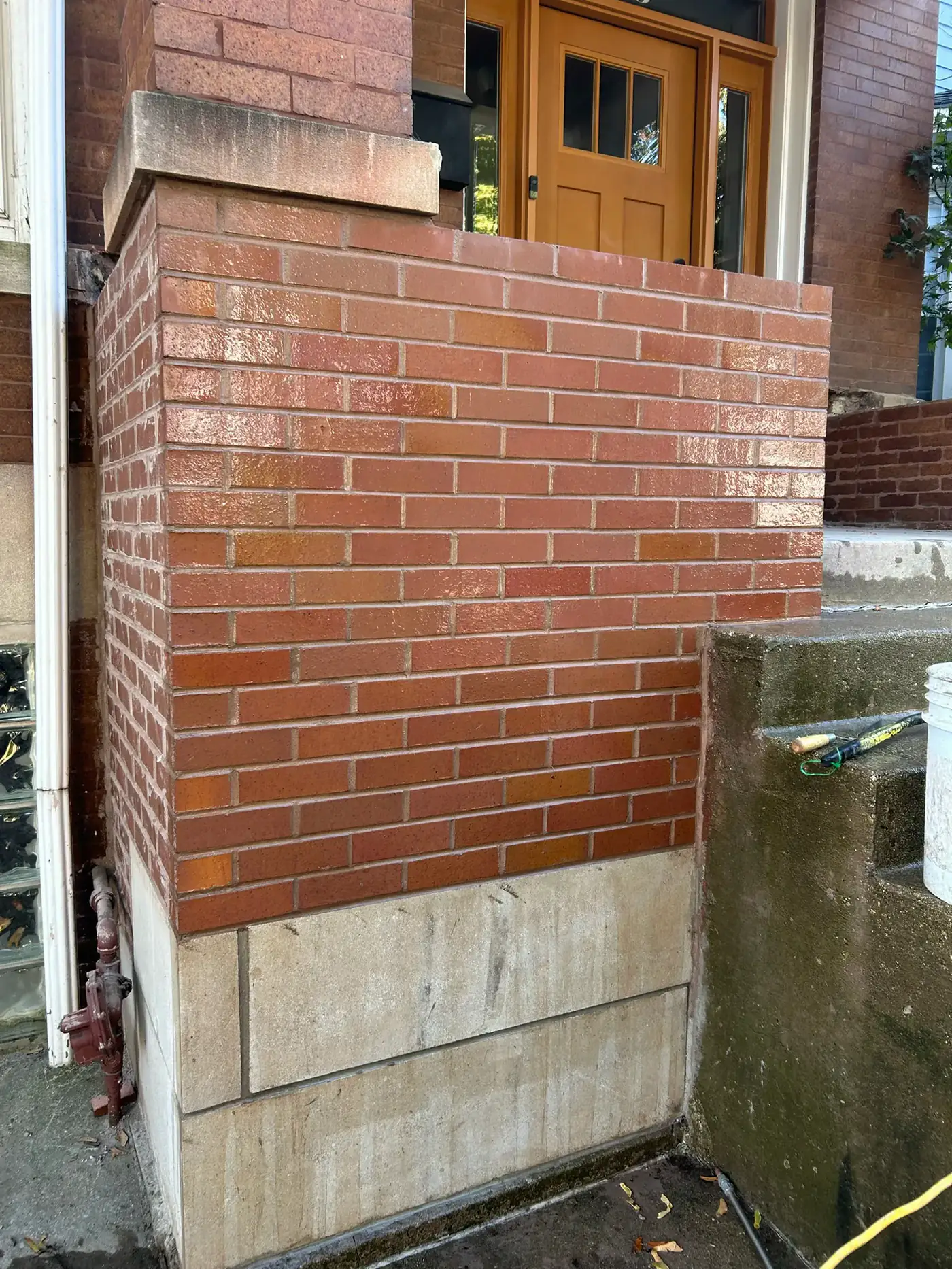
When a masonry contractor tells you they can match your brick, that claim deserves scrutiny. Matching brick isn't a sales line — it's a genuine technical challenge, and the quality of the match is one of the most visible determinants of whether a brick repair blends in or announces itself from 30 feet away.
The Chicagoland area has a particularly interesting landscape for brick matching. The region was built largely in successive waves — Chicago common brick from the 1880s through 1930s, then postwar residential and commercial brick through the 1950s and 1960s, then cavity wall construction brick from the 1970s through 1990s — and each era used different raw materials, firing methods, and manufacturing processes. A brick from 1910 doesn't look like a brick from 1985, and neither looks like a brick you can order off a standard pallet today.
The Variables That Have to Match
When we approach a brick matching problem, we're assessing several independent characteristics simultaneously:
Color. Brick color is driven by the clay composition and firing temperature. The same batch of clay fired at slightly different temperatures produces different colors. Brick color also changes with weathering — a new brick that matches fresh will often drift from the surrounding weathered brick within a season or two as surface efflorescence, carbonation, and oxidation change its appearance. The goal is usually to match the weathered wall, not the unweathered sample.
Size. Brick dimensions are not standardized across all eras. Chicago common brick (the handmade and machine-pressed brick used through the early 20th century) is often slightly larger than modern modular brick. The nominal 2-1/4 inch height of a modern modular brick doesn't necessarily match the 2-3/8 or 2-1/2 inch height of an older standard brick. A mismatched height throws off the entire coursework above the repair.
Texture. Some brick has a smooth, densely vitrified face. Some has a wire-cut texture. Some has a sand or bark finish. Some Chicago common brick has a characteristic rough, irregular surface from the hand-forming process. These are not interchangeable aesthetically.
Absorption rate. How quickly a brick absorbs water affects how mortar bonds to it, how the wall weathers, and how efflorescence patterns distribute. Matching absorption rate isn't always visible — but a mismatch here affects the performance of the repair over time.
Color consistency within the batch. Older brick varies considerably within a single batch. A wall built with Chicago common brick from 1920 may show significant color variation brick to brick — that's part of its character. Introducing a cluster of identically-colored modern brick into that pattern creates an obvious patch. Experienced contractors mix bricks from multiple sources or batches to approximate the original variation.
How Matching is Done in Practice
Start with physical comparison. Photos are almost useless for brick matching. The way a camera sensor renders brick color — especially in different light conditions — is unreliable. We bring physical samples to the job site and compare against the existing wall in natural light, at multiple times of day if possible. This is the only reliable method.
Source from reclaimed material for older buildings. For pre-1940 construction — Chicago common brick, early 20th century pressed brick, handmade regional brick — reclaimed material is usually the best or only option for a good match. The same clay deposits don't exist in commercial production anymore, and manufacturing processes have changed completely. Chicago has a substantial reclaimed brick market: salvage from demolition projects throughout the region produces Chicago common brick in a range of original colors and conditions. We work with salvage suppliers who can pull material from specific jobs or match against samples we bring in.
Use current manufacturers for modern brick. For 1960s through 1990s residential and commercial brick, many manufacturers are still active or have been acquired by current producers who maintain original product lines. We work with regional distributors who specialize in matches and can pull samples from multiple manufacturers for side-by-side comparison. The match may not be perfect — production runs vary over decades — but a close match is usually achievable.
Test before committing. On larger jobs, we build a small test panel with the proposed replacement brick and let it weather for a few weeks before proceeding with the full repair. This is the only reliable way to see how a match will look after initial weathering. On small repairs where this isn't practical, we advise clients on the closest available match and document that a variance exists.
When a Perfect Match Isn't Possible
Sometimes you simply can't get a brick that matches. The original manufacturer no longer exists, the clay was from a regional deposit that was exhausted 50 years ago, or the original brick has aged in a way that can't be replicated. In these cases, the choices are:
Use the closest available match. Accept a slight variance with the understanding that it will be visible on close inspection but not jarring from normal viewing distance. This is the most common path on repairs where only a few bricks need replacement.
Use a deliberate contrast. Rather than a near-match that looks like a failed match, some property owners prefer using a clearly different brick as a design choice — a soldier course in a contrasting color to mark a repaired section, for example. This approach reads as intentional rather than incompetent.
Expand the scope to reduce the visibility. If a section of wall has significant damage, it's sometimes more visually successful to repair a larger section — an entire bay, an entire elevation — so that the new brick is adjacent to other new brick rather than scattered among original material. The larger scope costs more but produces a cleaner visual result.
Wait for the right material. Reclaimed brick supply is unpredictable. If a specific Chicago common brick type is needed and the current supply is a poor match, it may be worth waiting months for a better lot to become available from a demolition project. For non-urgent repairs on historic or character-defining buildings, this patience pays off.
What to Ask Your Contractor About Brick Matching
Before authorizing any brick repair work on a visible facade, ask:
- Are you planning to use new or reclaimed brick for the replacement?
- Can you show me a physical sample against the existing wall before starting work?
- How will you handle variation within the repair area — mixing from different batches?
- If the match isn't exact, what will the variance look like, and is there a better option?
A contractor who dismisses these questions doesn't have a serious matching process. A contractor who engages with them — brings samples, talks through the tradeoffs, proposes a test panel if the scope warrants it — is the one worth hiring for work that will be visible for the next 30 years.
Emerald Masonry LLC takes brick matching seriously on every repair project. We source reclaimed Chicago common brick for historic properties and work with regional suppliers for modern brick matching throughout the southwest suburbs of Chicago. Contact us to discuss your project, or call (708) 288-1696.