
Masonry Restoration · Chicagoland, IL
Brick Veneer Ties and Shelf Angles — The Hidden Steel That Holds Your Wall Up
On most buildings put up in the last several decades, the brick you see is a thin outer shell held in place by steel you can't see. When that hidden steel corrodes or fails, the wall bulges, cracks, and in the worst cases sheds brick. Here's what veneer ties and shelf angles do, and how to tell when they're failing.
2026-06-06
The Wall You See Isn't Holding Itself Up
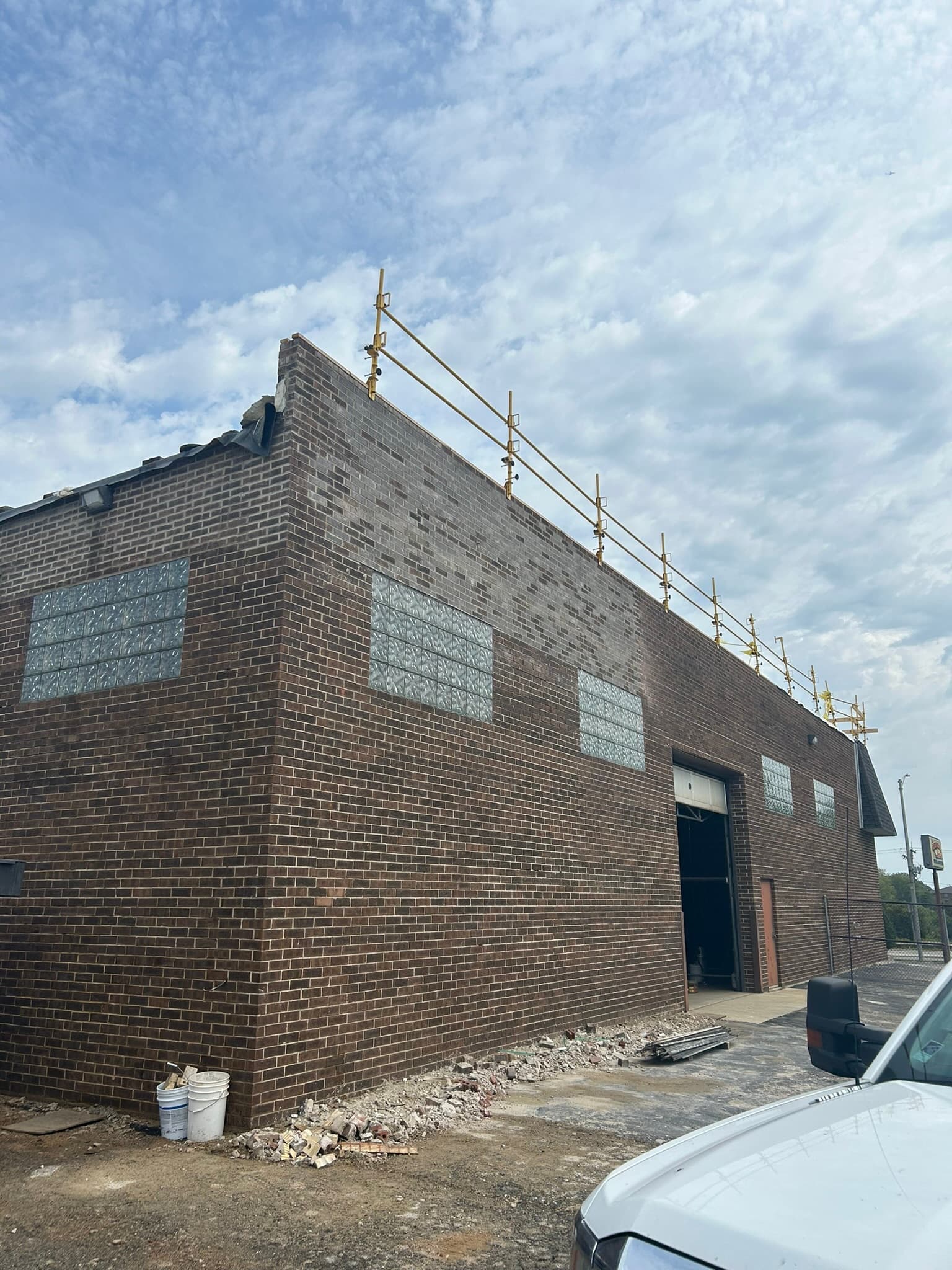
Walk up to almost any building constructed in the Chicago area over the past fifty or sixty years and put your hand on the brick. What you're touching is probably not a structural wall. It's a veneer — a single layer of brick, four inches thick, hung on the front of a building like a skin. It carries its own weight and nothing else. The actual structure is behind it: wood framing, steel studs, or concrete block.
That raises an obvious question. If the brick is just a thin outer layer with an air gap behind it, what keeps it standing up against the wind and stops it from peeling away from the building? The answer is steel — small, hidden, and almost entirely out of sight. Two pieces of that hidden steel do the heavy lifting: veneer ties and shelf angles. When they work, you never think about them. When they fail, the wall starts to move, and the symptoms can be alarming. Understanding what they are helps you read what your building is telling you.
Veneer Ties: The Anchors You Can't See
A veneer tie (also called a wall tie or brick anchor) is a small metal connector embedded in the mortar joints of the brick on one end and fastened to the structural wall behind on the other. They're placed in a grid across the whole wall, every few feet in each direction, and there are hundreds or thousands of them on a typical building.
Their job is simple but essential: hold the brick veneer against the building so wind can't push it in or suck it out, while still allowing the small natural movements of the wall. The brick carries its weight down to the foundation or a shelf angle; the ties keep it from tipping away from the structure.
The problem is that ties are metal sitting inside a wall that gets wet. Over decades, especially if water has been getting into the cavity through failed joints or bad flashing, the ties corrode. Corroded ties get thinner, lose their grip, and eventually break. Some older buildings were also simply under-tied to begin with, or tied with materials that don't hold up. When enough ties in an area fail, that section of veneer is no longer firmly connected to the building — and it begins to bow outward.
Shelf Angles: The Steel Ledges Carrying the Brick
On taller buildings, the brick veneer doesn't run unsupported from the ground to the roof. That would put too much weight at the bottom and leave no room for the building to expand and contract. Instead, the veneer is divided into vertical sections, and each section sits on a shelf angle (also called a relief angle) — a horizontal steel angle bolted to the structure that the brick rests on, usually at each floor line.
The shelf angle carries the weight of the brick above it and transfers it back into the building's structure. Just below each shelf angle is a horizontal gap — a soft joint or expansion joint — that gives the brick room to expand upward without crushing against the angle.
Shelf angles fail in two main ways:
- Corrosion (rust jacking). Steel that rusts expands to many times its original thickness. A rusting shelf angle pushes up on the brick sitting on it, lifting and cracking the courses above — the same destructive process that ruins window lintels, just running horizontally along a floor line.
- Blocked expansion joints. If the soft joint below the angle gets filled in with hard mortar over the years (often during a careless repointing), the brick has nowhere to expand. It presses down on the angle and out on the wall, cracking and bulging.
How to Tell the Hidden Steel Is Failing
You can't see the ties or the angles, but you can see what they do to the wall when they go bad. Warning signs include:
- A horizontal crack running along a floor line, often with the brick above it slightly lifted or stepped out. This is a classic shelf-angle symptom.
- Bulging or bowing in an area of the veneer — the brick is no longer being held flat against the building, which points to failed ties.
- Rust staining weeping out of a horizontal joint or from around the brick, a sign of corroding steel inside the wall.
- Stair-step cracking near building corners or openings, where movement is concentrating.
- A horizontal joint that's been mortared solid where there should be a soft, flexible joint — a setup for future cracking.
Any of these is worth a professional look, because the failure is structural and it progresses. Bulging veneer doesn't settle back into place on its own; left alone, it can reach the point where brick comes off the building.
Why This Isn't a Patch Job
When the hidden steel is the problem, replacing a few cracked brick accomplishes nothing — the wall keeps moving and re-cracks within a season or two. Real repair means dealing with the steel:
- Re-anchoring failed veneer with new ties, often installed through the existing brick face, to reconnect bulging sections to the structure.
- Addressing the shelf angle where corrosion or blocked joints are the cause — removing the brick over the affected area, treating or replacing the steel, restoring a proper expansion joint, and rebuilding the courses.
- Reopening soft joints that were wrongly filled with hard mortar so the wall can move the way it was designed to.
This is diagnostic work first. The visible cracking is a symptom, and a contractor who only treats the symptom is selling you a repair that won't hold.
The Takeaway for Owners and Property Managers
The brick on a modern building is a skin, and that skin depends on steel you'll never see — until it tells you it's failing through a horizontal crack, a bulge, or a rust stain. Those signs are not cosmetic. They mean the connection between the veneer and the building, or the steel carrying the brick's weight, is breaking down, and that's a problem that only gets worse and more expensive with time.
If your building is showing bulging brick, cracking along a floor line, or rust weeping from the joints, get it assessed before it progresses. Emerald Masonry LLC is a family-owned, licensed, bonded, and insured masonry contractor based in Palos Heights, with more than 40 years of experience diagnosing and repairing veneer, tie, and shelf-angle failures on Chicago-area buildings. Contact us for a free on-site evaluation, or call (708) 288-1696.