
Masonry Restoration · Chicagoland, IL
How Chicago's Freeze-Thaw Climate Compares to the National Average — And Why Your Masonry Pays for the Difference
Freeze-thaw cycling is the single biggest driver of masonry deterioration in the Chicago area — and Chicagoland gets far more of it than most of the country. Here's how our climate stacks up against national averages, and what those extra cycles actually do to brick and mortar.
2026-06-03
The One Number That Explains Most Masonry Damage
When property managers ask us why their brick building seems to deteriorate faster than buildings they owned in other parts of the country, the answer almost always comes down to one mechanism: freeze-thaw cycling. It's the dominant force behind spalling brick, eroding mortar, cracked lintels, and failing parapets across Chicagoland — and our region gets a heavier dose of it than most of the United States.
A freeze-thaw cycle isn't just "it got cold." It's a specific event: the temperature crosses 32°F downward (freezing) and then back upward (thawing) while there's moisture present in the masonry. Each crossing is one cycle. The number of those crossings per year — not just how cold it gets — is what determines how fast masonry breaks down. And on that metric, the Chicago area is a tough place to own a brick building.
How Chicagoland Stacks Up
The freeze-thaw burden in a given climate is usually expressed as the number of freeze-thaw cycles a building experiences per year. It's worth understanding the geography of this number, because it explains a lot.
The national picture
The continental U.S. spans a huge range. The Deep South and the desert Southwest see very few freeze-thaw cycles a year — in some places nearly none. The mildest coastal regions rarely cross freezing at all. The national "average" is dragged down by these warm regions, which is why masonry in much of the country simply doesn't fail from freeze-thaw the way it does here.
Where the worst freeze-thaw actually happens
Counterintuitively, the coldest places aren't always the worst for freeze-thaw. A location that drops below freezing in November and stays there until March has relatively few crossings — the temperature isn't bouncing back and forth across 32°F, it's just steadily cold. The masonry freezes once and stays frozen.
The worst freeze-thaw damage happens in transitional climates that oscillate around the freezing point — places where the temperature repeatedly climbs above freezing during the day and drops back below at night, especially in late fall, early winter, and early spring. Each of those daily swings is another cycle, and each one drives water deeper and pries the masonry a little more.
Chicago lands in the punishing middle
The Chicago area sits squarely in that punishing transitional zone. We're cold enough to freeze hard and often, but our winters — and especially our long, swinging shoulder seasons in late autumn and early spring — produce frequent crossings of the freezing point rather than one long steady freeze. Add in Lake Michigan's moderating effect, which keeps temperatures hovering near the freezing point more often, and you get a climate that's close to a worst-case scenario for masonry: plenty of moisture, plenty of cold, and a temperature that keeps crossing the line that does the damage.
The practical takeaway: a Chicagoland brick building experiences materially more freeze-thaw cycles per year than a building in a milder climate, and more damaging cycling than a building in a colder-but-steadier climate. Your masonry is working harder than most of the country's.
What Each Cycle Actually Does
Understanding the mechanism explains why this matters so much.
Water gets in first
Freeze-thaw can't damage dry masonry. Water has to be present. It enters through eroded mortar joints, cracks, spalled brick faces, failed caulk, bad flashing, and porous brick. This is why keeping water out is the entire game in masonry maintenance.
Then it freezes and expands
When water freezes, it expands by roughly 9% of its volume. Trapped inside a mortar joint or just behind a brick face, that expansion exerts enormous pressure — far more than the material's tensile strength. The ice pushes outward on the surrounding masonry.
Then it thaws — and goes deeper
When it thaws, the water doesn't leave. It seeps a little deeper into the micro-cracks the freezing just opened. The next freeze starts from that new, deeper position. Repeat this hundreds of times a year, year after year, and you get the failures we see every day:
- Spalling brick — the face of the brick pops or flakes off as trapped water freezes just behind it.
- Eroding mortar joints — the binder breaks down and the joint recedes and crumbles.
- Cracked and displaced masonry — accumulated expansion forces open cracks and pushes units out of plane.
- Crown and coping failure — horizontal top surfaces hold water and take the worst of it.
What It Means for How You Maintain a Chicago Building
If our climate delivers more freeze-thaw cycles than most of the country, then masonry maintenance here can't be on a national schedule. A few practical implications:
Tuckpointing intervals are shorter here
Mortar joints are the front line, and they wear out faster in a high-cycle climate. A repointing interval that might be fine in a milder region is too long here. Inspecting joints regularly and repointing before they fully open is the cheapest way to protect the brick behind them.
Small water entry points are urgent, not cosmetic
A hairline crack, a failed bead of caulk, a slightly recessed joint — in a mild climate these can sit for years. In Chicagoland, every one of them is a freeze-thaw entry point that compounds each winter. Closing them early prevents the expensive failures.
The top of the building matters most
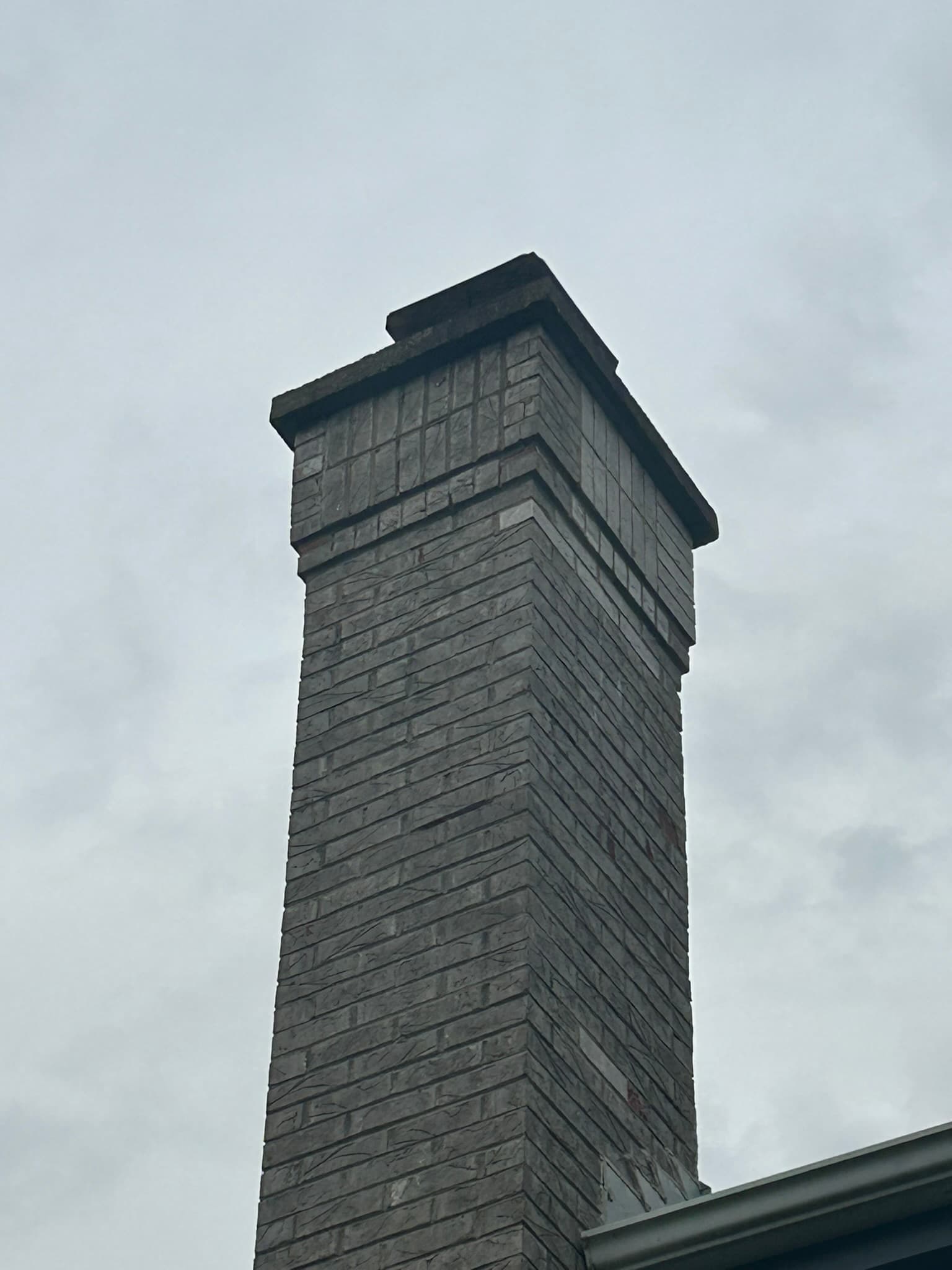
Copings, crowns, parapets, and chimneys take the most water and the most cycling. They fail first and they let water into everything below. Prioritizing the top of the building is the highest-return maintenance you can do in this climate.
Material matching protects you long-term
Repairs done with the wrong mortar — too hard for the existing brick — don't just fail; in a high-cycle climate they actively accelerate spalling. Getting the materials right matters more here precisely because the climate punishes mistakes faster.
The Bottom Line
Chicago's freeze-thaw climate isn't just "cold." It's a high-frequency, moisture-rich cycling environment that ranks among the harder masonry climates in the country — harder than the warm regions that pull the national average down, and in some ways harder on masonry than colder-but-steadier northern climates. That's not a reason to panic; it's a reason to maintain on a Chicago schedule, keep water out aggressively, and fix small problems before the winter turns them into big ones.
If you own or manage a brick building in the Chicago area and want a straight assessment of where water is getting in and how urgent it is, contact Emerald Masonry for a free on-site evaluation. We've spent more than 40 years watching this climate work on Chicagoland masonry, and we'll tell you honestly what needs attention now and what can wait. Call (708) 288-1696 or email emeraldmasonryil@gmail.com.