
Chimney Repair · Chicagoland, IL
Chimney Crown vs. Chimney Cap: What's the Difference (and Why Both Matter)
People mix up the chimney crown and the chimney cap all the time, but they're two different parts doing two different jobs. Here's what each one is, how each fails, and why a cracked crown is the quiet cause of so much Chicagoland chimney damage.
2026-06-28
Quick Answer
The chimney crown is the sloped masonry or concrete slab that covers the entire top of the chimney and sheds water off the brick; the chimney cap is the metal cover over the flue opening that keeps out rain, animals, and embers. Both protect against water, but a cracked crown is the bigger structural risk. Emerald Masonry LLC repairs Chicagoland chimney crowns — call (708) 288-1696 for a free estimate.
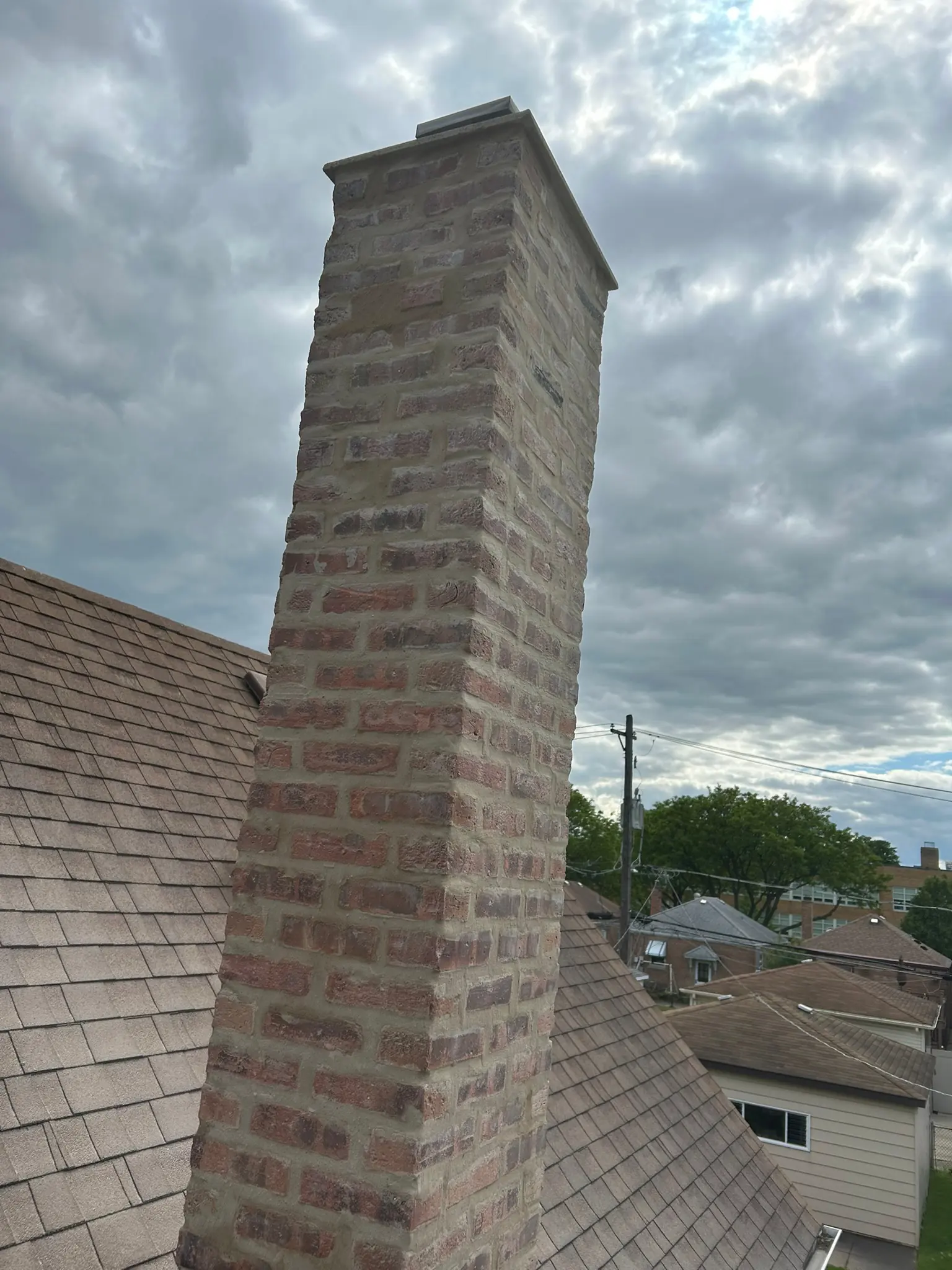
If you've ever gotten a chimney inspection report and seen the words "crown" and "cap" used like they mean the same thing, you're not alone — even some contractors blur them. They are two separate parts, in two different spots, doing two different jobs. The chimney crown is the sloped slab of masonry or concrete that covers the entire top of the chimney and sheds water off the brick. The chimney cap is the metal cover over the flue opening that keeps rain, animals, downdrafts, and embers out of the flue. Knowing which is which matters, because a failed cap is an annoyance — but a failed crown is how water quietly destroys a chimney from the top down. Emerald Masonry LLC repairs Chicagoland chimney crowns and the masonry damage they cause; call (708) 288-1696 for a free estimate.
The chimney crown: your chimney's roof
Picture the very top of a brick chimney. The brick walls form a box around the flue tile, and the flat area on top — the part that would otherwise let rain pour straight into the masonry — is covered by the crown. A proper crown is a solid slab, usually concrete or mortar, that slopes downward from the flue toward the edges and overhangs the brick slightly so water drips off instead of running down the face.
That slope and overhang are the whole point. The crown is essentially a small roof. When it's intact, rain hits it and runs off the edges, away from the brick. When it cracks, water goes the other direction — down into the top of the chimney, into the brick and mortar joints, and into the gap around the flue.
The chimney cap: the flue's hat
The cap is the metal cover — usually galvanized steel, stainless, or copper — that sits over the open flue at the very top, typically held a few inches above the crown on legs with mesh sides. Its jobs:
- Keep rain out of the flue. Without a cap, every rainfall sends water straight down the chimney into the smoke chamber, damper, and firebox.
- Keep animals out. Birds, squirrels, and raccoons love an open flue. The mesh sides block them.
- Block embers and downdrafts. The cap stops sparks from landing on the roof and helps with wind-driven downdrafts.
A cap is a comparatively small, replaceable part. A crown is built-in masonry. That difference is why they fail — and get fixed — so differently.
How each one fails
The crown fails by cracking and spalling. Many older Chicagoland chimneys were finished with a thin mortar wash instead of a true reinforced crown, and even good concrete crowns crack over decades. Once there's a crack, water gets in, freezes, expands, and widens it — the same freeze-thaw cycle that breaks apart brick all over Chicago. The crack grows, chunks break loose, and the crown stops shedding water entirely.
The cap fails by rusting, blowing off, or going missing. A galvanized cap eventually rusts through. Wind can lift a poorly secured one. Sometimes there simply never was a cap. The result is an open flue taking on water and wildlife.
Why a cracked crown is the bigger problem
A missing cap is bad, but the damage is mostly inside the flue. A cracked crown attacks the structure of the chimney itself. Here's the chain of events we see constantly in Chicago and the suburbs:
- The crown cracks.
- Water seeps into the top of the masonry and the space around the flue.
- Through fall and winter, that water freezes and thaws over and over.
- Brick faces start to spall — flake and pop off — and mortar joints crumble.
- White efflorescence staining appears as water moves through and evaporates.
- Left long enough, the upper courses of brick loosen, the flue tile can crack, and the stack can start to lean.
By the time a homeowner notices spalling brick or water in the firebox, the original cause is often a crown crack that's been letting water in for years. That's why we treat crown condition as one of the first things to check. You can read more about the full range of warning signs on our chimney repair service page.
How each is repaired
Cap: usually a direct replacement with a properly sized, secured stainless or galvanized cap. Quick, and worth doing the moment yours is rusted or gone.
Crown: this is masonry work. Depending on condition, we either repair the existing crown by cutting out and patching cracks and resurfacing it, or — when it's badly deteriorated — rebuild it as a proper sloped, overhanging crown with the right materials. Because the crown is the part holding back water, it should be done by a mason, not patched with hardware-store caulk that won't survive a Chicago winter. When the surrounding brick has already spalled, the crown repair gets paired with tuckpointing or brick replacement so the whole top of the chimney is sound again.
After a crown repair, we often recommend a breathable masonry sealer on the crown and upper brick. It sheds water while still letting the masonry dry, adding years to the repair. That's the same waterproofing logic we apply across exposed masonry — see our masonry sealing page for how breathable repellents work.
The Chicagoland angle
This isn't a minor detail in our climate. Chicago swings between thaws and hard freezes all winter, and each cycle drives water deeper into any crack and then expands it. A crown crack that might sit harmlessly for years in a dry climate can take a chimney apart in a handful of Illinois winters. North- and west-facing chimneys, which dry slowly and take the brunt of weather, tend to go first.
Emerald Masonry LLC is a family-owned, licensed and insured masonry contractor serving Chicago and the Chicagoland suburbs led by career masons with decades of hands-on experience in tuckpointing, chimney repair, brick repair and replacement, lintel and parapet repair, foundation and limestone/sill repair, caulking, sealing, and commercial, residential, and historic masonry restoration. Free on-site estimates — call (708) 288-1696.
Bottom line
The cap keeps water and critters out of the flue; replace it the moment it's rusted or missing. The crown keeps water out of the masonry, and when it cracks, it's the hidden engine behind spalling brick, crumbling joints, and leaning stacks. If you can see cracks at the top of your chimney, white staining on the brick, or water in the firebox, have the crown looked at before another winter works on it.
Not sure which part of your chimney is the problem? That's exactly what a free inspection is for. Reach out through our contact page or call Emerald Masonry LLC at (708) 288-1696, and we'll tell you straight what your chimney needs.
Frequently Asked Questions
What is the difference between a chimney crown and a chimney cap?
The crown is the large sloped slab of masonry or concrete that covers the whole top of the chimney and directs water away from the brick. The cap is the smaller metal cover that sits over the flue opening to keep out rain, animals, and embers. The crown protects the masonry; the cap protects the flue.
Is a cracked chimney crown a big deal?
Yes. A cracked crown lets water seep into the top of the chimney and down into the brick and mortar, which then spall and crack as that water freezes and thaws through Chicago winters. A small crown crack is one of the most common starting points for major chimney deterioration, so it's worth addressing early.
Can I replace just the chimney cap myself?
A simple flue cap is sometimes a straightforward swap, but the crown is masonry work that should be repaired or rebuilt by a mason. If your cap is missing or rusted, it's also a good moment to have the crown and brick inspected, since the same water that rusted the cap is often already working on the masonry.
How do I know if my chimney crown is failing?
Look for visible cracks across the top slab, chunks of concrete missing, white efflorescence staining on the brick below, spalling brick faces, or water showing up inside the firebox. From the ground a good clue is staining or deterioration concentrated near the top of the stack.
Should the crown be sealed after repair?
Often, yes. After repairing or rebuilding a crown, applying a breathable masonry sealer to the crown and upper brick adds a second layer of water resistance without trapping moisture inside. It's a low-cost step that meaningfully extends the life of the repair in a freeze-thaw climate.