
Chimney Repair · Chicagoland, IL
Chimney Flashing Leaks: Why Your Chicago Chimney Leaks Where It Meets the Roof
If your chimney only leaks when it rains, the problem is almost always where the brick meets the roof. Here's how a mason diagnoses failed flashing, a cracked crown, and open mortar joints — and how Emerald Masonry LLC fixes them across Chicagoland.
2026-07-09
Quick Answer
Most chimney leaks start at the flashing where the chimney meets the roof — failed step or counterflashing, a cracked crown, or open mortar joints let water in. Emerald Masonry LLC repairs chimney masonry, crowns, and flashing across Chicagoland — free estimates, (708) 288-1696.
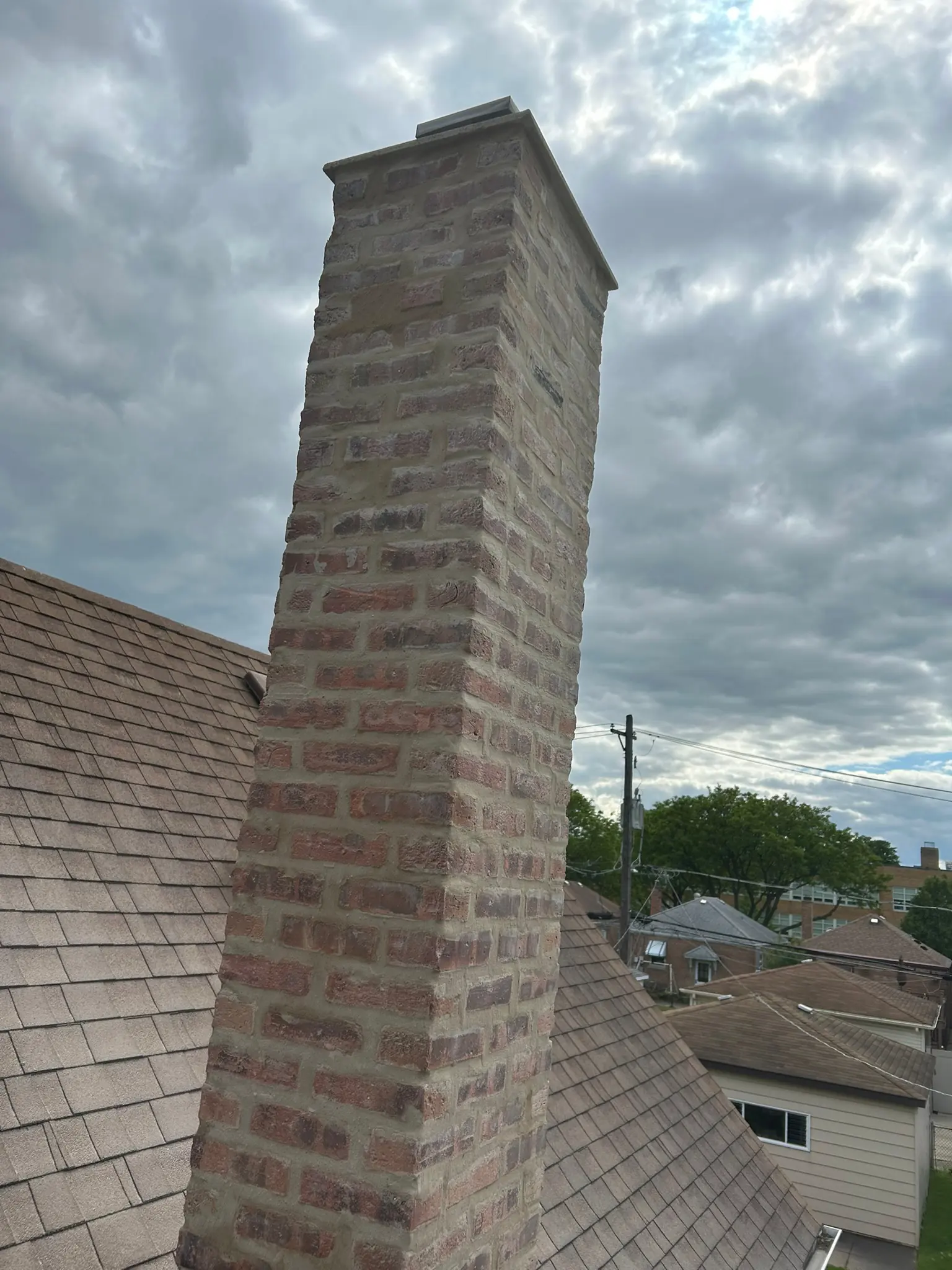
If your chimney leaks only when it rains, the culprit is almost always where the brick meets the roof — the flashing, the crown, or the mortar joints. That's the short answer, and it's the one we give homeowners across Chicagoland every week. At Emerald Masonry LLC, a family-owned, licensed, bonded, and insured masonry company with career masons of hands-on chimney work, we've traced hundreds of "mystery" ceiling stains back to a two-inch gap in a piece of counterflashing. If water is finding its way into your home through the chimney, call us for a free estimate at (708) 288-1696 — we repair chimney masonry, crowns, and flashing throughout the Chicago suburbs.
A chimney flashing leak is one of the most misdiagnosed problems in a house. People assume the roof is bad, or the flue is cracked, or there's condensation. Usually the truth is simpler and more fixable: the seal between a masonry chimney and the roof around it has failed. This guide walks through the anatomy of that connection, why chimneys leak, how a mason actually finds the source, and what a real repair looks like — so you know exactly what you're dealing with before anyone climbs a ladder.
The Anatomy of Where a Chimney Meets the Roof
A masonry chimney punches straight up through a sloped roof, which means there's a joint running around all four sides where two very different materials meet. Sealing that joint properly takes several layered components, and a failure in any one of them lets water in.
Step flashing
Step flashing is a series of small, L-shaped metal pieces woven into the roof shingles along the sides of the chimney that run up the slope. Each piece laps over the one below it like shingles do, so water running down the roof is guided over the top of each flashing piece and back onto the roof surface instead of into the joint. When step flashing is missing, corroded, or was installed flat instead of stepped, water sheets straight into the gap.
Counterflashing and the reglet
Counterflashing is the metal that covers the top edge of the step flashing and tucks into the brick. The correct method is to cut a groove — a reglet — into the mortar joint, bend the top of the counterflashing into that groove, and seal it. This reglet counterflashing detail is what makes the difference between a repair that lasts 20 years and a smear of caulk that fails in one winter. When counterflashing is just surface-mounted and sealed to the face of the brick, freeze-thaw movement pops it loose and the leak returns.
The chimney crown
The chimney crown is the sloped slab of concrete or masonry mortar across the very top of the chimney, surrounding the flue tile. Its job is to shed rain off the top of the structure so water runs onto the roof, not down inside the brick. A chimney crown crack — even a hairline one — lets water into the core of the chimney, where it freezes, expands, and slowly destroys the masonry from the inside.
The chimney cap
The chimney cap sits on top of the flue opening itself. It keeps rain, snow, animals, and debris out of the flue while letting smoke escape. A missing cap sends water straight down the flue into the firebox and damper — a leak that has nothing to do with the flashing but produces very similar interior symptoms.
The saddle or cricket
On wider chimneys, a chimney saddle cricket is built on the up-slope (uphill) side. This little peaked ridge splits water and snow and sends it around the chimney rather than letting it pile against the back wall. Without one, a wide chimney acts like a dam on the roof.
The mortar joints
Finally, the brick chimney itself is only as watertight as its chimney mortar joints. Over decades, mortar recedes, cracks, and washes out. Once joints open up, the whole stack becomes a sponge — which is exactly why chimney tuckpointing is so often part of a real leak repair.
Why Chimneys Leak: The Real Sources
When a chimney leaks when it rains, one or more of the following is almost always to blame. We check every one of these during a diagnosis.
The most common leak sources
- Failed, rusted, or improperly sealed flashing. Old galvanized flashing rusts through. Cheap surface-mounted counterflashing lifts away from the brick. This is the number-one cause of a chimney flashing leak.
- Tar "repairs" that fail. A previous owner or handyman troweled roofing tar over the flashing. Tar hardens, cracks, and peels within a season or two, and it hides the real damage underneath.
- A cracked chimney crown. Freeze-thaw and normal aging split the crown, and water pours in from the top. This calls for chimney crown repair or a full recast.
- A missing or damaged chimney cap. Rain and snow drop straight down the flue.
- Open or receding mortar joints. Water soaks through the brick face and shows up inside — corrected with chimney tuckpointing.
- Spalling chimney brick. When brick faces flake and pop off (spalling chimney brick), the exposed interior soaks up water fast. Left long enough, this leads to a partial or full chimney rebuild.
- No cricket on a wide chimney. Water and snow dam against the back and force through the flashing.
Two other clues are worth naming. Efflorescence chimney staining — that white, chalky powder on the brick — is a telltale sign that water is moving through the masonry and depositing salts as it dries. And any interior chimney water damage, like a brown ring on a bedroom ceiling below the roofline, means water has already been traveling inside your framing for a while.
How a Mason Diagnoses the Source
Finding a leak is detective work, because water rarely drips in directly below where it enters. Here's how we approach it.
- Interior stains first. We start where you're seeing the damage — a ceiling ring, a damp closet wall, rust on the damper. The location tells us roughly how high the water is entering and which side of the chimney to focus on.
- Attic inspection. From inside the attic on a dry day, we look up the chimney chase for water tracks, staining on the framing, daylight around the flashing, and wet or rotted sheathing. This is where a chimney flashing vs crown question often gets answered — flashing leaks stain low around the roof line, crown leaks track down from the top of the chimney.
- Rooftop inspection. On the roof we examine the step flashing, counterflashing, crown, cap, and every mortar joint, checking for lifted metal, tar patches, cracks, spalling, and open joints.
- Water testing. When the source still isn't obvious, we run water on isolated sections of the chimney one at a time — flashing, then crown, then brick face — while someone watches inside. Isolating each area pinpoints the exact entry point instead of guessing.
The Masonry Side vs. the Roofing Side — An Honest Boundary
This is where a lot of homeowners get bounced back and forth between trades, so we'll be direct about it.
What a mason fixes: the crown (repair or recast), the brick and mortar (masonry chimney repair and tuckpointing), spalled units, and the flashing-to-brick tie-in — meaning we cut a fresh reglet and reset and seal the counterflashing into the masonry where it belongs. If the leak is in the chimney itself or at the brick-to-metal seal, that's our work.
What a roofer handles: the field shingles across the roof, the roof deck and underlayment, and step flashing that's woven into the shingle courses when a section of roof is being replaced. If your shingles are shot or the roof deck is rotted, that's a roofer's job.
At Emerald Masonry LLC we do the chimney masonry, crowns, and the flashing/counterflashing tie-in. We do not reroof houses — full reroofing is a roofer's trade, and we'll tell you plainly when that's what you need rather than take on work outside our lane. Homeowners in Oak Lawn and Tinley Park often call us first assuming it's all one job; part of a good estimate is drawing that line clearly so you're not paying the wrong specialist.
The Repair Process, Step by Step
Every chimney is different, but a typical chimney flashing repair with masonry follows this sequence:
- Inspect and confirm the source using the diagnostic steps above, so we're fixing the actual leak, not a symptom.
- Remove failed materials — old tar, rusted or surface-mounted flashing, loose crown fragments, and crumbling mortar.
- Repair the masonry — tuckpoint open joints, replace spalled brick, and rebuild any sections that have deteriorated beyond patching.
- Repair or recast the crown with a proper sloped, overhanging profile so water drips clear of the brick instead of running down the face.
- Cut a fresh reglet into a mortar joint and set new counterflashing into it, so the metal is locked into the masonry, not just stuck to its surface.
- Seal and tool all joints and metal edges with the correct materials.
- Apply a breathable water repellent to the brick where appropriate, and confirm a proper chimney cap is in place.
- Test again to confirm the leak is gone before we call the job done.
Materials That Actually Last
The right materials are what separate a lasting repair from a callback. On a proper job we use:
- Crown mix and crown sealant — a durable, weather-rated mortar or concrete for recasting, finished with a flexible crown coating that bridges hairline cracks.
- Mortar matched to the chimney for tuckpointing, chosen for both strength and color so the repair blends in.
- Proper flashing metal — corrosion-resistant metal for counterflashing, not the thin galvanized stock that rusts through.
- A breathable water repellent for the brick. This is important: a good masonry sealer lets vapor escape while blocking liquid water. The wrong, non-breathable sealer traps moisture inside and accelerates spalling.
What Drives the Cost
We don't quote exact prices sight unseen, because an honest number depends on what we find. The factors that move a chimney flashing replacement cost up or down include:
- Chimney height and roof access — a tall chimney on a steep roof is more involved to work on safely.
- Scope — resetting counterflashing alone is very different from a crown recast plus tuckpointing plus brick replacement.
- Existing damage — hidden rot or spalling discovered during the work.
- Whether a cricket is needed on a wide chimney.
Rather than guess, we come out, diagnose the real source, and give you a clear free estimate. Call (708) 288-1696 — there's no obligation.
The Risk of Waiting
A chimney leak is not a "watch it and see" problem. Water that enters at the flashing or crown doesn't stay put — it travels. Left alone, it causes:
- Rotted roof sheathing and framing around the chimney chase.
- Interior damage — stained ceilings, ruined drywall, peeling paint, and damp insulation.
- Mold in the attic and wall cavities.
- Firebox and damper damage — rust that eventually compromises the fireplace and can become a safety issue.
- Accelerated masonry decay — every wet freeze deepens cracks and spalls more brick, pushing a simple flashing fix toward a full chimney rebuild.
Leak Source to Fix — At a Glance
| Leak source | What you notice | The masonry fix | | --- | --- | --- | | Failed/rusted flashing | Stains near the roof line, lifted metal | Cut new reglet, reset & seal counterflashing | | Tar patch failure | Cracked black patches, returning leak | Remove tar, install proper reglet counterflashing | | Cracked chimney crown | Water from the top, cracks on the crown slab | Crown repair or full recast | | Missing chimney cap | Water/animals in the flue, rusty damper | Install proper cap | | Open mortar joints | Efflorescence, damp brick, interior seepage | Chimney tuckpointing | | Spalling brick | Flaking, popped brick faces | Replace units, seal, sometimes rebuild | | No cricket (wide chimney) | Leak at the back/uphill side | Build a saddle/cricket + reflash |
Chicago Freeze-Thaw: Why This Region Is So Hard on Chimneys
Chicagoland weather is the real reason so many chimneys here leak. Our winters cycle above and below freezing dozens of times each season. Every time water soaks into a hairline crown crack, an open mortar joint, or under a lifting piece of flashing and then freezes, it expands by about nine percent — prying the gap wider. Thaw, refill, refreeze, repeat. This freeze-thaw chimney cycle is what turns a tiny flaw into a serious leak and what makes spalling chimney brick so common on older stacks. It's also why tar patches never last here: they can't flex with that constant movement. Proper chimney waterproofing with a breathable repellent, a sound crown, and correctly reglet-set counterflashing is the defense.
Maintenance and Inspection
The cheapest chimney repair is the one you catch early. We recommend:
- An annual inspection, ideally in fall before the freeze-thaw season sets in.
- A post-storm check after any major wind or hail event.
- Watching for early signs — white efflorescence, damp spots on the ceiling below the roofline, granules in the gutters, or any daylight visible around the flashing from the attic.
- Keeping the crown and cap sound, since those two components do the most work protecting the whole structure.
Catch a receding joint or an early chimney crown crack now, and it's a modest chimney flashing sealant and tuckpointing visit. Ignore it, and it becomes framing rot and a rebuild.
Related Services
- Chimney repair — crowns, rebuilds, tuckpointing, and flashing tie-in.
- Masonry sealing — breathable water repellent to protect brick from freeze-thaw.
- Tuckpointing — restoring failed mortar joints on chimneys and full walls.
The Bottom Line
If your chimney leaks when it rains, don't smear on more tar and hope. The problem is almost certainly at the flashing, the crown, or the mortar joints — and every one of those is a fixable masonry job when it's done right. As a family-owned masonry contractor with career masons of chimney experience, Emerald Masonry LLC is a licensed, bonded, and insured team that diagnoses the real source, repairs the masonry side the right way, and tells you honestly when a roofer needs to handle the shingles.
We serve Palos Heights and all of Chicagoland, from Oak Lawn to Tinley Park and beyond. Get a free estimate today: call (708) 288-1696, email emeraldmasonryil@gmail.com, or reach us at our contact page. Let's stop the leak before another Chicago winter makes it worse.
Frequently Asked Questions
Why does my chimney only leak when it rains?
A leak that appears only during or right after rain almost always points to the flashing or crown where the chimney meets the roof rather than an internal plumbing or condensation issue. Rain running down the roof gets pushed against the chimney and finds any gap in the step flashing, counterflashing, crown, or mortar joints. Because the water enters high and travels along framing, the interior stain often shows up several feet away from the actual entry point.
What's the difference between chimney flashing and the chimney crown?
Flashing is the metal that seals the joint between the chimney's sides and the roof surface, while the crown is the sloped masonry or concrete cap on top of the chimney that sheds water off the flue. Flashing failures leak where the brick meets the roof; crown cracks leak from the very top down through the structure. Both are common leak sources, and a mason checks each during diagnosis.
Can a mason fix chimney flashing, or do I need a roofer?
A mason handles the masonry side — cutting a fresh reglet into the brick, resetting and sealing counterflashing, rebuilding the crown, and tuckpointing open joints. A roofer handles the field shingles and the roof deck itself. Emerald Masonry LLC repairs chimney masonry, crowns, and the flashing-to-brick tie-in, and we'll tell you honestly when a roofer needs to handle the shingle field.
Is tar a good way to fix a leaking chimney flashing?
No. Roofing tar or caulk smeared over flashing is a temporary patch that hardens, cracks, and fails within a season or two — especially through Chicago's freeze-thaw cycles. It also hides the real problem and traps moisture against the brick. A proper repair reglets fresh counterflashing into the masonry and seals it correctly.
How much does chimney flashing repair cost in Chicago?
Cost depends on the height and access of the chimney, whether counterflashing alone needs resetting or the crown and brick also need work, and the extent of any water damage already done. Because every chimney is different, we don't quote exact prices sight unseen. Emerald Masonry LLC provides free, no-obligation estimates across Chicagoland at (708) 288-1696.
What happens if I ignore a chimney leak?
Water that enters at the flashing or crown rots roof sheathing and framing, stains ceilings, feeds mold, and can rust the firebox and damper. Inside the masonry, repeated freeze-thaw cycles spall the brick and crack the crown further, turning a small flashing repair into a partial chimney rebuild. Addressing a leak early is almost always the cheaper path.
What is a chimney cricket or saddle, and does my chimney need one?
A cricket (also called a saddle) is a small peaked structure built on the up-roof side of a wide chimney to divert water and debris around it instead of letting it pool against the brick. Chimneys wider than about 30 inches, or those on lower roof slopes, benefit greatly from a cricket. Without one, water and snow dam against the back of the chimney and eventually force their way through the flashing.
How often should I have my chimney and flashing inspected?
Once a year is ideal in the Chicago area, ideally in fall before the freeze-thaw season, plus after any major storm. An annual look catches receding mortar joints, early crown cracks, and lifting flashing before they become interior leaks. Emerald Masonry LLC offers free estimates and inspections throughout Chicagoland.