
Masonry Restoration · Chicagoland, IL
Cold-Weather Masonry Work in Illinois — What Can Be Done and What Should Wait
Property managers in Chicagoland often discover masonry problems in fall and need to know whether repairs can be made before winter. The answer depends on what kind of work is needed, what temperatures are forecast, and what measures the contractor takes. Some masonry work is genuinely fine in cold weather. Some isn't. Understanding the difference prevents both unnecessary delays and failed repairs.
2026-04-25
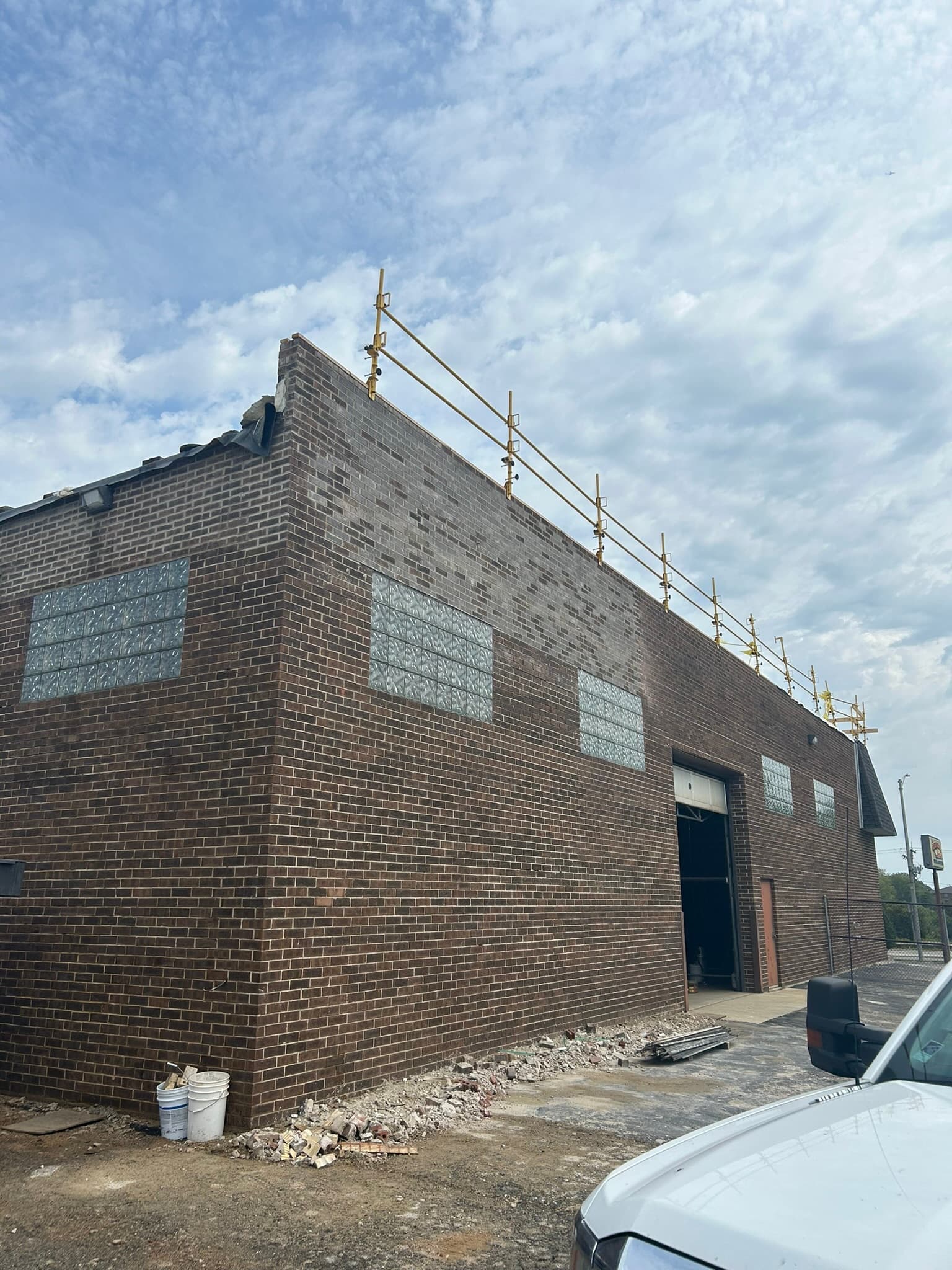
The call comes in November, sometimes October. A property manager has finally gotten around to scheduling masonry work they've been aware of since spring, and now they want to know: can this still be done before winter? Or do they have to wait until April?
The answer is more nuanced than "yes" or "no." Some masonry work is fine in cool weather. Some requires specific precautions in cold weather. And some should genuinely wait — not because contractors are reluctant, but because mortar that doesn't cure properly fails faster than the problem it was supposed to fix.
The Core Issue: Mortar Curing Temperature
Portland cement mortar and lime mortar both cure through chemical reactions that require adequate temperature and moisture. The critical threshold is 40°F.
Below 40°F, the hydration reaction in Portland cement mortar slows dramatically. Below 32°F, it stops almost entirely, and water in the mortar mix freezes. When mortar freezes before it's cured, ice crystals disrupt the microstructure of the curing matrix. The result is mortar that looks set but has significantly reduced compressive strength and bond — it fails prematurely, often within the first full freeze-thaw season.
This isn't a theoretical concern. Cold-weather mortar failures are a real and common pattern we see in Chicagoland. A building tuckpointed in late October by a contractor who didn't use heated enclosures or cold-weather mortar additives will often show joint failures — gaps, debonding, crumbling — the following spring.
What Can Be Done in Cold Weather
Inspection and assessment. Cold doesn't stop inspection. If you discover masonry problems in November, we can assess the building, document the conditions, scope the repair, and have everything ready for spring scheduling. This is often the right approach for non-emergency conditions — assess in fall, schedule in early spring, do the work in the window before summer heat becomes an issue.
Emergency water-entry stabilization. If water is actively entering the building through a masonry failure — a compromised parapet, a displaced coping unit, a failed lintel causing active structural infiltration — that condition can't wait until spring regardless of temperature. Emergency stabilization work, such as sealing open joints or setting temporary coping, can be performed with proper cold-weather precautions. The repair may be temporary in nature, with full restoration planned for spring.
Tuckpointing with heated enclosures. In Chicagoland's climate, professional masonry contractors working through fall and early winter use two main strategies: heated enclosures (temporary shelter with propane or electric heat that keeps the work area above 40°F for the duration of work and the cure period), and cold-weather mortar admixtures that accelerate the hydration reaction to reduce the critical temperature window. These measures add cost and complexity, but they allow quality work to be performed in temperatures that would otherwise be problematic. Work performed with proper heated enclosures and appropriate mortar specification is as durable as work performed in ideal conditions.
Brick replacement in mild cold. Individual brick replacement with quick-setting mortar can be performed in temperatures down to about 35-40°F if the work area is protected from wind and direct precipitation. The short window between mixing and placement reduces exposure time.
Sealing and waterproofing. Penetrating silane-siloxane waterproofers have a broader temperature range for application — most can be applied in temperatures down to 35-40°F if the masonry surface is dry. This work can sometimes be scheduled in late fall when tuckpointing can't.
What Should Wait for Spring
Large-scale tuckpointing without heated enclosures. If a masonry contractor proposes large-scale tuckpointing in December or January without discussing heated enclosures, be skeptical. The economics of heated enclosures on large jobs are real — they add cost — and contractors who avoid them are either passing the curing risk to you or not aware of the issue.
Mortar work when temperatures will drop below freezing within 24-48 hours. Fresh mortar needs to stay above freezing for a minimum of 24 hours to achieve adequate initial set. If overnight lows are forecast below 32°F within that window and the work area isn't protected by heated enclosures, the work should be postponed.
Chimney crown replacement or repair. Crown concrete requires adequate curing time, and fresh crown concrete is vulnerable to freeze damage if it doesn't achieve initial set before temperatures drop. Crown work in fall is possible with careful scheduling around temperature forecasts; winter crown work requires full heated enclosure.
Lime mortar applications. Lime mortar cures more slowly than Portland cement mortar through the carbonation process. Cold weather significantly extends the time required for adequate initial strength development. Lime mortar work in temperatures below 45°F generally requires heated enclosures or should be deferred to warmer conditions.
The Special Case of Fall Work
Fall — September through mid-November — is actually one of the better windows for masonry work in Chicagoland. Temperatures are typically above the 40°F threshold during working hours, humidity is often lower than summer, and the fierce UV of summer sun (which can dry fresh mortar too fast) has moderated.
Early fall work also gives fresh mortar the maximum time to cure before the first hard freeze, which matters for durability. A joint installed in September has 8-10 weeks to achieve full strength before December temperatures arrive. A joint installed in December — even in a heated enclosure — enters its first winter season with less cure time than fall work.
If you have masonry work that needs to be done this year, September and October are often preferable to both summer (peak demand, heat stress on fresh mortar) and spring (contractors scheduling up quickly for the season). Late fall work is feasible with the right precautions; winter work requires heated enclosures.
Questions to Ask a Contractor in Cold-Weather Conditions
Before authorizing fall or winter masonry work, ask:
What temperature range do you work in? A contractor who works in any temperature without discussing precautions is not thinking about curing conditions.
Do you use heated enclosures? For work in temperatures below 40°F, the answer should be yes, or the work should be rescheduled.
What's your cold-weather mortar specification? Cold-weather mortars use accelerants to achieve faster initial set at lower temperatures. Ask whether these are being used and what the minimum working temperature is for the specified mortar.
What's the forecast for the 48 hours after you complete work? The contractor should be monitoring weather conditions around the planned work date. If overnight temps are forecast below freezing within 24-48 hours of completion, either the work should be postponed or additional protection measures (insulating blankets, continued heat in the work area) should be in the plan.
What warranty applies to cold-weather work? If a contractor is confident in their cold-weather process, they should be willing to warrant the work on the same terms as any other installation. Hesitation or exclusions specifically for cold-weather work are a signal.
The Bottom Line
Cold weather doesn't have to stop masonry maintenance — but it changes the requirements. The difference between durable cold-weather masonry work and failed cold-weather masonry work comes down to whether the contractor is managing curing conditions actively (heated enclosures, appropriate mortar specification, weather monitoring) or just working in cold and hoping it works out.
Property managers who have fall maintenance needs don't have to accept a blanket "wait until spring." But they do need to ask the right questions about how the work will be protected.
Emerald Masonry LLC performs cold-weather work with appropriate precautions through the fall season. We discuss temperature forecasts and curing protection as part of any fall or winter project scope. Call (708) 288-1696 or contact us online to assess whether your masonry project is appropriate for fall scheduling.
See also: Tuckpointing | Masonry Restoration | Brick Repair