
Parapet Wall Repair · Chicagoland, IL
Why So Many Brick Buildings Leak From the Top Down — Coping, Caps, and Roofline Masonry
When a brick building leaks, the instinct is to blame the roof. But on masonry buildings, the water often starts higher — at the coping and the roofline. Here's how the top of your wall is supposed to keep water out, and what goes wrong when it doesn't.
2026-06-17
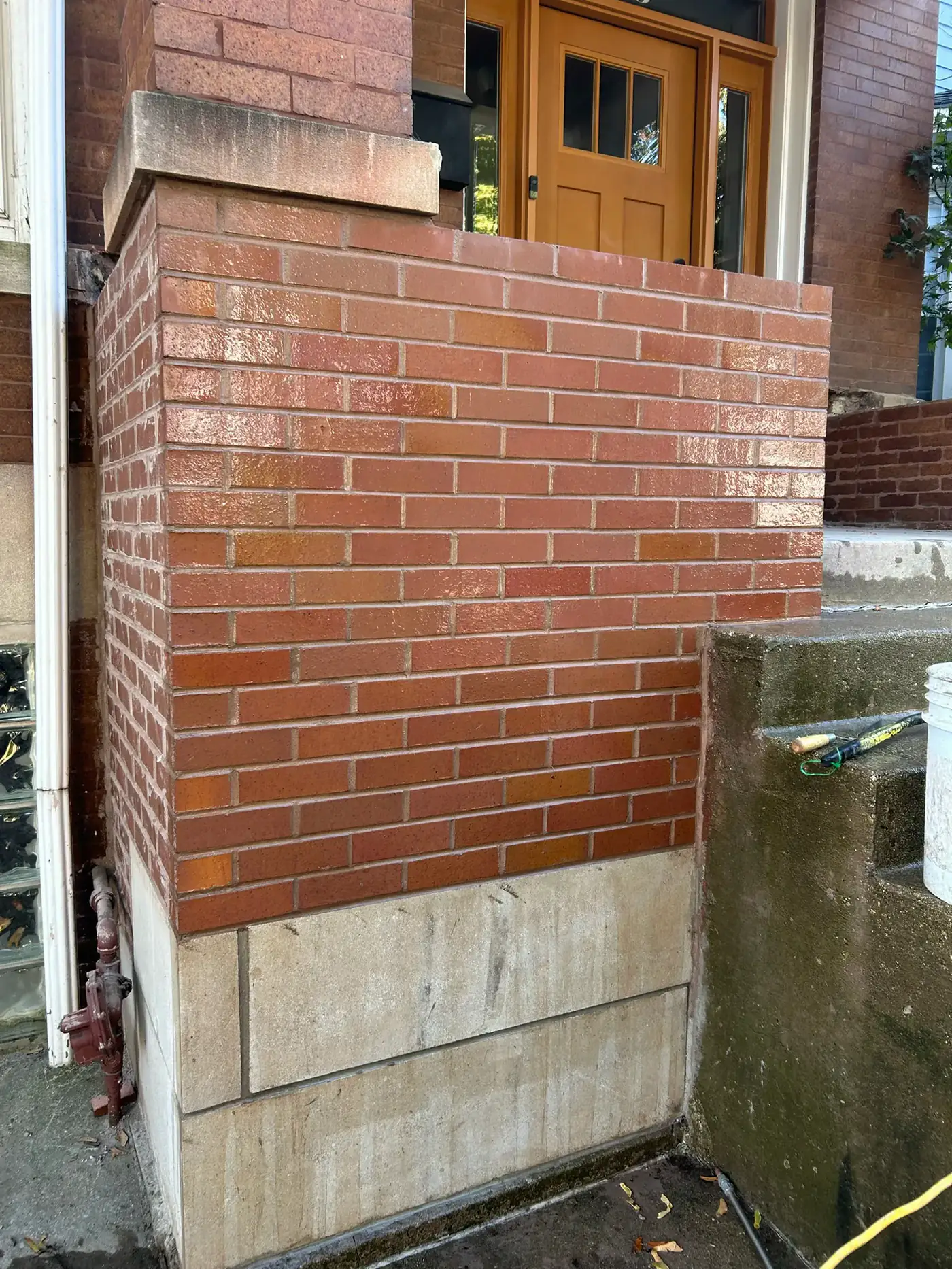
When a brick building springs a leak, almost everyone looks down — at the windows, the foundation, maybe the roof membrane. But on a masonry building, water has a strong tendency to enter from the top and travel down inside the wall before it ever shows up where you notice it. The leak you see on the top-floor ceiling often started feet above it, at the very top of the wall, in the parts almost nobody inspects: the coping and the roofline masonry.
This post is for property managers, building owners, and HOA boards who keep chasing leaks that do not seem to have an obvious source. Understanding how the top of a masonry wall is supposed to work — and how it fails — explains a surprising number of those mystery leaks.
The Top of the Wall Is the Whole Wall's Umbrella
Think about where water has the easiest path into a masonry wall. The face of the wall is vertical, so most rain runs off it. But the top of the wall — the top of a parapet, the cap of a freestanding wall, the crown of a chimney — is horizontal or nearly so. Water sits there. And if it can get in anywhere, it can get in there.
That is why the top of every masonry wall needs a dedicated water-shedding system. On a building with a parapet, that system is the coping: the cap that covers the top of the wall and throws water clear of both faces. Coping might be stone, precast concrete, clay, or metal. Whatever the material, its job is the same — keep water from entering the top of the wall and direct it away from the masonry below.
When the coping works, the wall underneath stays dry. When the coping fails, the entire wall below it is being fed water from above, and no amount of work on the wall face will fully stop the leaks.
How Roofline Masonry Fails
Cracked or Open Coping Joints
Coping is made of individual pieces, and the joints between them are a prime entry point. Over years of thermal movement and weather, those joints crack and open. Water runs straight through them into the top of the wall. This is one of the most common — and most overlooked — sources of masonry leaks.
Coping With No Overhang or Drip Edge
A properly designed coping overhangs both faces of the wall and has a drip edge so water falls clear instead of running back against the brick. A lot of older buildings, and plenty of cheaply built newer ones, have flat coping sitting flush with the wall. Water runs right off it and down the face — or worse, back under the cap.
Missing Flashing Under the Coping
Here is the detail that separates a coping that lasts from one that leaks: there should be a continuous waterproof membrane — flashing — bedded under the coping. Even if the coping joints crack, that flashing catches the water and sends it back out. Buildings without under-coping flashing have no backup. Once the coping joints open, water goes straight into the wall.
Parapet Joints Open on the Back Face
The roof-side face of a parapet is the most neglected masonry on any building. Nobody sees it from the street, so its mortar joints go unrepaired for decades. Open joints there let water into the wall from the back, where it works its way down and inward.
Failed Counterflashing at the Roof-to-Wall Joint
Where the roof meets the parapet, counterflashing seals the transition. When it lifts, rusts, or was poorly lapped, water enters right at the roofline — and this leak gets misdiagnosed as a roof problem constantly, because that is exactly where it shows up.
Why These Leaks Get Misdiagnosed
Roofline leaks are sneaky because water does not travel straight down. It gets into the top of the wall, runs along mortar joints, brick coursing, and any internal ledge it finds, and emerges somewhere that may be several feet from the entry point. So the stain on the ceiling, the damp spot at the top of an interior wall, the efflorescence blooming halfway down the facade — all of them can trace back to a coping joint or a parapet you never looked at.
This is why patching where the water appears so often fails. You can reseal the same ceiling, repaint the same wall, and re-caulk the same window three times, and the water keeps coming, because the actual entry point is up top where nobody is looking.
How to Get Ahead of It
The fix starts with looking in the right place. A roof-level inspection of the coping and parapet — checking the coping joints, confirming there is flashing under the cap, sighting the parapet for plumb, and examining the back-face mortar joints — finds the source that a from-the-ground look never will.
Once the source is identified, lasting repair means:
- Resetting or replacing the coping with proper overhang and a drip edge
- Installing continuous flashing under the coping so cracked joints are no longer a direct path in
- Repointing the parapet on both faces, not just the side that shows
- Repairing counterflashing at the roof-to-wall joint
- Sealing coping joints correctly as part of the system, not as the whole fix
We cover the full scope of this work on our parapet wall repair and waterproofing services, and on a building with broader issues it often rolls into a larger masonry restoration. If you want to understand the masonry side of repointing that goes with it, our piece on what "repointing" actually means goes deeper.
The Takeaway
If you have a brick building that keeps leaking and the source never seems clear, look up before you look anywhere else. The coping and roofline masonry are the umbrella for the entire wall, and when that umbrella has holes in it, everything below gets wet. The good news is that this is fixable — and fixing it at the top usually stops a whole cluster of downstream leaks at once.
If your Chicagoland building has stubborn leaks that defy diagnosis, contact Emerald Masonry or call (708) 288-1696 for a free on-site assessment. With more than decades of masonry experience across the region, we know where to look — and we will tell you straight what is letting the water in.