
Masonry Restoration · Chicagoland, IL
Glass Block Windows and Masonry: Why They Leak and How They're Repaired
Glass block basement and bathroom windows are everywhere on Chicago-area brick homes — and when they leak, the problem is almost always the masonry around them, not the glass. Here's why glass block fails, what actually leaks, and how it's properly repaired.
2026-06-21
Quick Answer
Glass block windows usually leak not through the glass but through the masonry around them — failed mortar joints between the blocks, the perimeter where the panel meets the brick opening, and missing or failed sealant. Repair means repointing the block joints, rebedding the perimeter, and sealing; badly failed panels are rebuilt. Emerald Masonry LLC repairs glass block masonry across Chicagoland. Free estimates — call (708) 288-1696.
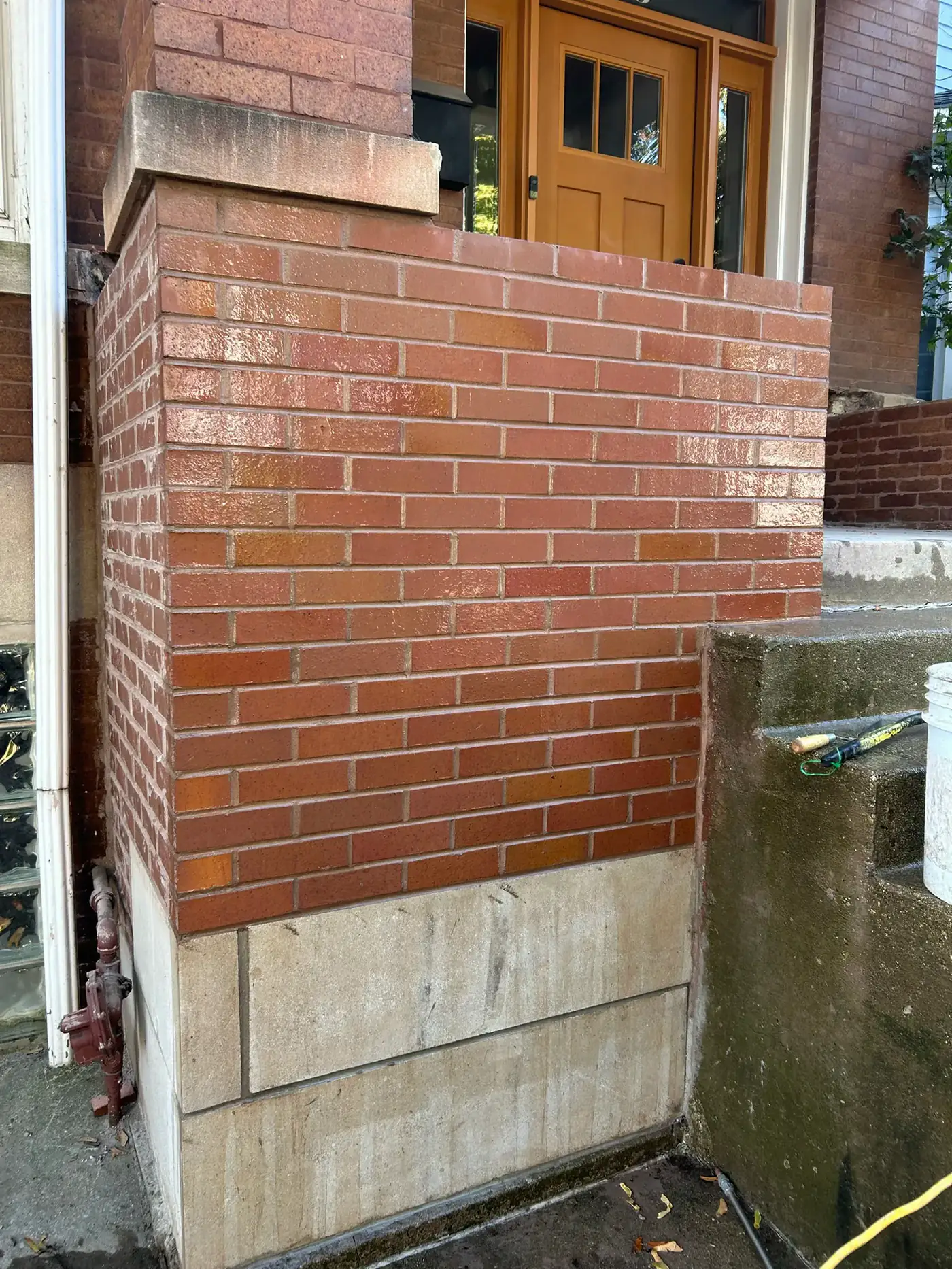
If you have a glass block window — and if you own a brick home anywhere around Chicago, you very likely do, in the basement or the bathroom — there's a good chance it will eventually leak. When it does, almost everyone assumes the glass blocks themselves have failed. They almost never have. The leak is a masonry problem: water finding its way through the mortar and the perimeter around the blocks, not through the glass. Understanding that distinction is the key to fixing it correctly instead of chasing the wrong repair.
Glass block is genuinely good building material, which is exactly why it's so common on Chicago-area homes. But it's still masonry, and like all masonry, the mortar and the joints are the parts that wear out.
What a Glass Block Window Actually Is
A glass block window isn't a window in the usual sense — there's no frame and sash, no moving parts. It's a small masonry panel: individual glass blocks laid up in courses with mortar between them, just like brick, then set into the opening in the surrounding brick or block wall. That construction is its great strength (secure, durable, light-transmitting, nothing to break or rot) and also tells you exactly where it's vulnerable: the mortar joints between the blocks, and the perimeter where the panel meets the wall opening.
Where Glass Block Windows Actually Leak
When water comes through a glass block window, it's traveling one of three paths — all of them masonry, none of them the glass:
- The mortar joints between the blocks. Just like brick, the mortar holding glass block together erodes, cracks, and washes out over time. Once the joints fail, water passes straight between the blocks.
- The perimeter joint. Where the glass block panel meets the surrounding brick opening, there's a joint that has to stay sealed. This is the most common leak point — the panel and the wall move slightly differently, and the perimeter mortar or sealant cracks and opens up.
- Failed or missing sealant. Many glass block panels rely on sealant at the perimeter and sometimes at the joints. Sealant has a limited life; when it dries, cracks, and pulls away, water follows.
Notice what's not on that list: the glass blocks. They're solid and effectively waterproof. Chasing a glass block leak by looking at the glass is why so many DIY attempts fail — the water is coming through the masonry around it.
Signs Your Glass Block Window Needs Attention
- Water on the sill or floor below the window after rain or snowmelt
- Damp, staining, or efflorescence on the wall around the panel
- Visibly eroded, cracked, or missing mortar between the blocks
- A gap or cracked joint around the perimeter where the panel meets the brick
- Dried, cracked, or peeling sealant around the edges
- A panel that looks like it's bowing or shifting out of plane — a more serious structural sign
The Risk of Ignoring It
A leaking glass block window is a steady water entry point into the wall and the space behind it. In a basement, that means moisture, efflorescence, mold, and damage to anything stored nearby — and water that's getting into the surrounding masonry, where Chicago's freeze-thaw cycle then works on the brick and mortar around the opening. A small perimeter reseal is a minor job; a panel left leaking for years until the surrounding brick spalls and the panel itself starts failing is a much bigger one. As with most masonry, early attention is far cheaper.
How Glass Block Masonry Is Properly Repaired
Because the failure is a masonry failure, the repair is masonry work:
- Assess the panel and the opening. We determine whether the joints, the perimeter, the sealant, or the panel structure is the source — and whether it's a repair or a rebuild.
- Repoint the joints between blocks where the mortar has eroded, the same grind-and-repack process used in tuckpointing.
- Rebed and seal the perimeter where the panel meets the brick opening, restoring the joint that takes the most movement.
- Renew the sealant with a quality, weather-rated product where sealant is the appropriate detail.
- Rebuild the panel if it's structurally failing, bowing, or has cracked blocks — set properly into a sound opening.
Where the surrounding brick opening has been damaged by the leak, that gets addressed too, with brick repair or repointing as part of the same job.
Are Glass Block Windows Worth Keeping?
Yes. For Chicago-area basements especially, glass block remains a smart choice — it's secure (hard to break through), durable, maintenance-light, and lets in daylight while keeping out drafts, with no operable parts to fail. The leaking you may be experiencing isn't a flaw in the concept; it's ordinary masonry wear that's reached the end of its service life and needs renewal. Repaired properly, a glass block window goes right back to being one of the lower-maintenance openings in the house.
Bottom Line
A leaking glass block window is one of the most misdiagnosed masonry problems we see, because the obvious suspect — the glass — is almost never the culprit. Water gets in through the eroded mortar between the blocks, the failed perimeter joint where the panel meets the brick, and dried-out sealant. Fix those, and the leak stops. The repair is straightforward masonry work, but it has to target the right paths — which is why an experienced look at both the panel and the surrounding opening makes the difference.
Emerald Masonry LLC is a family-owned, licensed and insured masonry contractor serving Chicago and the Chicagoland suburbs led by career masons with decades of hands-on experience in tuckpointing, chimney repair, brick repair and replacement, lintel and parapet repair, foundation and limestone/sill repair, caulking, power washing, sealing, and commercial, residential, and historic masonry restoration. If a glass block window is letting water in, contact us for a free on-site assessment — or call (708) 288-1696.
Frequently Asked Questions
Why is my glass block window leaking?
Almost always through the masonry, not the glass. The mortar joints between the blocks erode, the perimeter where the panel meets the brick opening fails, or the sealant cracks — and water comes through those paths. The glass blocks themselves rarely fail; it's the masonry around and between them that lets water in.
Can a leaking glass block window be repaired, or does it need replacing?
Often it can be repaired by repointing the joints between the blocks, rebedding and sealing the perimeter against the brick, and renewing failed sealant. If the panel is structurally failing, bowing, or has cracked blocks, it may need to be rebuilt. We assess the panel and the surrounding opening to tell you which.
Are glass block windows good for basements in Chicago?
Yes — they're popular on Chicago-area homes for good reason: they're secure, durable, let in light, and have no operable parts to fail. The catch is that, like any masonry, the mortar and perimeter need to stay sound. When they're installed and maintained properly, glass block basement windows hold up very well in our climate.
Do you install new glass block windows or just repair them?
We handle the masonry side of glass block — repairing leaking panels, repointing and rebedding them, and rebuilding or setting panels into the brick opening as part of masonry work. Because the failure is a masonry failure, it's repaired the same careful way we approach any brick and mortar problem.
Frequently Asked Questions
Why is my glass block window leaking?
Almost always through the masonry, not the glass. The mortar joints between the blocks erode, the perimeter where the panel meets the brick opening fails, or the sealant cracks — and water comes through those paths. The glass blocks themselves rarely fail; it's the masonry around and between them that lets water in.
Can a leaking glass block window be repaired, or does it need replacing?
Often it can be repaired by repointing the joints between the blocks, rebedding and sealing the perimeter against the brick, and renewing failed sealant. If the panel is structurally failing, bowing, or has cracked blocks, it may need to be rebuilt. We assess the panel and the surrounding opening to tell you which.
Are glass block windows good for basements in Chicago?
Yes — they're popular on Chicago-area homes for good reason: they're secure, durable, let in light, and have no operable parts to fail. The catch is that, like any masonry, the mortar and perimeter need to stay sound. When they're installed and maintained properly, glass block basement windows hold up very well in our climate.
Do you install new glass block windows or just repair them?
We handle the masonry side of glass block — repairing leaking panels, repointing and rebedding them, and rebuilding or setting panels into the brick opening as part of masonry work. Because the failure is a masonry failure, it's repaired the same careful way we approach any brick and mortar problem.