
Masonry Restoration · Chicagoland, IL
How to Clean Brick Without Damaging It: Moss, Algae, Soot and Stains on Chicagoland Masonry
Most brick that looks 'dirty' is actually telling you something — green algae means the wall stays wet, black staining means soot or biological growth, white bloom means salts are migrating out of the masonry. This guide covers what each stain actually is, which cleaning methods are safe, and which ones quietly destroy the fired face of the brick forever.
2026-07-29
Quick Answer
Brick can be cleaned safely with the gentlest effective method — low-pressure water, soft brushing, and masonry-specific chemical cleaners chosen for the stain type — but sandblasting, high-pressure washing and film-forming sealers permanently destroy the fired face of the brick and accelerate spalling. Emerald Masonry LLC cleans and restores masonry across Chicagoland. Family-owned, 40+ years, licensed and insured. Call (708) 288-1696.
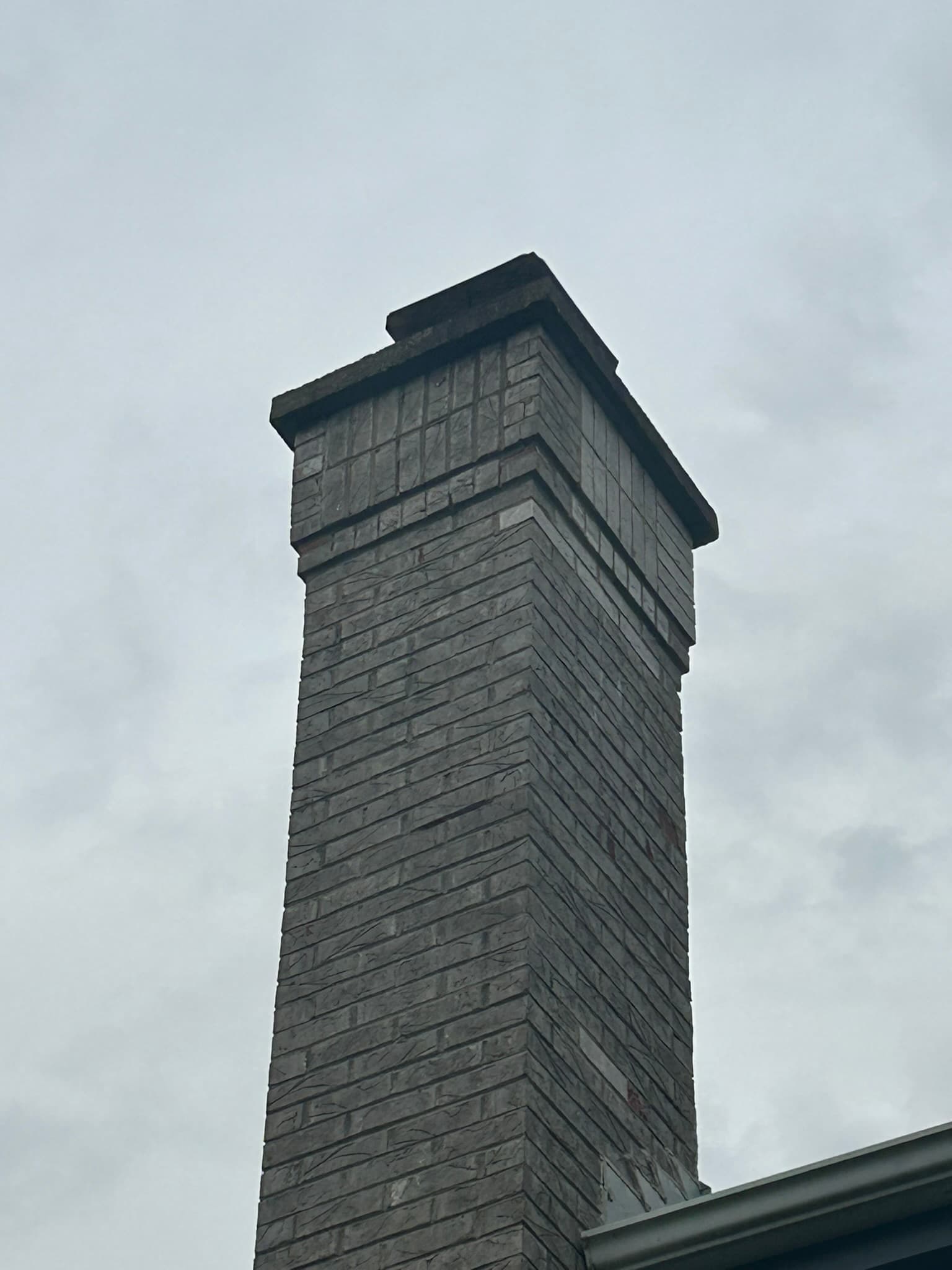
How to Clean Brick Without Damaging It
Brick can be cleaned safely — but only with the gentlest method that actually works: low-pressure water, soft brushing, and masonry-specific chemical cleaners selected for the particular stain. Sandblasting, high-pressure washing, wire brushing and film-forming coatings permanently destroy the fired face of the brick and set off years of accelerated deterioration. Emerald Masonry LLC cleans, repairs and restores masonry across Chicago and the Chicagoland suburbs — family-owned, licensed and insured, 40+ years of experience, free on-site estimates. Call (708) 288-1696.
There is a principle behind everything in this guide, and it is worth stating before anything else.
The One Thing to Understand About Brick
A brick is hardest at its surface. During firing, the outer skin of the unit vitrifies — it becomes denser, harder and far less absorbent than the body of the brick underneath. That fired face is the brick's weather protection. It is the reason a well-made brick sheds a century of rain.
That skin is thin, and it does not grow back.
Every destructive brick-cleaning method does the same fundamental thing: it removes that skin and exposes the soft, porous interior. The wall looks clean and bright the day the work is done. Then it starts absorbing several times more water than it did before, and in a climate that delivers dozens of freeze-thaw cycles per winter, saturated brick spalls — the faces flake, shell and pop off.
This is why professional masonry cleaning follows one rule: use the gentlest method that achieves an acceptable result. Not the fastest. Not the most dramatic. The gentlest.
Diagnose the Stain Before You Touch It
Most "dirty" brick is communicating something about water. Identify what you are looking at first — the right treatment and, more importantly, the right underlying repair depend entirely on it.
| What you see | What it usually is | What it means | Treatment approach | |---|---|---|---| | Green or greenish-black film | Algae, moss, lichen | The wall stays wet — shade, splash, gutters, vegetation | Biological cleaner + soft brush + fix the moisture source | | Chalky white bloom | Efflorescence (mineral salts) | Water is actively moving through the masonry | Dry brush or masonry cleaner; find and stop the water path | | Black sooty film | Carbon, soot, urban grime | Combustion or airborne pollution deposits | Masonry degreasing cleaner with dwell time | | Orange / rust streaks | Corroding steel lintel or embedded metal | Steel is rusting and expanding inside the wall | Cleaning is cosmetic — the lintel needs repair | | White crusty deposits low on the wall | Salt from deicers and splash | Road salt is being driven into the masonry | Rinse and neutralize; manage splash and grade | | Dark streaks below sills and ledges | Concentrated water runoff | A sill, coping or flashing has stopped shedding water | Repair the detail above the staining | | Blistering or peeling paint | Trapped moisture behind a film coating | The wall cannot dry outward | Assess before removal; often signals spalling underneath |
Notice the pattern: in nearly every row, the stain is a symptom and the water is the problem. Cleaning a wall without addressing the moisture source buys you a season or two.
Methods That Are Safe on Brick
Low-pressure water rinsing. Modest pressure, a wide fan tip, generous standoff distance, and the wall pre-wetted so it does not drink in cleaning chemicals. Water alone, applied patiently, removes a surprising amount of surface soil.
Soft or medium natural-bristle brushing. Slower than a machine and far kinder to the brick. This is the workhorse of safe masonry cleaning.
Masonry-specific chemical cleaners, chosen by stain type. There is no universal brick cleaner. Biological growth wants a biocidal cleaner; carbon and grease want a degreaser; efflorescence and mineral deposits want a mild acidic masonry cleaner used carefully. Every one of them requires pre-wetting the wall, controlled dwell time, and a thorough neutralizing rinse. Left to dry on the masonry, an acidic cleaner will etch brick and burn mortar joints.
Always test a discreet patch first. Different brick from different eras responds differently, and a small test area in an inconspicuous spot answers the question before the whole facade does.
Diluted bleach solutions are widely used on algae and moss, applied to a pre-wetted wall with a dwell period and a full rinse. Protect plantings below, and never mix bleach with acidic cleaners.
Methods That Damage Brick — Avoid Them
Sandblasting and abrasive blasting. This is the worst thing you can do to a brick building. It strips the fired face outright, hollows the mortar joints, erases the crisp arrises of the brick, and converts a durable wall into an absorbent one. On historic masonry it is irreversible destruction of original material. Older Chicago brick — softer, often handmade or locally produced — is especially vulnerable.
High-pressure washing. The same damage delivered by water instead of grit. High pressure blasts mortar out of the joints, etches the brick face, and forces water deep into the wall assembly, where it shows up later as interior damage and efflorescence.
Wire brushes and aggressive grinding. Fast, satisfying, and destructive to both brick face and joint edges.
Muriatic acid used casually. Strong acid on a dry wall burns mortar joints, discolors brick and can drive iron staining permanently into the masonry. Acidic cleaning has a place in professional work; undiluted hardware-store acid on a Saturday afternoon does not.
Paint and film-forming "waterproof" coatings. Applied to make a wall look clean and stay clean, they seal water in. Chicagoland brick needs to dry outward. A wall that cannot dry spalls its faces from behind, and painted brick is one of the most expensive conditions to reverse — often the paint cannot be removed without damaging the brick underneath.
The Chicagoland Context
Regional conditions determine which stains you get and how fast they escalate.
North elevations grow things. Shaded walls with little sun exposure and slow drying are where algae, moss and lichen establish. It is common to find one elevation of a Chicago bungalow green and the opposite elevation clean — the difference is drying time, not dirt.
Freeze-thaw punishes anything that increases absorption. This is what makes aggressive cleaning so much more dangerous here than in a mild climate. A wall that has lost its fired face in Chicago will show spalling within a few winters.
Road salt and deicers are driven into the lowest courses by splash all winter, producing crusty white deposits and contributing to surface loss at grade.
Urban soot and carbon on city buildings, chimneys and fireplaces produce the dark films that homeowners most often want removed — and on chimneys, staining frequently accompanies actual masonry failure.
The housing stock is old and soft. Chicago's brick bungalows, two-flats, worker cottages and greystones were largely built between 1890 and 1940 using soft brick, lime mortar, and enormous quantities of porous Chicago common brick. That masonry does not tolerate aggressive cleaning at all.
A Safe Cleaning Sequence
- Assess the wall first. Identify the stain, the moisture source and the condition of the joints.
- Repoint failing joints before cleaning. Washing a wall with open joints drives water into the wall assembly. Repointing first, cleaning second, is the correct order.
- Repair the water source. Gutter, downspout, sill, coping, flashing, grade, vegetation — whichever applies.
- Protect the surroundings. Plantings, windows, adjacent materials and walkways.
- Pre-wet the masonry thoroughly so it will not absorb cleaning chemicals into its depth.
- Test a small, inconspicuous area with the intended cleaner and method.
- Apply the cleaner, respect the dwell time, agitate softly with an appropriate brush.
- Rinse completely at low pressure, neutralizing where the product requires it.
- Let the wall dry fully and reassess. Repeating a gentle process twice beats escalating to an aggressive one once.
- Consider breathable protection only if warranted, and only vapor-permeable products.
Special Cases
Historic and landmark masonry. Soft handmade brick, lime mortar and carved limestone require the most conservative approach available, and cleaning on designated properties can be subject to review. Aggressive cleaning on a historic facade destroys irreplaceable material. See historic masonry restoration.
Limestone, greystone and cast stone. Porous stone is even less tolerant of pressure and acid than brick, and improper cleaning etches carved detail permanently. Limestone and sill repair often accompanies stone cleaning.
Painted brick. Removal is a specialty operation using chemical strippers and poultices, never blasting. Sometimes the honest recommendation is to leave the paint and maintain it, particularly if the brick beneath has already been damaged.
Commercial facades. Storefronts, mixed-use buildings and institutional properties add scale, access and public-safety considerations, and cleaning is usually staged with facade repair. See commercial masonry restoration.
Chimneys. Staining on a chimney is very often a repair signal rather than a cleaning job — white bloom and dark streaking on a stack usually mean water is moving through it. See chimney repair.
DIY or Hire a Professional?
There is a reasonable DIY zone here, and there is a zone where the downside is permanent.
Reasonable to do yourself: light algae or moss on sound, modern, ground-floor brick with intact mortar joints. A garden hose, a masonry-safe cleaner or a properly diluted bleach solution, a soft natural-bristle brush, patience, and a thorough rinse will handle it. Test a small area first, protect the plantings, and resist the urge to reach for the pressure washer when it goes slowly.
Worth hiring out: historic or soft brick of any kind, including Chicago common brick; painted brick; any wall with failing or receding mortar joints; heavy staining that a gentle method will not touch; chimneys and anything else requiring ladders or staging; commercial facades; and any stain that turns out to be a symptom — rust from a lintel, streaking below a failed sill, efflorescence from an active leak. In every one of those cases the cleaning is the smaller half of the job.
The asymmetry is what should drive the decision. A DIY cleaning that underperforms costs you a Saturday. A DIY cleaning done with the wrong pressure or the wrong chemical costs you the fired face of your brick, and there is no undoing that.
What Drives the Cost of Professional Masonry Cleaning
We assess in person rather than quoting by the square foot, because the same wall area can be a light rinse or a multi-stage restoration. The real drivers are:
- Stain type and severity. Light biological growth is a single-pass job; heavy carbon, layered stains or paint removal is a different scope entirely.
- Masonry type and age. Soft historic brick and porous limestone require slower, gentler, more careful work than modern face brick.
- Surface area and elevation count. One shaded north wall versus the whole building envelope.
- Height and access. Ground-level work versus staging, lifts or roof access on a chimney or a three-flat.
- Condition of the joints. If repointing is needed first, cleaning becomes the finishing stage of a larger project rather than a standalone service.
- Protection requirements. Landscaping, windows, adjacent materials, walkways and neighboring property all need protecting, particularly on city lots.
- Chemical selection and rinse handling. Some cleaners require neutralizing rinses and controlled runoff management.
Emerald Masonry gives free on-site assessments across Chicagoland, and part of that assessment is telling you honestly when a wall does not need professional cleaning at all.
Keeping Brick Clean the Easy Way
The most effective brick cleaning is the cleaning you never have to do, and it comes down to keeping walls dry:
- Keep gutters clear and downspouts extended away from the building. A single overflowing gutter produces years of streaking and algae on the wall below it.
- Slope grade away from the foundation and control splash-back at the base of walls.
- Trim vegetation back off the masonry so walls get air and sun; keep ivy off walls with questionable joints.
- Repoint failing joints promptly — sound joints keep water out, and water is what feeds nearly every stain in the table above.
- Repair sills, crowns, coping and flashing as soon as they stop shedding water.
- Inspect annually, and after major storms.
Related Services
Cleaning is usually one part of a larger picture: tuckpointing and repointing, brick repair, masonry sealing, chimney repair, limestone and sill repair and historic masonry restoration.
The Bottom Line
Dirty brick is rarely just dirty. Green means the wall stays wet. White means water is moving through it. Orange means steel is rusting inside it. Black may be soot, or may be the same water story in a different color. The stain is worth reading before it is worth removing.
And when you do remove it, remember the fired face. Gentle methods take longer and look less dramatic on day one, but they leave you with a wall that still has its weather protection intact — which is the entire point.
Emerald Masonry LLC is a family-owned, licensed and insured masonry contractor serving Chicago and the Chicagoland suburbs with 40+ years of experience in tuckpointing, chimney repair, brick repair and replacement, lintel and parapet repair, foundation and limestone/sill repair, caulking, sealing, and commercial, residential and historic masonry restoration.
Free on-site estimates. Call (708) 288-1696 or request an estimate.
Frequently Asked Questions
Can you pressure wash brick?
Low pressure, yes — high pressure, no. Modest pressure with a wide fan tip and adequate standoff distance is used routinely in professional masonry cleaning, but high-pressure washing strips the hard fired face off the brick and blasts mortar out of the joints. Once that fired face is gone, the brick absorbs far more water and starts spalling in Chicagoland winters.
How do I get green algae or moss off my brick wall?
Wet the wall, apply a masonry-safe biological cleaner or a properly diluted bleach solution, let it dwell, agitate with a soft or medium natural-bristle brush, and rinse thoroughly with low pressure. The more important step is fixing why that wall stays wet — usually shade, a leaking gutter, splash-back, or vegetation held tight against the masonry — or the growth simply returns.
What is the white powder on my brick and how do I remove it?
That is efflorescence — mineral salts carried out of the masonry by water and deposited on the surface as the water evaporates. Light efflorescence often brushes off dry, and heavier deposits respond to masonry-specific cleaners. But efflorescence is a symptom: it means water is actively moving through the wall, so the real fix is finding and stopping the water path.
Does sandblasting ruin brick?
Yes, permanently. Brick is hardest at its fired outer skin, and abrasive blasting removes exactly that skin, exposing the soft porous body underneath. Sandblasted brick absorbs water dramatically faster and typically begins spalling within a few winters. It is one of the most common irreversible mistakes made on older Chicago masonry.
Should I paint or seal my brick after cleaning it?
Paint and film-forming sealers trap moisture inside masonry that needs to dry outward, and the trapped water then spalls the brick face from behind. If protection is warranted, use a breathable, vapor-permeable sealer and only after repointing failed joints. Sealing a wall with open joints just seals water in.
Does ivy damage brick walls?
Ivy holds moisture against the wall, its rootlets penetrate open mortar joints and widen them, and removing established ivy usually pulls mortar and brick face with it. On sound, well-pointed masonry the damage is slow; on a wall with deteriorating joints it accelerates failure. Removal should be gradual and followed by repointing.
How do I remove black soot stains from a brick chimney or fireplace?
Soot and carbon staining generally respond to masonry-specific degreasing cleaners with dwell time and soft agitation, not to abrasion. On an exterior chimney, black staining paired with white staining often means water is moving through the stack, which is a repair issue rather than a cleaning one.
What causes orange or rust stains running down my brick?
Most often a corroding steel lintel above a window or door, bleeding rust down the face of the wall. It can also come from iron content in the masonry or from nearby metal fixtures. Rust staining from a lintel is a warning sign — corroding steel expands and lifts the brick above, so the staining matters far more than the appearance.
Is professional brick cleaning worth it or should I DIY?
Light biological growth on sound modern brick is a reasonable DIY job with a soft brush and a masonry-safe cleaner. Historic brick, painted brick, heavy staining, anything requiring ladders, and any wall with failing joints should be handled professionally, because the wrong method or pressure causes permanent damage. Emerald Masonry assesses masonry condition free of charge across Chicagoland.
Should I clean brick before or after tuckpointing?
After. Repointing produces mortar smears and dust, and cleaning is the finishing step that makes the repair blend in. Cleaning first also risks driving water into open joints. If joints are failing, repoint first and clean as part of the same project.