
Brick Repair & Replacement · Chicagoland, IL
Lintel Replacement: What Commercial Building Owners Need to Know
Steel lintels above windows and doors are one of the most overlooked structural elements in commercial brick buildings — until they fail. By the time a lintel announces itself through cracked brick or a sagging arch, the repair is already more complex than it needed to be. Here's what property owners and managers should know before the problem becomes urgent.
2026-04-12
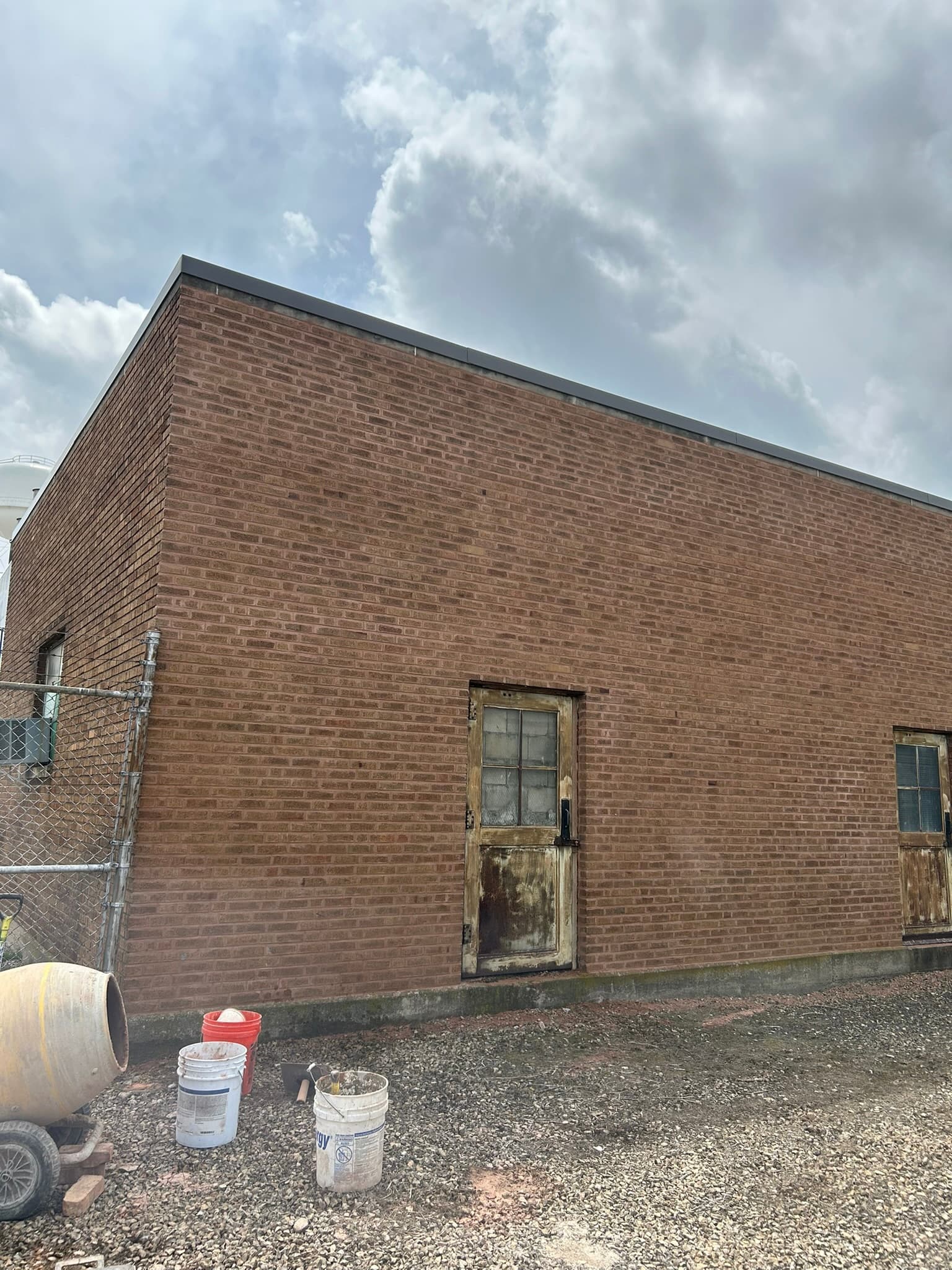
Every window and door opening in a commercial brick building has a lintel — the structural element that carries the weight of the masonry above the opening. In most buildings constructed through the 1980s, those lintels are steel. And steel, in the presence of moisture and air, corrodes.
Lintel failure is one of the more predictable structural problems in older commercial masonry, and one of the most commonly deferred. Property managers see the symptom — stepped cracks above a window, a slight bulge in the brick courses above a door opening — and assume it's a tuckpointing problem. Sometimes it is. But often, the cracks are telling you the lintel is expanding from rust, and the brick courses above are responding to that movement.
Ignoring a corroding lintel doesn't make the problem pause; it makes it worse. As rust continues to form, the expanding steel exerts increasing pressure on the surrounding masonry, widening cracks, displacing brick, and eventually creating a situation that requires shoring, temporary structural support, and a much larger scope of repair than a straightforward lintel replacement would have been.
What a Lintel Does and How It Fails
A lintel transfers the load of the masonry above an opening to the wall sections on either side. In a cavity wall building, there's typically an inner lintel (supporting the structural backup wall) and an outer lintel (supporting the face brick). They may be the same piece of steel angle spanning both wythes, or separate lintels at different heights.
The failure mechanism for steel lintels: Moisture enters through failing mortar joints, around window frames, or through deteriorated caulk at the lintel-brick interface. The steel corrodes. Iron oxide (rust) has approximately three times the volume of the original steel it forms from. That volume increase exerts outward pressure on the brick above and around the lintel — a condition called lintel spalling or rust jacking. The expanding rust cracks the brick, opens the mortar joints above the lintel, and creates a path for more water, accelerating the cycle.
Uncoated steel lintels installed in the 1960s through 1980s are the most common source of this problem in Chicagoland commercial buildings. They've had 40 to 60 years of potential moisture exposure, and many were installed without adequate caulk or flashing protection at the joint between the steel and the masonry.
How to Identify a Failing Lintel
Walk the perimeter of your building and look above every window and door opening:
Stepped cracks in the mortar joints. Cracks that follow a stair-step pattern through the mortar joints above an opening — particularly if concentrated within a few courses of the lintel — are the most common sign of lintel expansion. Compare against cracks in the body of the wall: diagonal cracks away from openings are more likely settlement-related.
Horizontal crack at the top of the lintel. A horizontal crack running along the top flange of the steel lintel, where it meets the brick above, is direct evidence of rust jacking.
Brick displacement or rotation. In advanced cases, brick courses above the lintel visibly bow outward or the first course above the lintel begins to tilt forward.
Rust staining. Brown or orange staining on the brick face below or beside a lintel indicates rust from the steel is migrating through the mortar or brick.
Spalled brick at lintel ends. The ends of the lintel bear on the masonry at each side of the opening. Rust at the bearing points causes the same expansion and cracking, often appearing as spalling or displacement in those localized areas.
What Lintel Replacement Involves
Lintel replacement is a structural repair that requires more care than standard tuckpointing or brick replacement. The basic sequence:
Assessment. Before any work begins, we assess the extent of corrosion, the condition of the surrounding masonry, and whether temporary shoring will be needed. For large openings — storefronts wider than 8 feet, for example — the masonry above may require temporary support while the lintel is out.
Temporary shoring (when required). Acrow props or timber shoring is installed to support the masonry above the opening while the lintel is being replaced. This step is non-optional for large openings or when the surrounding masonry is already significantly displaced.
Brick removal. Brick courses above the lintel are carefully removed to expose the full length of the steel. Damaged brick is set aside; salvageable brick is kept for reinstallation.
Lintel removal and replacement. The corroded steel is removed and replaced with new painted or galvanized steel angle of the appropriate size. New lintels must be the correct size for the span — undersized replacements are a common error on lower-budget jobs.
Flashing and caulk installation. Proper through-wall flashing behind the lintel, weep holes at the lintel bearing point, and properly specified caulk at the lintel-to-masonry joint are essential to prevent the same failure from recurring. Skipping this step is why some lintel replacements fail within 10 to 15 years.
Brick reinstallation and repointing. Sound salvaged brick is reinstalled; damaged brick is replaced with matching material. All disturbed mortar joints are repointed. See our brick repair services for more on matching and replacement.
How Many Lintels Does a Building Typically Have?
A two-story commercial strip building with 12 window openings and 4 door openings has at least 16 lintels per elevation. On a building with four elevations, that's potentially 60+ lintels. Not all of them will be failing at the same time — failure rate depends on exposure (south and west elevations get more sun and drying; north and east tend to stay wetter) and original installation details.
During a masonry assessment, we can survey all lintels and triage them by urgency: replace now, monitor and address in the next cycle, or no current action needed. This approach lets property managers plan capital expenditures rather than reacting to each failure individually.
The Cost Factor: Why Lintel Work Costs More Than Tuckpointing
Lintel replacement costs more per opening than standard tuckpointing for several reasons:
- Temporary shoring equipment rental and setup on large openings
- More labor-intensive brick removal and reinstallation
- Structural material cost (new steel lintels, flashing, weep hole accessories)
- Brick matching and replacement cost for damaged units
A single lintel replacement on a standard 6-foot commercial window opening typically involves 2 to 3 days of labor plus materials. The cost scales with opening width, the amount of brick that needs to be replaced, and whether shoring is required. We provide itemized estimates after a site assessment — we don't quote lintel work sight-unseen.
Frequently Asked Questions
Can I just tuckpoint over the cracks above my window and monitor it?
You can, and it's a reasonable short-term approach if the lintel is in early-stage corrosion and the cracks are hairline. But tuckpointing over a corroding lintel doesn't stop the expansion — it just hides it temporarily. The crack will reopen, typically wider, because the underlying force hasn't been addressed. At some point the lintel needs to come out; the question is whether you do it before or after the surrounding masonry has been significantly displaced.
What kind of lintel do you install as a replacement?
We typically use painted or galvanized steel angle of the same nominal size as the original. Stainless steel is an option for high-exposure applications where the owner wants maximum longevity. The size (leg dimensions and thickness) is specified based on the opening span and the load conditions — there's no one-size-fits-all lintel.
How do I know if my building has been through a lintel replacement already?
Look for color variation in the brick above window openings. A section where the brick or mortar doesn't match the surrounding wall is a common sign of prior repair. You may also find records of prior work in maintenance files or from the previous owner.
Service Coverage
Emerald Masonry LLC performs lintel assessment and replacement throughout the Chicago southwest suburbs — Cook, Will, DuPage, and Kane counties. Contact us to schedule an assessment, or call (708) 288-1696.