
Tuckpointing & Repointing · Chicagoland, IL
Mortar Color Matching in Tuckpointing — Why Your Repair Looks Wrong, and How It's Supposed to Be Done
Few things make a tuckpointing job look worse than mortar that doesn't match — a bright gray patch on a warm old brick wall reads as a scar, not a repair. Mortar color matching is a real craft, and here's what actually goes into getting it right.
2026-06-03
The Repair That Looks Worse Than the Damage
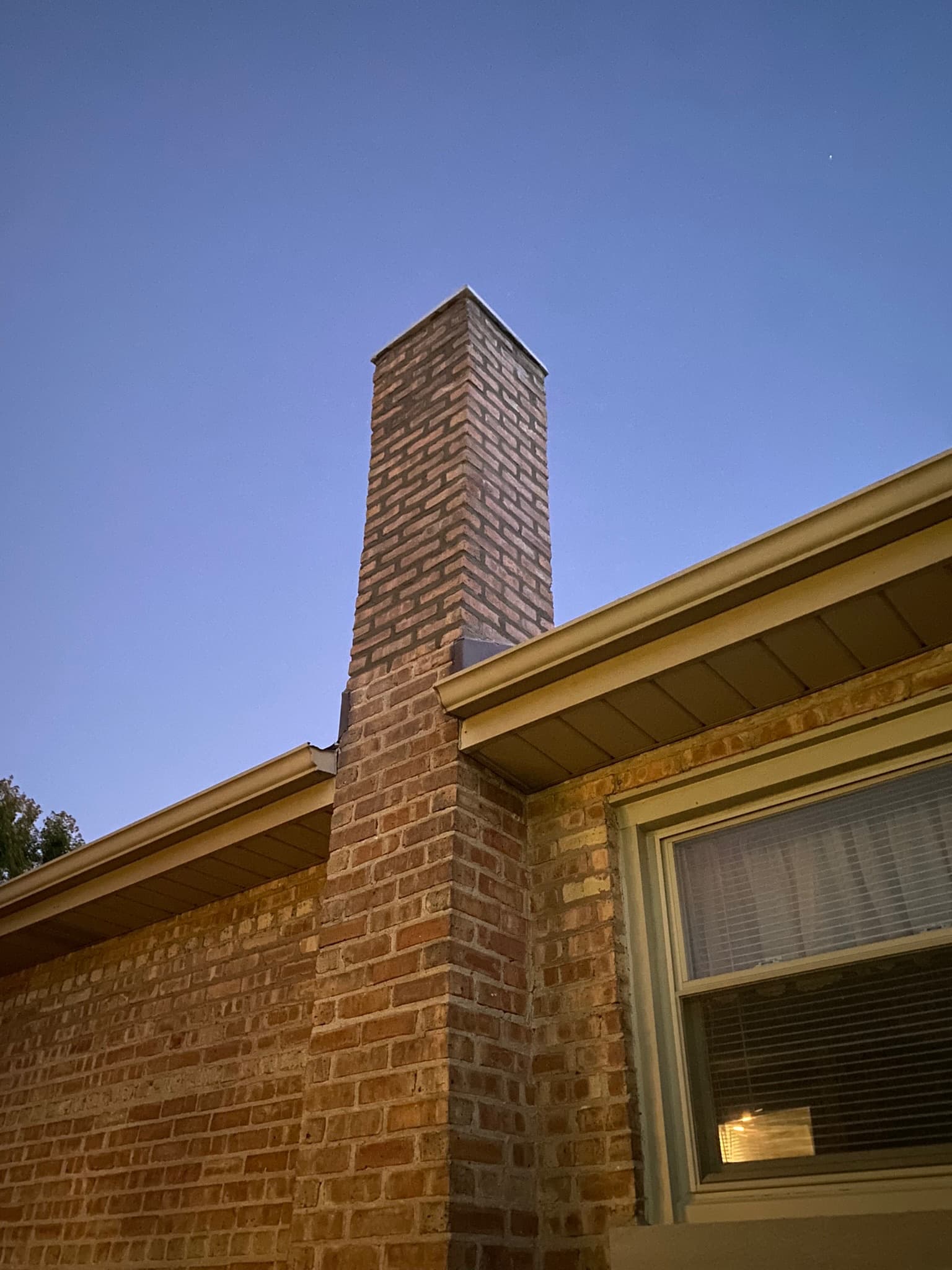
We get called out to a lot of buildings where someone already had tuckpointing done — and the complaint isn't that the work failed structurally. It's that it looks terrible. A band of bright, modern gray mortar runs across a warm, century-old brick wall like a scar. The joints that were repointed jump out at you from across the street. The owner paid for a repair and got a permanent eyesore.
This is one of the most common and most avoidable problems in masonry work, and it comes down to mortar color matching — a part of the craft that price-driven crews skip entirely and that good masons treat as central to the job. Whether your tuckpointing disappears into the wall or announces itself forever depends almost entirely on how seriously the contractor takes this step.
Why Mortar Color Is So Hard to Match
You'd think matching a gray joint would be simple. It isn't, for several reasons.
Mortar isn't just "gray"
Historic and existing mortar carries color from several sources: the cement or lime binder, the sand (which varies enormously by source — from near-white to buff to reddish), and sometimes added pigments. The sand is often the biggest driver of color, and the sand used in a 1920s building is not the sand at your local supply yard today. Matching the color means matching the whole recipe's visual result, not just buying "gray mortar."
Old mortar has aged
The mortar on an existing wall has been weathering for decades. It's accumulated dirt, dulled, lightened or darkened from exposure, and developed a patina. Fresh mortar mixed to match the original color of that mortar will look wrong, because it has to match the aged appearance, not the day-one color. A good mason matches what's on the wall now.
Wet mortar and cured mortar are different colors
Mortar changes color as it cures and dries. The mix that looks like a perfect match while it's wet in the joint can dry two shades off. Experienced masons know how a given mix will shift as it cures and account for it — which is why color matching is done with test joints, not guesswork.
Joint profile changes the perceived color
How the joint is tooled — concave, weathered, raked, grapevine — changes how light hits it and how the color reads. A joint struck to a different profile than the original will look like a different color even if the mortar is an exact match, because the shadow line is different.
How Color Matching Is Actually Done
A contractor who takes this seriously goes through a real process:
Start from the existing mortar
The match is to the mortar already on the wall, in its current weathered state — not to a swatch, not to "standard gray." On older buildings, this also overlaps with matching mortar strength (softer lime-rich mortar for softer old brick), so the right mix is being chosen for both color and behavior at once.
Identify the sand
Because sand drives so much of the color, matching it is often the key move. That can mean sourcing a sand that matches the original's color and grain, rather than using whatever's standard. On a fussy historic match, this is where most of the effort goes.
Mix test joints and let them cure
The only honest way to confirm a match is to mix candidate batches, tool sample joints in an inconspicuous spot on the actual wall, and let them dry and cure before judging. Comparing wet mortar to dry existing mortar is how mismatches happen. Test joints take the guesswork out.
Match the joint profile
The new joints are tooled to the same profile as the original so the shadow line — and therefore the perceived color and texture — matches. Profile and color are matched together because they affect each other.
Adjust with pigment only as needed
Where sand and binder alone don't get there, mortar pigments can fine-tune the color. Used carefully, they close the gap. Used heavily or carelessly, they look artificial — so they're a finishing adjustment, not the foundation of the match.
When a Perfect Match Isn't Possible — and That's Okay
Sometimes the original sand is truly unavailable, or the existing mortar is so weathered and variable that no single mix matches every joint. A good contractor will be honest about this up front. The goal on a visible elevation is a match close enough that the repair doesn't draw the eye — not a laboratory-perfect duplicate, which on hundred-year-old mortar is often impossible.
There's also a practical hierarchy. On a highly visible front elevation, color matching deserves real effort. On a rear wall facing an alley, or on a commercial building where the masonry is purely functional, the structural correctness of the mortar matters far more than a perfect color. A reasonable contractor scales the matching effort to where it actually matters — and tells you that's what they're doing.
Questions to Ask Before You Hire
If the appearance of the finished wall matters to you, ask the contractor directly:
- "How will you match the mortar color?" A good answer mentions the existing mortar, the sand, and test joints. A bad answer is "we'll use a gray that's close."
- "Will you do a test joint and let it cure before doing the whole wall?" This is the single best predictor of a good match.
- "Will you match the joint profile?" Color and profile go together.
- "Can I see the test joint before you proceed?" A confident mason will want you to.
A contractor who treats these questions as reasonable is one who takes the work seriously. A contractor who waves them off is telling you what your wall is going to look like.
The Bottom Line
Mortar color matching is the difference between tuckpointing that disappears into your wall and tuckpointing that scars it for the next 30 years. It's not magic — it's sand selection, test joints, profile matching, and the experience to know how a mix will cure. But it's real work, and it's the first thing the lowest bidder cuts.
If you're planning tuckpointing on a building where appearance matters — a visible home elevation, a historic facade, a storefront — contact Emerald Masonry and ask us about color matching directly. We'll talk through how we'll approach the match for your specific brick and mortar, and we'll show you a test joint before we commit to the whole wall. Call (708) 288-1696 or email emeraldmasonryil@gmail.com.