
Tuckpointing & Repointing · Chicagoland, IL
Painted Brick: Why Paint Traps Moisture — and How Masonry Repair Differs on Painted Walls
Painting brick feels like a fresh start, but the wrong coating seals water inside the wall — and Chicagoland's freeze-thaw winters do the rest. Here's why painted brick spalls faster, and how a masonry pro repairs and repoints it the right way.
2026-06-29
Quick Answer
Painted brick traps moisture because most paints seal the brick's pores so absorbed water can't escape; when that trapped water freezes in Chicagoland winters it spalls the brick face. Emerald Masonry LLC repairs, repoints, and replaces painted brick across Chicagoland with breathable methods — free on-site estimates at (708) 288-1696.
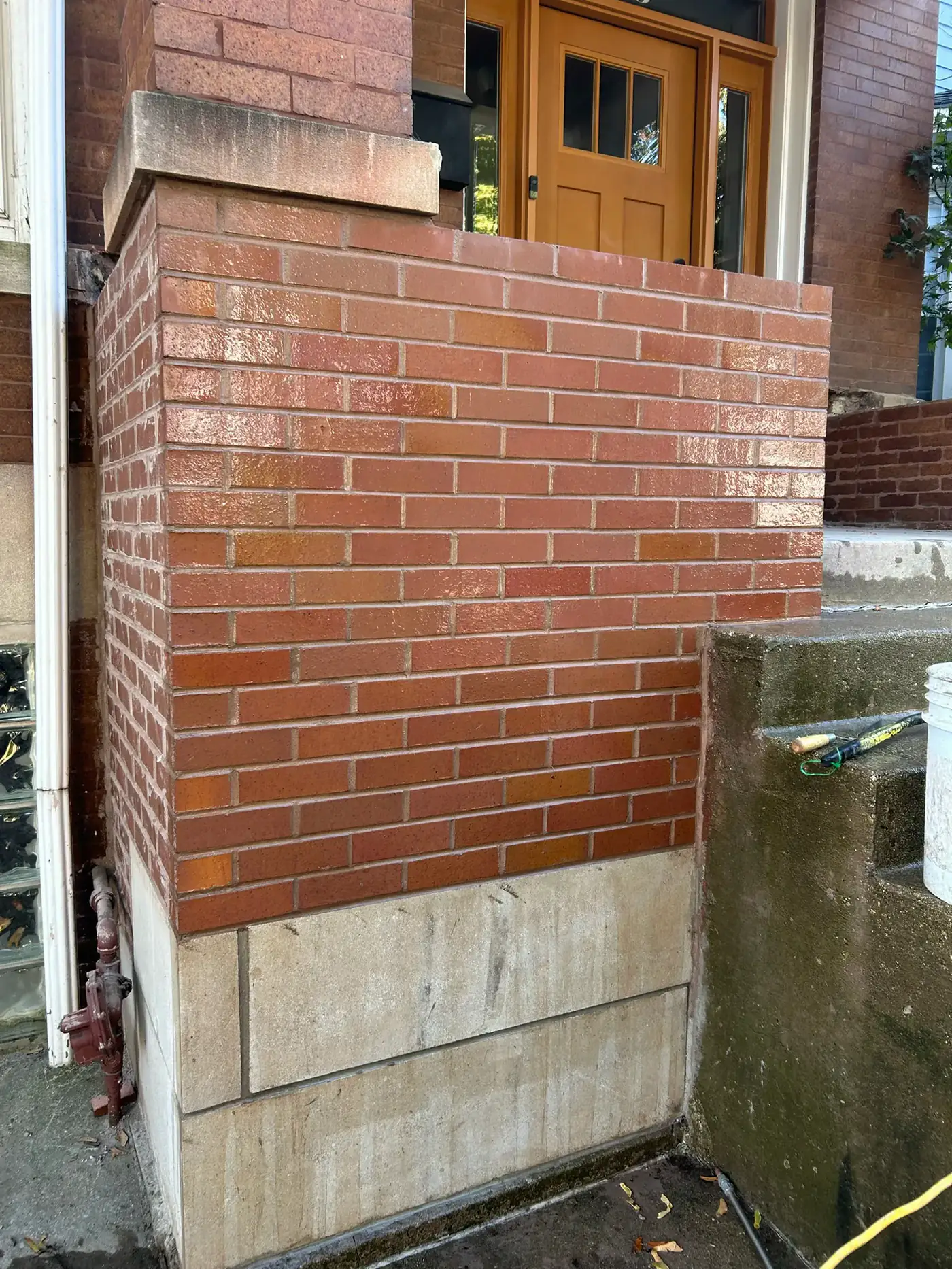
A fresh coat of paint can make a tired brick house look brand new — and quietly start destroying the very wall it's covering. The reason is simple physics: brick is designed to breathe, and most paints don't let it. When a coating seals the brick's pores, the water the wall naturally absorbs has nowhere to go. It sits inside the masonry, freezes when winter hits, and pops the face of the brick off in flakes. Across Chicagoland, some of the fastest-spalling walls we see aren't the oldest ones — they're the painted ones.
Why brick needs to breathe
Brick and mortar are porous by nature. They take on moisture from rain, snow, and humidity, and then release it as water vapor when conditions dry out. That "breathing" cycle — wet, then dry — is exactly how a healthy masonry wall manages water. The material is built to get damp and recover.
The key property here is vapor permeability: a good masonry surface lets water vapor pass through it. Lime-based mortars and natural brick are highly permeable for this reason. As long as the wall can dry from both sides, moisture never accumulates in any one place long enough to cause real harm.
Trouble starts when you put a barrier in the way of that drying.
How ordinary paint and elastomeric coatings trap water
Most exterior paints — and especially thick elastomeric or "rubberized" coatings sold as waterproofing — form a continuous film over the brick. That film does block some water from getting in. But it also blocks the far larger amount of water that's already inside the wall from getting out.
Moisture finds its way in regardless: through hairline cracks, around windows, up from the foundation, and through mortar joints that the paint didn't perfectly seal. Once it's behind the coating, it's stuck. The paint that was supposed to protect the brick has turned the wall into a sponge with a lid on it. Over time you'll see the warning signs — bubbling and peeling paint, white chalky efflorescence bleeding through, and damp interior walls — all symptoms of water that can't escape.
Why Illinois freeze-thaw then spalls painted brick faster
This is where Chicagoland's climate makes a bad situation worse. Our winters swing repeatedly above and below freezing — water in the wall thaws on a sunny afternoon and refreezes overnight, sometimes dozens of times a season. Each time that trapped water freezes, it expands by roughly nine percent and pushes outward against the face of the brick.
On a breathable wall, the brick would have dried out before the freeze. On a painted, sealed wall, the water is still there — and it has only one weak point to escape through: the face of the brick itself. The result is spalling, where the outer layer of the brick flakes, crumbles, or pops off entirely, leaving a soft, pitted surface that drinks in even more water. We see this constantly on painted-brick homes in neighborhoods like Oak Park and Berwyn, where beautiful century-old masonry was coated decades ago and is now shedding its face.
If you're noticing flaking brick, blistering paint, or crumbling mortar joints on your painted home, that's the moment to have it looked at — before the damage moves from the surface into the structure. A free on-site estimate will tell you exactly what's happening behind the paint.
The special challenges of repairing painted brick
Repairing painted brick is genuinely different from working on bare masonry, and it's where experience matters most.
Matching the repair to the paint. When we replace spalled brick or repoint failing mortar joints on a painted wall, the fresh material won't match the painted surface around it. A careful contractor blends the repaired area back into the existing color and finish so the fix disappears — rather than leaving an obvious patch.
Removal versus over-coating. Sometimes the right move is to strip the old coating; sometimes it's to maintain it. Stripping back to bare brick lets the wall breathe again, but it has to be done gently — aggressive sandblasting or harsh chemicals can erode the hard outer "fire skin" of the brick and leave it more vulnerable than the paint did. The method has to match the brick.
Breathable mineral coatings. If a homeowner still wants a painted look, the answer isn't ordinary house paint. Vapor-permeable mineral coatings (such as silicate or limewash-style products) bond to the masonry and let water vapor pass through, so the wall can dry while still being colored. For walls that need water resistance without sealing, a breathable masonry sealing treatment can shed liquid water while still letting vapor out — the opposite of what a film-forming paint does.
Strip it or maintain it?
There's no single right answer, and any contractor who quotes you one without seeing the wall is guessing.
If the existing coating is failing — peeling, blistering, with spalling brick underneath — the healthiest long-term path is usually to remove it, repair the damaged brick and mortar, and either leave the brick natural or finish it with a breathable system. If the paint is still sound and well-adhered, you may be able to maintain it with vapor-permeable products and targeted repairs, buying years before a full strip is needed.
Either way, the masonry repairs come first. Painting over crumbling brick or open mortar joints just hides the problem and feeds it more water.
How a pro approaches a painted wall
When Emerald Masonry LLC evaluates a painted-brick home — whether it's a bungalow in Beverly or a two-flat in Berwyn — we start by reading the wall: where the spalling is, where the coating is failing, where water is getting in, and how the brick is drying (or not). From there we repoint the joints that have opened, replace brick that's spalled past repair, and recommend a coating strategy that lets the wall breathe instead of suffocating it. The goal is always the same — get water moving back out of the masonry so the next Illinois winter can't keep prying it apart.
As a non-union, family-owned company with 40-plus years working on Chicagoland masonry, we've repaired a lot of well-meaning paint jobs. We'd rather help you do it right the first time.
If your painted brick is flaking, peeling, or just doesn't feel right heading into another winter, call Emerald Masonry LLC at (708) 288-1696 for a free, no-pressure on-site estimate. We're licensed, bonded, and insured, based in Palos Heights, and we serve homeowners across Chicagoland — and we'll tell you honestly whether your wall needs stripping, repointing, sealing, or just a careful repair. Request your free estimate here.
Frequently Asked Questions
Why does painted brick trap moisture?
Brick is naturally porous and needs to release the water it absorbs as vapor. Most ordinary paints and elastomeric coatings form a film that blocks that vapor from escaping, so moisture stays trapped inside the brick. In freezing weather that trapped water expands and breaks the brick face apart.
Does painting brick make it spall faster?
Often, yes. When a non-breathable coating holds water inside the brick, Chicagoland's freeze-thaw cycles turn that trapped moisture into ice that pushes the brick face off in flakes. Painted brick frequently spalls faster than bare brick that can dry out between storms.
Can you tuckpoint and repair painted brick without stripping the paint?
Yes. A masonry contractor can repoint failing mortar joints and replace spalled brick on a painted wall, then match the repair area back into the existing paint. Whether you strip the paint entirely or maintain it with a breathable coating depends on the wall's condition and your goals.
Should I strip the paint off my brick or repaint it?
It depends. If the coating is failing and trapping moisture, stripping back to bare brick and switching to a breathable mineral coating (or leaving it natural) is usually healthier for the wall. If the paint is sound, careful maintenance with vapor-permeable products can keep it looking good without sealing in water. An on-site evaluation tells you which path fits your home.