
Brick Repair & Replacement · Chicagoland, IL
Masonry Problems in Post-WWII Brick Bungalows — What to Expect and What It Costs to Fix
The postwar brick bungalow is one of the most common building types in south and southwest Cook County. These homes were built to last, but most are now 60–75 years old and have reached a predictable set of masonry failure points that every owner should understand before scheduling work.
2026-05-11
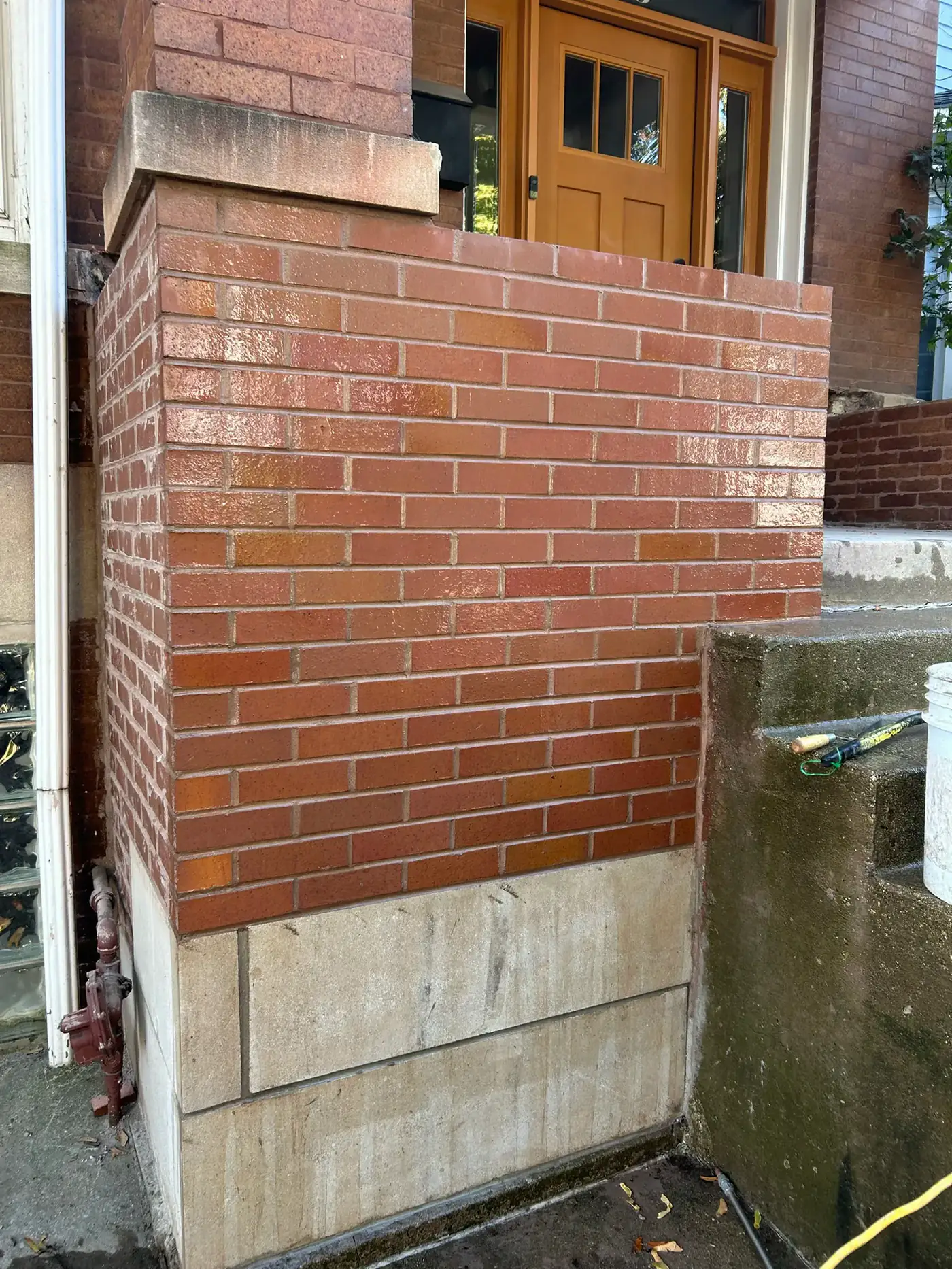
The Postwar Brick Bungalow: Built Well, But on a Clock
The period between 1945 and 1965 produced a specific type of residential brick construction that dominates south and southwest Cook County — the postwar brick bungalow and its close relative, the brick two-flat. Built during a time when brick was affordable, labor was organized, and municipal codes demanded durable construction, these homes used full-thickness solid brick or nominal 4" veneer over a wood or concrete block backing.
They were built to last. Most of them have. But they're now 60 to 75 years old, and a predictable sequence of masonry problems has emerged across the entire housing type — not from construction failures, but from the cumulative effect of decades of Chicago winters on materials that weren't designed to be eternal.
The Five Most Common Masonry Problems in These Homes
1. Mortar Joint Erosion
The original mortar in most postwar bungalows was a lime-Portland blend that performed well for 40–50 years. In homes that haven't had tuckpointing work in the last 20 years, the joints are typically recessed 1/4" to 1/2" from the brick face — past the threshold where water begins channeling into the joint rather than running off it. This is the most universal issue across the housing type, and the one that sets up most of the others.
2. Chimney Deterioration
The chimneys on these homes have taken more than 70 winters. Crown deterioration is nearly universal — original concrete crowns crack within 15–20 years and have been cycling water in for career masons in many cases. Upper chimney joints are often severely eroded. In serious cases, the upper 10–15 courses have gone through enough freeze cycles that they need to come down and be rebuilt rather than repointed.
3. Lintel Rust and Brick Displacement
Steel lintels span every door and window opening in these homes, and most were installed without the galvanizing or rust-inhibiting coatings that became standard later. At 60–70 years, many are rusting through. As steel expands during oxidation, it physically lifts and cracks the brick above the opening. You'll see a characteristic horizontal crack at the first or second course above a window or door. This is a structural issue, not cosmetic — the lintel is transferring its load to the surrounding brick rather than to the wall system.
4. Foundation and Grade-Level Mortar Failure
The lower 12–18 inches of the wall — at and below grade — are chronically exposed to ground moisture, ice melt, and the most aggressive freeze-thaw cycling. This zone typically needs repointing first and most often. It's also where the original brick sometimes shows spalling from decades of frost penetration, especially on north and east elevations.
5. Parapet Failure on Flat-Roof Two-Flats
Two-flat construction in this era typically used a flat or slightly sloped roof with a low parapet. Parapet cap joints on 70-year-old two-flats are almost uniformly in poor condition — often filled with caulk that itself has failed, or simply open after decades without attention. This is frequently the cause of persistent top-floor water infiltration that owners attribute to the roof rather than the masonry.
What Realistic Repair Costs Look Like
Masonry repair on a postwar bungalow or two-flat rarely involves a single isolated issue — the problems above tend to arrive together on a building of this age. Here's what a realistic scope typically involves:
Full-building tuckpointing (bungalow scale): $3,500–$7,000 depending on building perimeter and how severely the joints have deteriorated. Buildings that haven't been touched in 30+ years require more mortar removal and more material.
Chimney tuckpointing and new crown: $1,500–$3,500. If upper courses are significantly damaged and partial rebuild is needed, add $2,000–$4,000.
Lintel replacement (per opening): $800–$1,800 per window or door opening, depending on access conditions and whether the displaced brick above needs to be reset.
Foundation repointing (lower 18"): $1,500–$3,500 depending on perimeter length.
Full two-flat parapet repair and coping: $2,500–$5,000.
Most owners of older bungalows who haven't done maintenance since purchase are looking at a cumulative scope in the $8,000–$18,000 range to bring the building fully current. Breaking the work into phases by priority is a reasonable approach for most budgets.
What to Prioritize First
If the full scope can't be funded at once, the priority order:
1. Visible lintel rust and displacement. The structural risk is real. Displaced brick above an opening doesn't stabilize on its own — it gets worse as the rust continues to expand. This is not deferrable once it's visible.
2. Upper chimney courses and crown. Water infiltrating the flue cavity causes ongoing damage to the flue liner, crown assembly, and eventually the surrounding framing if it reaches the attic. Chimney problems compound faster than wall problems.
3. Full-building tuckpointing. The foundational maintenance action that slows every other deterioration mode. Once joints are repointed correctly, the building is substantially more protected from the problems above.
4. Foundation and grade-level repointing. Important but typically slower-developing than the structural priorities above.
5. Parapet coping joints (two-flats). Critical before winter, but can follow chimney and lintel work in most cases.
Common Mistakes When Hiring for This Work
Accepting surface patching over joint cutting. The most common quality shortcut in residential masonry is applying mortar over old mortar without cutting the joint. It looks like tuckpointing and lasts 3–5 years before failing. Ask specifically how deep joints will be cut and what tool will be used. If the contractor doesn't mention joint cutting at all, that's the answer.
Using modern Portland mortar on 1950s brick. High-strength type S mortar is harder than the brick in most postwar bungalows. When the wall moves — which it does with every temperature swing — the crack propagates through the brick rather than the joint. The correct mortar is softer and more flexible, typically a type N or a lime-rich blend. Ask about mortar specification.
Repointing only the street-facing elevation. North and rear walls on bungalows are almost always in worse condition than the front. A complete assessment covers all four sides.
FAQ
My bungalow was tuckpointed 15 years ago. Do I need it done again already?
Probably not, if the work was done correctly. A properly executed tuckpointing job — with mechanical joint cutting to proper depth and matched mortar — should last 20–30 years. If joints are already failing at 15 years, the previous work was likely surface-patched without cutting the old mortar out. That failure pattern is worth assessing before paying for a second round of work.
How do I know if my lintels are rusting without opening the wall?
Horizontal cracking directly above a window or door opening — at the first or second brick course above the head of the frame — is the diagnostic sign. If you see this on even one opening, it's worth having all lintels assessed. Rust typically affects multiple openings at roughly the same stage of deterioration.
Working with Us on Older Buildings
Emerald Masonry LLC works extensively with owners of postwar brick bungalows and two-flats throughout south and southwest Cook County. We provide written scope breakdowns that prioritize by severity, so you can make phased decisions with real numbers rather than guessing at what's urgent.
Phone: (708) 288-1696 | emeraldmasonryil@gmail.com | Free on-site estimates throughout Chicagoland.