
Brick Repair & Replacement · Chicagoland, IL
How Road Salt and De-Icers Destroy Brick Steps, Stoops, and Foundations in Illinois
The salt that keeps your steps from icing over is quietly eating the brick and mortar underneath it. Here's how de-icing chemicals attack masonry in Illinois, which parts of your home are most at risk, and how to protect — or repair — brick steps, stoops, and foundation walls.
2026-06-18
Quick Answer
Road salt and chloride de-icers damage Illinois brick by driving salt into the masonry, where repeated crystallization and freeze-thaw cycles spall the brick face and erode mortar joints — worst on steps, stoops, and at-grade foundation walls. Emerald Masonry LLC repairs salt-damaged brick and recommends safer de-icers and sealing. Free estimates — call (708) 288-1696.
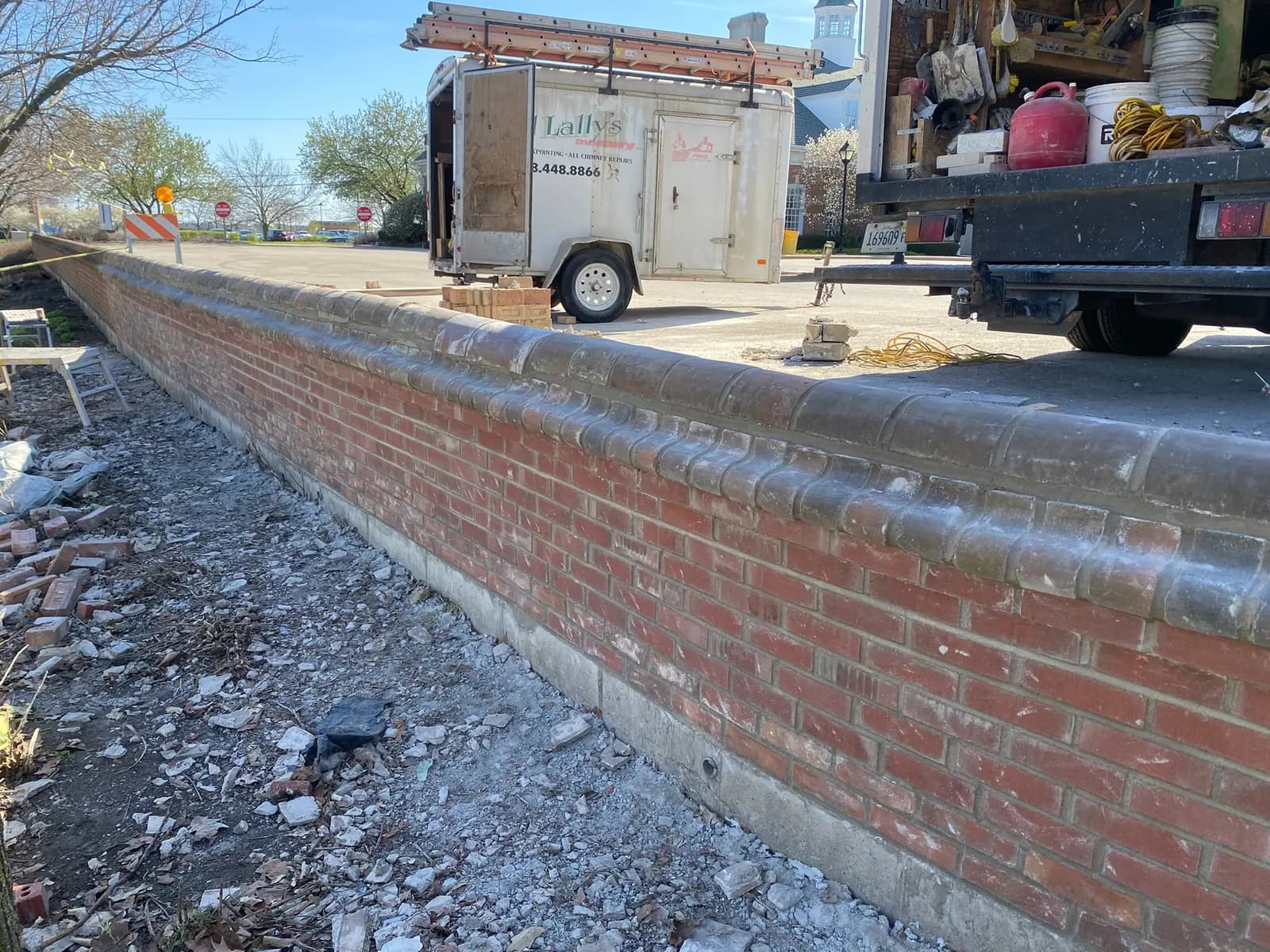
Every Illinois winter, homeowners do the responsible thing and salt their front steps so nobody slips. And every Illinois spring, those same steps show a little more crumbling brick, a little more flaking, a few more open mortar joints. The two are connected. The de-icing salt that keeps your stoop safe is one of the most aggressive things you can put on masonry — and over a few winters, it does real, accelerating damage.
This isn't an argument for letting your steps ice over. It's an explanation of what salt actually does to brick and mortar, where the damage concentrates, and how to keep your steps safe and your masonry intact.
How Salt Attacks Masonry
Brick and mortar are porous. They breathe — they take on water and release it. That's normal and, when the masonry is sound, harmless. The problem is what dissolved de-icing salt does once it rides that water into the wall.
There are two overlapping mechanisms:
Salt crystallization (salt scaling). When salt-laden water soaks into brick and mortar and then dries, the dissolved salt crystallizes inside the pores. Those crystals take up more room than the dissolved salt did, so they push outward against the pore walls. Wet it again, dry it again, and the cycle repeats — each time prying the masonry apart from the inside. Over a winter of melts and refreezes, that internal pressure flakes the face off the brick and powders the surface of the mortar.
Worsened freeze-thaw. Illinois already subjects masonry to dozens of freeze-thaw cycles a year, where absorbed water freezes, expands about 9%, and stresses the brick. Salt makes this worse in two ways: it draws and holds more moisture in the masonry (salt is hygroscopic — it attracts water), and brine refreezes and thaws at different temperatures than plain water, multiplying the number of damaging cycles the brick endures. More water, held longer, cycling more often, is exactly the recipe for spalling.
The visible result is spalling — brick faces popping, flaking, and crumbling — along with eroded, sandy mortar joints and, frequently, white efflorescence: the chalky mineral bloom left behind as salt-carrying water evaporates out of the wall. Efflorescence itself is cosmetic, but it's a clear sign that water and salts are moving through the masonry.
Where the Damage Concentrates
Salt damage isn't spread evenly across a house. It clusters exactly where de-icers get applied and where salty water collects:
- Front and back steps and stoops. These take direct, repeated salting all winter and are the number-one casualty. Brick treads and risers spall, and mortar washes out.
- At-grade foundation walls and the bottom courses of brick. Salt-laden snowmelt pools against the base of the wall, wicks up, and concentrates there. The lowest few courses often deteriorate first.
- Walkway and driveway edges where brick meets pavement. Plowed and shoveled salty slush gets piled against adjacent brick.
- Garage aprons and brick planters near the drive. Anywhere salt spray and runoff land.
- Brick near downspout discharge that's also in the salt zone — double the water.
If your house is going to show salt damage, this is the map of where to look first.
The Cost of Ignoring It
Salt damage is progressive and it accelerates. Once the hard, fired outer skin of a brick spalls off, the soft inner core is exposed — and that core absorbs salt and water far faster than the original face did. So the second winter does more damage than the first, and the third more than the second. Eroded mortar joints, meanwhile, let still more water and brine into the wall, feeding the same cycle. A stoop that needed a couple of bricks replaced and some repointing can, left alone, become a stoop that needs to be rebuilt. The same is true at the foundation, where the stakes are higher because that masonry is structural. Addressing salt damage while it's localized is dramatically cheaper than waiting for it to spread.
How to Protect Your Masonry
You can keep your steps safe without sacrificing the brick. A few practical measures:
- Shovel first, salt second. Removing snow mechanically means you need far less chemical. Most over-salting is compensation for not clearing the surface first.
- Choose a gentler de-icer. Rock salt (sodium chloride) is the cheapest and the hardest on masonry. Calcium magnesium acetate (CMA) is the most masonry-friendly common product. Plain sand adds traction with zero chemical attack. Calcium chloride and magnesium chloride work at lower temperatures but should still be used sparingly directly on brick.
- Apply less, more deliberately. De-icers work by melting a thin layer to break the ice bond — you don't need a heavy coat. More salt isn't more safety; it's just more chemical sitting on your brick.
- Direct water away. Make sure downspouts discharge well past brick steps and foundation walls so salty meltwater isn't pooling against the masonry.
- Seal sound masonry. A quality breathable masonry sealer reduces how much salt-laden water the brick drinks in, while still letting the wall release vapor. Crucially, sealer goes onto clean, dry, sound masonry — sealing over already-damaged or wet brick traps the problem inside. (See our masonry sealing service.)
A note on that last point: breathability is everything. A non-breathable film-forming "waterproofer" can trap moisture and salts behind the coating and make spalling worse, not better. This is one of those areas where the wrong product does more harm than no product.
Repairing Salt-Damaged Brick
When the damage is already done, the repair path is straightforward but order matters:
- Assess the extent. Spalled brick (face gone) needs replacing; cracked-but-intact brick and eroded joints can often be repaired in place.
- Replace failed brick with matched brick, since salt-spalled units won't recover.
- Repoint eroded joints with mortar matched in color and hardness to the existing masonry.
- Address the water and salt source — drainage, de-icer choice, application habits.
- Seal once everything is sound and dry with a breathable sealer to slow future absorption.
Skipping step 4 is the most common mistake — replacing brick without changing what damaged it just resets the clock on the same failure.
Bottom Line
Salt keeps your family on their feet through an Illinois winter, but it's quietly working against the brick steps, stoops, and foundation it lands on. Shovel before you salt, switch to a masonry-friendlier de-icer, keep water moving away from the wall, and seal sound brick — and you get the safety without the slow demolition. When the damage is already showing, catch it while it's localized.
Emerald Masonry LLC is a family-owned, licensed and insured masonry contractor serving Chicago and the Chicagoland suburbs led by career masons with decades of hands-on experience in tuckpointing, chimney repair, brick repair and replacement, lintel and parapet repair, foundation and limestone/sill repair, caulking, power washing, sealing, and commercial, residential, and historic masonry restoration. If salt has been working on your steps or foundation, contact us for a free on-site estimate — or call (708) 288-1696.
Frequently Asked Questions
Does road salt really damage brick and concrete masonry?
Yes. Chloride de-icing salts soak into porous brick and mortar, then crystallize and expand as they dry and re-wet, breaking the masonry apart from within — a process called salt scaling. Combined with freeze-thaw cycling, it spalls brick faces and erodes mortar joints, especially on steps, stoops, and at-grade walls that get salted directly.
What's a safer de-icer for brick steps and stoops?
Calcium magnesium acetate (CMA) is the gentlest common option for masonry. Sand provides traction with no chemical attack at all. Avoid rock salt (sodium chloride) and minimize calcium chloride and magnesium chloride directly on brick. Whatever you use, shovel first and apply sparingly so less chemical sits on the masonry.
Can salt-damaged brick be repaired, or does it need replacing?
Brick that has spalled — lost its hard outer face — needs replacing, because the exposed core absorbs salt and water even faster. Eroded mortar joints can be repointed. The key is to also address why salt is reaching the masonry and to consider a breathable sealer once repairs are done.
Will sealing brick protect it from salt damage?
A proper breathable masonry sealer reduces how much salt-laden water the brick absorbs, which helps. But sealing is not a license to keep dumping rock salt on the steps — it slows absorption, it doesn't make brick salt-proof. The best protection is reducing salt exposure plus sealing clean, sound, dry masonry.
Frequently Asked Questions
Does road salt really damage brick and concrete masonry?
Yes. Chloride de-icing salts soak into porous brick and mortar, then crystallize and expand as they dry and re-wet, breaking the masonry apart from within — a process called salt scaling. Combined with freeze-thaw cycling, it spalls brick faces and erodes mortar joints, especially on steps, stoops, and at-grade walls that get salted directly.
What's a safer de-icer for brick steps and stoops?
Calcium magnesium acetate (CMA) is the gentlest common option for masonry. Sand provides traction with no chemical attack at all. Avoid rock salt (sodium chloride) and minimize calcium chloride and magnesium chloride directly on brick. Whatever you use, shovel first and apply sparingly so less chemical sits on the masonry.
Can salt-damaged brick be repaired, or does it need replacing?
Brick that has spalled — lost its hard outer face — needs replacing, because the exposed core absorbs salt and water even faster. Eroded mortar joints can be repointed. The key is to also address why salt is reaching the masonry and to consider a breathable sealer once repairs are done.
Will sealing brick protect it from salt damage?
A proper breathable masonry sealer reduces how much salt-laden water the brick absorbs, which helps. But sealing is not a license to keep dumping rock salt on the steps — it slows absorption, it doesn't make brick salt-proof. The best protection is reducing salt exposure plus sealing clean, sound, dry masonry.