
Commercial & Industrial Masonry · Chicagoland, IL
Scaffolding vs. Aerial Lifts for Commercial Masonry Work — What's the Difference and Why It Affects Your Project
The access method a masonry contractor uses affects project cost, timeline, and what work is actually possible. Understanding when scaffolding is required versus when aerial lifts suffice helps property managers evaluate bids more accurately and avoid surprises.
2026-04-09
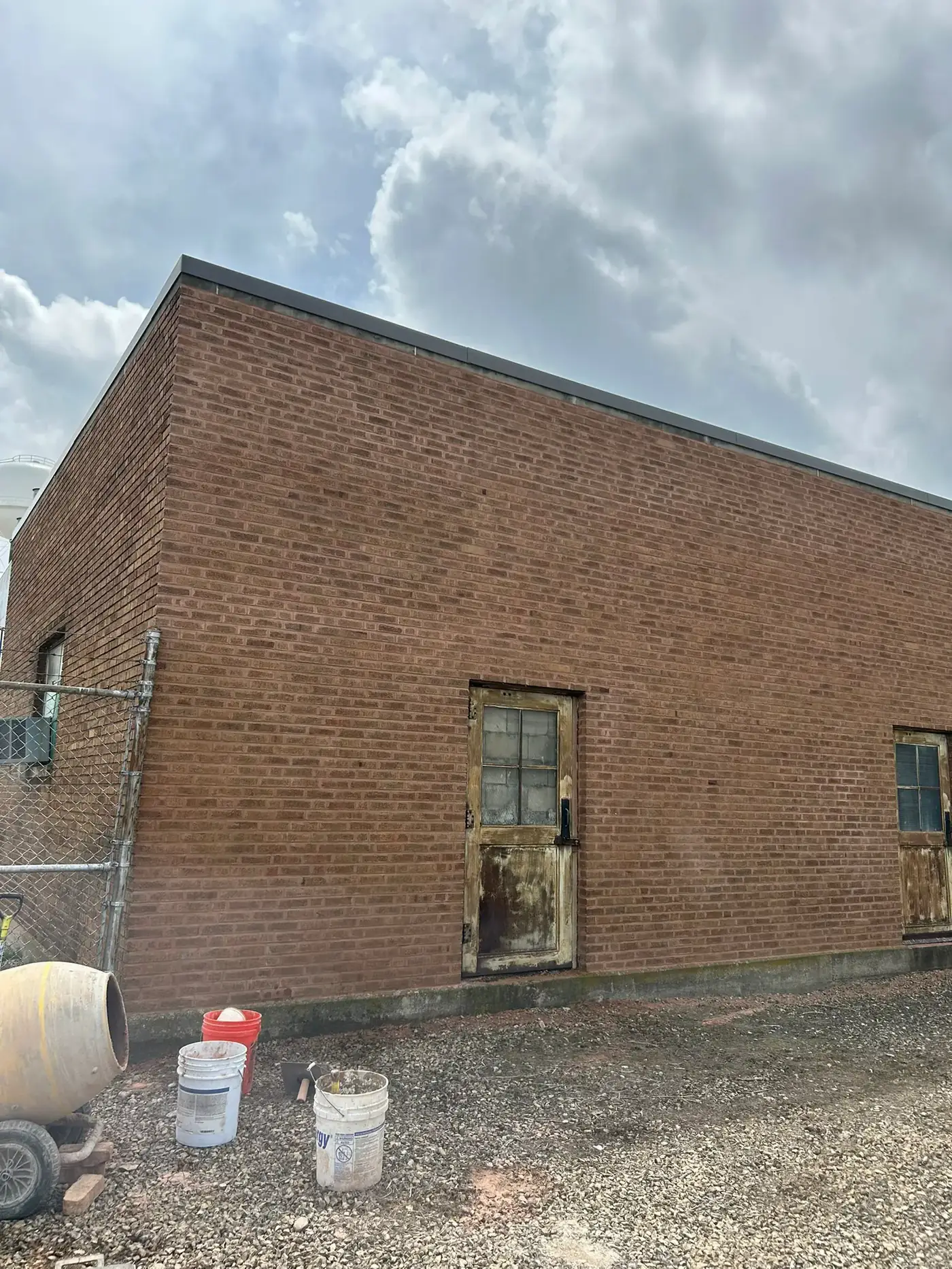
When you receive two bids for the same masonry scope on a commercial building and one is $8,000 more than the other, access method is often the explanation. One contractor priced aerial lifts; the other priced scaffold. Both can be legitimate depending on the scope — but they're not always interchangeable, and understanding the difference helps you ask better questions and make better decisions.
The Two Access Methods
Aerial work platforms — boom lifts and scissor lifts — are self-propelled machines that position a worker in a basket at elevation. Boom lifts articulate and telescope to reach work areas up to 60–150 feet depending on the model. Scissor lifts go straight up and are used for lower-elevation work on flat terrain. Both are rented, driven to the site, and operated by the masonry crew.
Scaffold is a temporary structure erected adjacent to the building face — either tube-and-coupler scaffold, system scaffold (like Ringlock or Kwikstage), or suspended scaffold for high-rise work. Scaffold erection is done by scaffold subcontractors or by the masonry crew if they have the certification and equipment. It stays in place for the duration of the project.
When Lifts Are Appropriate
Aerial lifts are the standard access method for most commercial masonry repair work in the Chicago suburbs. They're appropriate when:
- Work is limited in vertical extent — a parapet inspection, upper-floor repointing on a two- or three-story building, chimney work
- The building perimeter can be accessed by the lift — adequate clearance from landscaping, fencing, and adjacent structures for the lift outriggers
- Work doesn't require both hands free while stationary for extended periods — lifts move the basket to a new position frequently; they're efficient for scanning and spot work
- The site is accessible — hard surface or stable ground that supports the lift's weight (up to 30,000 lbs for large boom lifts)
For a typical two- or three-story commercial building in the Chicago suburbs — a strip center, an office building, a light industrial facility — aerial lifts handle most of the work scope efficiently and at significantly lower cost than scaffold.
Lift rental runs $600–$1,200 per day for standard commercial boom lifts. A week of lift access adds $3,000–$6,000 to a project, compared to $15,000–$40,000 or more for a full building perimeter scaffold.
When Scaffold Is Required
Scaffold becomes necessary in several specific situations:
High-density work across a full building face. If the scope involves full-face repointing on a four- or five-story building where workers need to move continuously across a large area while keeping material, tools, and mortar within easy reach, scaffold is more efficient. Repositioning a lift every few minutes becomes a time and cost drag that erases the rental cost advantage.
Work above the practical range of boom lifts. Standard boom lifts reach 60–80 feet. Buildings taller than that require larger lifts or scaffold. Suspended scaffold (swing stage) is typically used for high-rise masonry work.
Sites with restricted ground access. Buildings with underground parking, utility vaults, or fragile landscaping that can't support lift outrigger loads require scaffold or suspended access.
Extended duration work where full-face access is needed daily. If a project runs multiple weeks and workers need to access the entire building face every day, the efficiency of scaffold — always in place, no repositioning — can offset the erection cost.
Certain municipalities require it. Some Illinois communities require scaffold for masonry work above a specified height as a matter of local building code. Check with your contractor about permit requirements before work begins.
What Access Method Affects in Practice
Cost: Scaffold adds significant cost to a project. A complete tube-and-coupler scaffold on a standard commercial building perimeter runs $15,000–$50,000 in the Chicago market depending on height and linear footage. That cost is usually passed through directly to the owner plus a markup. Lifts are considerably cheaper for most project sizes.
Timeline: Scaffold erection takes 1–3 days before any masonry work begins and requires teardown afterward. Lifts arrive the morning work starts. For shorter scopes, scaffold adds a week or more to the project calendar.
Quality for certain scopes: For high-density full-face repointing where workers are moving continuously, scaffold allows more productive work time than lift repositioning. For spot repairs and inspection work, lifts are more efficient.
Disruption: Scaffold on a building's primary elevation requires temporary closure of adjacent sidewalk or parking. Lifts occupy less footprint but still require clear ground access. Both require coordination with tenants and adjacent property users.
Reading Bids for Access Method
When comparing masonry bids, confirm:
-
Is the access method specified? A bid that doesn't specify lift vs. scaffold is incomplete. Ask before you accept.
-
Is the access cost included or excluded? Some contractors include equipment rental in their labor and material price. Others break it out as a line item or exclude it entirely (rare but it happens on poorly written scopes).
-
Is the access method appropriate for the scope? A contractor who bids scaffold for a parapet inspection on a three-story building is either inexperienced or padding the bid. A contractor who bids lifts for full-face repointing on a six-story building may be underbidding work that will require scaffold once they're on site.
-
Does the site permit the proposed access? If your building has limited perimeter access, underground parking, or tight property lines, confirm the proposed method is actually feasible before accepting the bid. A scope change from lifts to scaffold once the job starts can add $20,000+ to a project.
The Property Manager's Takeaway
For most commercial masonry work in the Chicago suburbs on buildings up to four stories, aerial lifts are the standard, appropriate, and cost-effective access method. Scaffold is required for specific scopes and site conditions — and when it is required, it should be specified in the bid upfront with a clear cost line.
If you're receiving bids with significant price variation, ask each contractor to confirm the access method and whether its cost is included. Often the difference that looks like contractor quality or scope variation is actually just one contractor pricing lifts and another pricing scaffold.
Emerald Masonry LLC specifies access method in every written scope. We use aerial lifts for standard commercial building heights and scaffold when the scope requires it. Call (708) 288-1696 or request a free estimate.
Also see: Commercial Masonry | Tuckpointing | Masonry Restoration