
Tuckpointing & Repointing · Chicagoland, IL
How Often Does Brick Need Tuckpointing in Illinois? A Property Manager's Frequency Guide
The question property managers ask most often about masonry maintenance isn't 'what is tuckpointing?' — it's 'how often does my building need it, and how do I know when it's time?' The answer depends on the building's age, the mortar specification used, the elevation's exposure, and Illinois's specific climate load. This guide gives you a framework for calibrating your maintenance schedule to your actual building.
2026-04-25
The industry answer to "how often does brick need tuckpointing?" is "every 25-50 years," and it's wrong for Illinois about half the time.
That guidance comes from national industry publications written for average North American conditions. Chicagoland's climate isn't average — it has one of the highest annual freeze-thaw cycle counts in the country, between 100 and 115 per year. At that rate, mortar joint fatigue accumulates roughly twice as fast as it does in moderate-freeze climates with 40-60 cycles per year.
The practical tuckpointing interval for most Chicagoland commercial and residential brick is 25-35 years, not 35-50. And specific conditions — parapet walls, chimneys, north-facing elevations — justify even shorter cycles.
The Variables That Determine Your Building's Interval
1. Mortar Type
Type S Portland cement mortar (the standard for post-1950 brick): service life in Chicagoland of approximately 25-35 years in typical commercial and residential applications. This is the baseline. Buildings with Type S mortar should have their first tuckpointing assessment at 20-25 years, with work typically needed at 25-30 years on exposed elevations.
Lime mortar (original in pre-1930 buildings): longevity in Chicagoland's climate is highly variable. Well-installed lime mortar in protected conditions can last 80-100 years. The same mortar in a saturated, freeze-thaw-exposed condition deteriorates faster. Pre-war buildings that have never been repointed are typically overdue, but the condition of individual sections varies — some may still be adequate, others long past threshold.
Custom lime/NHL mortar (used in historic masonry restoration): similar longevity characteristics to original lime mortar, but modern NHL (Natural Hydraulic Lime) products can achieve better durability in freeze-thaw conditions than some traditional hot lime mixes.
Type N mortar: moderate strength, service life slightly shorter than Type S in high-exposure conditions. Common in older commercial work from the 1940s-1960s.
2. Elevation Exposure
This is the single biggest variable within a building. North and west-facing elevations consistently deteriorate faster than south and east-facing elevations on the same building.
Why north and west degrade faster: North walls receive less direct sunlight, so they dry out more slowly after rain and stay wet longer. Wet masonry in freeze-thaw conditions experiences more cycles of ice expansion than dry masonry. West walls take the prevailing storm direction (Illinois storm tracks typically push weather from the southwest or northwest, with west-facing walls taking the most direct rain impact).
Practical implication: On a building where south elevation mortar is adequate, the north elevation may be 3-7 years past its maintenance threshold. Phase your tuckpointing by elevation and priority — don't wait for the south elevation to reach the same condition as the north before starting the work.
3. Building Element Type
Main wall masonry: Standard 25-35 year cycle for Type S mortar in typical residential or commercial brick. This is the baseline.
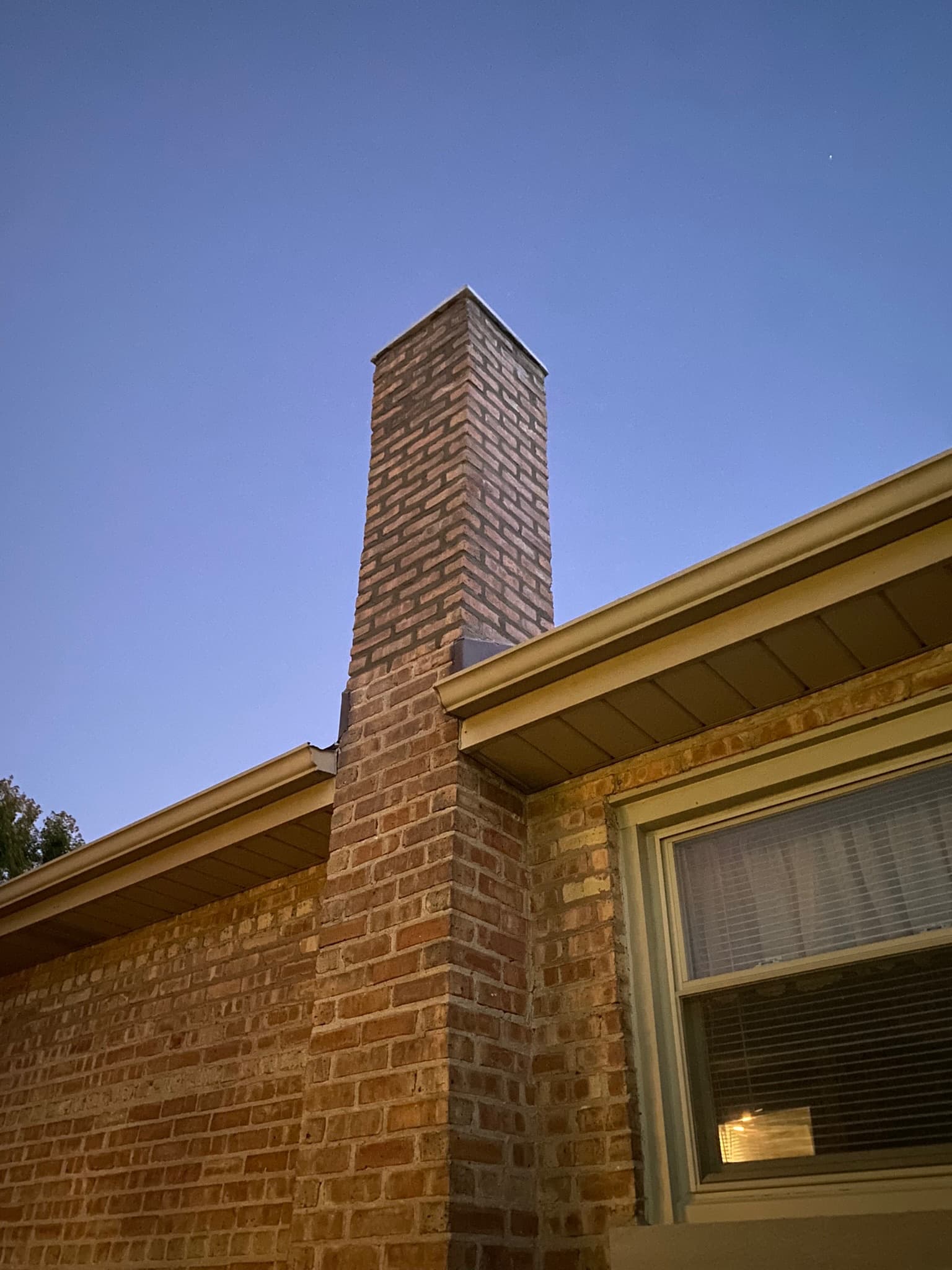
Chimney masonry: Shorter cycle. All four faces exposed, no overhang protection, thermal cycling from both interior use and exterior weather. Most chimneys in Chicagoland need repointing every 15-25 years. Chimney crowns need inspection and potential sealant every 5-10 years.
Parapet walls: Shorter cycle. Similar to chimneys in exposure — all faces exposed, direct precipitation on top surface, no protection from building overhang. Parapet repointing is typically needed 5-10 years ahead of wall masonry on the same building.
Below-grade or ground-contact masonry: Different considerations. Masonry at grade in contact with soil is exposed to sustained moisture rather than cyclical wetting. Maintenance schedules for this zone depend heavily on drainage conditions and soil contact.
Interior masonry (fireplaces, interior walls): Exposed to heat cycling but not freeze-thaw. Much longer service life — 40-60+ years is common for interior masonry mortar before attention is needed.
4. Previous Repair Quality
Buildings where previous tuckpointing was done correctly — mortar removed to adequate depth, appropriate specification used, proper curing — are starting the next cycle from a sound base. Buildings where previous work was done poorly (insufficient removal depth, wrong mortar, work done in freezing conditions) may be showing premature failure at 10-15 years rather than 25.
If your building had tuckpointing done and you're seeing joint failures within 10-15 years, the previous installation was likely deficient. Document this before the next project so you can verify the new contractor's methods.
How to Read Your Building's Current Status
Walk the building with an eye on these indicators:
Joint face depth. Push your finger across mortar joints at accessible height. Flush is fine. A joint that your fingertip sinks into is eroding. More than ¼ inch recession means active water entry.
Mortar hardness. Fresh, intact mortar is hard and won't crumble under moderate pressure. Mortar that crumbles to powder when pressed or that you can loosen with a key is well past its useful life.
Efflorescence distribution. White mineral deposits on the brick face tell you where water is moving through the wall. Note which elevations and elevations (which indicate where the most active water infiltration is occurring).
Crack patterns. Stair-step cracks following mortar joints in the field of the wall suggest settlement or thermal movement. Horizontal cracks specifically above window openings suggest lintel issues. Crumbling mortar without cracking is pure age-related erosion.
Visual mortar comparison. Look for sections where mortar color, texture, or profile looks different from surrounding areas — these mark previous repairs. Note whether those repair areas show early failure (premature crumbling or debonding), which tells you about the previous repair quality.
Building Age Benchmarks for Chicagoland
15-20 years old: First assessment for chimneys and parapet walls. Main wall mortar is unlikely to need repointing yet but should be in the inspection rotation.
20-25 years old: Assessment of north and west elevations. These may be reaching early maintenance threshold. Chimney and parapet work is likely due.
25-30 years old: Full building assessment. This is the expected first tuckpointing cycle for Type S mortar in standard Chicagoland exposure. North and west elevations may be clearly deteriorated; south and east may need work within 3-5 years.
30-35 years old: If tuckpointing hasn't happened yet, north and west elevations are likely past threshold and showing active water infiltration. Full building is overdue.
35-50 years old: If the building has never been tuckpointed, it has been living on borrowed time. The condition may range from "urgent" to "how is this still standing" depending on the brick quality and exposure history. Full assessment needed immediately.
Pre-1930 construction: These buildings often show a patchwork of different mortar generations — original lime, Portland repoints from the 1970s-1980s, and sometimes more recent work. Each section behaves differently. Full condition assessment by someone familiar with historic masonry is the right starting point.
Planning Masonry Maintenance Into the Capital Budget
The most expensive masonry work is reactive maintenance — addressing serious water infiltration or structural damage that's been developing for years. The cheapest maintenance is regular tuckpointing that keeps the mortar system functional before active water entry begins.
For capital planning purposes:
- Budget for tuckpointing every 25-30 years per building, phased across 2-3 years by elevation priority
- Budget for chimney assessment every 5-7 years and tuckpointing every 15-20 years
- Budget for parapet inspection annually and repointing every 15-20 years
- Set aside a contingency for lintel replacement (common in buildings 40+ years old, often found during tuckpointing assessment)
The cost of scheduled tuckpointing is a fraction of the cost of masonry restoration after years of deferred maintenance — and it's dramatically less than water damage remediation in the building interior.
Emerald Masonry LLC provides free on-site assessments that tell you exactly where your building is in its maintenance cycle. We'll walk every elevation, probe the mortar, document the condition, and give you an honest schedule. Call (708) 288-1696 or contact us online.
See also: Tuckpointing | Masonry Restoration | Commercial Masonry