
Masonry Restoration · Chicagoland, IL
Why Brick Walls Bow and Bulge — Causes, Risk Assessment, and Repair Options
A visibly bowing or bulging brick wall is one of the more alarming things a building owner can discover, and for good reason — it indicates that the wall has separated from its structural backing and is no longer performing as a connected system. Understanding what causes this, how serious each cause is, and what the repair options look like helps property owners and managers respond appropriately rather than either panicking or ignoring a real structural concern.
2026-04-26
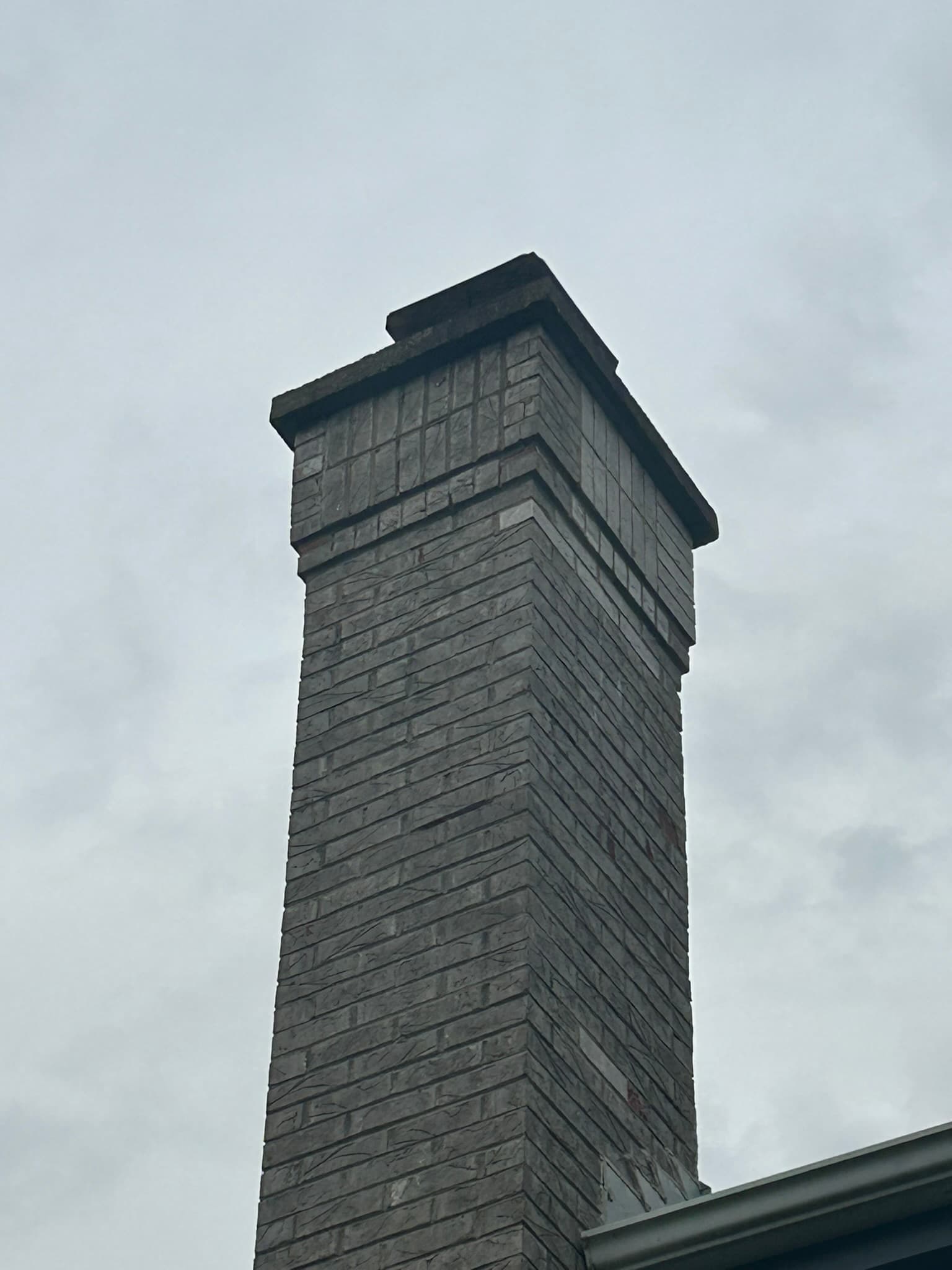
A brick wall that's bowing outward has lost its connection to the structure behind it. That statement has varying levels of urgency depending on the degree of movement, the cause, and the type of construction — but it's never a condition to ignore, and it's rarely a condition that stabilizes without intervention.
Here's what you need to understand.
What Causes Brick Walls to Bow
The most common causes, in roughly decreasing frequency for Chicagoland buildings:
1. Wall Tie Failure
Brick veneer — a single wythe of brick attached to a backup wall — is connected to that backup structure by metal wall ties embedded in the mortar joints during original construction. These ties are typically corrugated or L-shaped metal straps, installed at specified intervals (typically every 2 feet horizontally and every 16-24 inches vertically).
When wall ties corrode — from moisture entering through eroded mortar joints or from condensation within the wall cavity — they lose their holding capacity. As they fail, the brick veneer loses its connection to the backup wall. The veneer begins to act as a freestanding, unsupported element. Under wind load, thermal expansion and contraction, and its own weight, it begins to bow outward.
Wall tie failure is the most common cause of bowing in commercial brick veneer construction in Chicagoland, particularly in buildings from the 1960s-1980s where galvanized coating thickness on original ties was often minimal. In residential construction, early warning signs of tie failure include visible horizontal separation lines at joint courses where ties were originally located, and localized bulging in discrete sections of the wall.
2. Lintel Failure
A failing steel lintel above a window or door opening expands as it corrodes, pushing the brick courses above it outward. This is concentrated bowing — visible as outward displacement of a band of brick immediately above an opening, often accompanied by horizontal cracking along the mortar joints at the lintel level and stepped diagonal cracks at the corners of the opening.
Lintel-related bowing is distinguishable from wall tie failure by its location (specifically at and above openings) and its pattern (horizontal, within a defined zone). It's structural in the sense that the lintel is no longer providing adequate support, but the bowing is limited to the affected zone rather than affecting a broad wall section.
3. Thermal Expansion Without Adequate Control Joints
Masonry expands and contracts with temperature. Brick expands both thermally (with temperature change) and through moisture absorption over time (irreversible moisture expansion). Long, continuous brick walls without adequate control joints — vertical gaps filled with flexible sealant that accommodate movement — accumulate this expansion without a release mechanism. The wall buckles outward.
This is a design-related cause, most common in 1960s-1980s commercial construction where control joint spacing standards were less rigorously followed than current practice requires. The bowing tends to occur at the middle of long wall runs, between control joints.
4. Foundation Movement or Differential Settlement
If the building's foundation moves unequally — one corner settling more than another, or frost heave pushing up at specific locations — the brick superstructure above can bow or crack. Foundation-related bowing is often accompanied by larger diagonal cracks through the masonry that follow the settlement pattern and may affect multiple stories.
Foundation-related movement requires structural engineering assessment before any masonry repair is committed to. Repairing a brick wall that's moving due to an unresolved foundation issue produces repairs that re-crack.
5. Inadequate Backup Wall or Original Construction Defects
In some cases, the backup wall (CMU, concrete, steel stud) was constructed or has deteriorated in a way that no longer provides adequate lateral support. Less common in well-built commercial construction, but can occur in older residential construction where wall framing has decayed or where the original tie installation was inadequate.
How to Assess the Risk
Not all bowing is equally urgent. Factors that determine severity:
Degree of movement. Small outward displacement (1/8 to ¼ inch) detected by careful measurement or sighting down the wall may be monitored with crack monitors and a defined reassessment schedule. Displacement of ½ inch or more in a wall section, or any movement visible to casual observation, warrants professional assessment and likely near-term repair.
Rate of movement. A wall that's been at the same displacement for 20 years is different from a wall that has moved measurably in the last 12 months. Installing crack monitors at the edges of the affected zone and measuring over 90-180 days establishes whether movement is ongoing. Ongoing movement is more urgent than stable historical movement.
Height and location. A bowing parapet wall on a building's upper floor, where a failure would result in brick falling to an occupied area below, is an immediate safety concern regardless of displacement magnitude. Ground-level bowing on a wall away from foot traffic is less immediately dangerous.
Type of wall. Bowing in a structural masonry wall (where the brick is load-bearing, not veneer) is more serious than bowing in veneer that has separated from a structurally independent backup. Load-bearing wall bowing can compromise the structural system of the building.
Repair Options
Wall tie replacement (veneer re-anchoring). For wall tie failure, the standard repair is mechanical re-anchoring: helical or epoxy-set masonry anchors are installed through the brick face into the backup wall at appropriate spacing, drawing the veneer back into contact with the backup structure. If the veneer has displaced significantly, it may need to be pushed back into position before anchoring — sometimes requiring temporary shoring.
Lintel replacement. For lintel-related bowing, the repair involves replacing the failed lintel with a new galvanized or epoxy-coated steel angle, with temporary shoring during the process and rebuilding the displaced brick courses above the opening.
Rebuilt section with control joints. For thermal-expansion-related bowing in long wall runs, the affected section is typically removed and rebuilt with properly spaced control joints. The new construction includes flexible sealant-filled vertical gaps at code-compliant intervals to accommodate future movement.
Structural repair. For foundation-related or structural frame-related bowing, a structural engineer should direct the repair approach. Masonry contractors execute the masonry work; engineers determine whether the underlying movement cause has been resolved before repair proceeds.
What Not to Do
Don't wait and see without monitoring. "Wait and see" without any measurement means you have no information about whether movement is progressing. Install crack monitors or make pencil-date marks at crack ends to establish a reference.
Don't repoint over a bowing wall. Tuckpointing a wall section that's bowing due to tie failure doesn't address the cause. Fresh mortar will just crack again as the veneer continues to displace.
Don't assume it's cosmetic. Outward displacement of brick, even small amounts, has resulted in collapses in buildings where the condition was ignored. In Chicago and the suburbs, parapet collapses, veneer collapses during high-wind events, and sudden failure of long-deferred bowing conditions do occur. The appropriate response to visible bowing is professional assessment, not reassurance.
When to Call a Structural Engineer vs. a Masonry Contractor
A masonry contractor can assess veneer bowing that's likely wall tie failure, perform lintel inspections, and execute most re-anchoring and rebuilding repairs. A structural engineer is appropriate when:
- The bowing involves a load-bearing masonry wall (not just veneer)
- Large cracks suggest foundation or structural frame movement
- The degree of movement is substantial and the cause is unclear
- A building official or insurance carrier requires an engineer's assessment
In some cases, the right answer is both — the engineer assesses the cause and directs the approach, the masonry contractor performs the physical repair.
Emerald Masonry LLC assesses bowing and bulging masonry for commercial, institutional, and residential property owners throughout Chicagoland. We provide written documentation, photograph all conditions, and give you a clear picture of severity and repair options.
Contact us online or call (708) 288-1696. Free on-site assessments with honest, direct findings.
See also: Masonry Restoration | Brick Repair | Commercial Masonry