
Commercial & Industrial Masonry · Chicagoland, IL
Why Commercial Masonry Bids Vary So Much — What's Actually Different Between Them
It's common to get three bids for the same tuckpointing or masonry repair project and find that the highest quote is double the lowest. That spread isn't random — each variable in a masonry bid represents a real difference in what will be done, how it will be done, and how long it will last. Understanding where bids diverge helps property managers and building owners make decisions based on value rather than just price.
2026-04-24
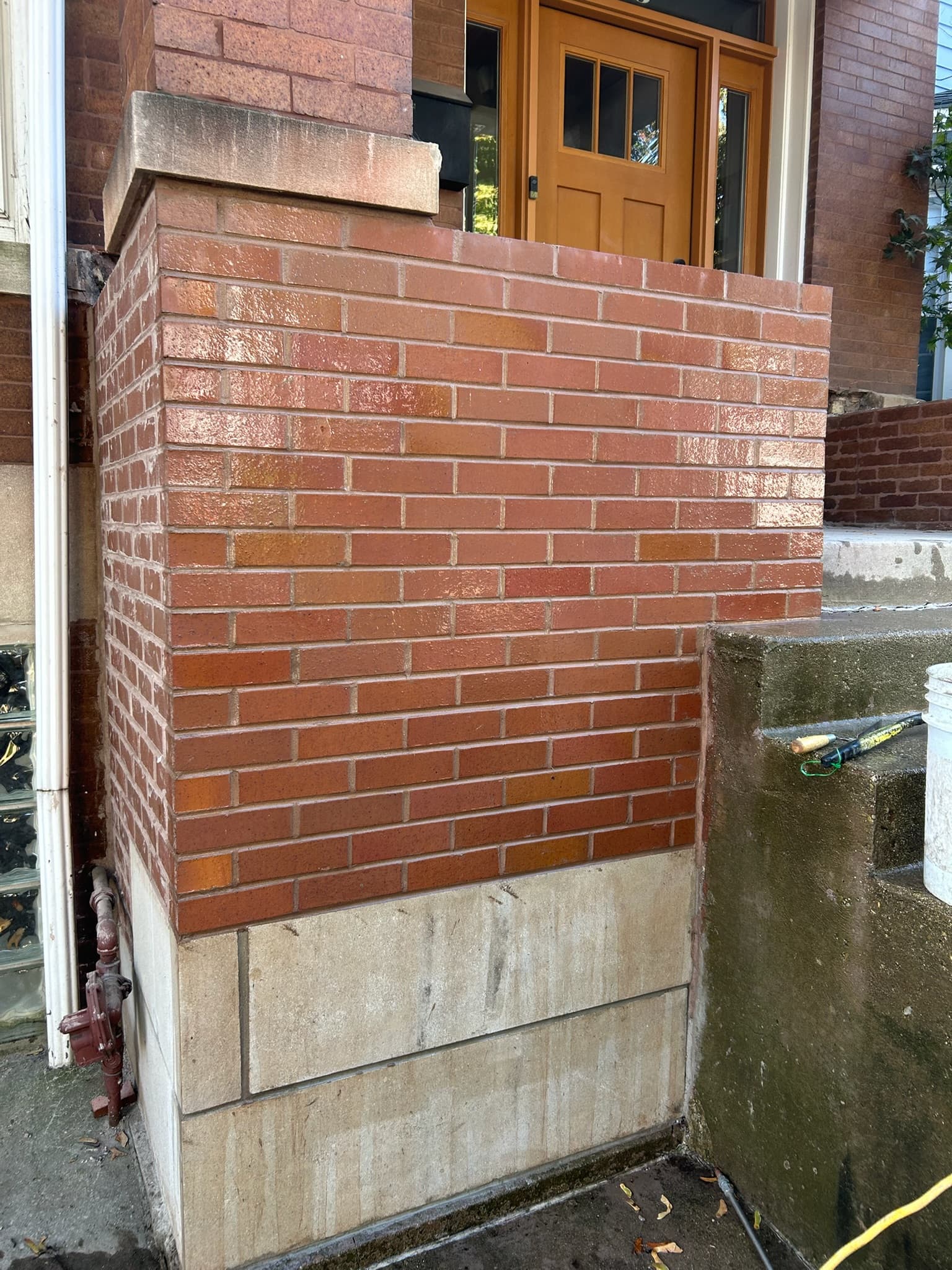
Three contractors walk a commercial building in Schaumburg or Joliet or Berwyn. They look at the same mortar joints, the same parapet wall, the same brick facade. Two weeks later, their bids land: $18,000, $31,000, and $47,000. For the same building.
This is a real scenario, and property managers see it regularly in Chicagoland commercial masonry. The question is never "which number do I choose?" — it's "what's different between these bids, and what does that mean for my building?"
The Variables That Drive Masonry Bid Prices
1. Scope Definition: What's Actually Included
The most common reason bids diverge dramatically is that they're not quoting the same scope.
The $18,000 bid may cover only the north and west elevations, addressing the most visible deterioration but leaving the parapet and rear facade for a future quote. The $47,000 bid covers all four elevations plus the parapet coping repoint and flashing inspection. They are not comparable — they represent different amounts of work.
How to check this: Every masonry bid should specify, in writing, which elevations are covered, which joint areas are included (all joints or spot joints?), what happens to the parapet, whether flashing is inspected and repaired, and whether scaffolding or lift access is included. If a bid doesn't specify these elements, call and ask. The answers will tell you whether you're comparing the same scope or radically different ones.
2. Mortar Removal Depth
This is a technical difference that's invisible in the finished work but dramatically affects how long the repair lasts.
Industry standard for effective tuckpointing is mortar removal to a depth of at least ¾ inch, creating a joint profile that allows adequate mechanical bond for the new mortar. Some contractors — particularly lower-priced ones — remove mortar to only ¼ to ½ inch, which is faster and requires less grinding equipment time. The new mortar applied in a shallow joint doesn't bond properly and tends to fail within 5-10 years, well short of the 25-35 year service life you should expect from properly installed mortar.
Ask specifically: to what depth is the mortar being removed? If the answer is vague or the contractor hasn't thought about it, the depth is probably insufficient.
3. Mortar Specification
A bag of Type S mortar costs roughly the same as a custom lime mortar mix. But on a building constructed before 1930 with soft historic brick, installing Type S instead of a lime-compatible mortar is a choice that causes brick spalling within 15-25 years. On that building, the $18,000 bid that uses Type S is not comparable to the $31,000 bid that uses lime mortar — the less expensive bid is creating a future repair scope.
For modern brick (post-1950), mortar specification matters less — Type S is generally appropriate. But if you have a pre-war building or are uncertain, ask every contractor to specify the mortar type and to explain why it's appropriate for your building's brick.
4. Access Method and Equipment
Getting to the masonry is a significant cost variable on commercial buildings.
Scaffolding for a multi-story commercial building involves substantial material, labor, and time. It provides stable working platforms and allows crews to work methodically across a large facade. Scaffolding is often included in comprehensive bids but may be line-itemed separately.
Boom lifts are more flexible but have limits — outrigger footprint requirements, height ratings, setback distances from the building. A lift that can reach the third floor can't always reach the fourth. On some buildings, the geometry makes lifts inadequate for thorough access.
Bids that don't specify access method may be assuming something that won't work for your building. If a crew shows up with a 40-foot boom lift for a six-story building, you'll learn about the access limitation when they can't finish the upper floors.
Ask: how will the crew access the upper elevations? Is the access equipment included in the bid, or is it an additional cost?
5. Warranty and Standing Behind the Work
Warranty terms vary dramatically in masonry contracting. Some contractors offer no written warranty. Others offer 1 year. Well-established contractors offer 3-5 years on labor, which reflects confidence in their material installation quality.
A short or non-existent warranty doesn't just represent risk for you — it tells you something about the contractor's expectation of how their work will hold up. A contractor who installs mortar at the right depth with the right material, in appropriate temperature conditions, should be confident enough in the result to warranty it.
Ask every bidder: what is your written warranty on this work?
6. Insurance and Licensing
This shouldn't affect price much, but contractors operating without proper insurance or licensing quote lower prices because they've eliminated overhead that legitimate contractors carry. If a crew on a commercial building without adequate liability and workers' compensation insurance causes an accident or causes damage, the property owner's insurance is likely to be the first line of defense.
Verify: ask for certificates of insurance showing general liability and workers' comp coverage, naming your entity as additional insured. Don't just accept verbal assurances. A licensed, bonded, insured contractor will have these documents readily available.
7. Company Overhead and Business Model
This is where some legitimate price variation lives. A well-established masonry company with full-time crews, maintained equipment, supervisors on site, and experienced project management has real overhead costs that a small owner-operator crew with lower fixed costs doesn't carry. That overhead often translates to more consistent quality control, better scheduling reliability, and greater accountability when something isn't right.
This doesn't mean the highest bid is always the best choice — but a bid that's dramatically below the range of other established contractors should prompt questions, not automatic celebration.
How to Evaluate Bids Side by Side
Step 1: Equalize the scope. Get every contractor to put in writing what's included and excluded. Once you have written scopes, determine whether you're comparing the same work.
Step 2: Ask the mortar question. For each bid, ask the contractor to specify the mortar type and to explain why it's appropriate for your building. This single question separates contractors who are thinking about your building's specific conditions from those quoting generically.
Step 3: Verify removal depth. Ask how deep the existing mortar will be removed and what tool is used for removal. Minimum ¾ inch is the right answer. Anything vague or less than that is a concern.
Step 4: Check access. Confirm that the access method in each bid is actually appropriate for your building's geometry and height.
Step 5: Check references for comparable work. A commercial tuckpointing bid on a 1960s four-story brick building should be supported by references from similar work. A company that primarily does residential work may not have the commercial scaffolding and coordination experience for a project of this scale.
Step 6: Get the warranty in writing. If a contractor won't put a warranty in the contract, factor that into your evaluation.
Red Flags in Low Masonry Bids
- Bid with no written scope or "all joints" language without elevation or area specification
- No mention of mortar type or specification
- No information on access equipment or method
- Cannot provide insurance certificates on request
- No warranty offered
- References only from residential work for commercial bid
- Bid submitted without actually walking the building
A Note on "Getting What You Pay For"
The cheapest masonry bid can generate the most expensive outcome over a 10-year period. Mortar installed at insufficient depth fails in 5-10 years, triggering another full tuckpointing cycle. Hard mortar on historic brick causes spalling that requires brick replacement — a significantly more expensive scope than the original repointing. Missed parapet flashing allows water damage to the roof assembly.
The right question is not "which bid is lowest?" but "which bid represents the best value over the building's maintenance lifecycle?" That requires understanding what's actually different between the bids.
Emerald Masonry LLC provides detailed written scopes on all commercial masonry bids. We specify mortar type, removal depth, access method, and include written warranty terms. We're based in Palos Heights and serve commercial and institutional properties throughout Cook, DuPage, Will, and Kane Counties.
Contact us online or call (708) 288-1696 for a free on-site estimate with full written documentation.
See also: Commercial Masonry | Tuckpointing | Masonry Restoration