
Limestone & Sill Repair · Chicagoland, IL
Why Limestone Sills and Lintels Fail — and How Stone Trim Is Restored
Limestone sills and lintels crack, flake, and crumble because the porous stone soaks up water that freeze-thaw cycles and rusting steel then tear apart. Here's why it happens and how stone trim is properly restored.
2026-06-20
Quick Answer
Limestone sills and lintels fail from water absorption, freeze-thaw spalling, rusting embedded steel that expands and cracks the stone, and failed mortar joints. Restoration ranges from gentle cleaning and repointing to Dutchman stone repair, matched-mortar patching, or full replacement for severe damage. Emerald Masonry LLC restores stone trim across Chicagoland — (708) 288-1696.
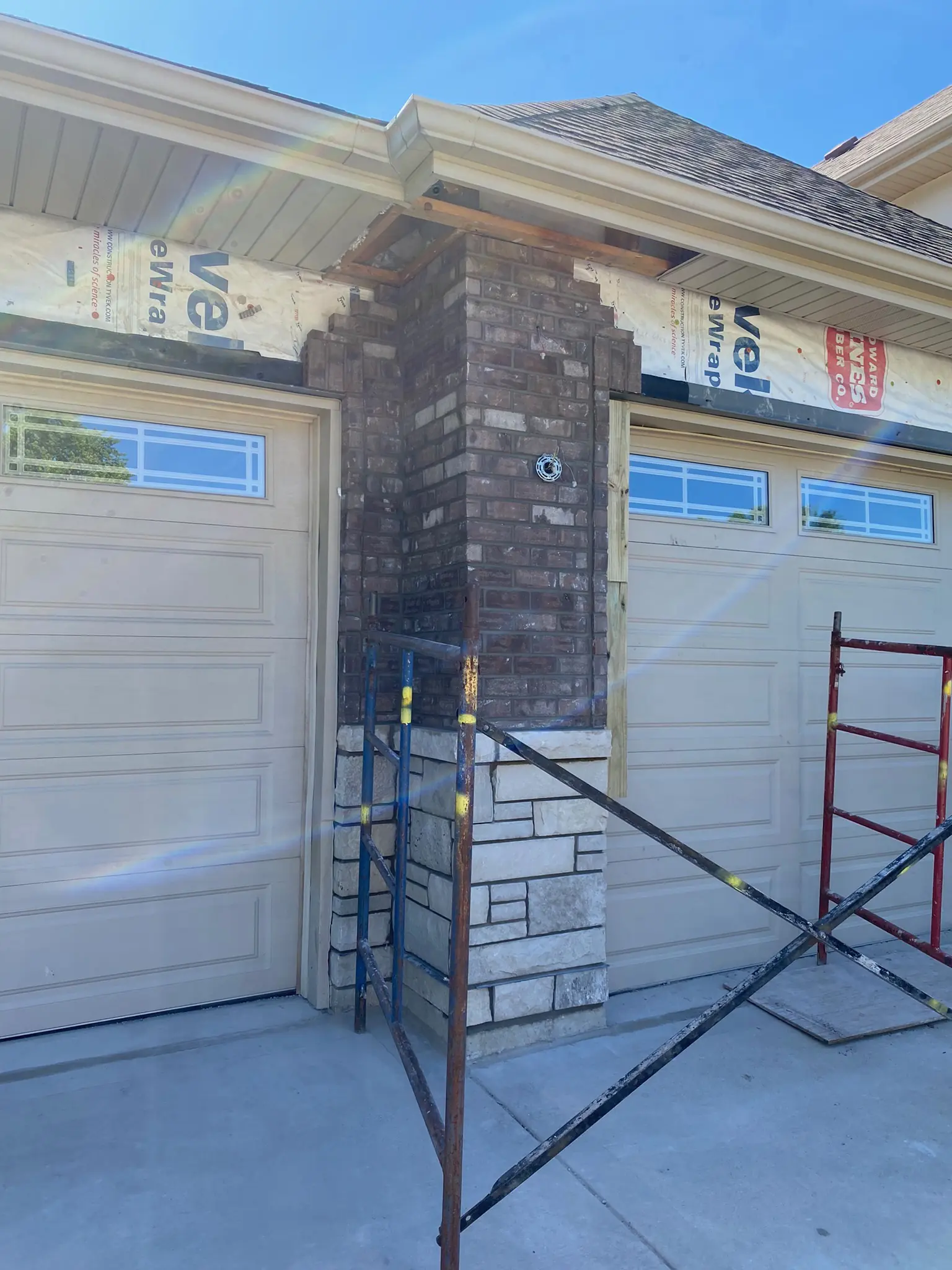
Limestone sills and lintels fail because the stone is porous and soaks up water, which then freezes, expands, and breaks the surface apart — and because the steel buried beneath many lintels rusts and pushes the stone outward until it cracks. The good news is that stone trim can almost always be restored rather than torn out. At Emerald Masonry LLC, our family-owned crew has restored limestone trim on Chicago-area brick homes and greystones for decades, and most sills and lintels we see are repairable. If you have flaking, cracked, or sagging stone, call (708) 288-1696 for a free estimate.
Below is what's actually happening to your stone, the warning signs to watch for, and how a proper restoration is done.
Where Limestone Shows Up on Chicago-Area Homes
Walk down almost any block in Beverly, Oak Park, or Berwyn and you'll see limestone everywhere — it was the trim stone of choice for generations of Chicagoland builders. On brick homes and the city's famous greystones, limestone typically appears as:
- Window and door sills — the sloped stone that sheds water away from the opening
- Lintels — the horizontal stone spanning the top of windows and doors
- Water tables — the projecting course near the base of the wall
- Copings — the cap stones on top of parapets and short walls
- Belt courses and decorative bands — the horizontal trim that wraps the facade
Because these pieces sit at the most exposed parts of the wall — taking the brunt of rain, snowmelt, and roof runoff — they are usually the first masonry elements to show their age.
Why Limestone Sills and Lintels Fail
Porous stone absorbs water
Limestone is a sedimentary stone full of tiny pores. It drinks in rainwater and melting snow like a sponge. By itself that wouldn't be catastrophic — but in Chicago, water inside stone doesn't stay liquid for long.
Freeze-thaw spalling
When the temperature drops, water trapped inside the stone freezes and expands by roughly nine percent. That expansion pushes the surface outward. Over hundreds of Chicago freeze-thaw cycles, the face of the stone begins to flake, powder, and break away — a failure masons call spalling or "sugaring." Sills take this worst because they're flat and hold standing water and ice.
Rusting embedded steel — "rust jacking"
Many older lintels are stone facing over a steel angle, or have steel pins and anchors buried in them. When water reaches that steel, it rusts. Rust occupies far more volume than the original metal — up to several times more — so as it grows it pries the stone apart from the inside. This rust jacking is one of the most destructive and most overlooked causes of cracked lintels, and no amount of surface patching fixes it if the steel underneath is left untreated.
Failed mortar joints
The joints around and between stone pieces are the wall's first defense. Once mortar shrinks, cracks, or washes out, water pours straight into and behind the stone — feeding both freeze-thaw and rust. A failed joint is often the root cause behind a "failing" sill that is otherwise sound.
Harsh cleaning and salt
Decades ago, many facades were sandblasted or aggressively power-washed, which strips the dense outer skin off limestone and leaves the soft, absorbent interior exposed to the weather. De-icing salt tracked or splashed onto lower stone accelerates the breakdown even further. (For more on why abrasive cleaning backfires, see why sandblasting and power-washing ruin brick.)
The Warning Signs
You don't need to be a mason to spot trouble. Look for:
- A flaking, powdery, or "sugaring" stone surface
- Cracks running through a sill or lintel, especially long horizontal ones
- Displaced or sagging pieces, or a lintel that looks like it's dropping
- Rust staining bleeding out of the stone or joints
- Open gaps where mortar joints used to be
- Loose fragments you can pick off by hand
If you notice any of these, it's worth a closer look before winter.
Not sure whether what you're seeing is cosmetic or structural? Send us a few photos or call (708) 288-1696 — we'll tell you honestly whether it needs attention now or can wait.
The Risks of Waiting
Stone trim damage never improves on its own — it compounds. Water entering through a failed sill or cracked lintel travels into the wall, soaking the brick and the wall cavity behind it. That leads to interior water damage, more spalling, and accelerated rust on any embedded steel. In advanced cases, pieces of stone or even a whole lintel can loosen and fall, which is a genuine safety hazard over a doorway or sidewalk. Catching it early almost always means a smaller, cheaper repair.
How Stone Trim Is Restored
Restoration is matched to the condition of each piece. A good mason uses the least invasive method that will actually last:
Gentle cleaning
We clean limestone with low-pressure methods and appropriate products — never sandblasting or high-pressure washing — to remove staining and biological growth without stripping the stone's protective skin.
Repointing the joints
Failed mortar is carefully raked out and the joints are repacked with a breathable, properly matched mortar. This stops the water entry that drives most stone failure in the first place.
Dutchman stone repair (piecing-in)
For localized damage, we cut out the deteriorated area and set in a Dutchman — a piece of matching limestone shaped to fill the void and bonded in place. Done well, a Dutchman is nearly invisible and preserves the original stone around it. This is the heart of skilled limestone and sill repair.
Patching with matched stone-repair mortar
Smaller chips, spalled faces, and shallow losses can be rebuilt with a specialized stone-repair mortar tinted and textured to match the surrounding limestone.
Addressing rusted steel underneath
When the cause is rust jacking, we address the steel itself — cleaning and treating or replacing the corroded lintel angle — before any stone is reset. Skipping this step guarantees the crack comes back. This is core to proper lintel repair.
Full replacement for severe cases
When a sill or lintel is deeply fractured, hollow, or crumbling beyond repair, we replace it with new stone cut and set to match the original profile. On historic homes and greystones, that replacement is part of careful historic masonry restoration that protects the character of the facade.
Why Matching and Breathable Materials Matter
Limestone needs to breathe. The mortar and any patch material used on it must be at least as permeable as the stone itself, or moisture gets trapped behind a hard layer and blows out the next time it freezes. Using modern Portland-heavy mortar or a hard film sealer on soft historic stone is one of the most common ways well-meaning repairs end up causing more damage. Color, texture, and joint profile matter too — a mismatched patch announces itself from across the street and devalues the home. Matching both the look and the physics of the original stone is what separates a repair that lasts decades from one that fails in a season.
Why DIY Caulk-and-Paint Makes It Worse
It's tempting to smear caulk over a crack and paint the sill to make it look fresh. The problem is that this hides the failure without fixing it. Caulk and paint seal water inside the stone, where freeze-thaw and rust keep working out of sight. By the time the patch finally breaks open, the damage underneath is usually far worse — and more expensive — than it would have been if the stone had been properly restored the first time.
Frequently Asked Questions
Can a cracked limestone sill be repaired or does it need replacement?
It depends on the severity. Minor cracks and surface loss can usually be repaired with a Dutchman stone piece or matched stone-repair mortar, while a sill that is deeply fractured, hollow, or crumbling typically needs full replacement. A mason can tell you which applies after a close inspection.
Why is my limestone sill flaking and crumbling?
Limestone is porous, so it absorbs water that freezes and expands in winter, breaking the surface apart in a process called spalling. Rusting steel embedded below the stone can also push outward and crack it. Both problems get worse every freeze-thaw season until the trim is restored.
Do limestone sills need to be sealed?
Limestone should breathe, so a hard film-forming sealer often traps moisture and accelerates damage. If sealing is appropriate, only a breathable masonry-grade product should be used, and only after any cracks and joints are properly repaired. We'll recommend what's right for your specific stone.
Restore Your Stone Trim Before Winter
If your limestone sills, lintels, or trim are cracking, flaking, or staining, the smartest move is to have them looked at before the next freeze-thaw season makes it worse. Emerald Masonry LLC is a family-owned, licensed, bonded, and insured masonry contractor with career masons restoring stone trim on brick homes and greystones across Chicagoland. We offer free estimates and honest recommendations — repair when we can, replace only when we must.
Call (708) 288-1696 or email emeraldmasonryil@gmail.com today.
Emerald Masonry LLC · (708) 288-1696 · 7156 W. 126th St. Suite 136, Palos Heights, IL 60464 · emeraldmasonryil.com
Frequently Asked Questions
Can a cracked limestone sill be repaired or does it need replacement?
It depends on the severity. Minor cracks and surface loss can usually be repaired with a Dutchman stone piece or matched stone-repair mortar, while a sill that is deeply fractured, hollow, or crumbling typically needs full replacement. A mason can tell you which applies after a close inspection.
Why is my limestone sill flaking and crumbling?
Limestone is porous, so it absorbs water that freezes and expands in winter, breaking the surface apart in a process called spalling. Rusting steel embedded below the stone can also push outward and crack it. Both problems get worse every freeze-thaw season until the trim is restored.
Do limestone sills need to be sealed?
Limestone should breathe, so a hard film-forming sealer often traps moisture and accelerates damage. If sealing is appropriate, only a breathable masonry-grade product should be used, and only after any cracks and joints are properly repaired. We'll recommend what's right for your specific stone.