
Masonry Restoration · Chicagoland, IL
Why North-Facing Brick Walls Deteriorate Faster — And What to Do About It
North-facing brick walls in Illinois stay wet longer and cycle through more freeze-thaw events per season than their south-facing counterparts. Understanding this exposure asymmetry helps property owners prioritize masonry maintenance before the most damaged elevation becomes a structural problem.
2026-05-11
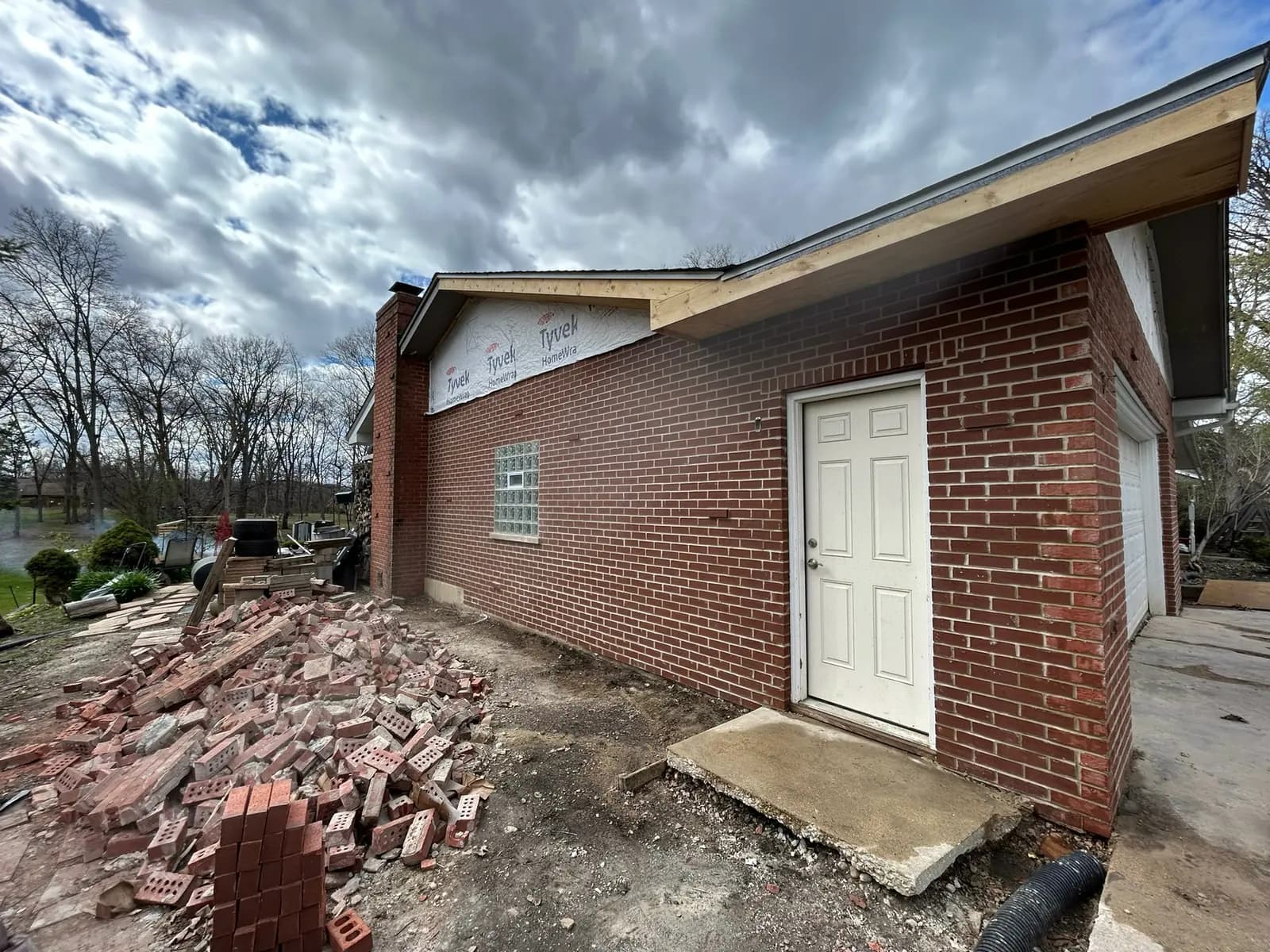
The Exposure Asymmetry Nobody Talks About
When a Chicagoland property manager schedules masonry maintenance, they usually prioritize the most visible elevation — typically the front of the building, which faces the street. But in Illinois, visibility and deterioration rate often don't correlate. The most damaged wall on a building is frequently the north or northeast elevation, regardless of how much attention it receives.
This isn't random. It's physics, and it plays out the same way on virtually every brick building in the Chicagoland area.
Why North Walls Take More Damage
Freeze-Thaw Cycles per Elevation
The foundation of brick masonry damage in Illinois is the freeze-thaw cycle. When water infiltrates mortar joints or brick pores, freezes, and expands, it creates internal pressure that progressively degrades both the mortar and the brick face. The number of freeze-thaw cycles a wall experiences in a season is directly tied to how long the wall stays wet after rain or snowfall.
South and west-facing walls dry out quickly. Direct sun exposure in the afternoon — the most intense solar period in fall and winter — drives moisture out of the brick surface rapidly. A south-facing wall can go through one or two freeze-thaw events from a given precipitation event before the surface dries. The same precipitation on a north-facing wall, which gets minimal direct sunlight from October through March, can produce five or six freeze-thaw cycles before the surface dries.
Over the lifespan of a 30-year-old building, north elevations in the Chicagoland area may have experienced two to three times as many damaging freeze-thaw cycles as south-facing walls on the same building. The cumulative effect on mortar joints and brick faces is substantial.
Wind-Driven Rain Exposure
Illinois prevailing storm winds come predominantly from the south and southwest, which would seem to protect north-facing walls. But winter storms — the ones that combine rain or freezing precipitation with below-freezing temperatures — arrive more often from the north and northwest. North and northeast elevations take the brunt of the combination most likely to drive water into joints while freezing overnight: the worst-case scenario for masonry.
Shade and Ground Moisture
North-facing walls in dense commercial areas and close-spaced residential neighborhoods often remain in shade for most of the day, compounding the drying delay. Ground-level north walls are also more susceptible to splash moisture from ice melt and rain runoff, which lingers on the surface longer than it would on a sun-exposed elevation.
What This Looks Like in Practice
The most common pattern we see on multi-story commercial buildings and larger residential properties throughout the Chicagoland suburbs:
- Front (south) elevation: Cosmetically visible mortar erosion, perhaps some light efflorescence, but structurally sound
- North or rear elevation: Joint recession of 1/2" or more in upper courses, brick faces beginning to spall in the top two or three courses, and sometimes visible horizontal cracking near window header levels indicating lintel distress
The rear or north wall has been quietly deteriorating while the front gets all the attention. By the time property managers or owners notice water infiltration on the north interior, the damage has typically progressed past the point where routine tuckpointing is sufficient — brick replacement and potentially lintel work are now in the scope.
Implications for Maintenance Scheduling
Don't Tuckpoint Only the Visible Face
If you're scheduling tuckpointing for a commercial building and the scope covers only the street-facing elevation, request a specific inspection of the north and rear walls before finalizing scope. A front-elevation tuckpointing job that defers a north-wall problem by two years may result in a significantly larger and more expensive north-wall restoration project in the near future.
Adjust Inspection Frequency by Orientation
For multi-building HOA communities and commercial portfolios, prioritize north-facing elevations in assessments. A south-facing wall at 20 years may be in good condition; a north-facing wall on the same-age building may already be at or past the tuckpointing threshold.
Watch for Upper-Course Asymmetry
On both residential and commercial buildings, north-elevation deterioration is most severe in the upper courses — the first 3–5 feet below the roofline or parapet. These courses combine the most persistent wetting with the most severe freeze-thaw exposure. During assessments, we always probe upper courses on north elevations regardless of how the lower courses appear from the ground.
Related Maintenance Considerations
Buildings with attached structures — garages, additions — often create a sheltered pocket on the north side where moisture accumulates but doesn't dry. These sheltered-but-poorly-drained zones can behave worse than open north exposures because they combine persistent shade with limited air circulation.
Chimney stacks on north-facing or shaded roof slopes are similarly at higher risk. The combination of roof-level exposure and persistent shade produces rapid chimney joint deterioration. If your home's chimney faces north or northeast, it deserves a closer inspection interval than a south-facing chimney on the same building.
For HOAs managing multiple brick buildings with mixed orientations, the north-facing units in a complex almost always need tuckpointing several years before the south-facing units. Budgeting as if all buildings age at the same rate is one of the most common planning errors we see.
FAQ
Does orientation matter more than building age for mortar joint health?
Both matter, but for buildings over 20 years old in Illinois, orientation is often the better predictor of which specific elevation needs work. A 20-year-old south-facing wall can look nearly pristine while the north wall on the same building needs immediate attention.
Can I tell from the ground which walls are in worse shape?
Sometimes, but not always. Ground-level observation picks up lower-course efflorescence and spalling. Upper-course joint recession — the most structurally significant issue on north elevations — is rarely visible from street level. Binoculars help for informal assessments; a close-up inspection from an aerial lift is the only reliable way to assess upper-course condition on buildings over one story.
If I tuckpoint the north wall now, how long before it needs attention again?
Done correctly, 20–25 years — slightly less than a south-facing wall in comparable condition, because the freeze-thaw exposure will always be higher on the north side. Using a mortar mix that's appropriate for the brick age and type (not an over-hard Portland mix) extends the interval significantly.
Get a Full-Elevation Assessment
If your building has never had a comprehensive north-wall masonry inspection, or if you're planning tuckpointing and want to understand the full scope across all four elevations, Emerald Masonry LLC offers free on-site assessments for commercial and multi-unit residential properties throughout Chicagoland.
Phone: (708) 288-1696 | Email: emeraldmasonryil@gmail.com