
Brick Repair & Replacement · Lombard, IL
Brick Repair in Lombard, IL — Structural and Cosmetic Repairs for DuPage County Brick Buildings
Brick failure in Lombard's commercial and residential building stock shows up in predictable patterns: spalling faces from freeze-thaw cycling, cracking above windows from corroded lintels, and displacement where water has been entering mortar joints for years. Emerald Masonry LLC diagnoses the cause, repairs the brick, and addresses the underlying water entry source so the repair holds.
Quick Answer
Brick failure in Lombard's commercial and residential building stock shows up in predictable patterns: spalling faces from freeze-thaw cycling, cracking above windows from corroded lintels, and displacement where water has been entering mortar joints for years. Emerald Masonry LLC diagnoses the cause, repairs the brick, and addresses the underlying water entry source so the repair holds.
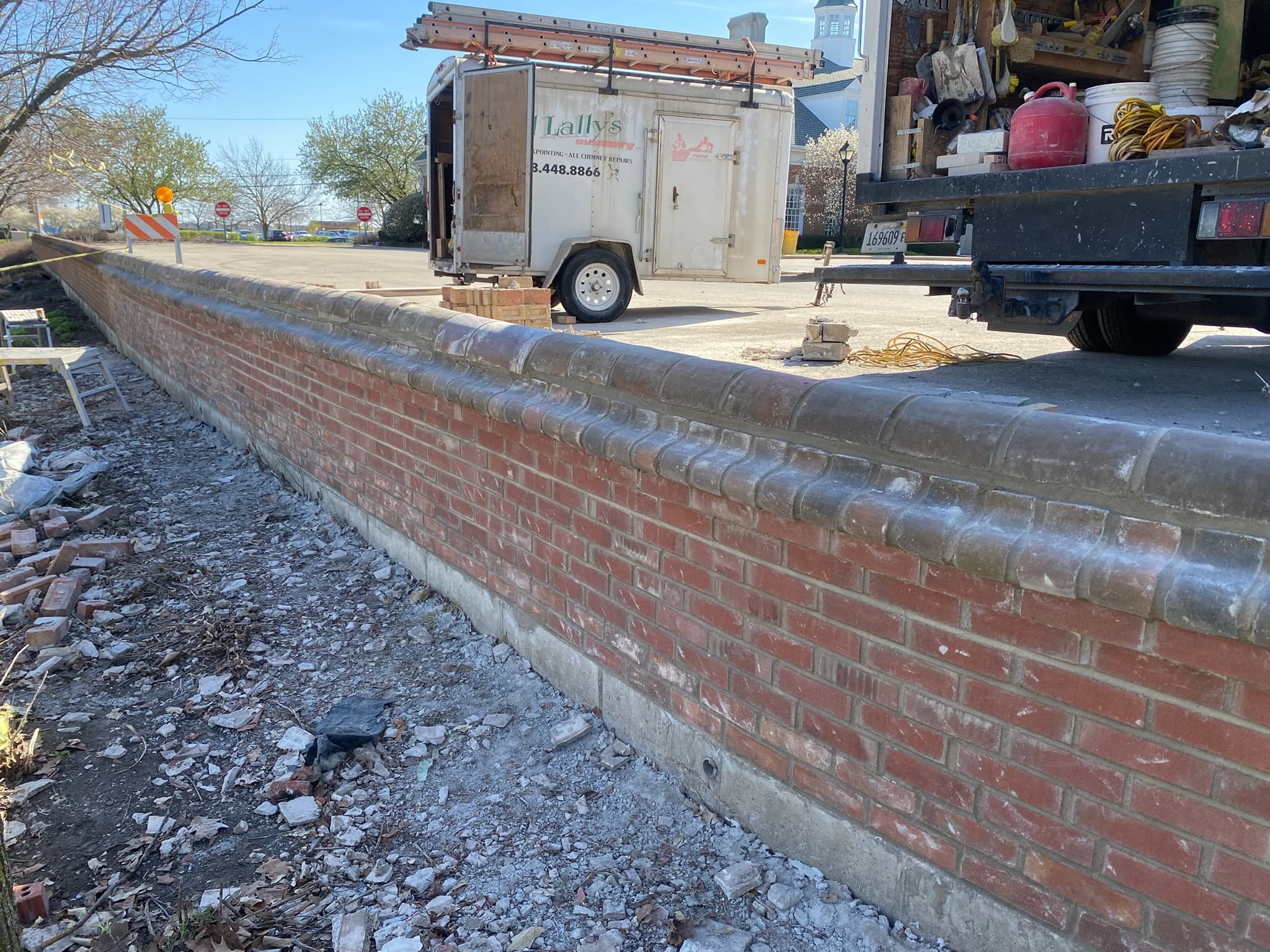
Damaged brick doesn't fix itself, and it doesn't stabilize either. Once brick begins spalling, cracking, or displacing, the process that caused the damage continues to operate — and typically accelerates — until the source is addressed. A Lombard property manager who notices a handful of spalled brick faces in spring is looking at a significantly larger scope if the same building is reassessed in two or three years without intervention.
The more useful question isn't just "how do I fix these bricks?" It's "why are these bricks failing, and what does that mean for the scope and sequence of repairs?"
Why Brick Fails in Lombard
Lombard's building stock spans from early 20th century residential construction in neighborhoods around Lilacia Park to postwar commercial development along Route 53, Madison Street, and the retail corridors toward Yorktown Center. Each era has different brick failure mechanisms.
Freeze-Thaw Spalling
The most common cause of brick failure in Lombard — and across Chicagoland generally — is freeze-thaw cycling. Brick is porous. It absorbs water through mortar joints, surface cracks, and inherent capillary action. When that absorbed water freezes, it expands approximately 9% in volume, generating pressure against the interior pore walls of the brick. Repeat this process through 100+ annual freeze-thaw cycles (Chicagoland's typical count), and the cumulative fatigue causes the fired face of the brick to delaminate and fall away.
The result is spalling: an irregular, often concave void in the brick face where the outer fired layer has separated. Spalling brick has lost its protective fired surface, exposing more porous interior material to accelerated moisture absorption.
Lintel Corrosion Cracking
At every window and door opening in a brick facade, a steel lintel spans the gap and carries the brick above. When lintels corrode — a predictable outcome of decades of exposure to moisture in Chicagoland's climate — they expand. The expanding steel pushes against the surrounding brick, creating horizontal cracks above openings, stepped diagonal cracks at window corners, and eventually displacement of the brick courses above the lintel.
In Lombard's commercial corridor buildings from the 1950s-1970s, lintel corrosion is one of the most consistent findings in building assessments. Buildings in this age range that haven't had lintels inspected or replaced are very likely showing early to advanced lintel failure at multiple openings.
Mortar-Incompatibility Spalling
On Lombard's older residential construction — buildings from the 1910s to 1940s with soft, lime-mortar-era brick — a distinct spalling pattern can occur when previous tuckpointing used hard Portland cement mortar. The mortar in these cases is harder than the surrounding brick, and thermal stress transfers into the brick face rather than being absorbed by the joint. The damage looks like spalling, but it's specifically concentrated around mortar joints rather than distributed randomly across the brick face.
If this is the pattern on your building, addressing it requires both removing the incompatible mortar and replacing the damaged brick — along with the commitment to use softer, lime-compatible mortar in the repointing.
What Brick Repair Involves
Individual brick replacement is appropriate when isolated bricks have spalled, cracked, or been mechanically damaged but the surrounding masonry is sound. The damaged brick is carefully removed, the void is cleaned and prepared, and a replacement unit is set with appropriate mortar.
The challenge in individual replacement is matching. The color, texture, and size of Lombard's older brick varies — early 20th century cream brick, common red, and pressed brick all appear in the area's building stock. Replacement units sourced from regional masonry suppliers or salvage yards should be matched as closely as possible. A poorly matched patch is permanent and visible.
Section replacement is required when damage is concentrated in a zone — above a failing lintel, along a mortar-incompatibility pattern, or in a section where water has been pooling and cycling through multiple freeze seasons. Section replacement removes a block of affected material, addresses the underlying cause (new lintel, flashing, source of water entry), and rebuilds the section with matched brick and appropriate mortar.
Tuckpointing in combination — any brick repair scope that involves spalling or cracking is also a situation where adjacent mortar joints should be assessed. If the joints are deteriorated and that's what allowed water into the brick in the first place, repairing the brick without repointing the joints leaves the water pathway open and the repaired brick exposed to the same conditions that failed the original.
Assessing the Full Scope
Before starting brick repair work, the full assessment should address:
What caused the failure. Spalling from freeze-thaw, cracking from lintel failure, displacement from mortar incompatibility, and settlement cracks all have different repair implications. The right repair for each situation is different.
What's the water entry source. If water is entering through failed flashing, a compromised parapet, or window perimeter caulk — and not just through mortar joints — those sources need to be addressed as part of the repair scope or the brick repair will fail in the same location again.
How far does the damage extend. Individual bricks that look intact from grade may be delaminating. Sounding the brick (tapping with a tool) reveals hollow sections where the face has separated from the body. An assessment that only documents what's visible misses the full scope.
What does surrounding material look like. If nearby brick is in marginal condition, it may be more cost-effective to include it in the current scope rather than returning in 2-3 years for a second phase.
FAQ: Brick Repair in Lombard
Can damaged brick be patched rather than replaced? Masonry patching compounds exist and are used in some applications, but they are not equivalent to full brick replacement in most cases. Patch repairs are visible, often don't match the surrounding brick in color or texture, and can fail at the patch-to-brick bond if the underlying cause of damage isn't addressed. For damaged brick that's visible from the street or property line, full replacement with matched brick is the better outcome.
How do you match the existing brick? We assess the existing brick for color, texture, size, and (where relevant) hardness. For older brick in the Lombard area, regional salvage suppliers and specialty masonry material suppliers are the primary sources for matching historic units. For newer commercial brick, we work with manufacturer references or regional distributors. The match won't always be perfect — weathered brick and new brick differ in surface patina — but we source for the closest available match.
What's included in a brick repair estimate? A complete estimate specifies the number of brick units to be replaced, the method of removal, the replacement material specification, what happens to adjacent mortar joints, whether flashing or lintel inspection is included, and warranty terms. Ask for this level of detail — a vague "brick repair" line item doesn't tell you what scope you're purchasing.
I have one spalled brick near each of my five windows. Is each a separate repair, or is there a pattern? Spalling at or adjacent to all five window openings strongly suggests lintel corrosion rather than random freeze-thaw damage. Freeze-thaw spalling is more distributed; lintel-related failure is concentrated above openings. If that's the pattern, the right scope includes lintel inspection at all five windows before committing to brick repair — because replacing brick above a failing lintel without addressing the lintel just sets up the same failure pattern in the replaced material.
Service Area
Emerald Masonry LLC serves Lombard and the surrounding DuPage County communities from our base in Palos Heights, IL. We work regularly in Addison, Villa Park, Elmhurst, Glen Ellyn, Wheaton, Lisle, and throughout the west suburban area. With 40+ years of Chicagoland masonry experience, we've worked on brick from every era of DuPage County construction — from 1910 bungalows to 1980s commercial facades.
Call (708) 288-1696 or contact us online for a free on-site evaluation. We'll assess the brick condition, identify the cause of damage, and give you a complete scope — not just a price for the symptom.
See also: Tuckpointing | Masonry Restoration | Commercial Masonry
Ready to get started?
Free on-site estimates for commercial and large-scale projects.