
Chimney Repair · Lisle, IL
Chimney Repair in Lisle, IL — Masonry Inspection, Repointing, and Crown Repair for DuPage County
Chimneys fail faster than any other masonry element on a building — all four sides exposed, no overhang protection, freeze-thaw cycling from above and below. In Lisle's climate, most chimneys need meaningful repair within 15-25 years of construction. Emerald Masonry LLC provides chimney inspection, repointing, crown repair, and full rebuilds for Lisle and surrounding DuPage County communities.
Quick Answer
Chimneys fail faster than any other masonry element on a building — all four sides exposed, no overhang protection, freeze-thaw cycling from above and below. In Lisle's climate, most chimneys need meaningful repair within 15-25 years of construction. Emerald Masonry LLC provides chimney inspection, repointing, crown repair, and full rebuilds for Lisle and surrounding DuPage County communities.
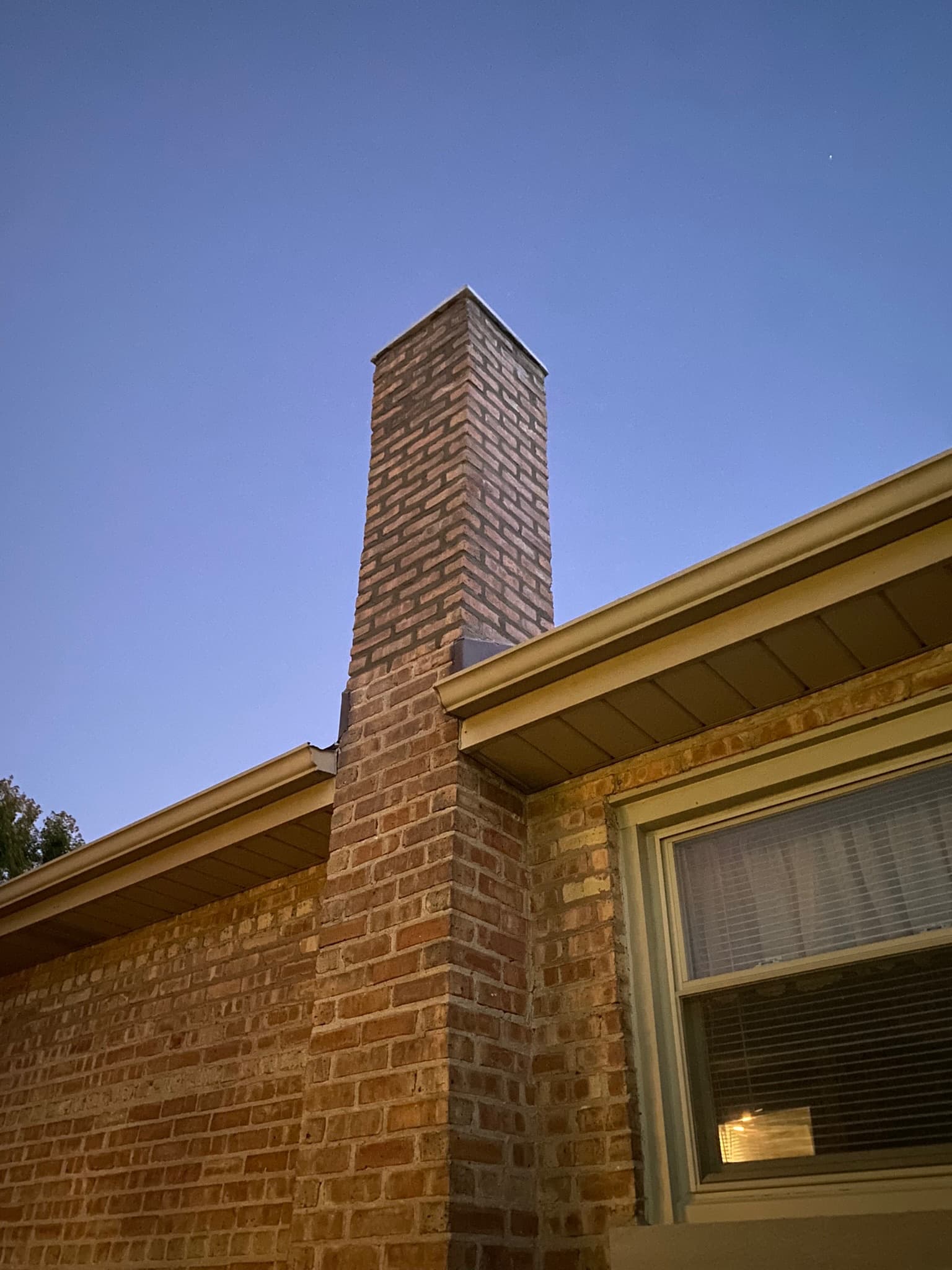
A chimney looks solid from the ground. That's part of the problem. The deterioration that matters most — failed crown concrete, eroded mortar joints on upper courses, open flashing seams — is invisible from the yard and only apparent from close inspection. By the time a Lisle homeowner or building owner can see the damage from ground level, the water infiltration is usually well-advanced.
The other part of the problem: chimneys are the single most exposed masonry element on any building. Every other masonry surface has some protection — overhangs deflect rain from walls, the ground insulates the lower courses from extreme temperature swings. A chimney has none of that. All four faces and the crown take full weather exposure simultaneously, and the interior of the flue experiences hot-cold cycling from fireplace or furnace operation. That combination drives masonry deterioration faster than anywhere else on the structure.
What Goes Wrong — and When
Understanding the failure sequence for chimneys helps you know what to look for and what a repair scope should address.
Crown Failure (Years 5-20)
The chimney crown is the concrete cap at the top of the chimney that seals the gap between the flue and the brick structure. Crown concrete mixes in residential construction are often not high-quality — they crack from temperature cycling and from settling of the underlying masonry. Once the crown cracks, water enters directly into the chimney structure.
Crown failure is the most common chimney repair we see in Lisle. It's also the most preventable with early action — a minor crown crack sealed with flexible crown sealant costs a fraction of the water damage it prevents. A crown with significant cracking or sections missing needs full replacement.
Flashing Failure (Years 10-30)
Chimney flashing is the metal system that seals the joint between the chimney and the roof surface. Flashing fails when the sealant at the flashing-to-masonry joint cracks, when the counter-flashing works loose from its masonry reglet, or when the step flashing rusts through. A failed flashing allows water to enter at the roofline — often pooling in the attic before it becomes visible as interior staining.
Mortar Joint Deterioration (Years 15-30)
The mortar joints in a chimney erode faster than wall mortar because of the combined exposure. Tuckpointing on chimney masonry is the most common maintenance work — removing eroded joints and installing new mortar to restore the weathertight seal.
Spalling and Brick Failure (Years 20+)
Once water enters through failed crowns, flashing, or eroded mortar joints, freeze-thaw cycling inside the brick structure causes spalling — the brick face delaminates and falls. Spalling brick indicates the chimney has been wet for a sustained period. The repair scope expands: affected brick must be replaced, not just repointed.
Structural Leaning or Settlement
Chimney structures can lean or develop significant cracks from settlement of the footing or from earthquake-related movement. A chimney that is visibly leaning or has large through-cracks in the masonry requires structural assessment before repair work begins — this is not a case for tuckpointing alone.
Chimney Repair in Lisle's Climate
Lisle sits in central DuPage County, experiencing the same 100+ annual freeze-thaw cycles that characterize the broader Chicagoland area. What that means for chimneys: mortar joints that are eroded enough to allow water entry will be subjected to freeze-thaw expansion in every vulnerable location every winter. The damage compounds cycle by cycle.
Lisle's residential construction spans from the early 20th century in older neighborhoods near downtown to late 20th century subdivisions on the village's eastern and western edges. The older construction — particularly in areas near the Illinois Prairie Path corridor — has chimneys that are 60-100 years old and often on their second or third generation of mortar.
The newer construction from the 1980s and 1990s has chimneys approaching the age where crown cracking and first-generation mortar erosion are common. These are often the chimneys where owners think "it can't be that old," but the 30-40 year mark is when significant chimney maintenance typically becomes necessary.
What a Complete Chimney Inspection Covers
Before quoting repair work, a proper inspection should document:
- Crown condition: Cracked, spalled, or missing crown concrete; crown slope and overhang relative to the flue
- Mortar joint condition: Joint depth and erosion, particularly on the upper 3-4 feet of the chimney structure where exposure is greatest
- Flashing condition: At the roof-to-chimney joint on all four sides; counter-flashing seating in the masonry
- Brick face condition: Spalling, efflorescence, displacement
- Cap and damper: Chimney cap mesh condition; top-mount damper function
- Interior flue: Liner condition, creosote buildup (coordination with a sweep if needed)
A contractor who quotes chimney repair without getting on the roof to physically inspect the crown and upper courses is estimating from the ground, not from actual condition data. The difference between a $500 crown sealant job and a $4,000 full crown replacement and repoint is only visible from close range.
Chimney Repair Options and Approximate Scope
Crown repair (minor): Cleaning, sealing, and applying flexible elastomeric crown coat to hairline cracks. Appropriate for crowns that are intact but developing surface cracks. Extends crown life 5-10 years.
Crown replacement: Remove and replace the full crown with properly mixed concrete, sloped for drainage. Required when crown has significant structural cracking or sections missing.
Tuckpointing: Remove eroded mortar to ¾" depth, install new mortar matched to the masonry age and brick hardness. Upper chimney courses typically show 3-5 years more erosion than lower courses on the same chimney.
Brick replacement: Spalled or structurally compromised brick replaced with matched material. Color and texture matching matters in visible chimney locations.
Full rebuild: When structural cracking or settlement affects the upper chimney, a rebuild from the roofline up is more cost-effective than attempting to repair a compromised structure. The rebuilt section is set with new mortar and a new crown.
Flashing replacement: Remove and replace the full step-and-counter-flashing system. New counter-flashing is set into reglets cut into the masonry rather than just surface-sealed.
FAQ: Chimney Repair in Lisle
How do I know if my chimney needs repair? From the ground: look for white staining (efflorescence) on the chimney face, visible mortar erosion or missing mortar, cracks or displacement in the brick, or dark staining at the roofline near the chimney base. From inside: water staining on the ceiling near the chimney, smell of damp masonry when the fireplace is used, or visible rust on the damper. Any of these indicates an inspection is needed. Don't wait for rain to come through — by then the water infiltration is already established.
Can I use my fireplace with a damaged chimney? If the interior flue liner is intact and the damage is limited to the exterior mortar joints or crown, use of the fireplace may be safe — but have it inspected first. A chimney with significant structural cracking, a failed liner, or heavy creosote should not be used until it's been properly assessed and repaired. We focus on the masonry exterior; for interior liner and sweep needs, we can refer you to a qualified chimney sweep.
How long does chimney repointing last? Properly installed mortar in a chimney should last 20-30 years in Chicagoland's climate. Crown concrete, properly formed and sealed, lasts 15-25 years before requiring maintenance. Flashing systems, when correctly installed with sealed reglets, last 20-30 years depending on material. These intervals are shorter than for wall masonry because of the elevated exposure.
Do I need a permit for chimney repair in Lisle? Most routine masonry repair — tuckpointing, crown repair, brick replacement — does not require a permit in Lisle. A full chimney rebuild, particularly above the roofline, may require a permit and inspection. We'll advise on permit requirements when we scope the project.
Service Area
Emerald Masonry LLC serves Lisle and the surrounding DuPage County area from our base in Palos Heights, IL. We work regularly in Naperville, Downers Grove, Westmont, Woodridge, Darien, Wheaton, Glen Ellyn, and throughout the western and southwestern suburbs. With 40+ years of Chicagoland masonry experience, we've repaired chimneys across every era of construction present in this region.
Call (708) 288-1696 or contact us online for a free on-site chimney inspection and repair estimate. We get on the roof, document what we find, and give you a clear picture of what needs to be done.
See also: Tuckpointing | Brick Repair | Masonry Restoration
Ready to get started?
Free on-site estimates for commercial and large-scale projects.