
Chimney Repair · Palos Park, IL
Chimney Repair in Palos Park, IL — Crown, Repointing, and Masonry Rebuilds for Southwest Cook County
Palos Park's residential character — established neighborhoods, wooded lots, and homes ranging from mid-century construction to newer builds — means chimney repair needs vary from crown sealant on a 20-year-old fireplace to full upper-chimney rebuilds on homes from the 1960s and 1970s. Emerald Masonry LLC is based in neighboring Palos Heights and serves the full Palos area with chimney inspection, repointing, crown repair, and rebuild services.
Quick Answer
Palos Park's residential character — established neighborhoods, wooded lots, and homes ranging from mid-century construction to newer builds — means chimney repair needs vary from crown sealant on a 20-year-old fireplace to full upper-chimney rebuilds on homes from the 1960s and 1970s. Emerald Masonry LLC is based in neighboring Palos Heights and serves the full Palos area with chimney inspection, repointing, crown repair, and rebuild services.
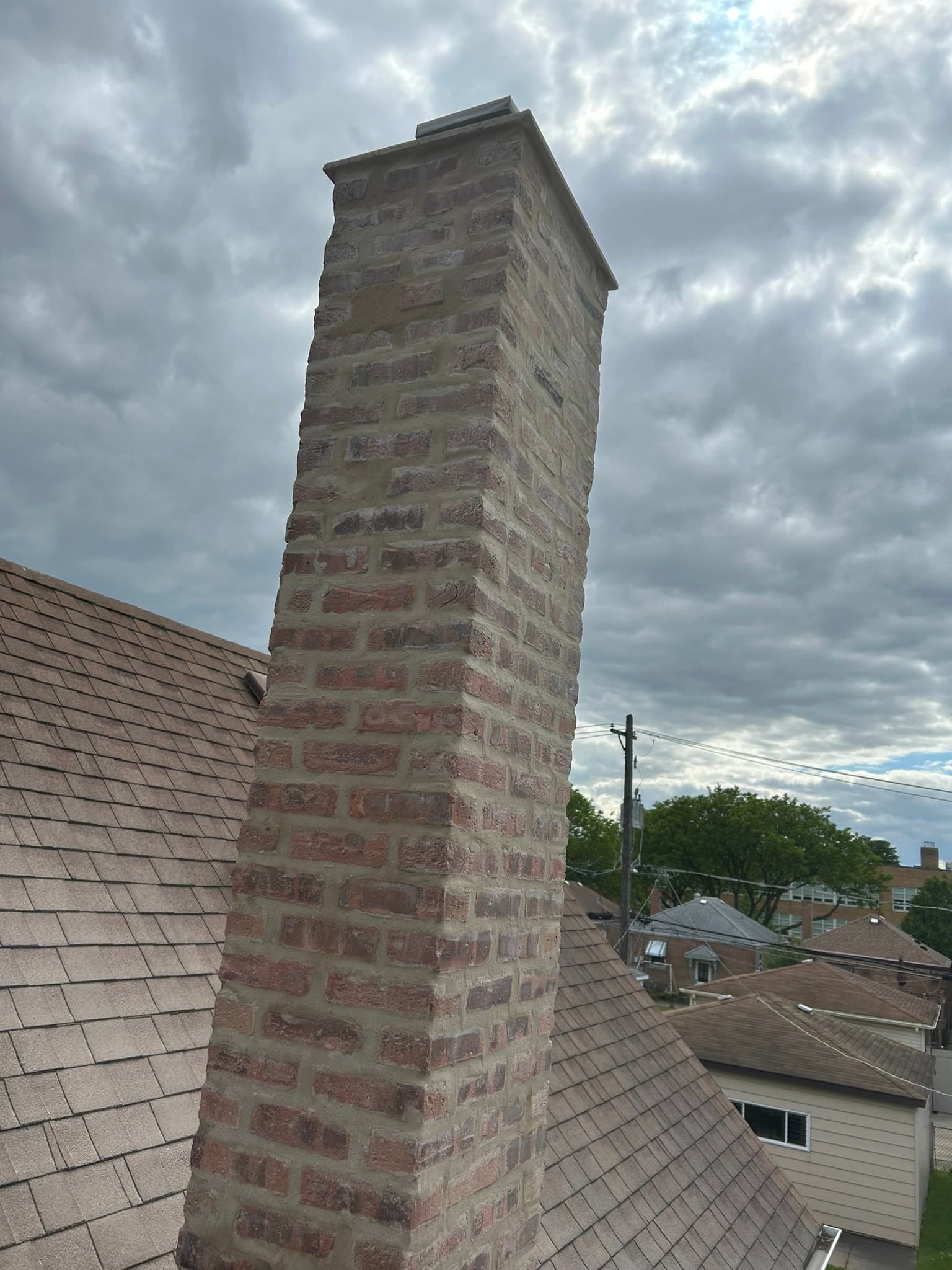
Being based in Palos Heights means we work in Palos Park regularly — these communities share a border and the same residential character. When a Palos Park homeowner calls about a chimney, we're typically on-site within a day or two. That proximity isn't just a scheduling convenience; it means we're familiar with the specific construction eras, typical chimney details, and common maintenance needs in this part of southwest Cook County.
Chimney Construction in Palos Park
Palos Park's housing stock reflects the community's gradual residential development through the second half of the 20th century. Unlike the denser pre-war construction in communities closer to Chicago, Palos Park built primarily from the 1950s through the 1990s — and continues to have new construction on larger wooded lots.
This development timeline means most chimneys in Palos Park fall into a specific age range:
1950s-1970s construction. The largest portion of Palos Park homes dates from this era. Chimneys from this period are now 50-70 years old. Original crown concrete from the 1960s and 1970s is almost universally at or past its service life — visible as cracking, crazing, or sections that have fallen away. Original mortar joints in these chimneys are in the second half of their service life and typically showing erosion on upper courses and the crown-to-chimney junction.
1980s-2000s construction. Chimneys from this era are 25-45 years old. Crown failures and first-generation mortar erosion are the typical findings. Many of these chimneys have prefabricated metal fireplace systems with masonry veneer enclosures rather than traditional full-masonry construction — the repair considerations are different, and the masonry veneer is thinner and more susceptible to cracking from thermal movement.
New construction. Palos Park continues to have custom home construction on remaining wooded lots. New chimneys should have the crown condition inspected at 5-10 years and tuckpointing assessed at 15-20 years — earlier than typical industry guidance, which is calibrated for less severe freeze-thaw climates.
What Goes Wrong — The Failure Sequence
Crown Deterioration
The chimney crown seals the top of the chimney structure, protecting the gap between the flue liner and the masonry. Concrete crowns crack from thermal cycling and from minor settlement of the chimney structure below. Once cracked, water enters directly into the chimney body — through the crown crack, down the flue-to-masonry gap, and into the mortar joints and brick below.
Crown failure is the most common chimney deficiency we see across Palos Park. The repair options range from sealing surface cracks with elastomeric crown coat (appropriate for minor hairline cracking) to full crown removal and replacement (required for crowns with structural cracking, missing sections, or improper slope that pools water toward the flue).
Mortar Joint Erosion
Upper chimney courses — typically the top 3-4 feet of the chimney above the roofline — experience the most severe mortar erosion because they have no overhang protection and take weather on all four sides simultaneously. On Palos Park homes from the 1960s and 1970s, the upper courses often show mortar eroded to ½ inch depth or more, while lower courses accessible from a ladder are in better condition. The discrepancy is visible only from close inspection at roof level.
Flashing Failure
The metal flashing system that seals the chimney-to-roof junction is a consistent maintenance item. Counter-flashing — the portion that seals into the chimney masonry — works loose from its masonry seat over time as sealant shrinks and mortar around the reglet deteriorates. Step flashing at the sides of the chimney develops rust or gaps at seams. Either failure allows water to enter at the roofline, typically appearing as ceiling staining in rooms directly below or adjacent to the chimney.
Spalling
Sustained water infiltration through crown, flashing, or joint failures causes freeze-thaw spalling in the upper chimney masonry. Spalling here is a secondary symptom — it indicates the chimney has been wet for a sustained period. Repair includes both replacing the spalled brick and addressing the original entry point.
Getting an Accurate Chimney Assessment
The information that determines a chimney repair scope can only be gathered from close inspection at roof level. An assessment performed entirely from ground level with binoculars misses:
- Hairline crown cracking not visible from below
- Upper course mortar depth (erosion is visible from above, not from below)
- Counter-flashing seating condition
- Cap and screen condition
- Any displacement in the upper courses
We get on the roof for every chimney assessment. The difference between a $500 crown coat and a $3,500 crown replacement and repoint is only distinguishable with eyes on the structure at close range.
Chimney Repair Options
Crown coat / sealant. For crowns with minor surface cracking — no structural failures, no missing sections, crown geometry intact. Applied as a flexible elastomeric membrane. Extends crown service life 5-10 years.
Crown replacement. Full removal of the existing crown and rebuilding with properly mixed, sloped concrete. Required when crown has structural cracking, significant missing sections, or water has been entering through crown failures for multiple seasons.
Upper chimney repointing. Removal of deteriorated mortar to ¾" depth on upper courses and re-mortaring with appropriate specification. Often combined with crown work.
Full chimney repoint. All accessible courses below the roofline, from firebox level up. Appropriate when full-height mortar assessment reveals uniform deterioration.
Flashing replacement. Full step-and-counter-flashing system replacement. Counter-flashing set into cut reglets rather than surface-sealed, for longer-lasting seal.
Brick replacement. Individual spalled or cracked brick replaced with matched material.
Upper chimney rebuild. When the chimney structure above the roofline has significant structural cracking, leaning, or has been penetrated by water for extended periods, rebuilding from the roofline up is more cost-effective than repairing a compromised structure. New masonry is set on the existing below-grade structure with a new crown.
FAQ: Chimney Repair in Palos Park
How do I know if my chimney needs attention? From the ground: white staining (efflorescence) on the chimney face, visible mortar missing or crumbling, rust staining at the chimney base, or dark staining near the roofline. From inside: water smell when using the fireplace, staining on ceilings near the chimney, rust on the damper or firebox. Any of these is reason for a close inspection — the condition at the crown and upper courses determines the repair scope, not what's visible from below.
My chimney hasn't been touched in 30 years. What should I expect? At 30 years in Chicagoland's climate, expect at minimum: crown needing sealant or replacement, upper course mortar repoint, and likely flashing seal refresh. If the chimney is showing any staining or visible joint erosion from ground level, the upper-course condition is probably worse. A full close inspection will document the actual condition. We'll tell you exactly what needs to be done now and what can wait.
Is chimney tuckpointing different from wall tuckpointing? The process is the same — mortar removal, new mortar packing and tooling — but chimney work requires roof access and presents different safety considerations. Chimney work is also more urgent in terms of weather protection: a chimney with failing crown and mortar is exposed to precipitation and freeze-thaw cycling 365 days a year, with no overhang to deflect rain. The deterioration rate is faster than wall masonry.
Can I use my fireplace while the chimney has mortar deterioration? If the interior flue liner is intact and damage is exterior-only, fireplace use may be safe — but you should have the chimney inspected before the heating season to verify liner condition. Exterior mortar deterioration doesn't directly compromise fire safety, but a cracked or failed liner does. We inspect the exterior masonry; for liner and interior sweep needs, coordinate with a licensed chimney sweep.
Service Area
Emerald Masonry LLC is headquartered in Palos Heights, directly adjacent to Palos Park, giving us faster response times and deeper familiarity with local construction than contractors based further away. We serve the full Palos area — Palos Park, Palos Heights, Palos Hills — as well as Orland Park, Tinley Park, Oak Forest, Frankfort, Homer Glen, and the broader southwest suburban region.
Call (708) 288-1696 or contact us online for a free on-site chimney inspection. We get on the roof, document what we find with photographs, and give you a complete repair scope.
See also: Tuckpointing | Brick Repair | Masonry Restoration
Ready to get started?
Free on-site estimates for commercial and large-scale projects.