
Chimney Repair · Villa Park, IL
Chimney Repair in Villa Park, IL — Masonry Inspection, Crown Repair, and Repointing for DuPage County
Villa Park's residential neighborhoods were built primarily between the 1940s and 1970s — meaning most chimneys in the village are 50-80 years old and well into the range where crown failure, mortar erosion, and flashing deterioration are the norm rather than the exception. Emerald Masonry LLC provides chimney inspection, repointing, crown repair, and full rebuilds for Villa Park and surrounding DuPage County communities.
Quick Answer
Villa Park's residential neighborhoods were built primarily between the 1940s and 1970s — meaning most chimneys in the village are 50-80 years old and well into the range where crown failure, mortar erosion, and flashing deterioration are the norm rather than the exception. Emerald Masonry LLC provides chimney inspection, repointing, crown repair, and full rebuilds for Villa Park and surrounding DuPage County communities.
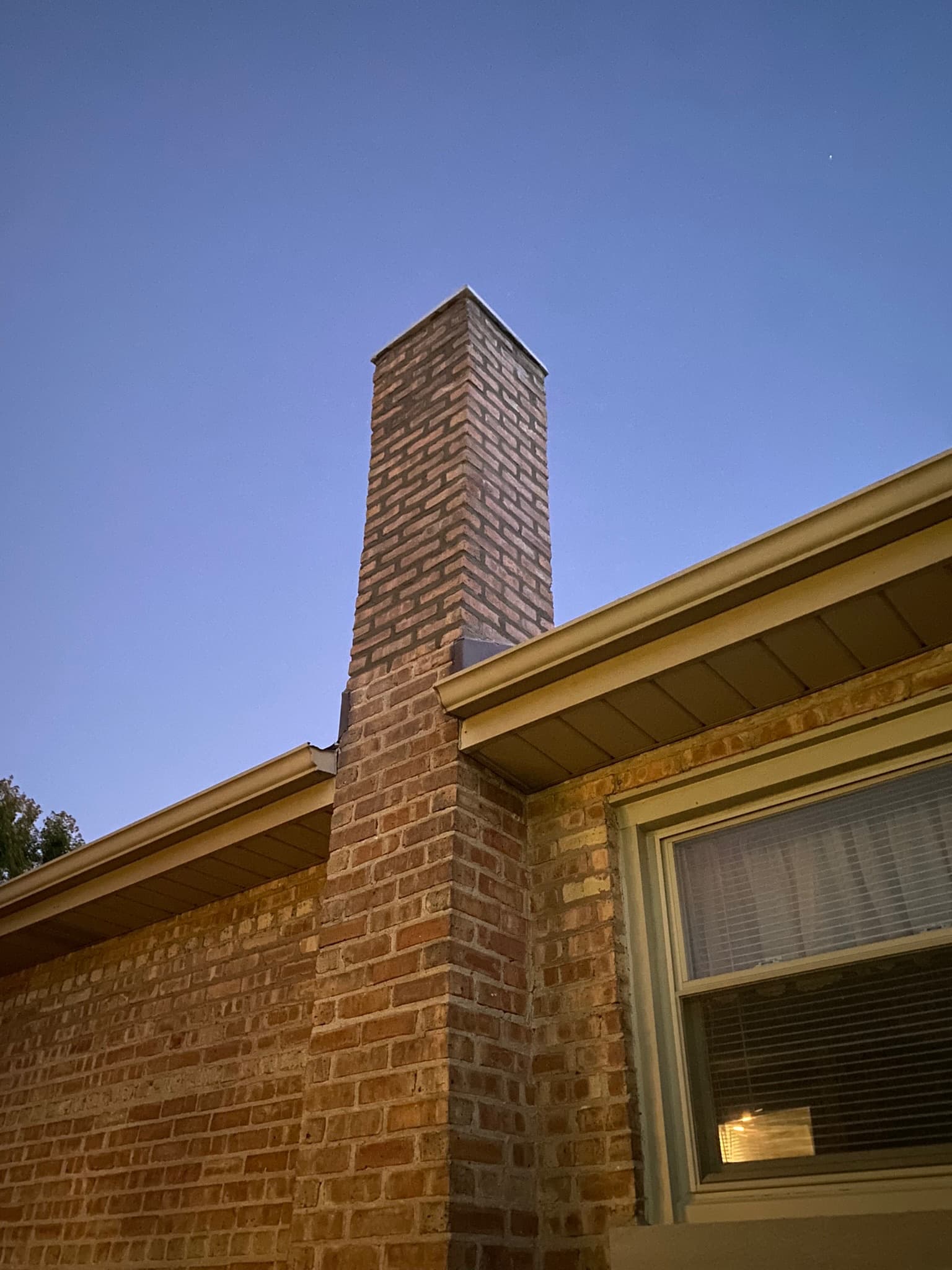
The chimney is the most maintenance-intensive masonry element on any house, and it's the one most often ignored until there's an obvious problem. "Obvious" usually means water staining on the ceiling near the fireplace, a damaged crown visible from the yard, or a chimney sweep who refuses to certify the system until the masonry is repaired. By that point, the water has been entering the chimney for seasons, and the repair scope is larger than it would have been with earlier intervention.
In Villa Park — where residential construction from the postwar decades means chimneys that are 50-80 years old — the maintenance interval is current on most properties, and many are well past it.
Villa Park's Chimney Age Profile
Villa Park grew through several distinct development phases. The oldest neighborhoods east of Villa Avenue contain housing from the 1930s and 1940s, including the brick bungalows and two-stories common throughout Cook and DuPage County in that era. The larger residential buildout occurred in the 1950s and 1960s, with more development pushing toward Route 83 and St. Charles Road through the 1970s.
Chimneys from these eras:
1930s-1940s construction. Chimneys in this age range are 80-90 years old. Most have been addressed at least once in their history, but the current state of crown, flashing, and upper-course mortar reflects the age of the most recent intervention. If the last tuckpointing was done in the 1990s, that work is now 30+ years old and approaching its own end of service life.
1950s-1970s construction. Chimneys 50-70 years old. This is the most common cohort of chimneys in Villa Park, and it's the age range where crown concrete has typically failed structurally (not just hairline cracking), original flashing has been replaced at least once, and the upper chimney courses show meaningful mortar erosion. Full assessment is needed.
The prefabricated fireplace era (1980s+). Homes built from the 1980s onward increasingly used factory-built metal fireplaces with masonry veneer enclosures rather than traditional full-masonry chimneys. These are structurally different, and the masonry veneer is thinner and more susceptible to cracking from thermal expansion. The repair scope for prefab fireplace chimneys focuses more on the veneer and crown than on structural masonry.
The Three Things That Fail Most Often
1. The Crown
The chimney crown is the concrete cap at the top of the chimney that seals the gap between the flue and the surrounding masonry. In Villa Park's climate, crown concrete from the 1960s-1980s is almost always failed — cracked, missing sections, or sloped incorrectly to drain water toward the flue rather than away from it.
Crown failure lets water enter directly into the top of the chimney. This water saturates the mortar joints and brick in the upper courses, drains down the flue-to-masonry gap, and can end up in the firebox or — if the flashing is also compromised — at the roofline junction.
The appropriate crown repair depends on the extent of failure:
- Hairline or surface cracking with intact structure: Elastomeric crown coat sealant extends service life 5-10 years.
- Structural cracking or missing sections: Full crown removal and replacement with properly mixed concrete, sloped to drain outward.
2. Mortar Joint Erosion
Upper chimney courses — the top 3-4 feet of chimney above the roofline — experience the highest mortar erosion rate on any building. No overhang protection, all four faces exposed, thermal cycling from both the chimney flue heat and exterior weather. On Villa Park chimneys in the 50-70 year age range, the upper courses typically show 30-50% deeper erosion than the portions of the chimney accessible from a ladder at the roofline.
Tuckpointing on chimney masonry follows the standard process — removal to ¾" depth, new mortar packing and tooling — but the urgency is higher because of the exposure rate. Eroded chimney mortar causes active water infiltration with every rain event that reaches the chimney faces.
3. Flashing
Counter-flashing seals the junction between the chimney masonry and the roof surface. It's set into the masonry (a cut "reglet" or seal into the mortar joint) and bends down over the step flashing at the roof. When the counter-flashing pulls away from the masonry — from thermal expansion, mortar deterioration in the reglet, or physical loosening — water enters at the roofline.
Flashing failure in Villa Park chimneys typically appears as dark staining on the ceiling below or adjacent to the chimney, or as water that enters during and after rain rather than during freeze events. A chimney that "leaks" when it rains is almost always a flashing issue; a chimney that causes efflorescence or interior musty smell is typically a mortar or crown issue.
What a Proper Chimney Assessment Includes
Anything less than roof-level inspection of a chimney is incomplete. Ground-level observation with binoculars identifies some conditions but misses:
- Crown crack width and depth (visible from above, not below)
- Upper-course mortar condition (the worst erosion is at the top)
- Counter-flashing seating and counter-flashing-to-masonry seal
- Cap and screen condition
- Any displacement in upper courses
Every chimney assessment we perform includes getting on the roof and physically examining the crown, upper courses, and flashing at close range. The written scope we produce reflects what's actually there, not what we can see from 30 feet away.
FAQ: Chimney Repair in Villa Park
My chimney is 60 years old. Has it ever had enough work done on it? Without specific records, it's impossible to know. The safest approach for a 60-year-old chimney is a current close inspection — crown, flashing, mortar condition — and a repair scope based on current conditions rather than assumptions about past work. Many chimneys in Villa Park's postwar housing stock have had cosmetic attention (paint, surface sealants) without addressing the structural crown and mortar issues that drive actual water infiltration.
How do I know if the water staining in my ceiling is from the chimney? Chimney-related staining typically appears directly below or immediately adjacent to the chimney stack, often at the corner where the chimney meets a ceiling or at the fireplace breast. It may appear during rain events (flashing issue) or during extended cold periods (ice damming pushing water under the roof) or throughout the heating season (condensation from combustion gases in an unlined or poorly lined flue). A chimney sweep can investigate from the interior; we assess the exterior masonry and flashing system. For a full diagnosis, both exterior and interior assessment together are most useful.
Can I wait until I notice a real problem? The problem with this approach: by the time you notice it, the water infiltration is already established. Interior staining means water has traveled through the masonry, through the roof assembly, and into the living space. The repair scope at that point includes not just chimney work but potentially insulation replacement, ceiling repair, and mold remediation. Early maintenance — a crown coat at 10-15 years, tuckpointing at 20-25 years — costs a fraction of reactive repair after sustained infiltration.
Does chimney repair require a permit in Villa Park? Routine tuckpointing and crown repair typically don't require permits. Structural work — rebuilding the chimney above the roofline, or any work that affects the fireplace opening — may require a permit and inspection. We advise on permit requirements at the time of scoping.
Service Area
Emerald Masonry LLC serves Villa Park and the surrounding DuPage County communities from our base in Palos Heights. We work throughout Lombard, Addison, Elmhurst, Glen Ellyn, Wheaton, and the full west suburban corridor. Our 40+ years in the Chicagoland market means we've serviced chimneys across every era of DuPage County residential construction.
Call (708) 288-1696 or contact us online for a free on-site chimney inspection. We get on the roof, document everything, and give you a complete scope.
See also: Tuckpointing | Brick Repair | Masonry Restoration
Ready to get started?
Free on-site estimates for commercial and large-scale projects.