Commercial & Industrial Masonry · Harvey, IL
Commercial & Industrial Masonry in Harvey, IL — Brick, Block, and Facade Repair for South Cook County's Industrial and Institutional Buildings
Harvey's commercial and industrial building stock is among the oldest in south Cook County, and most of it is brick and block that has been working hard for sixty to a hundred years. Emerald Masonry LLC repairs facades, loading docks, parapets, and block walls for the warehouses, institutions, and churches that keep the city running.
Quick Answer
Harvey's commercial and industrial building stock is among the oldest in south Cook County, and most of it is brick and block that has been working hard for sixty to a hundred years. Emerald Masonry LLC repairs facades, loading docks, parapets, and block walls for the warehouses, institutions, and churches that keep the city running.
Masonry That Has Been Working for a Century
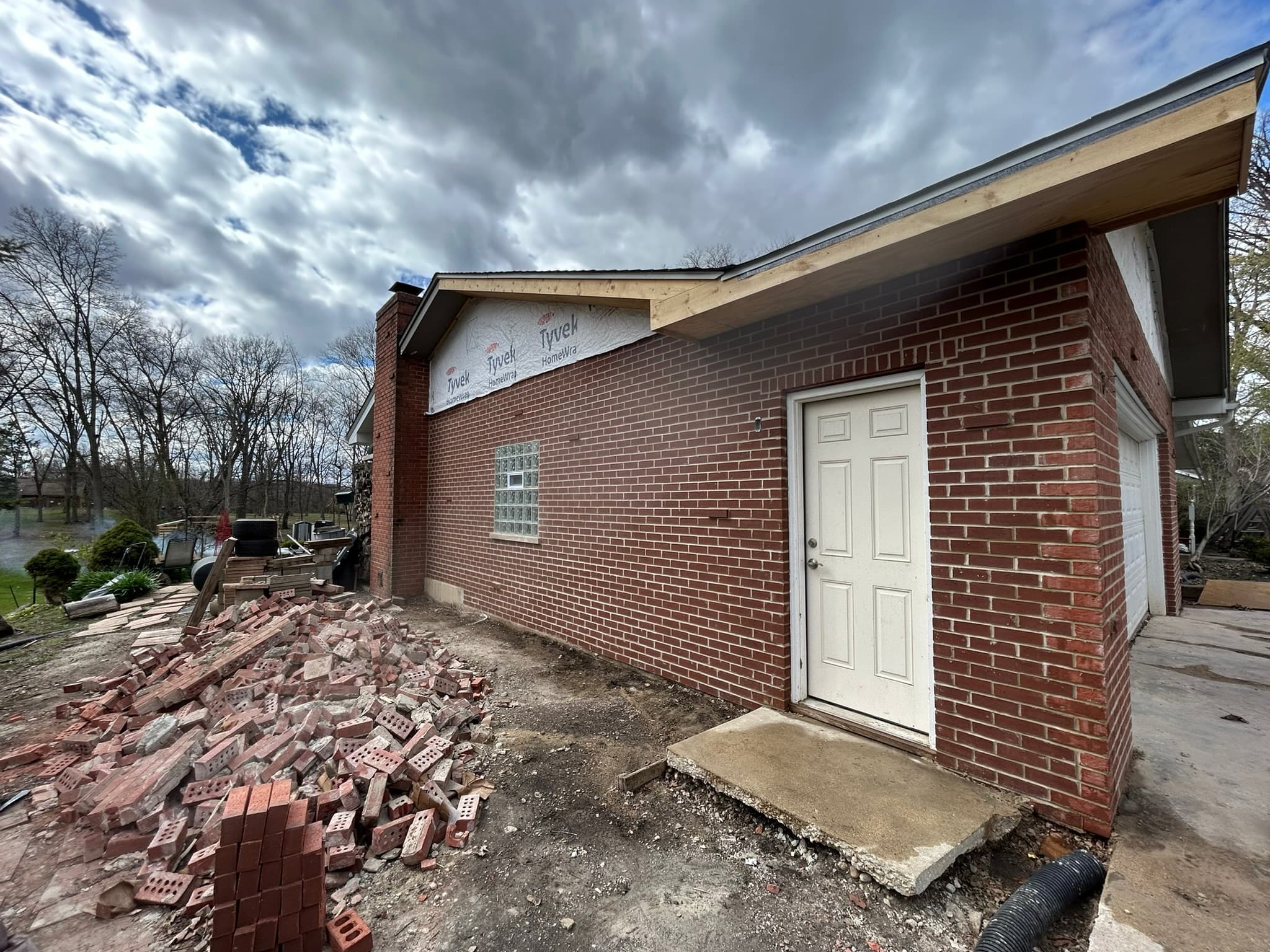
Harvey is a working city, and its buildings show it. Built up as a manufacturing and rail hub starting in the 1890s, the city carries one of the densest concentrations of older industrial and institutional masonry in south Cook County — brick mill buildings, block warehouses, masonry storefronts along Broadway and 154th Street, churches, schools, and municipal structures. A lot of it is original. A lot of it has never had a serious masonry restoration in the lifetime of its current owner.
That history is exactly why commercial masonry in Harvey is its own kind of job. You are rarely working on a clean, modern veneer wall. You're working on solid multi-wythe brick, on early concrete block, on facades that have been patched by three generations of trades, and on structures where the masonry is doing real load-bearing work — not just hanging on the outside for looks. Emerald Masonry LLC works on that kind of building. We repair the brick, block, and facade systems on Harvey's commercial, industrial, and institutional properties so owners can keep them in service instead of writing them off.
The Conditions We See on Harvey Commercial Buildings
Eroded and washed-out mortar joints
On a hundred-year-old brick wall, the mortar is the part that wears out first. Decades of Chicago-area freeze-thaw cycles pull moisture into the joints, freeze it, and grind the mortar back course by course. On a tall industrial wall, that erosion is easy to ignore from the ground — until water starts moving through the wall and showing up inside. Commercial-scale tuckpointing is the baseline repair that keeps a masonry building weathertight.
Spalling and failing brick
Once water is moving through the wall freely, the brick faces themselves start to spall — popping off in sheets and crumbs, especially on the weather sides and near the ground where splashback and salt collect. On loading docks and at grade, you also get mechanical damage: forklifts, trucks, and pallets that chip and knock out brick and block over the years.
CMU block walls
Much of Harvey's industrial stock is concrete block — warehouses, additions, back walls, and entire structures. Block repair has its own failure modes: cracked block from settlement, rusted joint reinforcement, control joints that were never maintained, and water entry through porous, unsealed block. We repair and reseal CMU walls so they stop taking on water.
Parapets and roof edges
The parapet — the section of wall that rises above the roofline on a flat-roofed commercial building — is the most exposed masonry on the structure, weathered on both faces. On older Harvey buildings, failing parapets are one of the most common and most urgent problems we find, because a loose parapet is both a leak path and a falling-masonry liability over a sidewalk or parking area.
Lintels and structural steel
Over every window and door opening in a masonry wall sits a steel lintel. When that steel rusts, it expands and lifts the brick above it — cracking the wall in a stair-step pattern. On commercial buildings with long spans of openings, lintel replacement becomes a recurring maintenance item, not a one-time fix.
How We Approach a Commercial Job
Commercial and industrial masonry is not a one-size repair. The first thing we do on a Harvey building is figure out what's actually failing and why — because the visible damage is often a symptom of something happening behind the wall.
- Assessment. We look at the whole envelope: joints, brick and block faces, parapets, lintels, control joints, and how water is getting in. We tell you what needs to be done now versus what can be staged.
- Scope and staging. On a large building, you rarely do everything at once. We help owners and property managers stage the work — stabilize the urgent failures first, then schedule the rest across budget cycles.
- Access. Industrial buildings are tall. We plan the right access — scaffold, swing stage, or lift — for the height and the site, and we work around the building's operations where we can.
- The repair itself. Color- and profile-matched mortar on tuckpointing, brick and block replaced with matched units, parapets rebuilt to shed water, lintels cut out and replaced with new steel, and walls resealed where appropriate.
What to Look for in a Commercial Masonry Contractor
For a property manager or owner in Harvey, the contractor matters as much as the scope. A few things to insist on:
- They diagnose before they quote. A bid that doesn't explain why the wall is failing is just a price for hiding the problem.
- They're licensed, bonded, and insured — and they can prove it before anyone goes up on a wall on your property.
- They mortar-match. New mortar on an old wall should match the original in color and in strength. The wrong mortar can do more damage than no repair at all.
- They stage honestly. A good contractor will tell you what can wait, not just sell you the biggest job possible.
Frequently Asked Questions
Do you work on industrial and warehouse buildings, not just storefronts? Yes. A large share of our commercial work is exactly that — warehouses, industrial buildings, institutional structures, and churches. We handle solid brick, multi-wythe walls, and CMU block at full commercial scale and height.
Our building is old and we're not sure it's worth restoring. How do we decide? That's the assessment's job. Most older Harvey masonry buildings are far more economical to repair than to replace — the structure is sound and the issue is the envelope. We'll give you an honest read on whether the masonry is a maintenance problem or a structural one before you commit to anything.
Can you stage the work so we don't pay for it all at once? Yes, and on larger buildings we usually recommend it. We prioritize the failures that are leaking or unsafe, stabilize those first, and schedule the rest across your budget cycle.
How urgent is a loose or leaning parapet? Treat it as urgent. A parapet that's pulling away is both an active leak path and a falling-masonry hazard over whatever is below it. It's one of the first things we look at on a flat-roofed commercial building.
Serving Harvey and South Cook County
Emerald Masonry LLC is a family-owned, non-union masonry contractor based in Palos Heights, with more than 40 years of Chicagoland experience. We're licensed, bonded, and insured, and we work with property managers, building owners, institutions, churches, and insurance companies across Harvey and the surrounding south suburbs — Markham, Dixmoor, Phoenix, Dolton, Riverdale, Hazel Crest, and the rest of south Cook County. We carry a $5,000 project minimum and provide free on-site estimates.
If you manage or own a commercial or industrial building in Harvey with eroded joints, spalling brick, a failing parapet, or a block wall taking on water, get it assessed before the next freeze-thaw season makes it worse. Contact Emerald Masonry for a free on-site evaluation. Call (708) 288-1696 or email emeraldmasonryil@gmail.com.
Ready to get started?
Free on-site estimates for commercial and large-scale projects.