
Efflorescence & Waterproofing · Burr Ridge, IL
Efflorescence & Masonry Waterproofing in Burr Ridge, IL — Stop White Staining and Water Infiltration
White staining on brick and mortar is a symptom, not the problem — it means water is moving through your masonry. Emerald Masonry LLC provides efflorescence treatment and penetrating waterproofing for commercial and institutional properties in Burr Ridge and throughout DuPage County.
Quick Answer
White staining on brick and mortar is a symptom, not the problem — it means water is moving through your masonry. Emerald Masonry LLC provides efflorescence treatment and penetrating waterproofing for commercial and institutional properties in Burr Ridge and throughout DuPage County.
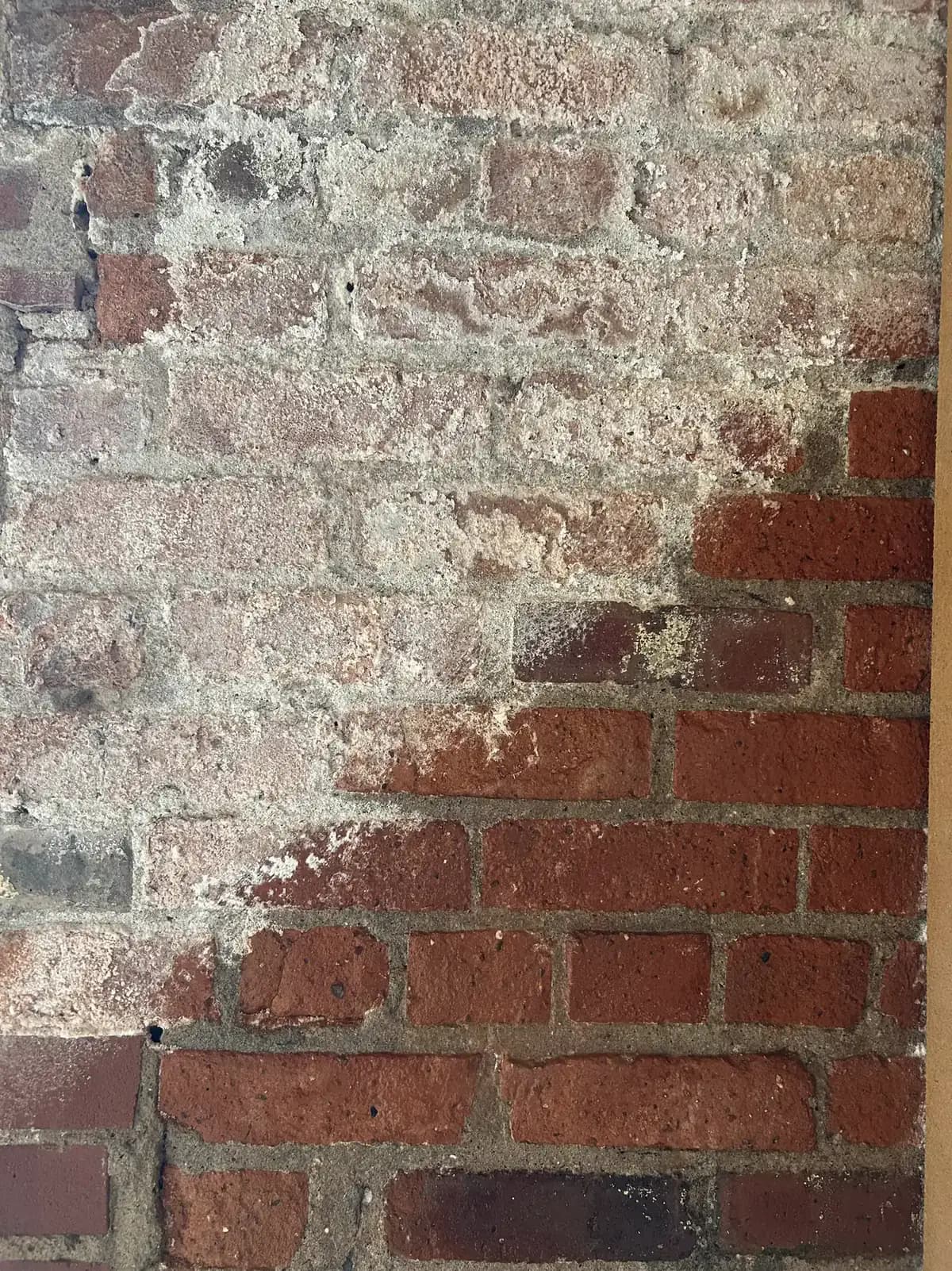
White streaks and crusty deposits on the face of a brick building aren't just cosmetic. They're evidence of water actively moving through the wall — entering through failed mortar joints or compromised coping, dissolving soluble salts from the masonry materials, and depositing them on the surface as the water evaporates. The staining is the visible symptom. The water infiltration is the actual problem.
Burr Ridge's commercial building stock is predominantly brick and masonry construction from the 1970s through the 2000s — well-built buildings, but ones that are now reaching the age where mortar joints fail and water management details need attention. Efflorescence is one of the first signs that maintenance is overdue.
Emerald Masonry LLC handles efflorescence assessment, source correction, and penetrating waterproofing for commercial properties throughout Burr Ridge and DuPage County.
What Efflorescence Actually Is
The white deposits you see on brick and mortar are soluble salts — primarily calcium carbonate — that were always present in the masonry materials. Water moving through the wall carries them to the surface. When the water evaporates, the salts crystallize and deposit on the face.
The mechanism is simple, but the implication is important: efflorescence can't appear without water movement. A building with heavy efflorescence has a water management problem that will, if unaddressed, lead to spalling brick, failing mortar joints, and eventually interior water damage.
Efflorescence is most common in specific locations:
- Below parapet walls and coping — where water enters from the top
- Adjacent to window and door lintels — where flashing fails or sills crack
- At grade level — where water wicks up from soil contact or splash-back
- On north-facing elevations — where walls stay wet longer after rain
The pattern tells you where to look for the water source. That source correction has to happen before waterproofing is applied — sealers don't solve infiltration problems, they just change where the water goes.
The Correct Sequence: Source First, Then Sealer
A common mistake is applying a masonry sealer to a building with active efflorescence. The sealer traps moisture inside the wall, which accelerates freeze-thaw damage and can cause severe spalling. Waterproofing is a finishing step, not a repair step.
The correct sequence:
Step 1: Assess and Correct the Water Source
Walk the building with the efflorescence pattern in mind. Failed mortar joints, cracked coping, open lintels, and compromised window sills are the usual culprits. Each source needs to be addressed before anything else. On most Burr Ridge commercial buildings, this means a combination of tuckpointing failed joints and repairing or replacing damaged coping and flashing.
Step 2: Clean the Efflorescence
Once the water source is controlled, existing deposits need to be removed. Light efflorescence brushes off dry. Heavier deposits require diluted masonry cleaner — typically a mild acidic solution — applied carefully to avoid damaging mortar joints. The brick needs to be thoroughly rinsed and allowed to dry completely before any sealer is applied. Rushing this step leads to sealer failure.
Step 3: Apply Penetrating Waterproofing
After cleaning and curing, a penetrating silane/siloxane sealer is applied to the cleaned masonry surface. Unlike film-forming coatings, penetrating sealers work below the surface — they line the pore structure of the brick and mortar without creating a vapor barrier. This is critical for older masonry: the wall needs to breathe to release any residual moisture.
Application is typically by low-pressure spray in two passes. Coverage rates vary by brick porosity — more porous brick absorbs more material. A properly applied penetrating sealer on well-maintained masonry lasts 7–10 years.
Burr Ridge Building Stock Considerations
Burr Ridge developed primarily from the 1960s through the 1990s along the I-55 and Route 83 corridors. The commercial properties along Harvester Drive and adjacent business parks are predominantly single and multi-story brick construction — many now 30–50 years old and reaching their first or second major masonry maintenance cycle.
This age range is important: buildings from this era often used Type S mortar, which is harder than the lime-based mixes used in older construction. When this mortar deteriorates, it tends to crack rather than recess — which means the joint face may look acceptable while the interior of the joint has failed. Water enters through surface cracks before the deterioration is obvious.
Regular inspection of joint condition — not just surface appearance — is the best early warning system for these buildings.
When to Waterproof vs. When to Repoint First
Repoint first when mortar joints show visible cracking, recession, or crumbling. Applying sealer over failing joints wastes material and delays necessary repair.
Waterproof immediately when joints are in good condition but the brick is absorbing water rapidly (a splash test — spraying water on the surface — will show whether it's absorbed immediately or beads off). Porous brick in good structural condition is a good candidate for preventive sealer application.
Do both in sequence — tuckpointing first, then waterproofing — when joints are in mixed condition. This is the most common scenario on Burr Ridge commercial buildings that haven't had masonry maintenance in 15+ years.
Frequently Asked Questions
Can I just paint over the white staining to hide it? Masonry paint over efflorescence will fail quickly — the salt crystals will push through or behind the coating and cause it to bubble and peel. More importantly, paint is a film-forming coating that traps moisture in the wall. On older brick, that causes accelerated spalling. The staining needs to be cleaned properly, and the water source needs to be addressed, before any coating is applied.
How long does penetrating waterproofing last on a commercial building? A properly applied penetrating silane/siloxane sealer on clean, sound masonry typically lasts 7–10 years. Reapplication is straightforward on a building that's been maintained — it's the initial application on a building with significant efflorescence and mortar deterioration that requires the most preparation work.
Our building has efflorescence every spring — is that normal? Seasonal efflorescence that appears in early spring and fades in summer is common — it's tied to the freeze-thaw cycle driving water movement through the wall. But "common" doesn't mean acceptable. Persistent seasonal efflorescence means the wall is cycling water through it every winter, which is causing cumulative damage to the mortar and, over time, to the brick. Address the source now rather than watching it worsen.
Does waterproofing prevent all future efflorescence? Penetrating sealers dramatically reduce water absorption and will eliminate or greatly reduce efflorescence recurrence when the original water source has been corrected. They don't, however, prevent water entry through new cracks or joint failures that develop after application — which is why ongoing inspection is part of any maintenance plan.
Serving Burr Ridge and DuPage County
Emerald Masonry LLC is based in Palos Heights, IL, and serves commercial and institutional properties throughout Burr Ridge, Willowbrook, Darien, Westmont, Hinsdale, and the broader DuPage County area. We bring career masons of Chicagoland masonry experience to every project.
Contact us at (708) 288-1696 or request a free estimate for your Burr Ridge property.
Also see: Tuckpointing & Repointing | Masonry Restoration | Commercial Masonry
Ready to get started?
Free on-site estimates for commercial and large-scale projects.