
Efflorescence & Waterproofing · Palos Hills, IL
Efflorescence & Waterproofing in Palos Hills, IL — Stopping Moisture Infiltration in Brick Buildings
Efflorescence — the white mineral deposits that appear on brick facades — is a symptom of water moving through masonry walls. In Palos Hills, where brick construction spans from postwar residential to current commercial and institutional, efflorescence and water infiltration are consistent issues that go beyond cosmetic. Emerald Masonry LLC diagnoses the water entry source, repairs it, and applies appropriate waterproofing to prevent recurrence.
Quick Answer
Efflorescence — the white mineral deposits that appear on brick facades — is a symptom of water moving through masonry walls. In Palos Hills, where brick construction spans from postwar residential to current commercial and institutional, efflorescence and water infiltration are consistent issues that go beyond cosmetic. Emerald Masonry LLC diagnoses the water entry source, repairs it, and applies appropriate waterproofing to prevent recurrence.
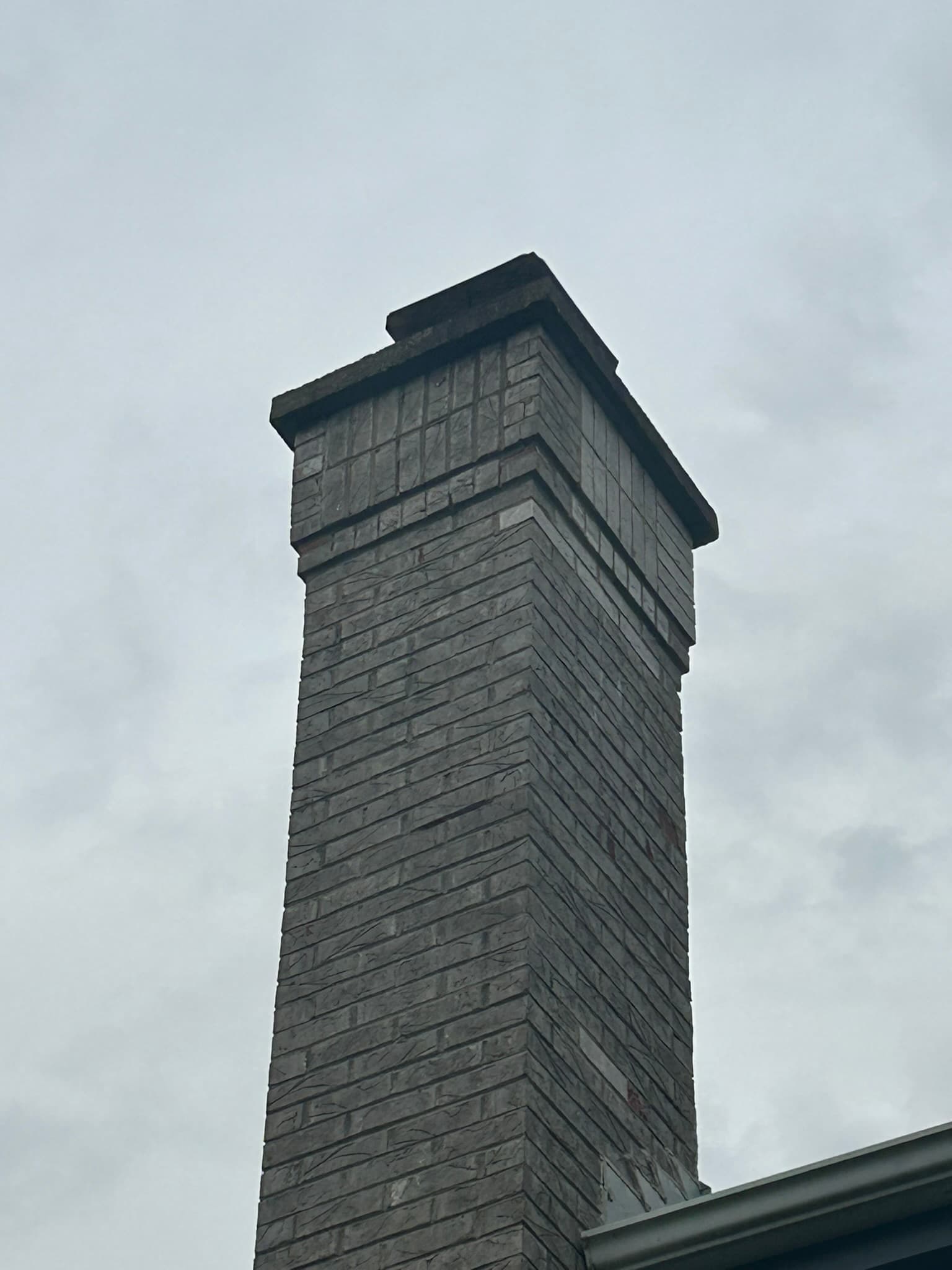
Most property owners in Palos Hills know what efflorescence looks like — those white, chalky stains that streak down brick facades or bloom across the face of block walls. What's less well understood is what efflorescence tells you: water is actively moving through the masonry wall, carrying dissolved mineral salts that deposit on the surface when the water evaporates.
The stain is not the problem. The water causing it is.
What Causes Efflorescence
Water enters masonry through one or more of several pathways:
Deteriorated mortar joints — the most common cause. As mortar erodes, gaps open between mortar and brick at the joint face. Water enters, migrates through the joint matrix, dissolves calcium carbonate and other minerals from the cement, and carries them toward the exterior face. When the water evaporates at the wall surface, the minerals crystallize as white deposits.
Failed flashing or coping — at parapets, window heads, and roof edges, flashing seals prevent water from entering at masonry transitions. When flashing fails or coping joints open, water enters at the top of wall assemblies and migrates downward, typically showing as efflorescence low on the wall or at window heads.
Ground-level wicking — the bottom courses of masonry in contact with or near grade can absorb moisture directly from soil, particularly where grading directs water toward the building or where there's no capillary break between the foundation and the masonry above. Efflorescence at the lower 2-3 feet of a facade frequently indicates this source.
Internal masonry moisture — in some building assemblies, moisture from interior sources (HVAC condensate, pipe leaks, high interior humidity) migrates outward through the masonry, depositing salts as it reaches the cooler exterior face.
Efflorescence in Palos Hills Construction
Palos Hills has a mix of construction eras. The older residential neighborhoods along Ridgeland Avenue and the established commercial corridors date from the 1950s-1970s, with brick construction that's now 50-70 years old. The newer commercial and institutional development on the village's periphery dates from the 1980s through the 2000s. Each era has different efflorescence risk profiles.
Older brick construction from the 1950s-1970s: mortar is typically at or past its first maintenance cycle, and joints that haven't been repointed are often eroded enough to allow active water entry. The brick from this era tends to be more porous than modern production brick, meaning the capillary action drawing water through the wall is more aggressive.
Newer construction from the 1980s-2000s: the primary efflorescence sources in this age range are usually failed coping, failed flashing, or early mortar joint erosion on north and west elevations. Weep system failures — where original weep holes have been painted over or caulked — are also common, trapping water behind the veneer rather than letting it drain.
Palos Hills also has significant masonry construction in its schools, churches, and public buildings. Institutional masonry tends to have larger mortar joint surfaces (thicker walls, more courses), more parapet exposure, and more complex flashing details — all of which create more potential entry points for water and more potential efflorescence sources.
How to Properly Treat Efflorescence
There is a right sequence and a wrong sequence.
Wrong sequence: Apply a masonry sealer over the efflorescence deposits without addressing the water entry. This traps the moisture-carrying pathway behind a barrier, which causes hydrostatic pressure to build against the sealer. The sealer blisters, peels, or causes spalling of the brick face. The efflorescence returns, often worse, when the sealer fails.
Right sequence:
-
Diagnose the water entry source. Before any product is applied, identify where water is getting in. Inspect mortar joints, flashing, coping, weep holes, window perimeters, and grading. This step is non-negotiable.
-
Address the source. Tuckpoint deteriorated mortar joints. Repair or replace failed flashing. Reset or replace coping. Clean or replace plugged weep holes. Repair window perimeter caulk. Correct any grading that directs water toward the foundation.
-
Clean the efflorescence. Efflorescence deposits are removed with dilute acid wash or proprietary efflorescence cleaner, followed by thorough rinsing. This prepares the surface for subsequent treatment.
-
Apply waterproofing. For masonry surfaces where a surface treatment is appropriate, penetrating silane-siloxane waterproofers are applied to breathable masonry after cleaning. These products fill capillary pores within the masonry matrix without creating an impermeable surface film — they allow vapor to escape while repelling liquid water entry.
The key distinction: penetrating waterproofers that are vapor-open can be applied to masonry after the source is repaired. Film-forming sealers that create a surface barrier should not be applied to masonry that still has active water entry — they trap the problem rather than solving it.
What Waterproofing Products Are Appropriate
Not all masonry waterproofing products are the same, and not all are appropriate for every substrate:
Penetrating silane/siloxane waterproofers — appropriate for most above-grade brick, block, and stone masonry. Penetrate 3-5mm into the substrate, react with the silica to form a hydrophobic matrix. Breathable — allow vapor transmission while repelling liquid water. Best choice for most Palos Hills brick applications.
Crystalline waterproofing (e.g., Xypex, Kryton) — appropriate for below-grade concrete masonry and block construction. Penetrates deeply and forms crystals within the substrate pores that block water. Too expensive for above-grade brick applications where penetrating silane-siloxane performs adequately.
Elastomeric coatings — appropriate for specific applications where a bridging membrane is needed across cracked surfaces. Not appropriate as first-line treatment for standard brick masonry — they create a vapor barrier that can cause spalling if trapped moisture has no egress path.
"Masonry sealer" products from hardware stores — usually film-forming, often petroleum or acrylic-based, frequently not vapor-open. These are the products that cause blistering and spalling when applied to damp masonry or over active water entry pathways. We do not use these.
FAQ: Efflorescence and Waterproofing in Palos Hills
Will cleaning the efflorescence make it go away? Cleaning removes the visible deposit, but efflorescence returns if the water entry source is not addressed. We've seen facades cleaned three or four times over a decade without ever fixing the underlying mortar joint erosion causing the problem. Cleaning is a step in the right treatment sequence, not the treatment itself.
How much does masonry waterproofing cost? Treatment cost depends primarily on the surface area being treated and the scope of repair work needed before treatment. Tuckpointing deteriorated joints is usually the largest cost component — the waterproofer application itself is a fraction of the total scope. We provide detailed per-element estimates so you understand where the money goes.
Can I waterproof the masonry myself? Penetrating silane-siloxane products are available to consumers, but the critical step — diagnosing and repairing the water entry source — is where most DIY attempts fail. Applying a waterproofer over deteriorated mortar joints gives you a waterproofed surface that still has water moving through it at the joint level.
Does waterproofing last forever? Penetrating silane-siloxane waterproofers have an effective life of 5-10 years under typical exposure before reapplication is warranted. They're not a one-time-forever solution — they're a maintenance step that should be coordinated with tuckpointing cycles.
Service Area
Emerald Masonry LLC is based in Palos Heights, directly adjacent to Palos Hills, and serves the full southwest Cook County area including Palos Park, Orland Park, Oak Forest, Tinley Park, Bridgeview, Worth, and Chicago Ridge. Our proximity to Palos Hills means rapid response for inspections and estimates, and familiarity with the specific construction details common in this area's building stock.
Call (708) 288-1696 or contact us online for a free on-site assessment of your efflorescence or water infiltration issue.
See also: Tuckpointing | Masonry Restoration | Brick Repair
Ready to get started?
Free on-site estimates for commercial and large-scale projects.