
Historic Masonry Restoration · Oak Park, IL
Historic Masonry Restoration in Oak Park, IL — Preserving Pre-War Brick in One of Chicagoland's Most Architecturally Significant Communities
Oak Park contains one of the most concentrated collections of historically significant architecture in the Chicago suburbs — including the world's largest collection of Frank Lloyd Wright buildings and thousands of pre-war brick residences and commercial buildings. Masonry restoration in Oak Park isn't just maintenance; it's preservation work that requires specific expertise in pre-1930 materials and methods. Emerald Masonry LLC brings 40+ years of Chicagoland experience to historic masonry restoration in Oak Park and the surrounding near-west suburbs.
Quick Answer
Oak Park contains one of the most concentrated collections of historically significant architecture in the Chicago suburbs — including the world's largest collection of Frank Lloyd Wright buildings and thousands of pre-war brick residences and commercial buildings. Masonry restoration in Oak Park isn't just maintenance; it's preservation work that requires specific expertise in pre-1930 materials and methods. Emerald Masonry LLC brings 40+ years of Chicagoland experience to historic masonry restoration in Oak Park and the surrounding near-west suburbs.
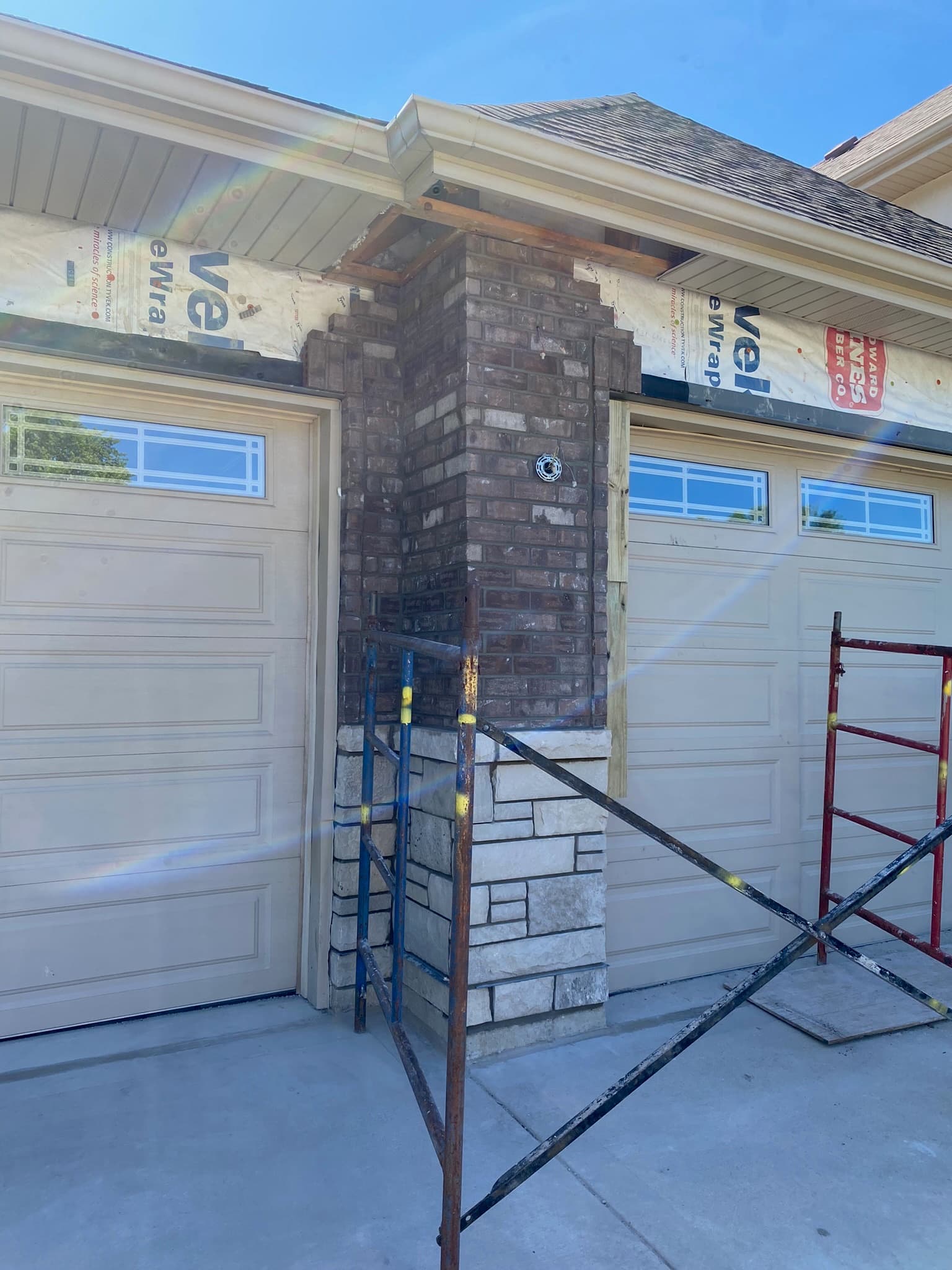
Oak Park is not a typical masonry market. The village's building stock represents a specific intersection of architectural history and materials science that shapes every masonry restoration decision made here. Any contractor working in Oak Park's historic neighborhoods — and particularly on any of the community's designated landmarks — needs to understand what makes this building stock different and what that requires of the repair approach.
What Makes Oak Park's Masonry Different
Oak Park developed primarily between 1890 and 1940, with the densest residential construction in the village occurring during the Prairie School era and the subsequent Craftsman, Colonial Revival, and brick bungalow period. The result is one of the most concentrated collections of pre-war architecture in any suburb in the country.
For masonry purposes, this means:
The brick is historic soft material. Pre-1930 brick — which dominates Oak Park's residential neighborhoods and much of its commercial stock — was manufactured from different clay sources and fired at lower temperatures than modern production brick. Compressive strengths of 1,500 to 3,000 psi were typical. This brick is more porous, more water-absorbent, and less freeze-thaw resistant than modern brick. It was designed to work with soft lime mortar. It does not work well with hard Portland cement mortar.
The original mortar is lime-based. Buildings from Oak Park's primary development period used mortars ranging from pure lime to natural cement-lime combinations. These mortars are soft (75-300 psi compressive strength), flexible, and vapor-permeable. They allowed the wall assembly to breathe, flex slightly with thermal movement, and absorb stress in the joint rather than the brick.
The architectural detail matters. Oak Park's building stock includes ornamental brick detailing — soldier courses, dentil cornices, decorative arches, corbeled elements — that requires careful reproduction when damaged. The craftwork visible on these buildings is part of their architectural significance.
Landmark and historic district protections apply to many properties. Oak Park has an active Historic Preservation Commission and a substantial inventory of locally designated landmarks and buildings in locally designated districts. Work on designated properties may require approval and must meet Secretary of the Interior Standards for preservation.
The Mortar Compatibility Problem
This is the critical technical issue in Oak Park masonry restoration, and it's where the most damage has been done to the village's building stock.
Through the 1970s, 1980s, and 1990s, many Oak Park buildings were repointed with modern Type S Portland cement mortar. The contractors doing this work were using what was standard commercial practice at the time. The results were not immediately apparent. But within 15-25 years, the buildings began to show a specific damage pattern: brick faces spalling, cracking, and delaminating in areas concentrated around the newer, harder mortar joints.
The mechanism is straightforward. Type S mortar at approximately 1,800 psi compressive strength is harder than the historic brick it was installed against. Thermal expansion and contraction cycles the wall. The hard mortar doesn't flex — stress transfers into the brick face, which is now the softer, more compliant element in the system. The brick face cracks. Water enters. Freeze-thaw cycling drives the delaminated face outward. Spalling occurs.
This damage is irreversible. The brick face, once gone, cannot be replaced in kind. Pre-1930 brick is no longer in production. Replacement requires sourcing salvaged period brick — imperfect in match but better than modern units — or accepting a permanent visual distinction in the wall.
The right restoration approach requires:
- Removing all incompatible Portland mortar from joints adjacent to soft historic brick
- Replacing with Type O or custom NHL (Natural Hydraulic Lime) mortar matched in compressive strength and vapor permeability to the original
- Performing test patches before full-scale repointing to verify mortar behavior with the specific brick
Preservation Principles for Oak Park Work
The framework that governs responsible restoration of Oak Park's historic masonry:
Minimum intervention. Do only what's necessary. Don't grind and repoint areas where the mortar is still sound. Every intervention carries some risk of inadvertent damage; limiting scope limits risk. A qualified preservation contractor will tell you which sections of your building can be left alone.
Reversibility. Where possible, repairs should be reversible — using materials that can be removed if better information or better materials become available later. This argues against film-forming sealers that bond permanently to historic masonry and against hard mortar that bonds more strongly than the brick itself.
Matching original materials. Mortar must be matched to the original in strength, color, texture, and vapor permeability. Brick replacement must use period-appropriate salvaged material where possible.
Documentation. Before significant restoration work, photograph the building systematically. Record what the original joint profiles look like, what the mortar color is, what the brick texture is. This documentation guides the work and provides a record for future generations.
What a Competent Historic Masonry Assessment Covers
For Oak Park properties, an honest masonry assessment should address:
Mortar condition by section. Which sections have original intact lime mortar, which have been repointed (and with what), which are actively deteriorating?
Brick condition. Where is spalling occurring? Is it random freeze-thaw spalling or mortar-incompatibility spalling? The pattern tells you the cause.
Mortar specification. Based on visual assessment (and ideally sampling), what is the correct mortar specification for this building's specific brick?
Landmark status. Is this building locally designated? Does it require HPC approval for facade work? We can advise on this but recommend consulting directly with Oak Park's Historic Preservation staff for definitive guidance on your specific property.
Scope prioritization. Which deterioration is urgent (active water entry, structural cracking, displaced brick near entrances) versus which can be monitored?
FAQ: Historic Masonry in Oak Park
How do I know if my Oak Park building has the wrong mortar in its joints? Look at the joints carefully. Original lime mortar is often beige, off-white, or pale gray, with slight texture variation and a soft surface you can scratch with a fingernail. Portland cement repointing work typically appears as a harder gray, often with more uniform color and a sharper joint edge profile. If you see two visually distinct mortar types in the same wall, previous repointing has occurred. Whether that repointing used incompatible mortar is determined by comparing the mortar hardness to the brick hardness — we do this assessment at the time of inspection.
My building is on the local landmark list. What does that mean for repair work? Locally designated landmarks in Oak Park require a Certificate of Appropriateness from the Historic Preservation Commission before exterior modifications, including masonry restoration. This is a review process, not a prohibition — most routine maintenance and restoration work is approved. The key is using materials and methods consistent with the Secretary of the Interior's Standards. We work within this process regularly and can help you understand what documentation the HPC typically requires.
Is lime mortar available or does it have to be special-ordered? Pre-mixed Type O mortar (higher lime content than Type S) is available through masonry supply distributors. Natural Hydraulic Lime (NHL) products from European manufacturers are available through specialty masonry suppliers and provide superior performance in freeze-thaw conditions compared to bagged Type O. Custom lime mortar can also be mixed on-site for close color and texture matching. We specify and source the appropriate product for each project rather than using whatever is in stock.
My neighbors had tuckpointing done recently and the mortar looks completely different from the original. Is that fixable? If the repointing was recently completed with hard mortar and you're seeing early signs of spalling (within the last 1-5 years), removing the incompatible mortar and replacing it now — before further spalling damage occurs — is the better choice. If spalling is already extensive, the damage to the brick face may be irreversible, and the scope shifts to sourcing matching replacement brick for the damaged sections while repointing the remaining joints with compatible mortar.
Service Area
Emerald Masonry LLC serves Oak Park and the surrounding near-west communities from our base in Palos Heights, IL. We work throughout River Forest, Forest Park, Berwyn, Cicero, Elmhurst, Maywood, and the full range of Cook and DuPage County inner-ring suburbs. Our 40+ years in the Chicagoland market includes sustained work on the full spectrum of pre-war brick construction that characterizes this part of the region.
Call (708) 288-1696 or contact us online. Free on-site estimates with written documentation. We'll identify the mortar specification, document the condition, and give you a clear picture of what the restoration scope requires.
See also: Masonry Restoration | Tuckpointing | Brick Repair
Ready to get started?
Free on-site estimates for commercial and large-scale projects.