
Lintel Replacement · Darien, IL
Lintel Replacement in Darien, IL — Corroded Steel Lintel Repair for Brick Commercial and Residential Buildings
Corroded steel lintels are one of the most common sources of progressive brick cracking in Darien's commercial and residential buildings. Emerald Masonry LLC specializes in lintel replacement with proper shoring, brick stabilization, and complete mortar restoration — stopping damage before it compounds.
Quick Answer
Corroded steel lintels are one of the most common sources of progressive brick cracking in Darien's commercial and residential buildings. Emerald Masonry LLC specializes in lintel replacement with proper shoring, brick stabilization, and complete mortar restoration — stopping damage before it compounds.
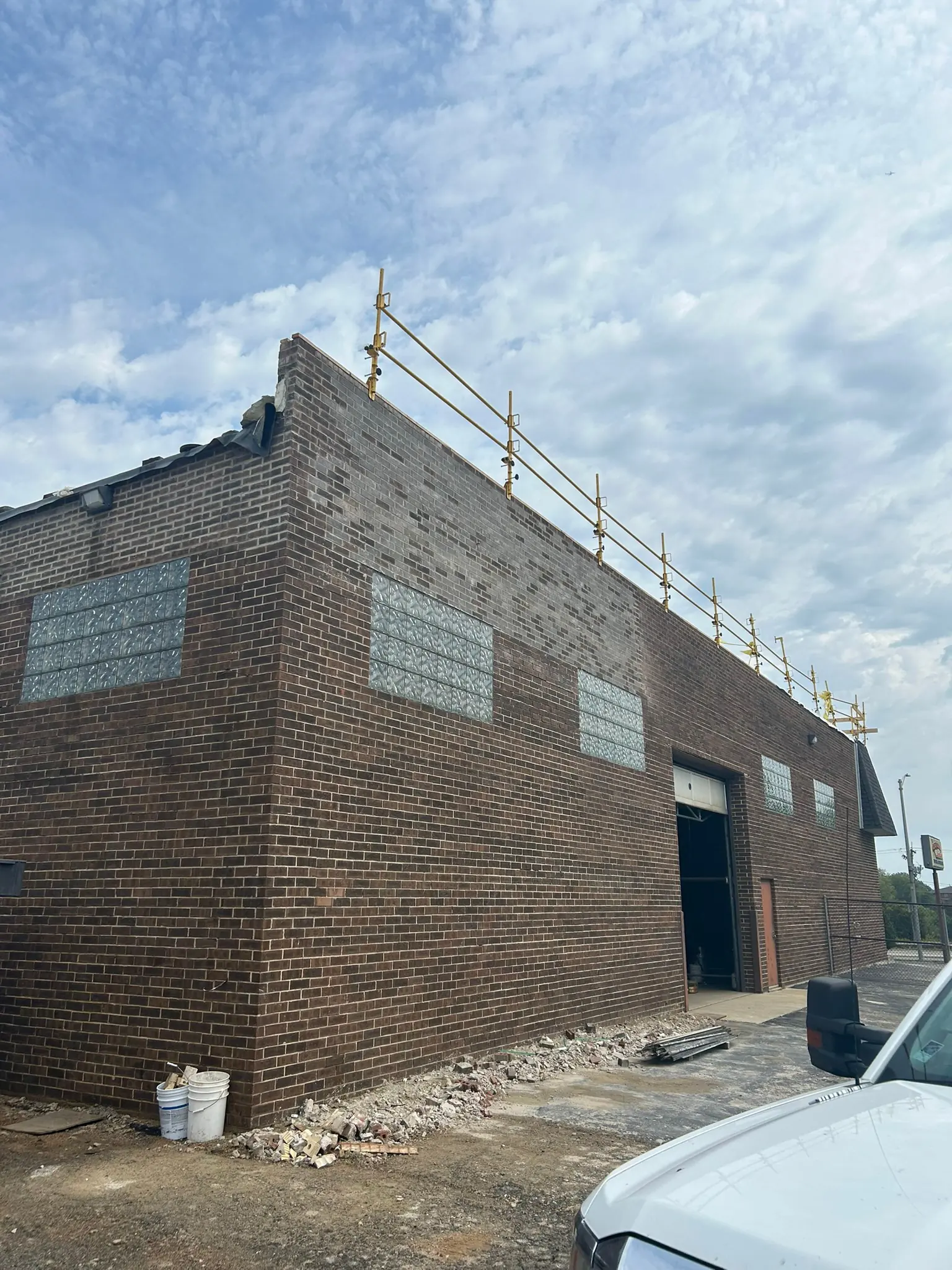
If you've noticed diagonal cracks running from the corners of a window or door opening on a brick building, there's a high probability a corroded lintel is responsible. It's one of the most predictable failure modes in Chicagoland masonry, and it's particularly common in Darien's commercial stock — strip centers, office buildings, and flex industrial properties built primarily in the 1970s through 1990s.
Lintels are the structural steel members embedded in the wall above window and door openings. They carry the weight of the brick courses above the opening. When they corrode, they expand — sometimes dramatically — exerting outward and upward pressure on the brickwork above. The cracks that result are a symptom of that expansion. Until the lintel is replaced, the cracking will continue.
How Lintel Corrosion Happens
Steel corrodes when it's exposed to moisture over time. Lintels in brick walls are embedded at both ends in the mortar bed and often lack proper corrosion protection — galvanizing was inconsistently applied in older construction. Water infiltrates the wall through failing mortar joints, compromised flashings, or window perimeter caulk, and reaches the steel. From there, the process is slow but inevitable.
Darien's commercial properties along Ogden Avenue, 75th Street, and the Cass Avenue corridor include a large inventory of buildings where lintels from the original construction are now 40–50 years old. Many have reached or are approaching the end of their serviceable life.
The irony is that by the time the cracking becomes obvious, the lintel has typically been failing for years. Property managers often notice the cracks before they connect them to lintel corrosion — particularly when the corrosion is subsurface and the steel still looks intact from the outside.
What Lintel Replacement Involves
This isn't a simple swap. Replacing a load-bearing lintel in a brick wall requires the courses above the opening to be temporarily supported before anything is removed.
Step 1: Temporary shoring. Before the lintel is removed, we install needle beams or timber shoring to carry the brick courses above. This is non-negotiable — removing a lintel without proper support risks displacement or collapse of the brick courses above the opening.
Step 2: Brick removal. The brick directly above and adjacent to the failed lintel is carefully removed and set aside. On well-maintained buildings where the brick is in good condition, we salvage and reuse as much original material as possible. When brick is compromised, we source matching replacement units.
Step 3: Lintel removal and replacement. The corroded steel angle is removed, the bearing pocket is cleaned, and a properly sized new galvanized or painted steel lintel is set at the correct bearing depth on both ends. New angles are typically 3½ × 3½ × ¼ inch or larger depending on span and load.
Step 4: Brick and mortar restoration. The salvaged or replacement brick is reset in properly specified mortar, the full joint depth is packed, and the joints are tooled to match the surrounding wall profile and color.
Step 5: Flashing installation. This step is often skipped by contractors who don't understand masonry systems. Properly installed through-wall flashing above the new lintel directs any wall infiltration to the exterior through weep holes. Without it, the new lintel is at risk of the same moisture exposure that failed the original.
Multiple Lintels on Commercial Properties
Darien's strip centers and multi-tenant commercial buildings often have 20–40 window and door openings per building. It's rare for only one lintel to be failing on a building of that age. We typically inspect all openings on a commercial property before scoping the work — finding and replacing all failing lintels in a single mobilization is significantly more cost-effective than coming back for one or two at a time over several seasons.
On properties where only some lintels are actively failing, we can prioritize by severity while documenting others for future monitoring. Our written assessment identifies which lintels need immediate replacement, which are marginal, and which can be deferred.
Residential Properties in Darien
Darien's single-family and townhome inventory includes brick-clad construction from the 1970s and 1980s where garage door openings, large picture windows, and sliding door openings all span steel lintels. These residential lintels are typically smaller in cross-section than commercial ones but fail by the same mechanism.
We handle residential lintel work with the same process — proper shoring, brick salvage where possible, galvanized replacement steel, and flashing installation.
FAQ
How long does lintel replacement take per opening? A single residential lintel — window or garage door opening — typically takes one day including shoring, removal, replacement, and brick reset. Commercial openings with wider spans or multiple courses of affected brick may take 1–2 days per opening. On commercial properties with multiple simultaneous replacements, we sequence the work for efficiency.
Can I just repair the cracks without replacing the lintel? No — if the lintel is the cause, filling the cracks provides no structural benefit. The lintel will continue to expand as it corrodes, the cracks will reopen, and the repair will separate within one to two seasons. We won't perform crack repair on top of an actively failing lintel; it's not an honest service.
My contractor said it's just settlement. How do I know? Settlement cracks typically appear at building corners, at the transition between different structural elements, or at the foundation-to-wall junction. They often run diagonally at roughly 45 degrees. Lintel-failure cracks appear specifically at the corners of window or door openings and tend to run diagonally upward from the corners of the opening. The pattern is fairly diagnostic. When in doubt, we'll assess both possibilities during a free inspection.
Will I need a permit in Darien? Work involving structural elements — including lintel replacement — typically requires a permit from the Village of Darien. We handle permit applications as part of the project scope. Permit requirements and timelines vary; we factor this into the project schedule.
Serving DuPage County Commercial and Residential Properties
We serve Darien, Willowbrook, Burr Ridge, Hinsdale, Westmont, Woodridge, Lisle, and surrounding DuPage County communities. For properties with suspected lintel failure, early action limits the scope and cost of repair. Call Emerald Masonry LLC at (708) 288-1696 or schedule a free on-site lintel assessment. For buildings with broader masonry issues, see our commercial masonry and masonry restoration pages.
Ready to get started?
Free on-site estimates for commercial and large-scale projects.