
Lintel Replacement · Hinsdale, IL
Lintel Replacement in Hinsdale, IL — Stopping Rust-Driven Brick Damage Before It Spreads
When steel lintels corrode inside a Hinsdale brick wall, the expanding rust pushes mortar joints apart and cracks the brick above windows and doors. This is one of the most common — and commonly misread — masonry problems in Hinsdale's older brick housing stock. Emerald Masonry LLC replaces corroded lintels and rebuilds the affected masonry to stop the damage cycle.
Quick Answer
When steel lintels corrode inside a Hinsdale brick wall, the expanding rust pushes mortar joints apart and cracks the brick above windows and doors. This is one of the most common — and commonly misread — masonry problems in Hinsdale's older brick housing stock. Emerald Masonry LLC replaces corroded lintels and rebuilds the affected masonry to stop the damage cycle.
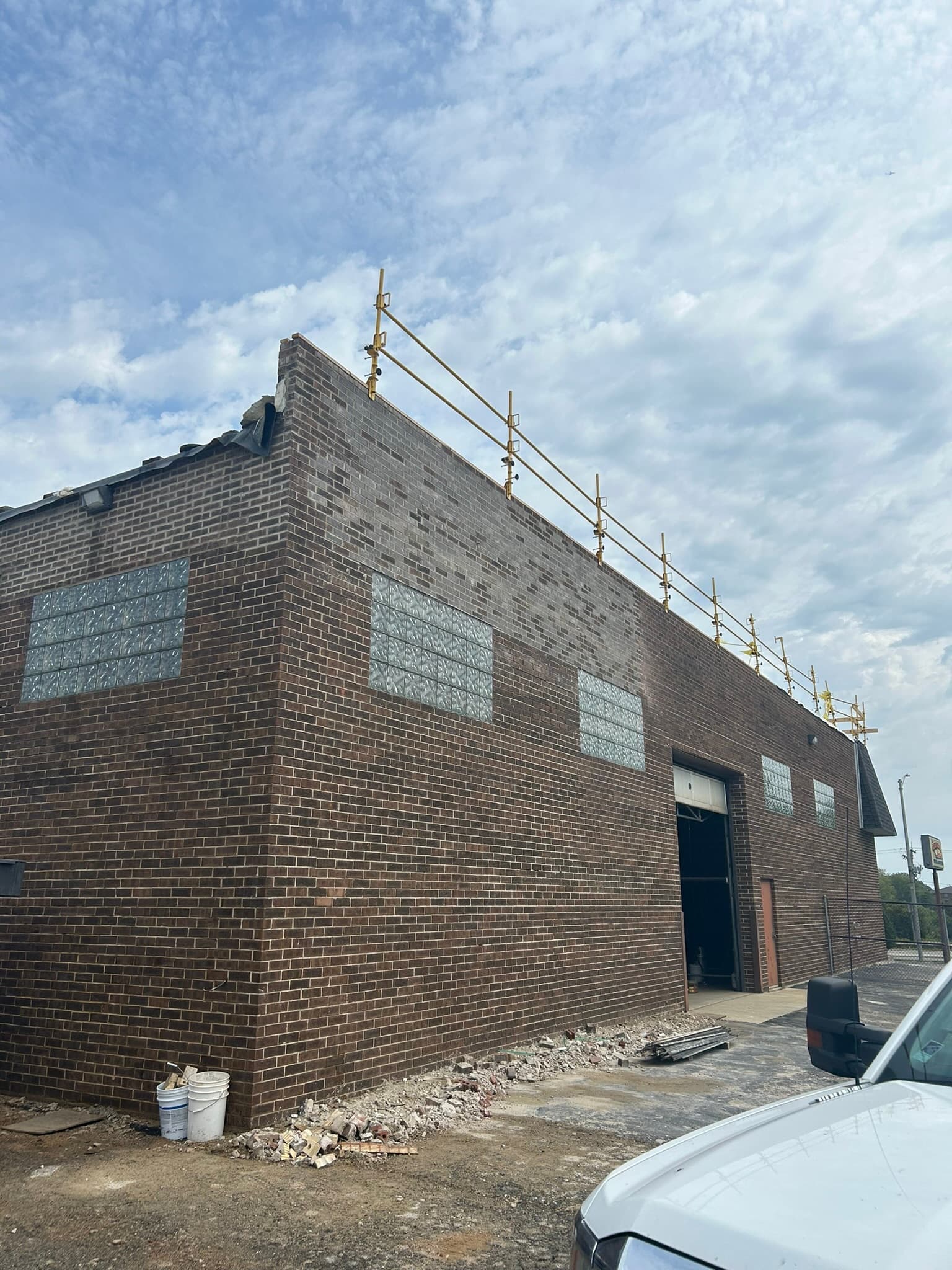
Hinsdale sits in one of the densest concentrations of high-quality older brick construction in the Chicago suburbs. Many of the homes and commercial buildings along the village's historic corridors were built between 1910 and 1955, with brick facades that have aged gracefully — until a hidden steel component begins to fail.
The component is the lintel: a horizontal steel beam embedded above every window and door opening in a brick wall, carrying the weight of the brick courses above the opening. When that steel corrodes, the damage follows a predictable and damaging sequence. Understanding it is the first step toward stopping it.
What a Lintel Does — and What Happens When It Fails
A lintel is structural. Without it, the brick above a window or door opening would have nothing to span across — the weight would collapse inward. Steel lintels became the standard in Chicagoland brick construction in the early 20th century because they're strong, readily available, and easy to embed during construction.
The problem is that steel corrodes when exposed to moisture. And in a brick wall, lintels receive moisture continuously — from rain infiltration through mortar joints, from condensation where warm interior air meets cold masonry, and from the inherent porosity of the brick itself.
When steel corrodes, it expands. A corroded steel lintel can expand to several times its original volume as the rust develops. That expansion generates enormous lateral pressure against the surrounding brick and mortar — pressure that has nowhere to go except outward.
What the Damage Looks Like
The visible signs of lintel failure are consistent and readable:
- Horizontal cracks along mortar joints directly above windows or doors, running parallel to the lintel
- Stepped diagonal cracks at the corners of window openings, following the mortar joints
- Brick displacement or bowing above the opening — the affected courses push out slightly from the wall plane
- Rust staining bleeding through the mortar joints or the brick face in the lintel zone
- Spalling of the brick faces adjacent to the lintel, where expansion pressure causes the fired face to delaminate
The critical point: these cracks and movements are not cosmetic. They indicate that the structural support above the opening is compromised. Water now enters through those cracks, accelerating corrosion further and potentially damaging the building interior during heavy rain.
Why Hinsdale Buildings Are Particularly Susceptible
Hinsdale's older residential and commercial buildings — particularly those in the historic downtown and the neighborhoods northeast of the Metra station — represent the era of construction when steel lintels were new and their long-term corrosion behavior wasn't yet understood. Original construction didn't include corrosion-resistant coatings, galvanized steel, or expansion joints that would accommodate rust development.
Those lintels are now 70 to 110 years old. At that age, in DuPage County's climate with 100+ freeze-thaw cycles per year driving moisture into masonry pores, active corrosion in un-replaced lintels is the rule, not the exception.
Hinsdale also has a significant number of brick buildings with brick-to-grade conditions — minimal or no weep systems, older flashing details that have failed, and continuous mortar joint networks that conduct moisture to lintel zones. These factors compound the corrosion rate.
How Lintel Replacement Works
A proper lintel replacement is a masonry project, not just a metalwork job. The process:
1. Temporary support. Before any masonry is removed, temporary shoring is installed to carry the load of the brick above the opening. This is non-negotiable — the masonry above is structural and must be supported during the work.
2. Brick removal. The brick courses covering and adjacent to the lintel are carefully removed. On historic properties like many in Hinsdale, this requires care to salvage original brick for reuse where possible.
3. Lintel removal. The corroded lintel is cut out. In some cases, the original lintel has expanded and fused to the surrounding masonry; removal requires more careful demolition.
4. Preparation and flashing. Before the new lintel is installed, the lintel seat is cleaned and prepared. Proper flashing and weep systems are installed to prevent moisture from reaching the new lintel. This step is often skipped by contractors who don't understand the long-term implications — if moisture still collects at the lintel, corrosion will recur.
5. New lintel installation. A new galvanized or epoxy-coated steel lintel, sized to the span and load, is set into position.
6. Brick rebuild. The removed brick courses are rebuilt with appropriate mortar — for historic brick in Hinsdale, this means using lime-compatible mortar, not modern Type S, which can cause spalling in soft pre-war brick.
7. Tuckpointing. Adjacent mortar joints affected by the original expansion cracking are repointed to close water entry points.
The full scope is why lintel replacement costs more than basic tuckpointing — it involves demolition, shoring, structural work, flashing, and masonry rebuild. A quote that seems dramatically lower than others usually reflects shortcuts in one or more of these steps.
When to Repair vs. Replace
Not every corroded lintel needs full replacement. Minor surface rust on an otherwise structurally sound lintel — one that hasn't expanded, hasn't caused cracking, and can be exposed and treated — may be addressable with rust-inhibiting treatment and protective coating. This buys time but is not a permanent solution.
Replacement is appropriate when:
- The lintel has expanded and caused cracking or displacement in the surrounding masonry
- Rust staining indicates active, through-section corrosion
- The brick above the opening has shifted from its original plane
- Water has been entering the wall in the lintel zone
- The building is more than 60 years old and lintels have never been replaced
If you have one failed lintel in a building with multiple same-age windows, it's worth inspecting all of them at the same time. They were installed in the same era, with the same materials, under the same conditions. When one fails, others are typically within a few years of the same threshold.
What to Look for in a Lintel Replacement Contractor
Lintel replacement on older brick buildings is specialized work. Verify:
- Experience with historic masonry. A contractor should know mortar compatibility, brick matching, and proper shoring technique. This isn't general construction work.
- Flashing and weep system installation. Ask specifically whether the quote includes new flashing above the lintel zone. If the answer is unclear, the flashing is probably not included.
- Brick matching. Hinsdale's older brick has specific colors and textures — replacement material should be sourced to match. A contractor who doesn't mention this isn't planning for it.
- References from similar projects. Lintel replacement on residential or commercial brick in Hinsdale's vintage housing stock is a specific credential. Ask for references.
- Scope in writing. The quote should specify the number of lintels, the number of courses to be removed and rebuilt, whether flashing is included, and what happens to adjacent mortar joints.
FAQ: Lintel Replacement in Hinsdale
How do I know if my lintel needs replacement or just repair? If there are horizontal cracks above windows, stepped diagonal cracks at window corners, or any visible displacement of the brick above the opening, the lintel has already expanded enough to require replacement. Surface rust alone (without cracking) may be treatable without full replacement — an on-site inspection will determine which situation you're dealing with.
How long does lintel replacement take? A single lintel replacement on a residential building typically takes one to two days for the masonry work, plus additional time for mortar curing. Multiple lintels on a commercial building may take three to five days depending on access and the number of openings. Work should not be rushed — the brick rebuild needs appropriate cure time before shoring is removed.
Will you match the existing brick? Yes. Brick matching is part of the scope for any lintel replacement on a building where the original facade appearance is important. In Hinsdale, where property values and historical character both matter, we source replacement brick to match the existing color, texture, and format as closely as possible.
Can I wait on a lintel replacement if the cracking looks minor? Lintel failure is progressive, not stable. Once the corrosion-expansion cycle begins, water enters through the cracks, accelerates further corrosion, and the expansion continues. "Minor" cracking above a window becomes structural displacement within a few seasons if not addressed. The repair is less expensive and less disruptive earlier in the process than after significant brick displacement has occurred.
What's the $5,000 project minimum? Emerald Masonry maintains a $5,000 project minimum. Single-lintel replacements on smaller residential openings can fall at or just above this threshold. Multiple lintels or the combination of lintel replacement with tuckpointing of adjacent affected joints typically well exceeds the minimum.
Service Area
Emerald Masonry LLC serves Hinsdale and the surrounding DuPage and Cook County communities from our base in Palos Heights, IL. We work throughout Clarendon Hills, Westmont, Darien, Burr Ridge, Willowbrook, Oak Brook, and the broader southwest and west suburban Chicago area. Our 40+ years in the Chicagoland market means we've worked on the full range of brick construction that defines these communities — from 1920s bungalows to mid-century commercial buildings.
Need a lintel inspection or replacement estimate in Hinsdale? Contact us online or call (708) 288-1696 for a free on-site evaluation. We'll assess every opening, document the condition honestly, and tell you what needs to be replaced now versus what can be monitored.
See also: Brick Repair | Masonry Restoration | Tuckpointing
Ready to get started?
Free on-site estimates for commercial and large-scale projects.