
Masonry Restoration · New Lenox, IL
Masonry Restoration in New Lenox, IL — Structural Repairs for Aging Brick & Stone Buildings
New Lenox is one of Will County's fastest-growing suburbs, but it also has a significant inventory of older institutional, commercial, and residential masonry that requires serious restoration work — not just cosmetic patching. Emerald Masonry LLC provides comprehensive masonry restoration services for churches, commercial buildings, institutional properties, and older residential structures throughout New Lenox.
Quick Answer
New Lenox is one of Will County's fastest-growing suburbs, but it also has a significant inventory of older institutional, commercial, and residential masonry that requires serious restoration work — not just cosmetic patching. Emerald Masonry LLC provides comprehensive masonry restoration services for churches, commercial buildings, institutional properties, and older residential structures throughout New Lenox.
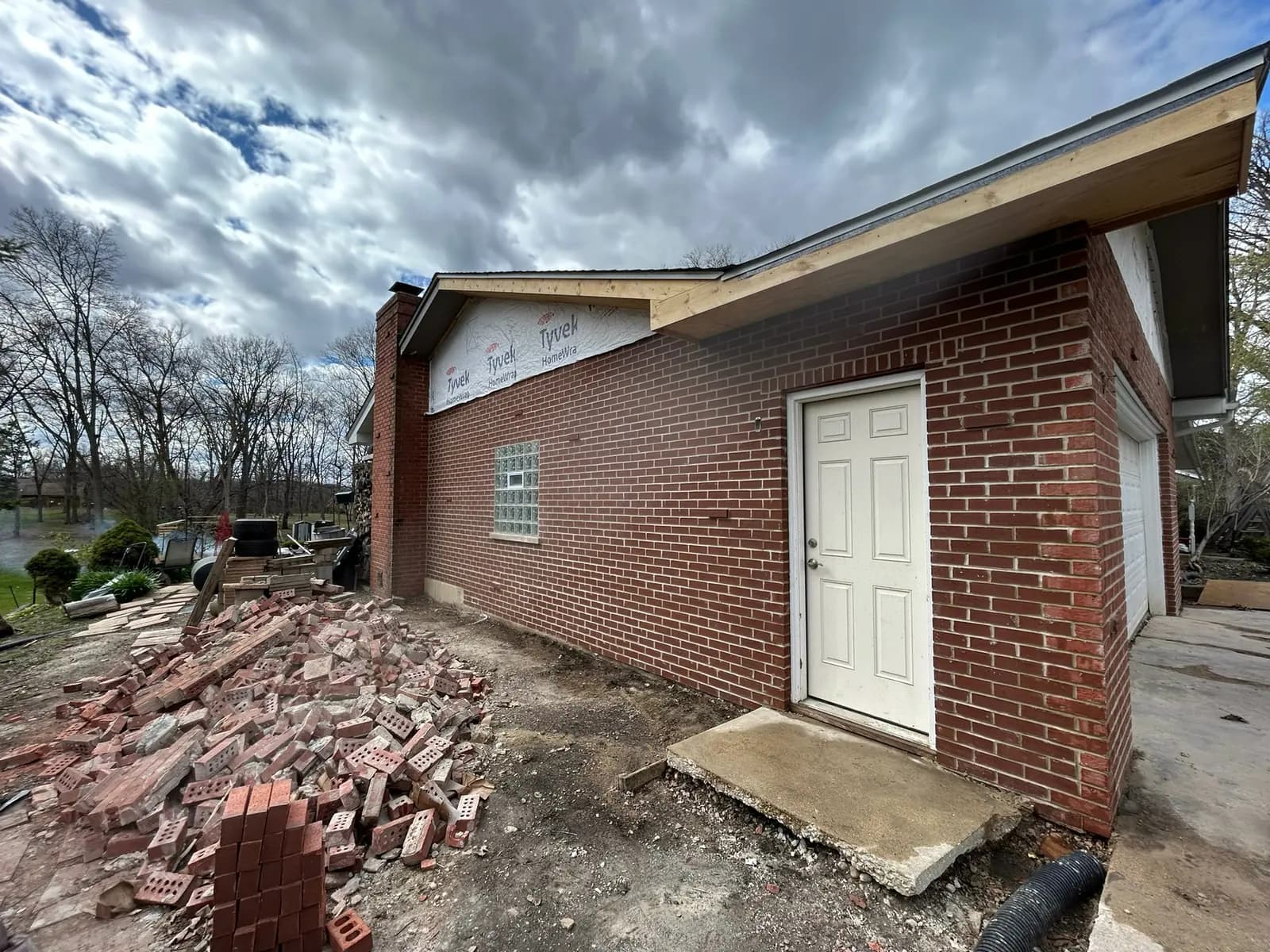
Masonry restoration is a different scope of work than routine maintenance. Tuckpointing a building every 20 years is maintenance. Masonry restoration is what happens when that maintenance has been deferred long enough that the wall assembly itself has been compromised — when structural integrity, not just weathertightness, is at stake.
New Lenox has a range of property types that present real restoration challenges. The older institutional buildings — churches, schools, and early commercial structures along Route 30 — were built with materials and techniques from a different era. The newer residential subdivisions that expanded through the 1990s and 2000s brought cavity wall construction that fails in its own specific ways when flashing and waterproofing systems aren't maintained.
Emerald Masonry LLC has been doing this work in Will County and across Chicagoland for decades. We understand the full picture of what masonry restoration involves — assessment, material matching, structural coordination, and execution.
When Restoration Is the Right Call
Some masonry problems can be resolved with targeted repairs. Restoration is warranted when the scope of damage makes targeted repairs inefficient or when the underlying cause is systemic:
- Widespread joint failure across a large facade section, indicating long-term moisture exposure
- Structural movement — cracks that follow a pattern suggesting foundation settlement or wall tie failure in cavity construction
- Brick spalling across multiple courses driven by freeze-thaw cycling into brick that has absorbed years of moisture
- Parapet deterioration — parapets are the highest-exposure section of any masonry building and often need complete rebuilding rather than repointing
- Persistent efflorescence — ongoing mineral staining is evidence of continuing moisture movement through the wall, not just surface deposits
The correct sequence is always: understand the cause, address the cause, then repair the damage. Restoration work that skips the investigation phase will produce a wall that fails again.
What a Restoration Project Includes
Facade assessment. We walk the building, probe joints and brick faces, photograph all damage, and identify failure patterns. For larger commercial projects, we provide a written assessment report that documents conditions by elevation — useful for insurance claims, HOA capital planning, and historic preservation documentation.
Mortar analysis. On older buildings — particularly New Lenox properties with institutional masonry from the early to mid 20th century — we identify the existing mortar type before specifying a replacement mix. Using the wrong mortar is one of the most common causes of premature restoration failure.
Brick removal and replacement. Damaged brick is removed carefully. Replacement brick is sourced to match in color, size, and absorption characteristics. For older or historic buildings, reclaimed brick is often the best option.
Repointing. All disturbed joints — and often a wider zone around the repair area — are repointed with properly proportioned mortar tooled to match the original profile.
Parapet rebuilding. When parapets have deteriorated to structural failure, we dismantle from the failing point and rebuild with new or reclaimed brick, installing a properly formed cap and integrating with roof flashing.
Waterproofing. After restoration, we apply breathable penetrating sealers on appropriate brick types — not film-forming coatings that trap moisture. See our waterproofing services for more on what products work and what to avoid.
New Lenox Institutional and Commercial Properties
The Route 30 corridor through New Lenox has a mix of commercial buildings from several construction eras. Older retail storefronts from the mid-20th century have solid-brick construction that is forgiving of minor deferred maintenance but eventually reaches a threshold where comprehensive restoration is more economical than repeated patchwork.
Churches and institutional buildings represent some of the most demanding restoration work — large facades with limited maintenance budgets that go years between inspections. We've worked on institutional masonry throughout Will and Cook Counties and understand the constraints that govern how these projects get funded and approved. More on this work at our masonry restoration services page.
Residential Masonry Restoration
For newer cavity-wall residential construction in New Lenox, the restoration issues differ from historic buildings:
Flashing failure — Through-wall flashing above window and door openings, and at the base of walls, is a common failure point in 1990s and 2000s construction. When flashing fails, water migrates into the wall cavity and eventually manifests as interior staining, efflorescence, or brick deterioration at the base of walls.
Weep hole blockage — Weep holes allow water that enters the cavity to drain out. When they're painted over, filled with mortar, or blocked by debris, water accumulates in the cavity and accelerates deterioration.
Lintel corrosion — Steel lintels over window and door openings eventually corrode, expand, and crack the brick above. Lintel replacement is a structural repair that must be done carefully to avoid destabilizing surrounding brick. See our brick repair services for more on lintel work.
Frequently Asked Questions
How do you know when a masonry problem needs restoration versus just tuckpointing?
The scale and depth of the damage, and whether the structural assembly has been compromised. If mortar joints are recessed and crumbling but brick is structurally sound, tuckpointing handles it. When brick is spalling, structural cracks are present, or water has gotten into a cavity wall assembly, the scope expands to restoration — which involves more investigation, material removal, and often structural coordination.
Will a restoration project require permits in New Lenox?
Repair-in-kind work generally doesn't require permits. Structural repairs — lintel replacement, parapet rebuilding, work that changes the structural configuration of the wall — may require permits and engineering documentation. We advise on permit requirements during the estimate process.
Can you match brick on a 1990s residential home?
Often yes. Many brick manufacturers from that era are still in production, or have close current equivalents. We work with regional suppliers who specialize in matching residential brick, and we bring physical samples when assessing the property.
Service Area
Emerald Masonry LLC serves New Lenox and the surrounding Will County area, including Frankfort, Mokena, Joliet, Lockport, Plainfield, and Shorewood. We cover Cook, Will, DuPage, and Kane counties throughout the Chicagoland region.
Free on-site estimates. $1,000 project minimum. Licensed, bonded, and insured.
Ready to get started?
Free on-site estimates for commercial and large-scale projects.