
Parapet Wall Repair · Elgin, IL
Parapet Wall Repair in Elgin, IL — Commercial Roof Edge Masonry for Kane County Properties
Parapet walls on Elgin's commercial and industrial buildings take more weather exposure than any other masonry element — all sides exposed, no overhang protection, direct precipitation on the top surface. In a community with substantial commercial development from the 1960s through the 1990s, most flat-roofed buildings are reaching the age where parapet maintenance is overdue. Emerald Masonry LLC provides parapet wall repair, coping restoration, and flashing repair for Elgin and Kane County commercial properties.
Quick Answer
Parapet walls on Elgin's commercial and industrial buildings take more weather exposure than any other masonry element — all sides exposed, no overhang protection, direct precipitation on the top surface. In a community with substantial commercial development from the 1960s through the 1990s, most flat-roofed buildings are reaching the age where parapet maintenance is overdue. Emerald Masonry LLC provides parapet wall repair, coping restoration, and flashing repair for Elgin and Kane County commercial properties.
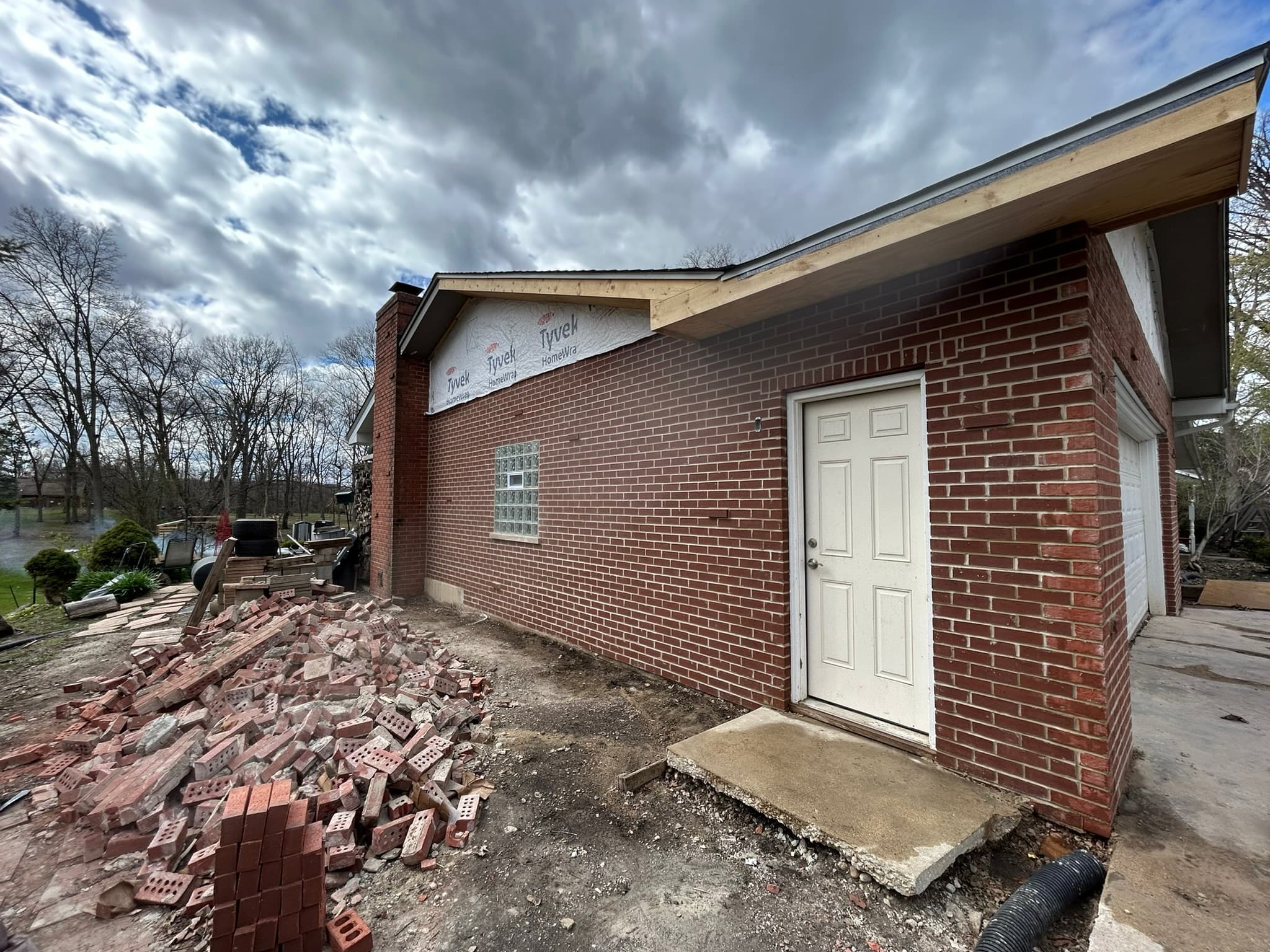
The parapet wall is the most exposed masonry element on any commercial building — and it's the one most likely to be causing interior water damage by the time it's noticed. Parapets sit above the roofline, taking weather on all four faces simultaneously, with no overhang to deflect rain. The top surface receives direct precipitation, and the coping joints that seal the top are the first thing to fail.
In Elgin, where commercial development along the Route 20, Route 31, and I-90 corridors built out substantially from the 1960s through the 1990s, a high percentage of flat-roofed commercial buildings are at or past the parapet maintenance threshold.
Why Parapets Fail Faster Than Other Masonry
The physics are straightforward. A masonry wall with a roof overhang sheds most of its precipitation load away from the wall face — only wind-driven rain contacts the surface directly. A parapet wall has no overhang. Every face receives direct precipitation. The top surface pools water unless the coping is sloped for drainage and the coping joints are sealed.
The temperature differential compounds the problem. Parapets span between the building interior (temperature-controlled) and the exterior (full weather exposure). This creates more severe thermal cycling than wall masonry that's protected by building heat on one side. The masonry expands and contracts more aggressively, and the mortar joints experience more fatigue.
In Chicagoland's climate — with 100+ annual freeze-thaw cycles — a parapet undergoing more wetting and more thermal cycling than the rest of the building reaches its maintenance threshold years ahead of the wall below it.
What Parapet Failure Looks Like
Coping joint failure. The coping units (stone, concrete, or brick) on top of the parapet are sealed at their joints. When those joints open — from sealant shrinkage, thermal movement, or mortar erosion — water enters through the top of the parapet and migrates down through the masonry. Interior staining below the parapet, efflorescence on the parapet face, and saturated insulation below the roof membrane are all downstream effects of open coping joints.
Mortar erosion on parapet courses. The same freeze-thaw pattern that erodes wall mortar operates faster on parapet faces. Buildings where wall mortar is at 25% erosion often have parapet mortar at 50-75% erosion. Parapet repointing is typically needed a full maintenance cycle ahead of the wall below.
Coping displacement. Individual coping units that have rocked out of alignment, tilted, or shifted indicate the mortar bed setting them has failed. Displaced coping units leave direct gaps for water entry at the top of the parapet — these are urgent conditions.
Flashing failure at the parapet base. The flashing system that seals the junction between the parapet wall and the roof membrane is a consistent failure point. When this flashing fails, water enters at the roof-to-parapet junction and can travel under the roof membrane before becoming visible as interior damage. This is one of the harder-to-identify parapet failure modes because the entry point is concealed.
Structural cracking. Diagonal or stair-step cracks through the parapet masonry can indicate settlement, differential thermal movement between the parapet and the main wall, or failed movement accommodation at the parapet-to-wall junction. Structural cracks in a parapet warrant engineering assessment before repair — filling cracks in a moving structure just re-opens the fill.
Parapet Repair in Elgin's Commercial Building Stock
Elgin's commercial corridors include a range of building types:
1960s-1970s strip centers and light commercial. This era's construction frequently has concrete block parapets with brick veneer facing — a combination where the block and veneer can move independently, creating gaps at the veneer-to-block interface. The brick veneer on these parapets is often showing mortar erosion, and the shelf angle flashing that supports the veneer at the roof level is a common corrosion point.
Industrial and warehouse construction. Elgin's industrial parks along the Fox River and along Route 20 have substantial CMU block construction. Block parapets on industrial buildings are often painted or coated, and the coating degradation exposes the underlying block to direct moisture. Block parapet repair includes both joint repointing and surface recoating after repair.
Downtown commercial buildings. Elgin's downtown along the Fox River has some of the oldest commercial construction in Kane County, including brick buildings from the late 19th and early 20th centuries. Parapets on these buildings are full historic masonry — soft brick, lime mortar — with all the mortar compatibility considerations that implies.
The Repair Scope
Coping joint resealing. For coping joints where the original mortar or sealant has cracked or fallen out, repointing with appropriate mortar or elastomeric sealant (depending on the joint type and movement expected) restores the weathertight seal.
Coping reset. Where individual coping units have displaced or rocked, they are reset on a fresh mortar bed with appropriate sealant at joints.
Parapet face repointing. Mortar joint erosion on parapet faces is addressed the same way as wall repointing — joint preparation to ¾" depth, new mortar installation — but the urgency is higher given the exposure.
Flashing repair or replacement. Damaged counter-flashing at the parapet-to-roof junction is repaired or replaced. Where the flashing reglet has failed, new counter-flashing is set into cut reglets in the masonry rather than just surface-sealed.
Brick or block replacement. Where parapet units have spalled, cracked, or displaced beyond repointing, individual units are replaced with matched material.
Structural repair. Cracked parapet sections that have moved require investigation of the movement cause before repair. The appropriate repair may range from flexible sealant at a control joint to partial or full parapet rebuild.
FAQ: Parapet Wall Repair in Elgin
How do I know if my parapet needs repair? From the roof: check coping joint condition (open gaps, missing sealant, displaced units), look for mortar erosion on the parapet face, and check the flashing seal at the parapet base. From inside: look for staining on the ceiling near exterior walls, particularly at corners and along the parapet line. Water staining at upper exterior walls inside is a strong signal that the parapet is leaking.
Can I defer parapet repair if there's no visible interior leak? Parapet deterioration is typically ahead of visible interior damage — water can enter the parapet zone and migrate within the wall assembly for months or seasons before appearing as interior staining. By the time interior damage is visible, the water infiltration is established and the repair scope typically includes not just masonry work but also addressing any insulation or substrate damage below the roof membrane.
Does parapet repair need to be coordinated with roofing? Often yes. The flashing at the parapet base integrates with the roof membrane system. Any flashing replacement or repair should be coordinated with the roofing contractor who maintains the membrane. We communicate directly with roofers during parapet scopes that involve base flashing work to ensure the masonry and membrane repairs are integrated correctly.
What's the difference between parapet tuckpointing and full parapet restoration? Tuckpointing addresses mortar joints on otherwise intact masonry. Full parapet restoration addresses mortar joints plus coping, flashing, any structural cracking, and brick or block replacement where needed. Most Elgin commercial parapets in the 30-50 year age range need at least tuckpointing and coping work — the full restoration scope applies when there's also structural cracking, significant displacement, or failed flashing.
Service Area
Emerald Masonry LLC serves Elgin and the Kane County commercial market from our base in Palos Heights. We work throughout South Elgin, Streamwood, Bartlett, Hanover Park, and the I-90 corridor between Kane and Cook Counties. Commercial parapet repair is a primary scope for our commercial division — we work with property managers, building owners, and insurance adjusters on parapet conditions ranging from routine maintenance to storm-damaged emergency repairs.
$5,000 project minimum. Contact us online or call (708) 288-1696 for a free on-site assessment.
See also: Commercial Masonry | Tuckpointing | Masonry Restoration
Ready to get started?
Free on-site estimates for commercial and large-scale projects.