
Tuckpointing & Repointing · Glen Ellyn, IL
Tuckpointing in Glen Ellyn, IL — Mortar Joint Repair for DuPage County's Brick Homes and Buildings
Glen Ellyn's older neighborhoods carry substantial brick construction from the 1920s through the 1950s — building stock that's now at or past the standard tuckpointing interval for Chicagoland's climate. Emerald Masonry LLC provides professional mortar joint repair for Glen Ellyn homes, commercial buildings, and institutional properties throughout DuPage County.
Quick Answer
Glen Ellyn's older neighborhoods carry substantial brick construction from the 1920s through the 1950s — building stock that's now at or past the standard tuckpointing interval for Chicagoland's climate. Emerald Masonry LLC provides professional mortar joint repair for Glen Ellyn homes, commercial buildings, and institutional properties throughout DuPage County.
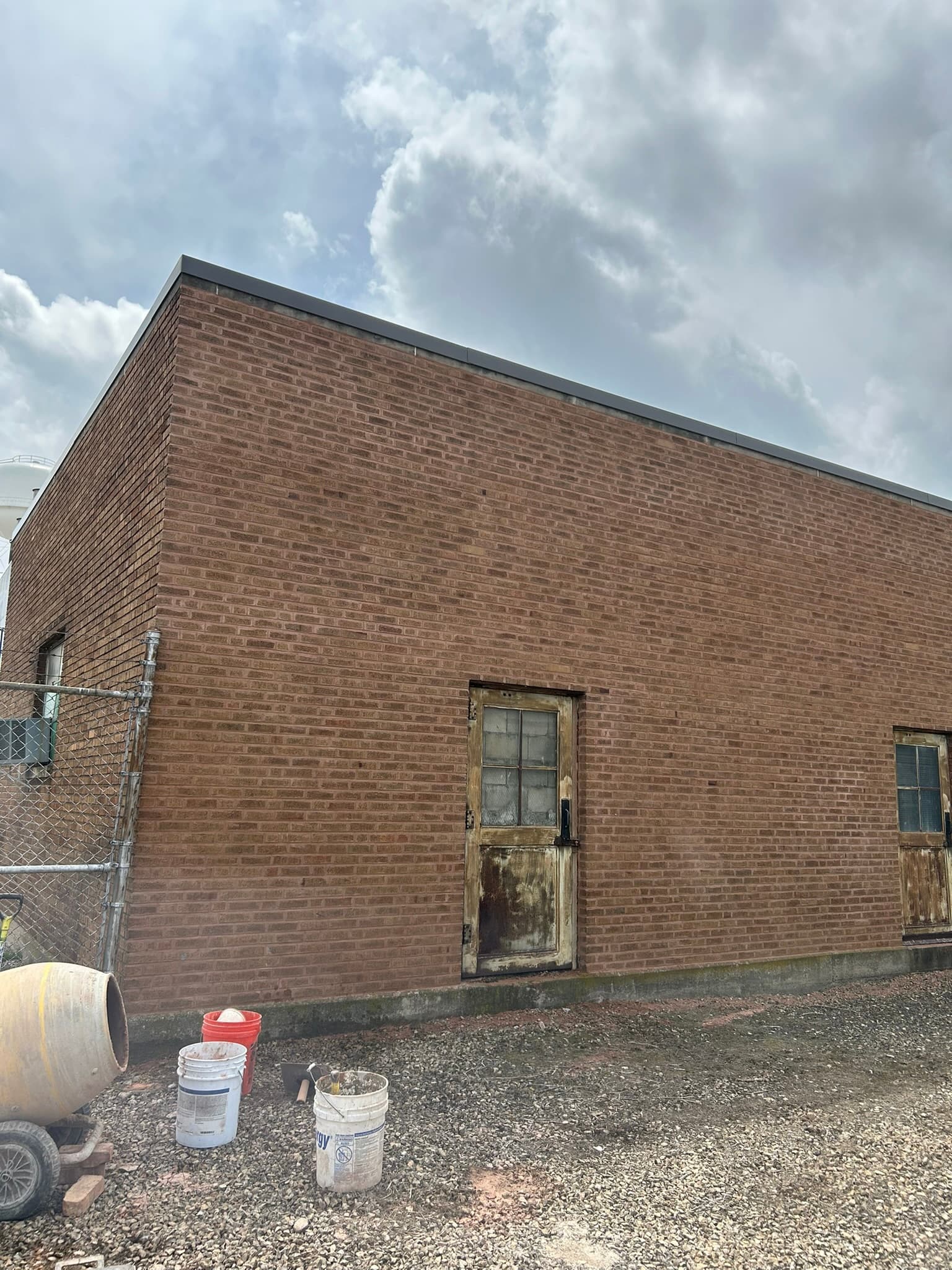
Most of the conversations we have with Glen Ellyn property owners start the same way: they noticed something looking off on a brick wall — a crack, some crumbling, a white stain — and they're trying to figure out how serious it is. The honest answer is almost always the same: it depends on how old the mortar is and how far along the deterioration is. But in Glen Ellyn's housing stock, where a large portion of the brick construction dates to the interwar period, the answer is often "this is overdue."
What Tuckpointing Is — and Why It Matters
Tuckpointing (also called repointing) is the removal of deteriorated mortar from existing masonry joints and the installation of new mortar to restore the weathertight seal. The mortar in a brick wall is the sacrificial element — it's softer than the brick and designed to absorb stress, movement, and moisture so the brick doesn't have to. When mortar wears out, water gets in. When water cycles through freeze-thaw, it expands in the pores of the brick and the remaining mortar, accelerating further deterioration.
The question isn't whether a brick building needs tuckpointing eventually — it's whether the owner catches the maintenance interval before structural and water damage occur.
Glen Ellyn's Brick Building Stock
Glen Ellyn developed rapidly between 1905 and 1950, and much of that development used brick construction — residential bungalows and colonials, commercial storefronts along Main Street and Roosevelt Road, and institutional buildings including churches and schools. Many of these structures are still in active use and retain their original brick facades.
Brick from this era was typically laid with lime-based mortar. That original mortar has a service life in Chicagoland's climate of roughly 80-100 years. Most of Glen Ellyn's 1920s-1940s construction is now well into that range — and often showing it. Buildings where tuckpointing was done in the 1980s or 1990s with Portland cement mortar may be showing accelerated brick spalling adjacent to the newer joints, because the harder Portland mortar placed against soft historic brick transfers stress into the brick rather than absorbing it.
Newer construction from the 1970s through the 1990s — Glen Ellyn also has substantial residential development from this era — typically used Type S mortar. That mortar has a practical service life in Chicagoland of 25-35 years, which means much of the 1975-2000 construction is at or approaching maintenance time.
How to Read Your Mortar Joints
The condition of mortar joints gives you a reliable read on where a building is in its maintenance cycle. What to look at:
Joint depth. Run your finger across a mortar joint. A joint that's flush with the brick face is intact. A joint that you can feel recessing into the wall is eroded — the mortar has worn back from the face. More than ¼ inch of recession means water is entering that joint and pooling against the back of the joint cavity, where it freezes and expands.
Crumbling vs. cracking. Crumbling mortar — soft, sandy, falling out in pieces — indicates age-related deterioration. Cracked mortar can indicate movement, settlement, or, above windows and doors, lintel failure. Both conditions need repair; cracking requires an investigation of the cause, not just refilling.
Color and texture changes. If you see sections of mortar that look different from the rest — harder, grayer, more uniform — those sections were previously repointed. Look carefully at the brick adjacent to those sections for spalling, particularly if the brick is pre-1950 soft historic material.
Efflorescence. White mineral deposits on the brick face indicate water is moving through the wall. The water carries dissolved salts, which crystallize on the surface when the water evaporates. Efflorescence is a symptom, not the root problem — but it tells you water is actively entering somewhere nearby.
The Tuckpointing Process
For a standard tuckpointing project on a Glen Ellyn brick building:
Joint preparation. Deteriorated mortar is removed to a depth of ¾ inch using an angle grinder, oscillating tool, or hand chisel. Grinding speed and technique matter — aggressive grinding on historic brick can damage the brick edges, which are not replaceable without visible patching.
Mortar selection. For Glen Ellyn's pre-1950 brick buildings, mortar must be matched to the brick's compressive strength and porosity. Soft historic brick requires soft, lime-rich mortar — typically Type O or a custom mix. Modern brick and CMU block take Type S. Getting this wrong causes the brick to spall within 15-25 years.
Joint packing and tooling. New mortar is packed into the prepared joint in layers, then tooled to match the original joint profile. Common profiles include concave (the most common), flush, and weather-struck. The tooling affects both appearance and water-shedding.
Curing. Fresh mortar joints need moisture and moderate temperature to cure properly. Work in direct midday sun without shading, or in freezing temperatures without heated enclosures, risks weak mortar that won't bond properly or achieves full strength.
What a Tuckpointing Bid Should Include
When getting quotes for tuckpointing work in Glen Ellyn, look for these specifics:
- What mortar type is being specified, and why is it appropriate for this building's brick?
- How deep will the existing mortar be removed? (Anything less than ½ inch is inadequate)
- What is the scope — which elevations, which joint areas?
- Is scaffolding or lift access included in the price, or quoted separately?
- What is the warranty?
A contractor who can't answer the mortar type question, or who quotes the same mortar regardless of the building's age and brick type, is not thinking about mortar compatibility.
FAQ: Tuckpointing in Glen Ellyn
How often does brick need to be tuckpointed in Illinois? In Chicagoland's climate, the practical maintenance interval for Type S mortar in standard modern brick is 25-35 years. Lime-based mortar in historic brick may last longer in intact condition but deteriorates faster once water infiltration begins. North and west-facing elevations typically reach the maintenance threshold 3-5 years before south and east elevations on the same building.
Can I tuckpoint just one side of my building? Yes, and for many buildings it makes sense to phase the work. North and west elevations are typically first to need attention. Start there, and budget for the remaining elevations in subsequent years. This is a reasonable approach for buildings where budget is a constraint — as long as the priority elevations are addressed promptly.
Does tuckpointing fix water infiltration? Tuckpointing repairs mortar joints, which are one pathway for water entry. It does not address all water infiltration causes — cracks through brick faces, failed flashing, missing or damaged coping on parapet walls, or improperly detailed window frames can all admit water regardless of mortar condition. We'll identify other water entry points when we inspect the building, so you understand the full scope of what's needed.
What's the difference between tuckpointing and caulking? Caulking is an elastomeric sealant applied to control joints, window perimeters, and other flexible seams. It is not appropriate for masonry mortar joints, which require solid mortar, not a flexible sealant. Contractors who caulk standard mortar joints are applying the wrong product — caulk will peel and trap moisture differently than mortar. If you see old caulk in mortar joints on your building, it should be removed and replaced with proper mortar.
Service Area
Emerald Masonry LLC serves Glen Ellyn and the surrounding DuPage County communities from our base in Palos Heights, IL. We work regularly in Wheaton, Lombard, Villa Park, Elmhurst, Lisle, Westmont, Downers Grove, and throughout the western suburbs. Our crews have 40+ years in Chicagoland masonry — long enough to have worked on the full age range of DuPage County's building stock, from pre-war brick to 1990s commercial facades.
Free on-site estimates for tuckpointing and mortar joint repair in Glen Ellyn. Contact us online or call (708) 288-1696.
See also: Masonry Restoration | Brick Repair | Waterproofing
Ready to get started?
Free on-site estimates for commercial and large-scale projects.