
Tuckpointing & Repointing · Shorewood, IL
Tuckpointing in Shorewood, IL — Mortar Joint Repair for Will County's Growing Residential and Commercial Stock
Shorewood developed rapidly through the 1990s and 2000s as Will County's population expanded, producing a building stock with a concentrated age range that is now hitting the 25-35 year tuckpointing threshold. Emerald Masonry LLC serves Shorewood homeowners and commercial property owners with professional mortar joint repair, repointing, and masonry assessment.
Quick Answer
Shorewood developed rapidly through the 1990s and 2000s as Will County's population expanded, producing a building stock with a concentrated age range that is now hitting the 25-35 year tuckpointing threshold. Emerald Masonry LLC serves Shorewood homeowners and commercial property owners with professional mortar joint repair, repointing, and masonry assessment.
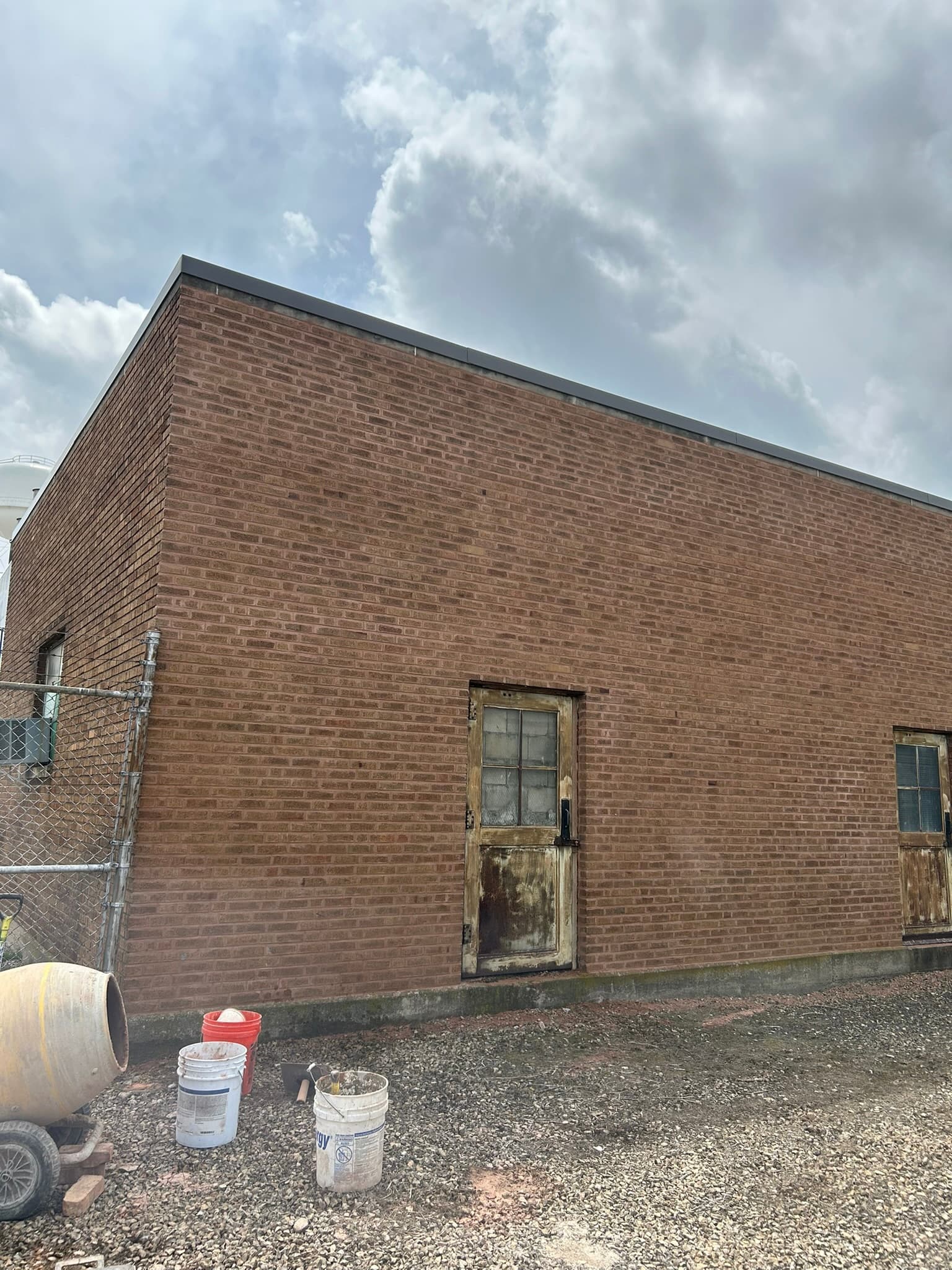
Not every community's masonry maintenance needs follow the same timeline. Shorewood's story is different from older south and southwest suburbs because the village's major growth happened late — most of Shorewood's housing and commercial development occurred after 1990. That means a relatively uniform building age, and it means a concentrated wave of tuckpointing maintenance that's due now or coming in the next 5-10 years.
Shorewood's Building Stock and Maintenance Timeline
Shorewood incorporated as a village in 1957 but grew modestly until the suburban expansion of the 1990s-2000s, when Will County became one of the fastest-growing counties in Illinois. The subdivisions that built out along Route 59, Black Road, and the Caton Farm Road corridor represent primarily 1990s through 2000s construction.
Brick in this era of construction was built with Type S Portland cement mortar. Service life for Type S mortar in Chicagoland's climate (100+ annual freeze-thaw cycles) runs 25-35 years before the first tuckpointing cycle is warranted. For Shorewood's 1990s housing stock, that window is open now. For the early 2000s construction, it opens within the next 5-10 years.
This timing aligns with what we actually see on Shorewood properties: north and west elevations on 1990s brick homes showing measurable mortar erosion, some with efflorescence indicating active water entry, and occasional freeze-thaw spalling on the most exposed faces.
Commercial construction along Shorewood's retail corridors — Route 59 at Black Road, the commercial centers near I-55 — developed on a similar timeline and carries the same maintenance schedule.
Reading Mortar Condition on a Newer Building
One common mistake on 1990s-2000s construction: assuming that because the building is "only" 25-30 years old, it's fine. Mortar erosion is a function of freeze-thaw cycles and water exposure, not calendar age alone. North and west walls on Shorewood homes that were well-exposed to prevailing wind-driven rain have accumulated significant erosion.
The test is straightforward. Run your finger horizontally across a mortar joint on the north wall. If the joint feels flush with the brick face, it's intact. If your fingertip sinks noticeably into the joint — more than about ¼ inch — the mortar has eroded below the brick face and is no longer shedding water correctly. Water is pooling inside the joint cavity, wetting the back of the joint and the surrounding brick, and freeze-thaw cycling is occurring inside that cavity.
Repeat this test on the south wall. If the south wall is flush and the north is eroded, you have the classic first-tuckpointing-cycle pattern: north side needs work now, south side has a few more years.
What Tuckpointing Involves
Proper tuckpointing on a Shorewood residential or commercial building:
Mortar preparation. Existing mortar is removed from the joint to a depth of ¾ inch minimum using an angle grinder with a diamond blade. Less than ¾ inch doesn't create adequate mechanical bond for the new mortar. Speed matters here — a contractor who rushes the grinding phase to save time produces shallow joints that don't hold.
Mortar specification. For Shorewood's post-1990 brick (modern, dense, high-compressive-strength), Type S Portland cement mortar is the appropriate specification. This is different from historic pre-1930 buildings that require lime-compatible mortar. The brick is harder here; the mortar can match.
Packing and tooling. New mortar is packed into the prepared joint in layers, compressed, and tooled to the original profile once it reaches appropriate stiffness. The joint profile affects both appearance and long-term water shedding. Standard profiles for residential brick are concave (the most common) or weather-struck.
Curing. Fresh mortar needs to stay above 40°F and shouldn't be exposed to direct hot sun or heavy rain during the first 24-48 hours of cure. In Chicagoland's spring and fall — the prime tuckpointing seasons — this is generally manageable with scheduling awareness.
Phasing Tuckpointing on a Shorewood Home
For homes where budget makes whole-building tuckpointing difficult to absorb at once, phasing by elevation is a sound approach:
Phase 1 (urgent): North and west elevations, plus any chimney and parapet surfaces regardless of orientation.
Phase 2 (2-3 years later): East and south elevations, once Phase 1 work has been completed and the priority water-entry pathways are addressed.
Don't defer Phase 1 to do Phase 2 first. South elevation mortar may look worse cosmetically (weathering) while the north elevation has more actual water infiltration risk. Address the actual maintenance priority, not the visually obvious one.
Commercial Tuckpointing in Shorewood
Commercial buildings along Shorewood's Route 59 corridor require the same maintenance process as residential — with the added complexity of access, tenant operations, and larger facade areas.
For commercial properties, tuckpointing estimates should specify:
- Which elevations and which joint areas are included
- How the contractor will access upper courses (boom lift, scaffolding)
- Whether the work can be phased around tenant access and loading hours
- Warranty terms
Commercial facades that haven't been tuckpointed in 20+ years often show a combination of mortar erosion and early efflorescence, particularly at the parapet level and at the lower 2-3 courses near grade. Both zones should be in scope for first-cycle commercial tuckpointing.
FAQ: Tuckpointing in Shorewood
My house was built in 1996. Is it really already time for tuckpointing? In Chicagoland's climate, yes. The 25-35 year service life for Type S mortar means 1990s construction is at or entering the maintenance window. Whether your building specifically needs work depends on elevation exposure and the conditions it's experienced. A quick inspection — running your finger across north-wall joints — will tell you if erosion has progressed past the ¼" threshold. If it has, waiting will deepen the erosion and increase water infiltration before the work gets done.
Can I tuckpoint just the north and west sides for now? Yes, and this is often the right approach. North and west elevations are almost always first to reach the maintenance threshold. Tuckpointing them now stops the active water infiltration on the most vulnerable faces. Budget for the remaining elevations in the following 2-4 years. The key is not deferring the high-priority elevations while doing something else first.
What's the difference between tuckpointing and caulking? Tuckpointing uses solid mortar, packed into the joint. Caulking uses an elastomeric sealant applied on top of or in place of mortar. The two materials are appropriate for different applications — mortar for standard masonry joints, caulk for control joints, window perimeters, and other flexible connections. Using caulk in a standard mortar joint is inappropriate: caulk doesn't bond the way mortar does, it weathers differently, and it traps moisture when it fails. If you see old caulk in mortar joints on a building, it should be removed and replaced with actual mortar.
How do I find a reputable tuckpointing contractor in the Shorewood area? Ask for the mortar specification before agreeing to anything. A contractor doing work on 1990s Shorewood brick should specify Type S mortar and should be able to explain why. Ask what depth they remove the existing mortar (minimum ¾ inch). Ask for references from comparable projects in Will County. Ask for the warranty in writing. A contractor who can answer these questions clearly is demonstrating the right level of preparation.
Service Area
Emerald Masonry LLC serves Shorewood and the surrounding Will County communities from our base in Palos Heights. We work throughout Joliet, Plainfield, Channahon, Crest Hill, Romeoville, Lockport, and the full I-55 corridor in Will County. With 40+ years of Chicagoland masonry experience, we understand the specific maintenance needs of Will County's rapidly developed suburban building stock.
Contact us online or call (708) 288-1696 for a free on-site estimate.
See also: Masonry Restoration | Brick Repair | Waterproofing
Ready to get started?
Free on-site estimates for commercial and large-scale projects.