
When Masonry Repair Is Urgent · Chicagoland, IL
When Masonry Repair Becomes Urgent: Signs You Shouldn't Wait Out
Some masonry problems are safety and structural emergencies — falling brick, a leaning parapet or chimney, rust-jacked lintels, active water intrusion, and structural cracks. Others can be safely scheduled. Here's how to tell which is which, and why fall is the deadline before winter.
Quick Answer
Treat it as urgent if there's active water intrusion, a leaning parapet or chimney, falling masonry, a rust-jacked lintel, or a structural crack — these threaten safety or worsen fast. Cosmetic wear can be scheduled. Get failing masonry sealed before winter. Emerald Masonry inspects free — call (708) 288-1696.
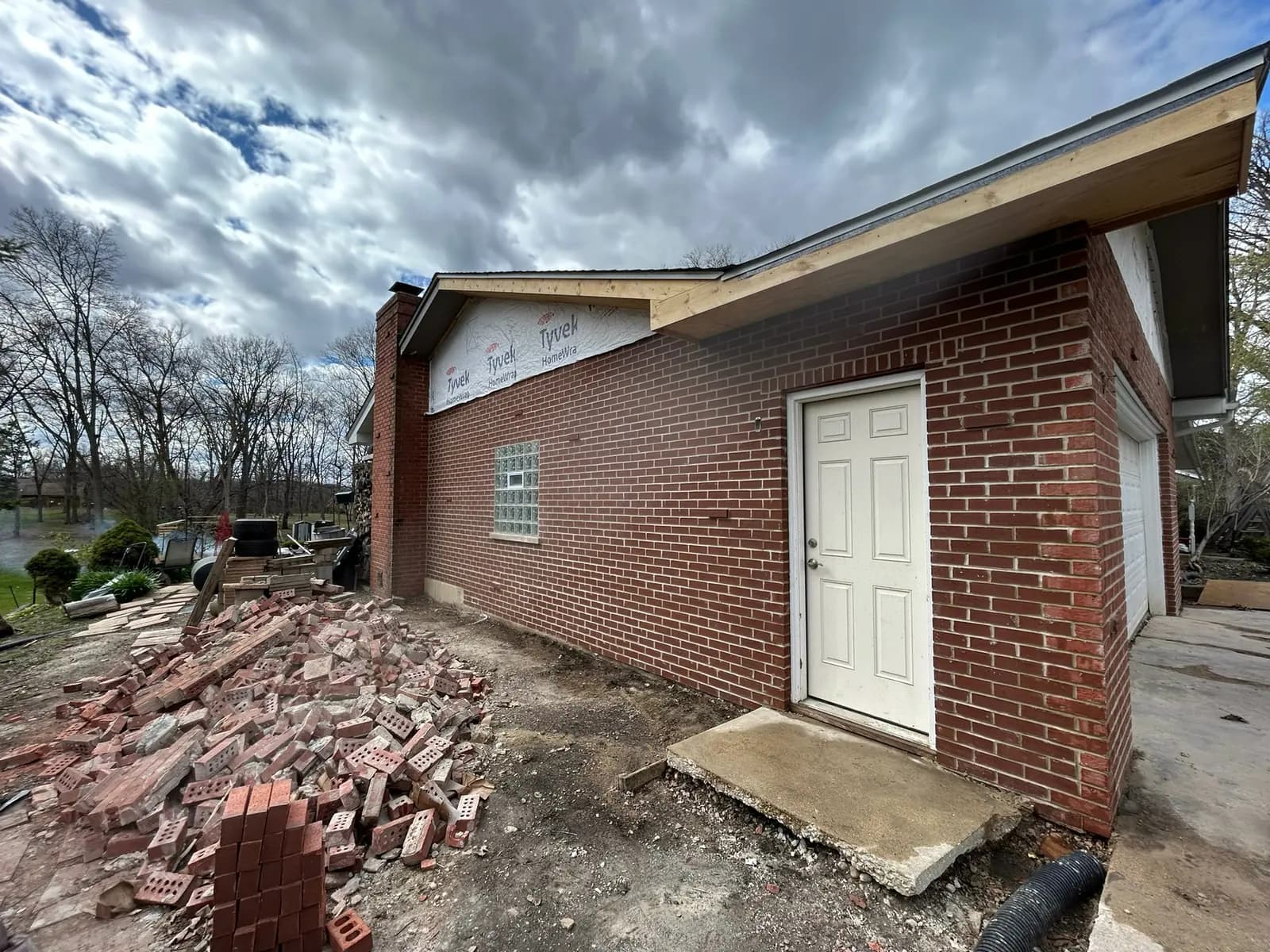
Treat a masonry problem as urgent if you see any of these: active water coming through a wall, a leaning parapet or chimney, brick that is loose or falling, a rust-jacked lintel forcing the brick apart, or a wide, growing, stair-stepping crack. These threaten safety or get rapidly worse and should be inspected right away. Cosmetic wear — minor surface staining, a few sandy joints, light efflorescence — can be safely scheduled. And in Chicagoland, any failing masonry that lets water in should be sealed before winter, because freeze-thaw turns a small problem into a big one.
Most masonry deteriorates slowly, which makes it easy to put off. But a handful of signs mean the wall has crossed from "wearing" into "failing," and a few mean it is a safety hazard right now. Emerald Masonry restores masonry across Chicagoland, and this page is the decision guide for telling urgent from schedulable.
Signs That Are Urgent
These problems put people at risk or worsen fast enough that waiting costs you far more later.
Active water intrusion. Water staining inside, damp interior walls, or visible leaks during rain mean water has a clear path through the masonry. Every storm and every freeze drives it deeper, rotting framing and spreading damage. This does not wait.
A leaning parapet or chimney. A parapet wall (the masonry that extends above a flat roofline) or a chimney that leans, bulges, or is pulling away from the structure has lost its structural hold. These are tall, heavy, and exposed — when they go, they fall. This is an emergency.
Falling or loose brick. Brick coming loose or dropping — especially above a doorway, walkway, or parking area — is a direct hazard to anyone below and a sign the masonry has failed its bond. Secure and repair it promptly.
A rust-jacked lintel. The steel lintel over a window or door rusts, expands, and forces the brick above it apart, cracking and lifting it. The damage spreads as the rust grows, and it can drop brick. Urgent.
Structural cracks. A crack that is wide, growing, stair-stepping diagonally through the brick, or paired with bulging signals movement in the wall or foundation. Unlike a hairline mortar crack, this needs eyes on it now.
Signs You Can Schedule
Not everything is an emergency. These can wait for a planned repair on your timeline — though "scheduled" still means before winter when water is involved:
- Minor surface staining or light efflorescence (white powdery residue)
- A few sandy or slightly recessed mortar joints with no water entry
- Isolated cosmetic chips that are not letting water in
- General weathering that has not yet opened the wall to water
The dividing line is simple: is it a safety risk, is it structural, or is water actively getting in? If yes to any, it is urgent. If no, you can plan it.
| Sign | Urgent | Schedulable | | --- | --- | --- | | Active water intrusion | Yes | — | | Leaning parapet or chimney | Yes | — | | Falling or loose brick | Yes | — | | Rust-jacked lintel | Yes | — | | Wide, growing, stair-step crack | Yes | — | | Hairline mortar crack, no water | — | Yes | | Surface staining / efflorescence | — | Yes | | A few sandy joints, dry inside | — | Yes |
The Freeze-Thaw Deadline
In the Chicago area, there is a seasonal clock on all of this. Any opening in the masonry — a crack, a washed-out joint, a spalled brick face — lets water in. When that water freezes it expands and forces the masonry apart, and over one winter that happens dozens of times. A joint that is merely worn in October can be a failed, water-soaked section by March. That is why fall is the practical deadline: sealing failing masonry before the first hard freeze is dramatically cheaper than repairing the multiplied damage in spring.
How Emerald Assesses It On-Site
We come out and tell you honestly whether what you are seeing is an emergency or something you can plan around. On a free on-site estimate we check for active water paths, sound the brick, inspect lintels for rust expansion, look at parapets and chimneys for lean or separation, and read cracks for whether they are cosmetic or structural. Then we prioritize: what has to be addressed now for safety, what should be sealed before winter, and what can genuinely wait. Urgent structural and water issues fall under masonry restoration, failed steel over openings under lintel repair, and exposed rooftop walls under parapet wall repair.
Frequently Asked Questions
Is a small crack in my brick wall an emergency?
Not always — hairline cracks in mortar are common and often schedulable. But a crack that is wide, stair-stepping through the brick, growing, or paired with bulging or a leaning wall is structural and should be looked at right away. When in doubt, have it inspected.
Why is falling or loose brick urgent?
Loose or falling brick above a doorway, walkway, or parking area is a direct safety hazard to people below, and it signals the masonry has lost its hold. It should be secured and repaired promptly rather than scheduled out for later.
What is a rust-jacked lintel and why does it matter?
A lintel is the steel beam over a window or door opening. When it rusts, it expands and forces the brick above it apart, cracking and lifting the masonry. Left alone it keeps spreading and can lead to brick falling, so it is an urgent repair.
Should I wait until spring to fix failing masonry?
Usually no. Open joints, cracks, and spalled brick let water in, and Chicago-area freeze-thaw cycles drive that water deeper all winter, multiplying the damage. Sealing failing masonry before winter is far cheaper than repairing a worse problem in spring.
Not Sure If It Can Wait? Get It Looked At
If you are seeing any of the urgent signs above, do not wait it out. Emerald Masonry LLC is a family-owned, licensed, bonded, and insured contractor with 40-plus years of Chicagoland experience, and our on-site estimates are free. We will tell you straight whether it is an emergency or something to schedule — and get it sealed before winter.
Call (708) 288-1696 or request a free on-site estimate today.
Ready to get started?
Free on-site estimates for commercial and large-scale projects.
When Masonry Repair Is Urgent in Chicagoland, IL — Frequently Asked Questions
Is a small crack in my brick wall an emergency?
Not always — hairline cracks in mortar are common and often schedulable. But a crack that is wide, stair-stepping through the brick, growing, or paired with bulging or a leaning wall is structural and should be looked at right away. When in doubt, have it inspected.
Why is falling or loose brick urgent?
Loose or falling brick above a doorway, walkway, or parking area is a direct safety hazard to people below, and it signals the masonry has lost its hold. It should be secured and repaired promptly rather than scheduled out for later.
What is a rust-jacked lintel and why does it matter?
A lintel is the steel beam over a window or door opening. When it rusts, it expands and forces the brick above it apart, cracking and lifting the masonry. Left alone it keeps spreading and can lead to brick falling, so it is an urgent repair.
Should I wait until spring to fix failing masonry?
Usually no. Open joints, cracks, and spalled brick let water in, and Chicago-area freeze-thaw cycles drive that water deeper all winter, multiplying the damage. Sealing failing masonry before winter is far cheaper than repairing a worse problem in spring.