
Brick Repair & Replacement · Oak Lawn, IL
Brick Repair in Oak Lawn, IL — Spalling, Cracking & Structural Brick Restoration
Spalling, cracked, and displaced bricks in Oak Lawn aren't cosmetic problems — they're active water entry points. Emerald Masonry LLC provides complete brick repair and replacement for commercial properties, multi-family buildings, and large residential across Cook County's southwest suburbs.
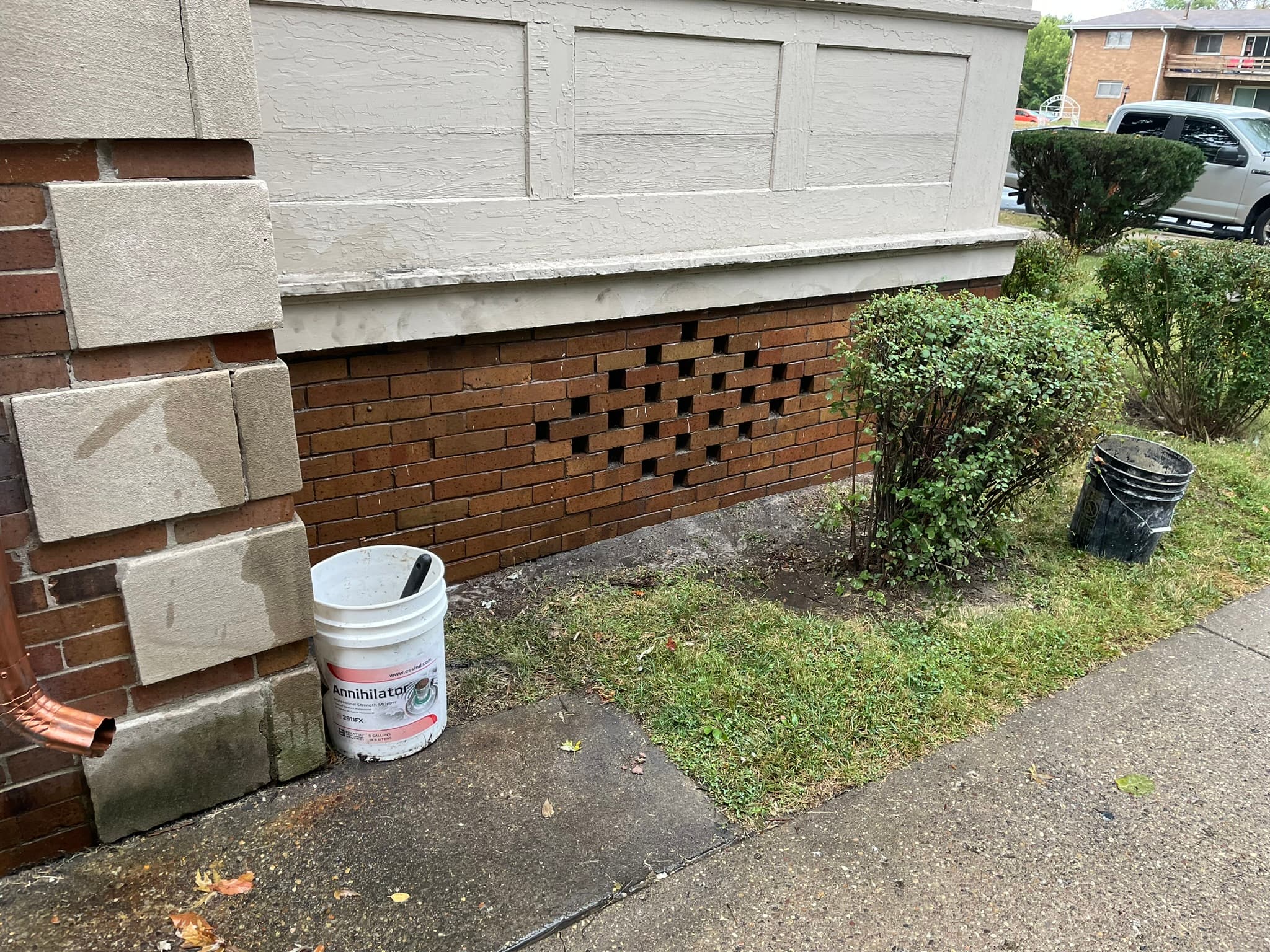
Brick Repair in Oak Lawn — What's Actually Happening to Your Wall
Oak Lawn's building stock includes a significant concentration of mid-century brick — commercial buildings, multi-family properties, churches, and single-family homes built in the 1950s through 1970s. That brick is now 50 to 70 years old, and it's showing it.
Individual bricks fail through a predictable set of mechanisms: freeze-thaw spalling, lintel failure, impact damage, and settlement cracking. When a brick fails, it's not an isolated cosmetic problem — it's an open door for water to enter the wall assembly. The bricks around it begin to absorb moisture, the mortar in adjacent joints starts to deteriorate faster, and a localized failure becomes a wall-wide problem.
Emerald Masonry LLC handles brick repair and replacement for commercial properties, HOAs, multi-family buildings, and institutional clients throughout Oak Lawn and Cook County.
Types of Brick Failure We See in Oak Lawn
Spalling brick faces. This is the most common failure mode in Chicago's climate. Water penetrates the brick face — typically through failed mortar joints — and freezes inside the brick. The expanding ice breaks the fired face away from the body of the brick. Once a brick face spalls, the exposed interior is far more porous than the original fired surface. Water entry accelerates rapidly.
On buildings with north-facing or exposed parapet walls, spalling often appears first in those locations — they stay wet longest and see the most temperature cycling.
Cracked bricks. A crack through the body of a brick — not just the mortar joint — indicates structural stress: differential settlement, thermal expansion, impact, or lintel failure. Cracked bricks need to be removed and replaced. Surface patching a cracked brick is a temporary measure at best.
Hollow or loose bricks. Tap a brick that sounds different from its neighbors — hollow or dull instead of a solid ring. That brick has separated from its mortar bed or the internal structure has fractured. It's a failure waiting to happen, and in a commercial or multi-family building, a loose brick near a pedestrian area is a liability issue.
Displaced or bulging bricks. Bricks that have moved outward from the wall face indicate the mortar bed or wall tie system has failed. This is a structural concern that goes beyond brick replacement — the cause of the displacement needs to be identified before the repair is meaningful.
Stair-step cracking. Diagonal cracks that follow the mortar joints in a stair-step pattern are classic differential settlement. The crack pattern tells us a great deal about where the structural force is originating. These cracks need to be monitored and addressed — they don't resolve on their own.
Lintel Failure: The Most Overlooked Brick Problem in Oak Lawn
A significant proportion of the brick repair work we do in older Chicago suburbs traces back to failed lintels.
A lintel is the steel beam above every window and door opening that carries the weight of the masonry above it. In buildings constructed before the 1970s, these lintels were often installed with minimal or no protective coating. When water reaches them through failing mortar joints, they rust.
Rusting steel expands. A lintel that's rusting inside the wall is pushing outward and downward against the bricks above the opening. The pattern is distinctive: a horizontal crack or displacement at the lintel line, often with bricks visibly pushing out above the window or door frame.
Left unaddressed, lintel failure progresses from a crack to a displacement to bricks that are no longer structurally supported above the opening. In a commercial building with dozens of window openings, lintel-line deterioration at multiple locations simultaneously is a common finding on properties that haven't had masonry work in 20+ years.
The repair involves removing the affected bricks, replacing or protecting the lintel, and resetting the brick above the opening with properly matched mortar and brick.
How We Source Replacement Brick
Matching replacement brick to a 50- or 60-year-old wall is one of the more demanding parts of the job. Brick manufactured today is not the same as brick manufactured in 1960 — the color profiles, surface textures, and manufacturing tolerances are different.
We source from multiple suppliers and maintain relationships with salvage sources for older profiles. For most repair scopes, we can get very close. When an exact match isn't possible, we're transparent about the options before any work begins.
What we don't do: use whatever's on the truck and hope the client doesn't notice. A visible repair in an otherwise intact wall is a failure of the job.
What to Expect from the Repair Process
-
Assessment — We examine the affected areas, document the failure modes, and identify the cause. Surface replacement without addressing the cause (failed mortar joints, lintel failure, drainage issues) is a temporary fix.
-
Scope and estimate — We provide a written fixed-price estimate covering the specific repair scope. For larger buildings with deterioration across multiple elevations, we can provide a phased assessment with prioritized recommendations.
-
Brick removal — Failing bricks are removed fully. On structural repairs, adjacent masonry is shored as appropriate.
-
Lintel assessment — Any lintel above an opening being worked is inspected. If rust expansion is present, we address it as part of the scope — not as an add-on after the wall is already open.
-
Brick setting — Replacement brick is set in properly mixed mortar and tooled to match the surrounding joints. Mortar color matching is part of the standard scope.
-
Cleanup — Site left clean. No grout haze on adjacent brick, no debris in the landscape.
Who We Work With in Oak Lawn
Property managers — Multi-family and commercial buildings with deferred masonry maintenance. We provide written scopes, documentation, and regular progress communication.
HOAs — Common area brick structures, entry pillars, perimeter walls, and shared building exteriors. We help HOA boards understand scope and prioritization.
Churches and institutions — Large footprint buildings with complex deterioration patterns. We develop phased plans that work within capital budget cycles.
Insurance restoration — We work with adjusters and TPAs on documented storm and impact damage. We provide damage documentation and before/after photo records in formats that support the claims process.
Frequently Asked Questions
Can you repair just a few bricks, or do you require a minimum scope? Our minimum project size is $5,000. Most structural brick repair scopes on commercial buildings exceed that. If your scope is smaller, we can refer you to appropriate resources.
How do I know if I need brick replacement or just tuckpointing? If the brick faces are intact and only the mortar joints are failing, tuckpointing is the right repair. If the brick itself is cracked, spalling, hollow, or displaced, the brick needs to be replaced. On most buildings that haven't been maintained, both repairs are needed in the same scope.
What does a bulging or bowing wall mean? Outward movement in a masonry wall almost always indicates tie failure, mortar bed failure, or lateral pressure from behind the wall. This is a structural concern that requires assessment before repair planning. Don't ignore bulging walls — the condition does not improve on its own.
Coverage Area
Based in Palos Heights, we serve Oak Lawn and the surrounding south and southwest suburbs: Chicago Ridge, Evergreen Park, Blue Island, Alsip, Burbank, Worth, Bridgeview, and adjacent communities throughout Cook County.
Ready to get started?
Free on-site estimates for commercial and large-scale projects.