
Chimney Repair · Homer Glen, IL
Chimney Repair in Homer Glen, IL — Crown, Tuckpointing & Full Chimney Rebuilds
A chimney is the most exposed masonry on any building — and in Homer Glen's climate, it shows damage first. Emerald Masonry LLC handles chimney tuckpointing, crown repair, cap installation, and full rebuilds for properties throughout Will County and the southwest suburbs.
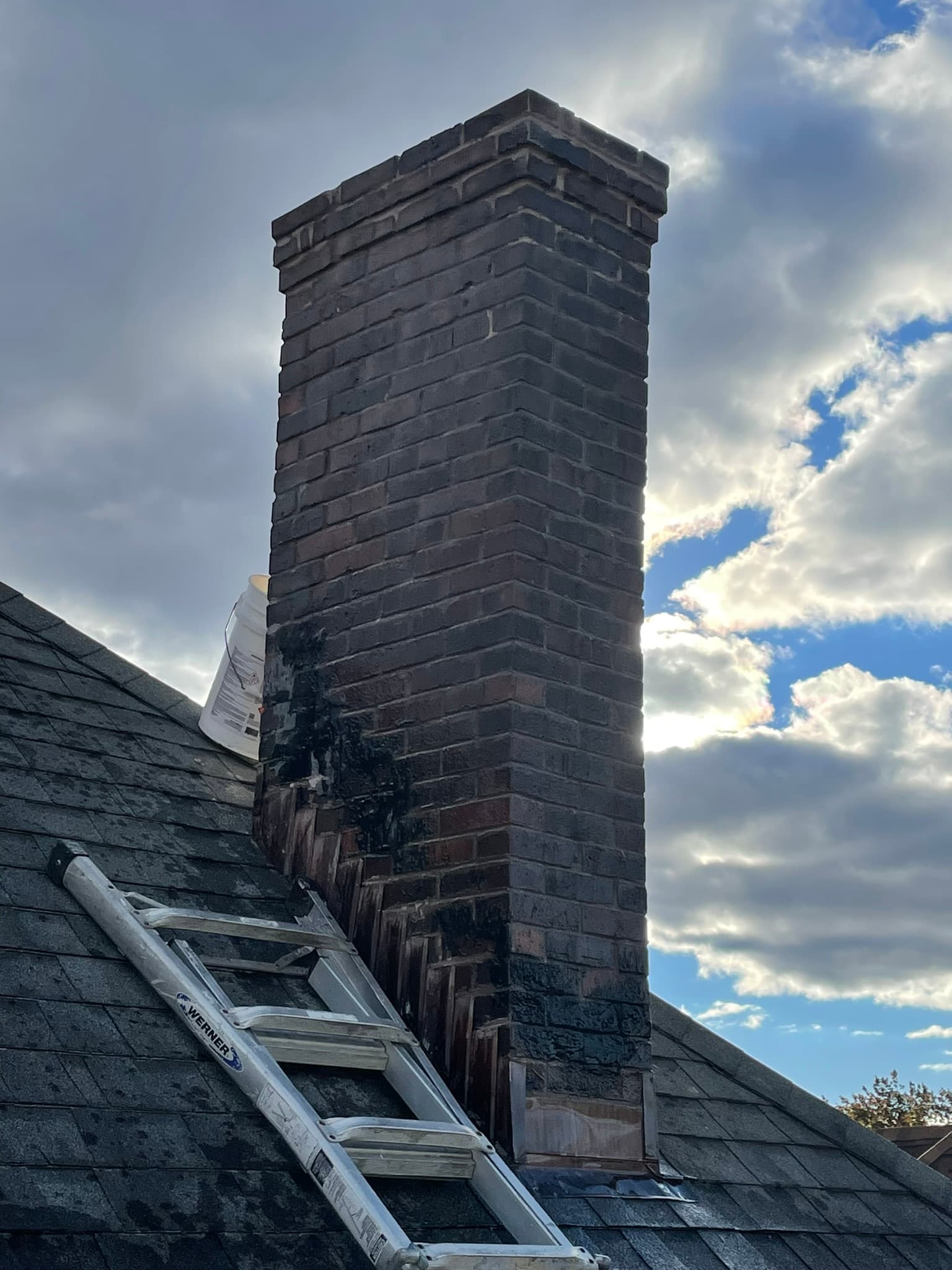
Why Homer Glen Chimneys Need Attention
Homer Glen sits at the edge of Will County in one of the more weather-exposed positions in the Chicago metro area. Properties here deal with full-force winter weather — extended freeze-thaw cycles, heavy snowpack, and spring moisture that drives into every open joint and crack it can find.
A chimney is the most vulnerable masonry structure on a residential or commercial building. It's fully exposed on all four sides, including the top. There's no roof overhang, no protection from driving rain, and in a Chicago-area winter, no relief from the freeze-thaw cycle. Mortar joints on a chimney fail faster than joints anywhere else on the building.
Most chimneys in Homer Glen that haven't been serviced in 10 or more years have at least some repair need — ranging from minor tuckpointing to crown replacement to partial rebuilds. The question isn't whether there's a problem; it's how far along it is.
What We See on Homer Glen Chimneys
Deteriorated or cracked crown. The chimney crown is the mortar or concrete cap that covers the top of the chimney stack and slopes water away from the flue opening. It's the first component to fail on most chimneys. Hairline cracks in the crown allow water to enter at the highest and most exposed point of the structure.
A properly functioning crown is critical. Without it, water runs directly into the top of the chimney stack, saturating the brickwork and mortar from the inside out. By the time interior water damage appears — staining in the firebox, damp interior walls — the masonry has usually been absorbing water for multiple seasons.
Failing mortar joints. Chimney mortar deteriorates faster than wall mortar for two reasons: full weather exposure on all four sides, and the expansion-contraction cycle from heat movement through the flue. Tuckpointing a chimney every 15–20 years is standard preventive maintenance for actively used chimneys. Many Homer Glen chimneys are well past that window.
Spalling or loose bricks near the top. The bricks at the top of a chimney stack are the most exposed and the most frequently damaged. Once the crown begins to fail, water enters the stack, saturates the upper bricks, and freeze-thaw cycling breaks their faces off. Loose bricks near the top of a chimney are a safety concern — they can dislodge and fall.
Rust staining on chimney brick. Orange or brown staining on chimney brick is almost always a sign of a failing metal cap or interior flue liner. Water is entering the flue and running down inside the chimney, rusting metal components and carrying that rust to the exterior surface. The stain is a symptom; the interior conditions are the problem.
Leaning or separated chimney structure. A chimney that shows visible lean or separation at the roofline has a foundation or structural problem that requires immediate assessment. This is not a tuckpointing job — it requires a rebuild.
Chimney Services We Provide
Chimney tuckpointing and repointing. Complete mortar joint removal and replacement for chimneys with deteriorated joints. We work from scaffolding or proper ladder staging depending on height and roof pitch — scaffolding is not optional on tall or steep-pitch chimneys.
Crown repair and replacement. Crack repair on sound crowns; full replacement for crowns with structural failure. New crowns are formed and finished to slope properly away from the flue opening.
Cap installation and replacement. Metal chimney caps keep water and animals out of the flue. When caps rust through or are missing, the interior is exposed to the full force of the weather.
Partial chimney rebuilds. When the upper section of a chimney has deteriorated beyond what repointing can address — loose bricks, significant spalling, crown failure — we remove the damaged section down to sound masonry and rebuild from there.
Full chimney reconstruction. For chimneys with structural failure, significant lean, or complete masonry deterioration, a full tear-down and rebuild is the correct answer. We document conditions before demolition and rebuild to match the original profile and height.
Flashing repair and waterproofing. The flashing where the chimney meets the roof is a common water infiltration point independent of the masonry condition. We assess flashing as part of every chimney evaluation and address it if it's contributing to the problem.
Why Chimney Work Requires a Masonry Contractor — Not Just Anyone
Chimney repair is often marketed by general contractors, roofing companies, and handyman services. The problem is that chimney masonry — especially on older brick structures — requires specific knowledge:
Mortar composition matters. The wrong mortar on an older chimney transfers stress into the brick face rather than the joint. Hard Portland mortar on soft historic brick causes spalling. Matching the original mortar hardness is as important as matching the color.
Crown construction is a skill. A poorly formed crown that doesn't slope correctly, that's too thin at the edges, or that bonds improperly to the flue liner will fail in one or two winters. We've rebuilt crowns that were installed by other contractors within a few years of the prior work.
Scaffold access is required for tall chimneys. Working off a ladder on a steep-pitch roof is a safety issue and a quality issue. We build proper scaffolding when a chimney requires it — it's in the scope, not an excuse to cut corners.
When to Act
The best time to address chimney issues in Homer Glen is spring or early fall — before the next winter season and before the freeze-thaw cycle does another year's worth of damage.
Don't wait for active water in the firebox or visible brick loss. By the time those symptoms appear, the repair scope is significantly larger than it would have been two or three years earlier.
If your chimney hasn't been assessed by a masonry contractor in the last 10 years, it's worth having it looked at. We'll give you an honest assessment of what's there and what needs to happen.
Coverage Area
Emerald Masonry LLC serves Homer Glen, Lockport, Frankfort, New Lenox, Mokena, Romeoville, Bolingbrook, and surrounding Will County communities.
Ready to get started?
Free on-site estimates for commercial and large-scale projects.