
Chimney Repair · New Lenox, IL
Chimney Repair in New Lenox, IL — Masonry Structural Repair & Rebuilds
Chimney problems in New Lenox range from minor mortar joint failure to full structural rebuilds — and the difference matters both for safety and cost. Emerald Masonry LLC handles the masonry side of chimney repair for residential and commercial properties throughout New Lenox and Will County.
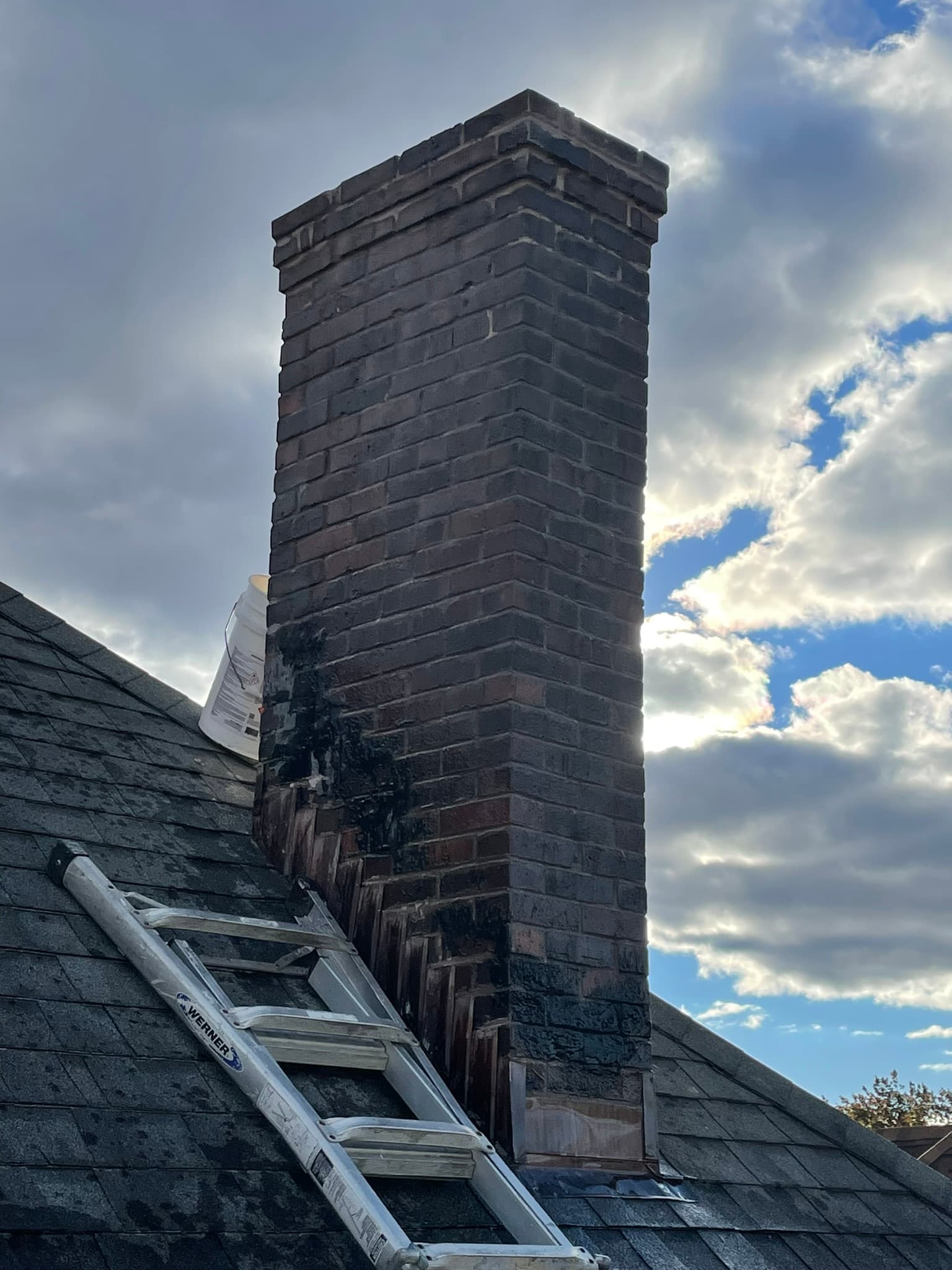
A chimney sweep company and a masonry contractor are not the same thing. Sweeps handle cleaning, inspections, and liner work. Masonry contractors handle the brick and mortar — the structural shell of the chimney that keeps everything together and weather-tight. In New Lenox, where Will County's climate puts chimneys through 30–40 freeze-thaw cycles every winter, the masonry side of chimney maintenance is what determines whether a chimney lasts or fails.
Emerald Masonry LLC is a licensed masonry contractor based in Palos Heights, serving New Lenox and all of Will County. We handle chimney tuckpointing, crown repair, brick replacement, flashing repair, and full chimney rebuilds for residential and commercial properties.
Why Chimney Masonry Fails in New Lenox
Chimneys are the most exposed masonry structure on any building. Unlike a wall, which is sheltered on one side and backed by the structure, a chimney stands fully exposed on all four sides — open to rain, wind, UV, and temperature swings from every direction. The top is exposed to direct water from rain and snow. The base sits at the roofline where thermal movement is greatest.
The result: chimneys deteriorate faster than any other masonry on the building.
Mortar joint failure starts it. Mortar between brick courses softens with age, cracks with thermal movement, and opens to water. Once water enters mortar joints on a chimney, freeze-thaw cycling takes over — water in the joints freezes, expands, and forces the joints open further. Within a few seasons, joints that needed repointing become joints that have allowed water to saturate the surrounding brick.
Brick spalling follows. Water-saturated brick that freezes loses face material — the face pops off, exposing raw clay or concrete block underneath. Spalled chimney brick creates larger openings for water and, on upper courses, presents a falling hazard.
Crown failure is extremely common. The chimney crown is the concrete or mortar cap that covers the top of the chimney, directing water away from the flue opening. Crowns crack, shrink, and deteriorate over time. A cracked crown allows water to pour into the chimney rather than shedding off.
Flashing failure at the roofline is often misdiagnosed as a roofing problem. Through-wall flashing where the chimney meets the roof prevents water from running down the chimney exterior into the attic or interior wall. When flashing fails — whether the roofing membrane, the counter-flashing, or the masonry step flashing — water enters at the base. We coordinate with roofers when flashing work spans both trades.
What Chimney Masonry Repair Looks Like
Tuckpointing
The most common chimney masonry job we do in New Lenox: removing deteriorated mortar joints and installing fresh mortar matched to the original in type and color. On chimneys, we cut joints to a minimum ¾-inch depth and specify mortar based on the chimney's age. Older brick chimneys — pre-1970 construction common in New Lenox's established neighborhoods — often require Type N or lime-based mortars that won't stress the softer original brick. Using modern Type S or Type M on old soft brick causes the brick faces to crack and spall.
Crown Repair and Rebuilding
Minor crown cracks can be sealed with an elastomeric crown coat product. Crowns that have failed structurally — large cracks, sections missing, separation from the flue — need to be removed and rebuilt. A properly rebuilt crown has a slope away from the flue, a drip edge that extends slightly past the chimney face, and the right mortar mix to resist repeated freeze-thaw cycling.
Brick Replacement
Individual spalled or damaged brick units are removed and replaced. Matching brick — in color, texture, and size — matters visually and structurally. We source from regional suppliers and salvage yards for discontinued units. On older New Lenox homes, matching a buff or tan common brick from the 1950s or 1960s takes more effort than matching modern units, but getting it wrong leaves an obvious patch that affects the home's appearance and resale value.
Partial and Full Rebuilds
When deterioration has progressed to structural failure — leaning chimney, frost heave at the base, multiple courses of loose or missing brick — a partial or full rebuild is the right scope. We remove the chimney down to the point of sound masonry, relay courses to match the original bond pattern, and rebuild the crown. Full rebuilds typically include a new flue liner, coordinated with your chimney sweep or HVAC contractor.
Commercial Chimneys in New Lenox
New Lenox has a growing commercial district along Route 30 and the Lincoln Highway corridor, including industrial facilities and institutional buildings with commercial chimneys. Commercial chimney masonry — on boiler flues, industrial exhausts, and institutional buildings — is a separate scope from residential work. We handle commercial chimney tuckpointing, parapet-level flue work, and brick replacement on commercial properties throughout New Lenox and Will County.
Frequently Asked Questions
How do I know if my chimney needs masonry repair vs. just a cleaning? A chimney sweep inspection will identify both. From the outside, look for: white staining (efflorescence) on the brick, visible mortar joint gaps or recessed mortar, brick faces that are chipping or popping off (spalling), cracks in the crown visible from the ground, or rust staining running down from the flashing line. Any of these indicate masonry work is needed. We provide free on-site masonry assessments and can coordinate with your chimney sweep.
Can you repair a chimney without full scaffold? On most residential chimneys in New Lenox, we use extension ladders with proper standoffs and chimney jacks for standard two-story heights. Taller chimneys, commercial stacks, or work requiring both hands free on multiple sides may require scaffold. We specify the access method upfront in the written scope.
How much does chimney masonry repair cost in New Lenox? Chimney tuckpointing on a standard two-story residential chimney runs $800–$2,500 depending on the number of sides, mortar condition, and access. Crown repairs run $400–$1,200 for crack sealing to full rebuild. Partial rebuilds (upper section only) run $2,500–$6,000. Full chimney rebuilds from the roofline up range from $5,000–$15,000 depending on chimney size and height. Our $5,000 minimum applies to all projects. We provide free written estimates.
How long does chimney repair take? A tuckpointing job on a standard residential chimney takes 1–2 days. Crown replacement adds a day. Partial rebuilds typically take 2–4 days. Full rebuilds run 3–7 days depending on chimney size, mortar cure time, and weather. We won't rush mortar curing to fit a schedule.
Serving New Lenox and Will County
Emerald Masonry LLC serves New Lenox, Frankfort, Mokena, Joliet, Lockport, Plainfield, Manhattan, Orland Park, and surrounding communities. We've been doing chimney and masonry work across the southwest suburbs for over 40 years.
Call (309) 323-9959 or request a free chimney assessment.
Also see: Chimney Repair services | Tuckpointing & Repointing | Masonry Restoration
Ready to get started?
Free on-site estimates for commercial and large-scale projects.