
Commercial & Industrial Masonry · Joliet, IL
CMU Block Wall Repair in Joliet, IL — Commercial Concrete Masonry Restoration
CMU block walls in Joliet's commercial and industrial buildings develop specific failure modes that differ from brick masonry. Emerald Masonry LLC handles block repair, mortar joint restoration, and full CMU rehabilitation for commercial and industrial properties throughout Will County.
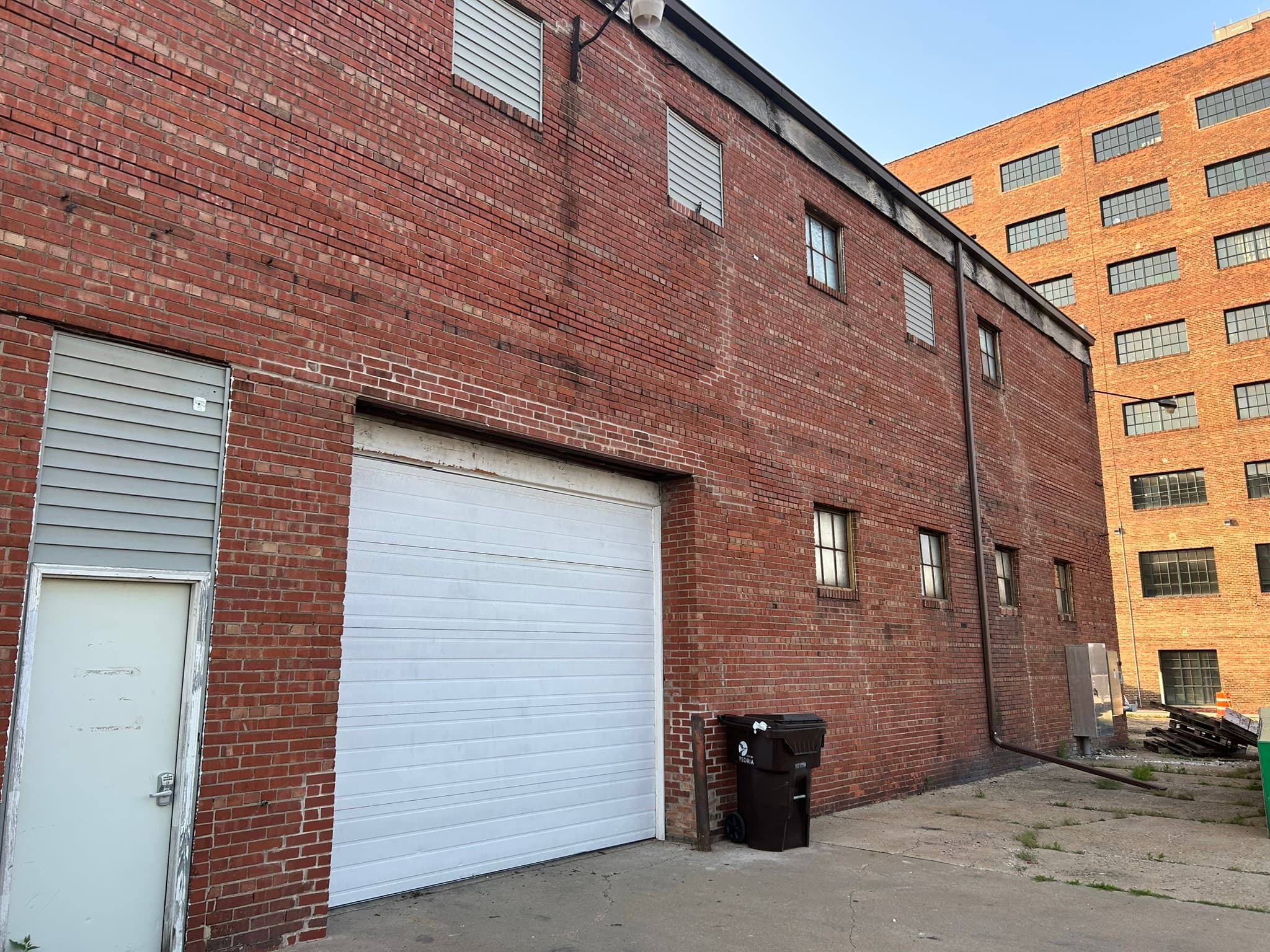
CMU Block Repair in Joliet — A Different Kind of Masonry Problem
Joliet and Will County have a substantial commercial and industrial building stock with CMU — concrete masonry unit — construction. Warehouses, manufacturing facilities, retail buildings, schools, and institutional structures built from the 1960s through the 1990s relied heavily on CMU block for its economy, load-bearing capacity, and availability.
CMU block is durable, but it's not maintenance-free. It fails through a distinct set of mechanisms, and those failures are often more consequential than they appear. A cracked CMU block or open mortar joint isn't just an aesthetic problem — it's a direct path for water infiltration, and in a Joliet winter, water that gets into a CMU wall does significant damage.
Emerald Masonry LLC handles CMU block repair for commercial, industrial, and institutional properties throughout Joliet and Will County.
How CMU Block Walls Fail
Cracked block faces. CMU block cracks from a variety of causes: differential settlement, thermal expansion and contraction, impact damage, and water damage from the inside out. A crack through a CMU face is more serious than a crack through a mortar joint — the structural unit itself is compromised.
The cause of the crack matters as much as the crack itself. Settlement cracks and thermal cracks behave differently and require different approaches. Impact cracks are typically more localized. Before any repair is done, we understand what caused the damage.
Failed mortar joints. CMU mortar joints deteriorate just as brick mortar joints do — they're susceptible to Chicago freeze-thaw cycling, water infiltration, and carbonation over time. Failed joints on a CMU wall allow water to enter both the joint itself and the hollow cores of the block. In a hollow-core CMU wall, water inside the cores can cause significant internal damage that isn't visible from the exterior.
Control joint failure. CMU walls are designed with control joints — intentional vertical breaks in the wall that accommodate thermal movement and prevent random cracking. When control joint sealant fails, the joints open and allow water infiltration at high-movement locations. Deteriorated control joints are a common finding on older commercial CMU buildings.
Core deterioration. In wet climates, water that gets inside the hollow cores of CMU block can cause mortar and grout fill to deteriorate from the inside, weakening the structural core of the wall. This type of deterioration isn't visible until it reaches an advanced stage. Regular mortar joint maintenance is the primary prevention.
Impact damage. Commercial and industrial buildings take physical punishment — forklifts, loading dock activity, vehicle impact, and equipment contact all cause localized damage that goes beyond surface aesthetics. Damaged blocks need to be removed and replaced, not patched. Impact-damaged CMU that's been patched over will fail again, often within a single season.
Parapet and cap joint failure. CMU parapet walls are exposed on both faces and the top — the most vulnerable section of any wall. When cap mortar or coping fails on a CMU parapet, water enters the wall from above and saturates the entire parapet section. This is one of the most common causes of significant interior water damage in commercial CMU buildings.
CMU Repair Requires Different Materials and Methods
CMU repair is not the same as brick repair, and contractors who treat them identically produce poor results.
Block matching. CMU block comes in a range of profiles, textures, face dimensions, and aggregate compositions. Getting a repair to blend requires matching the specific block profile, not just picking whatever's available at the supply house. We source from multiple suppliers and work with salvage when necessary for older or discontinued profiles.
Mortar composition. The mortar mix for CMU work needs to match the original in hardness and workability. Using mortar that's too hard or too soft for the substrate causes accelerated joint failure or, worse, stress transfer into the block face.
Control joint sealant specification. Control joint sealant needs to be compatible with the substrate, flexible enough to accommodate movement, and rated for the exposure conditions. The wrong sealant product fails quickly — we specify sealant based on the actual joint movement requirements.
Core grouting. On structural repairs where block cores are being opened, grouting must be done properly to maintain the structural design of the wall. This is not a detail to improvise.
Commercial and Industrial Clients in Joliet
The range of CMU structures we work with in Joliet and Will County reflects the diversity of commercial and industrial building stock in the area.
Warehouses and distribution facilities. Large-footprint CMU structures with significant impact exposure at loading docks and vehicle access points. Block damage at dock areas is common and tends to recur if not addressed at the structural level.
Retail properties. Strip centers and standalone retail buildings with CMU construction often show mortar joint deterioration and control joint failure across large wall areas. Back-of-house service areas take particular punishment.
Schools and institutional buildings. Older school buildings with CMU construction require careful mortar matching and phased scheduling around academic calendars.
Manufacturing facilities. Industrial environments add chemical exposure and extreme temperature cycling to the standard CMU failure modes. Interior moisture management is often as important as exterior repair.
Our Assessment Process
Before we quote any CMU repair scope, we walk the building. For commercial and industrial buildings, that means all elevations, including loading dock areas, parapet walls, and control joint locations.
We document what we find, identify the failure modes, and develop a scope that addresses causes rather than symptoms. A written fixed-price estimate follows the assessment. We don't bill time-and-material on commercial projects — scope accuracy up front is part of how we operate.
For large buildings with deterioration across multiple elevations, we can develop a phased plan that prioritizes the most critical conditions first and schedules subsequent phases around your operational and budget cycles.
Coverage Area
Emerald Masonry LLC serves Joliet and surrounding Will County communities: Romeoville, Bolingbrook, Plainfield, Shorewood, Lockport, New Lenox, Mokena, and Frankfort.
Ready to get started?
Free on-site estimates for commercial and large-scale projects.