
Efflorescence & Waterproofing · Downers Grove, IL
Efflorescence & Masonry Waterproofing in Downers Grove, IL — Stop Water Intrusion Before It Gets Worse
White staining on brick is never just cosmetic — efflorescence is a symptom of water moving through masonry. In Downers Grove's commercial corridors, unaddressed water infiltration is one of the most predictable sources of long-term building damage.
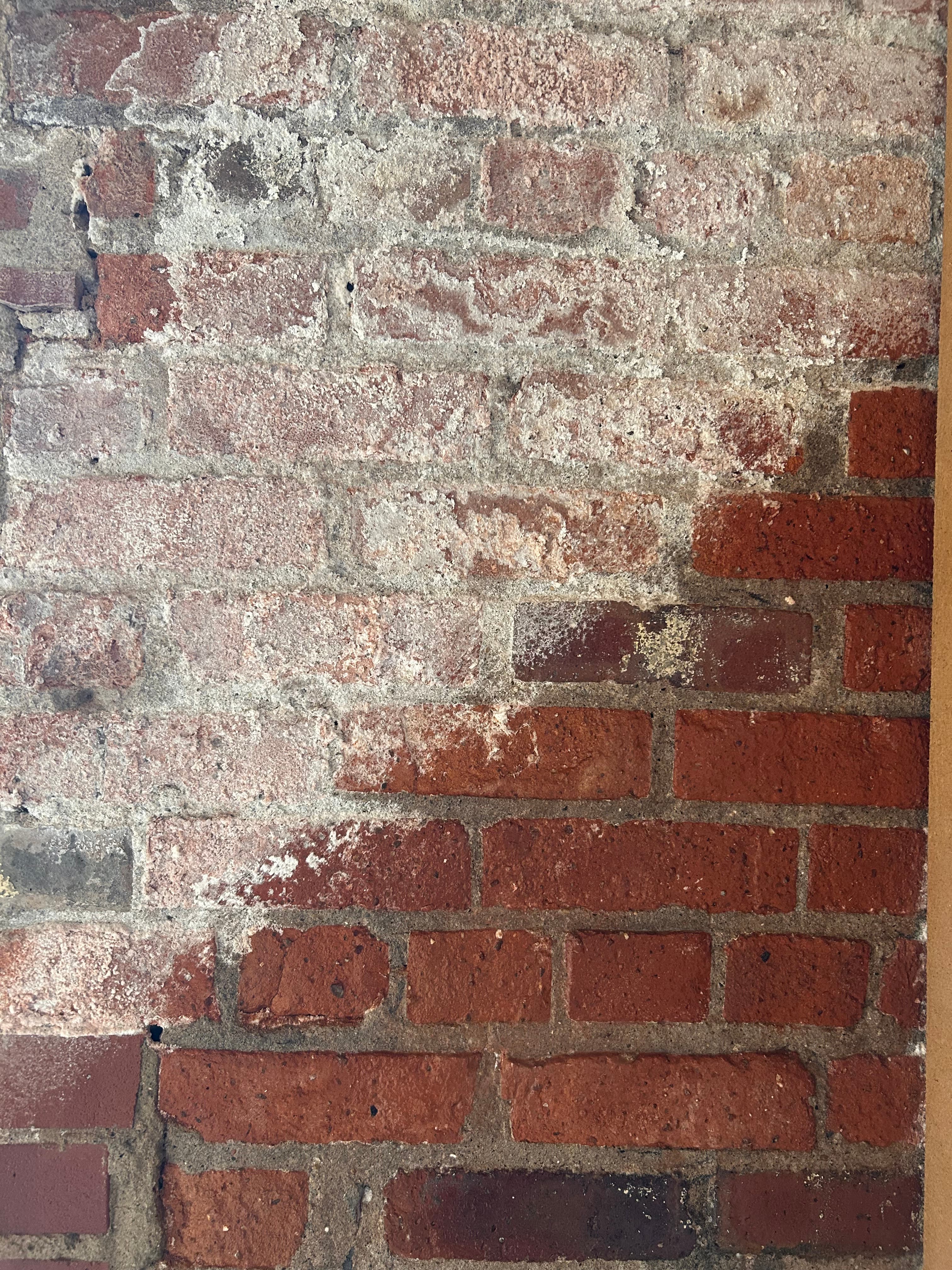
That white powdery staining on your building's brick facade isn't paint. It's efflorescence — mineral salt deposits left behind when water moves through masonry and evaporates at the surface. On its own, efflorescence won't destroy a wall. But it's a reliable signal that water is getting in somewhere, and water getting in means damage is accumulating.
Emerald Masonry LLC handles efflorescence removal and masonry waterproofing for commercial properties throughout Downers Grove and DuPage County. We don't just treat the surface staining — we find the source and address it so it doesn't come back.
What Efflorescence Actually Tells You
Efflorescence forms when soluble salts in the masonry or the mortar dissolve in water and migrate to the surface. As the water evaporates, it leaves the salt crystals behind. The mechanism requires two things: salt in the masonry material (present in virtually all brick and mortar) and water moving through the wall.
So efflorescence itself is mostly harmless. The water behind it is not.
In Downers Grove commercial buildings — particularly the office parks along Ogden Avenue and the mixed-use corridors downtown — water infiltration through masonry typically comes from:
- Failed mortar joints. Open or cracked joints let water in at every rain event. Even shallow joint failure creates a pathway.
- Cracked or failed caulk. Window perimeters, parapet transitions, and penetrations accumulate years of caulk over caulk. Eventually the whole assembly fails.
- Compromised parapet copings. The top of a parapet wall is the most exposed surface on any commercial building. Cracked or shifted coping lets water run directly into the wall from above.
- Failed window sills. Sloped masonry sills channel water away from the building — when they crack or separate, water runs back against the wall instead.
How Water Damage Progresses
The typical sequence: joints fail, water enters, salts migrate and deposit as efflorescence, freeze-thaw cycles stress the wet masonry, brick faces begin to spall, and water penetrates further into the wall assembly. Once water reaches the backup wall or interior framing, the remediation scope — and cost — expands significantly.
Downers Grove sees 30+ freeze-thaw cycles in an average winter. Buildings in the village center and along major arterials are also exposed to wind-driven rain from the west and south. A building that developed its first visible efflorescence two winters ago has likely been taking water for longer than that.
Efflorescence Removal
Surface cleaning is part of the fix but not the fix itself. We clean efflorescence using appropriate chemical treatments — diluted hydrochloric acid or dedicated masonry efflorescence cleaners depending on the masonry type — followed by neutralization and rinsing. The cleaned surface reveals the actual masonry condition underneath and prepares it for any subsequent repair or sealer application.
What we don't do is pressure wash and call it done. High-pressure washing drives water into the wall, can damage soft brick faces, and does nothing to address the underlying water source. We've seen buildings that were "treated" for efflorescence repeatedly with a pressure washer, with staining returning every season because nothing was fixed.
Masonry Waterproofing
Once underlying issues are repaired — joints repointed, caulk replaced, damaged brick addressed — a penetrating silane or siloxane sealer can be applied to reduce future water intrusion. These products penetrate the masonry substrate and line the pores without creating a film coat on the surface, allowing the wall to breathe while blocking liquid water.
A few things to understand about masonry sealers:
Not a substitute for repairs. A sealer won't bridge open mortar joints or fill cracks. It should always be applied over properly prepared, repaired masonry.
Not permanent. Penetrating sealers on exposed commercial masonry typically last 7–10 years depending on exposure. They need periodic re-application as part of a maintenance program.
Appropriate for the substrate. Different sealers are formulated for different masonry types. Applying the wrong product to historic brick or natural stone can trap moisture and accelerate deterioration. We specify products based on the masonry.
When Waterproofing Makes Sense
Not every building needs a sealer. For buildings with minor efflorescence and otherwise intact mortar, targeted repointing and caulk replacement may be all that's needed. For buildings with significant water infiltration history, absorptive brick, or parapet exposure, a sealer as part of a complete repair program is a cost-effective investment.
Commercial Buildings in Downers Grove
Downers Grove has an active commercial real estate market, particularly in its downtown and along the Route 53 and Ogden corridors. Much of the commercial brick stock dates from the 1970s through 1990s — old enough that first-cycle masonry maintenance is overdue on a significant portion of buildings.
For property managers handling buildings in this age range, a masonry assessment isn't a discretionary item. Water infiltration that's been active for 5–10 years without repair has typically caused damage that won't be visible until the scope of work has grown considerably.
Working with Property Managers
We understand that commercial masonry work happens within budget cycles, tenant schedules, and ownership reporting requirements. We provide:
- Written assessment findings with photographs
- Itemized scope and cost breakdown (so you can phase work if needed)
- Before/after photo documentation for your records
- Coordination around occupied building schedules
For multi-building portfolios, we can prioritize by condition and develop a phased repair and maintenance schedule across multiple budget years.
Frequently Asked Questions
Is efflorescence on my Downers Grove building a structural problem? Usually not directly, but it indicates water movement through the wall — and sustained water infiltration causes structural damage over time through freeze-thaw spalling, mortar joint deterioration, and potential corrosion of embedded steel (lintels, ties). Treat the underlying cause, not just the surface symptom.
Will cleaning remove all the white staining? In most cases, yes — chemical cleaning removes the salt deposits effectively. On older buildings with repeated heavy efflorescence cycles, some staining may persist in the brick face. We'll give you an honest assessment before treatment.
Can waterproofing be applied without doing other repairs first? We won't apply sealer over failed mortar joints or damaged masonry. That would trap the problem behind a sealed surface. Repairs come first, then sealer.
How much does masonry waterproofing cost in Downers Grove? Application of penetrating sealer on a clean, repaired surface typically runs $1.50–$3.00 per square foot of treated masonry depending on the product and surface area. For most commercial building faces, that's a modest cost relative to the protective value. Our $5,000 project minimum applies. We provide free written estimates.
Get a Masonry Assessment in Downers Grove
If you're seeing white staining, interior water marks near exterior walls, or have deferred masonry maintenance on a DuPage County commercial property, get an assessment before the next winter cycle.
Call Emerald Masonry LLC at (309) 323-9959 or schedule a free on-site estimate.
Also see: Tuckpointing & Repointing | Masonry Restoration | Commercial Masonry
Ready to get started?
Free on-site estimates for commercial and large-scale projects.