
Foundation Masonry Repair · Chicagoland, IL
Water in the Basement: Is It Your Foundation Masonry or Your Drainage?
Before you spend money on a foundation, find out whether you have a masonry problem or a water-management problem — because the fix, the cost and the contractor are all different. This guide walks through where the water is entering, what each pattern means, and why most Chicagoland basements leak for reasons that cost a few hundred dollars to correct rather than a few thousand.
2026-08-02
Quick Answer
Most Chicagoland basement water is a drainage problem rather than a foundation-masonry problem — overflowing gutters, downspouts discharging at the wall, grade sloping toward the house and splash at grade cause the majority of leaks, and they are cheap to fix. Masonry repair is needed when mortar is washing out, units are spalling, or cracks show movement. Emerald Masonry LLC diagnoses both across Chicagoland. Family-owned, career masons, licensed and insured. Call (708) 288-1696.
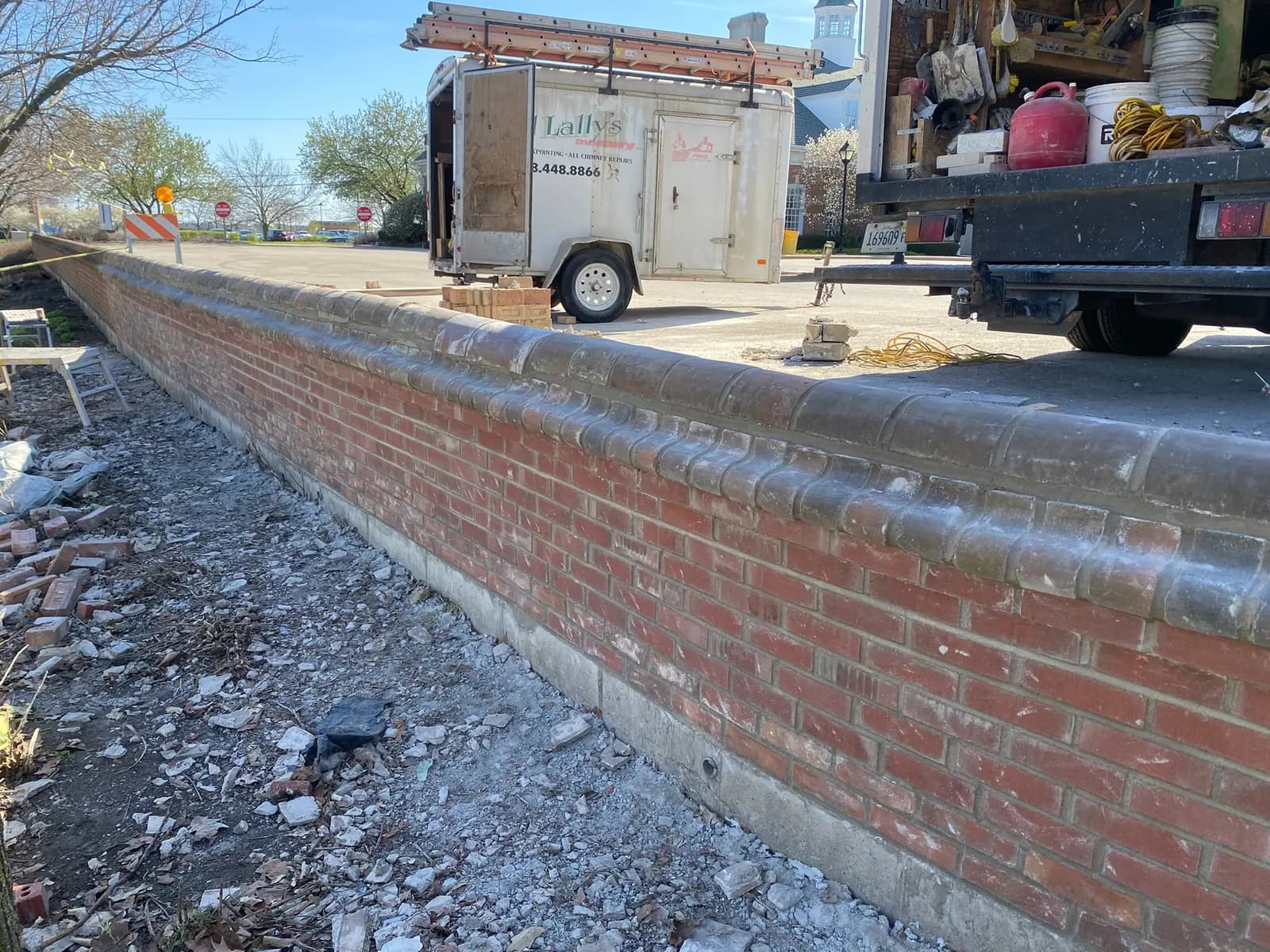
Water in the Basement: Masonry or Drainage?
Most Chicagoland basement water is a drainage problem, not a foundation problem. Overflowing gutters, downspouts discharging at the wall, grade sloping toward the house, and splash-back at the base of the foundation cause the majority of leaks we get called about — and they cost a fraction of what masonry repair does. Masonry repair is genuinely needed when mortar is washing out of the joints, units are spalling, or a crack shows real movement. Emerald Masonry LLC diagnoses both across Chicago and the Chicagoland suburbs — family-owned, licensed and insured, career masons with decades of experience, free on-site estimates. Call (708) 288-1696.
We will say the part most contractors do not: if you call us about a wet basement and the problem turns out to be your downspouts, we will tell you that. It is a cheap fix, it is not our work, and selling foundation repair to somebody who needs a gutter extension is how this trade earns a bad reputation.
The Two Categories
Nearly every wet basement in this region falls into one of these — often both, in which case the order you fix them in matters.
| | Drainage / water management | Foundation masonry | |---|---|---| | What's wrong | Too much water arriving at the wall | The wall can no longer keep it out | | Typical symptoms | Leaks during heavy rain or snowmelt; water near a downspout; cove-joint seepage | Washed-out mortar, spalled block or brick, visible gaps, moving cracks | | Timing | Event-driven — you can predict it | Persistent or worsening regardless of weather | | Cost | Low — often a few hundred dollars | Moderate to high | | Who fixes it | Often you, in an afternoon | Masonry contractor | | Fix first? | Yes, always | After the water source is controlled |
Repairing masonry while leaving the water source in place is a repair with a countdown on it. That is not an upsell-avoidance line; it is why repointing jobs fail early.
Start Here: Where and When Does It Come In?
The pattern tells you most of what you need.
Only during heavy rain, near one spot
Almost certainly drainage. Go outside during the next storm and watch. Nine times out of ten there is a gutter overflowing, a downspout dumping at the foundation, or a low spot in the grade holding water against the wall.
At the cove joint — where wall meets floor
The cove joint is the seam between the foundation wall and the slab, and it is the single most common entry point in Chicagoland. Saturated soil builds hydrostatic pressure and pushes in at the weakest seam. This is usually a water-management or water-table issue rather than masonry failure.
Through visible joints in the wall
Now you are looking at masonry. If you can see mortar washed out from between block, brick or stone — gaps, missing material, soil visible — the wall has lost its ability to hold water back.
Through a crack
Depends entirely on the crack. See the next section.
Around a window well
Usually drainage — the well is filling because it has no drain, is packed with leaves, or grade directs water into it.
Nowhere visible, but the air is damp
Masonry can wick moisture continuously without producing a drop you can point at. Efflorescence, damp-feeling walls and peeling paint on the interior face are the tells.
Reading Foundation Cracks
- Hairline vertical / shrinkage cracks — common, usually minor, often from original curing.
- Stair-step cracks through the mortar joints — differential settlement or soil movement. Worth evaluating, especially if widening.
- Horizontal cracks partway up a block wall — the serious one in this region. It indicates lateral soil pressure pushing the wall inward, which is exactly what saturated clay does.
- Cracks wider at one end — rotational movement.
- Cracks with displacement, one side proud of the other — active movement.
- Bowing or bulging, visible when you sight along the wall — the wall is deflecting under load and needs professional evaluation before anything else is scoped.
A crack that leaks is a water problem. A crack that is moving is a structural problem. They need different responses, and telling them apart is the point of the assessment.
Why Chicagoland Basements Specifically
Clay soil. The heavy glacial clay across Cook, DuPage, Will and Kane swells substantially when saturated and shrinks when dry. That seasonal cycle presses on foundation walls from outside — the reason block walls here develop horizontal cracking and bowing.
Freeze-thaw. Dozens of crossings of the freezing point each winter. Water inside a saturated mortar joint expands as it freezes and works the joint apart, concentrated at the wettest part of the building.
Spring snowmelt on frozen ground. Melt water cannot infiltrate frozen soil, so it runs across the surface — straight to the foundation. March and April produce more first-time basement leaks than any storm.
Old housing stock, three foundation types. Pre-1940 brick and quarried limestone foundations under bungalows, two-flats and greystones, where the stone is durable but the century-old mortar is washing out. Post-war concrete block, strong in compression but vulnerable to lateral clay pressure. And modern poured concrete with masonry above.
Road salt driven into the lowest courses by splash all winter, adding salt crystallization damage to freeze-thaw.
Fix These First — Cheap, and Often Sufficient
- Clean the gutters. A single overflowing section dumps thousands of gallons against one spot of wall each year.
- Extend the downspouts — well away from the foundation, not eighteen inches from it.
- Correct the grade so soil slopes away from the house for the first several feet.
- Control splash at the base of walls with proper ground cover.
- Clear and drain window wells, and add covers where appropriate.
- Check the driveway and patio slope — hard surfaces pitched toward the house deliver a lot of water.
- Trim vegetation back off the foundation so the area dries.
Do all seven, then watch through one wet season. A large share of homeowners stop here.
When It Really Is the Masonry
Call a mason when you see:
- Mortar washing or crumbling out from between stones, block or brick — sometimes with daylight or soil visible through.
- Spalling and flaking in the courses above grade where splash keeps masonry wet.
- Parging falling away in sheets, exposing the wall behind.
- Displaced or dropped stones in a rubble foundation.
- Deteriorated brick in an old foundation, particularly soft Chicago common brick below grade.
- Any horizontal cracking or bowing — this one first, regardless of everything else.
How the repair works
- Assessment inside and out, reading crack patterns and checking grading, downspouts and drainage.
- Water source corrected before masonry work begins.
- Joint preparation — failed mortar raked out to sound material.
- Repointing with mortar matched to the wall: an appropriate structural mix on block, a softer lime-modified mix on old limestone and soft brick, because mortar harder than the surrounding stone concentrates stress at the stone face instead of in the joint.
- Resetting and rebuilding — displaced stone reset, failed units replaced, deteriorated sections rebuilt.
- Parging the exposed portion where appropriate.
- Drainage recommendations to protect the repair.
Materials
Type S and Type M mortars where structurally appropriate on block and below grade; lime-modified mixes for old limestone, stone and soft brick; matched replacement block and brick; parging and cementitious coatings; salvaged or matched stone for rubble sections. Related work: foundation masonry repair, tuckpointing, brick repair and masonry sealing.
What Drives Cost
- Linear footage and wall height of the affected section.
- Above grade versus below grade — excavation is the single biggest multiplier.
- Deterioration versus movement — a bowing wall is a different scope from eroded joints.
- Foundation type — resetting rubble stone is slower than repointing block.
- Access — tight side yards, decks, patios, landscaping.
- Related water work — grading, downspouts, parging.
- Interior finish — a finished basement complicates interior-side access.
We assess in person and give a free written scope. We also tell you what can wait.
DIY or Pro?
Do yourself: gutters, downspout extensions, grading, splash control, window well clearing. This is the highest-return work available and it needs no contractor.
Hire out: anything involving mortar in a bearing wall, any excavation, any horizontal crack or bowing, deteriorated stone or brick foundations, and any situation where you cannot tell what you are looking at. Foundation masonry is load-bearing — a bad repair there is not cosmetic.
Who Do You Actually Call?
Three different trades get called about wet basements, and they solve different problems. Calling the wrong one first is how people end up with an expensive system that did not fix anything.
A masonry contractor handles the wall itself — washed-out mortar joints, deteriorated block, brick or stone, spalled units at grade, parging, and repointing or rebuilding failed sections. If water is coming through visible defects in the masonry, this is the trade.
A waterproofing contractor handles water management systems — interior drain tile, sump pumps, exterior membranes and excavation-based systems. These are appropriate when the water table or hydrostatic pressure is the driver and the wall itself is sound, and they are the right answer for persistent cove-joint seepage that surface drainage cannot fix.
A structural engineer should be involved before anyone does anything when a wall is bowing, bulging, or showing horizontal cracking with displacement. That is a load question, not a water question, and it deserves an independent opinion from someone who is not selling the repair.
The order that saves money: fix surface drainage yourself first, then get a masonry assessment if the wall shows visible defects, then consider a waterproofing system if water persists with sound masonry and corrected drainage. Bring in an engineer immediately, ahead of all of it, if anything is moving.
Be cautious of any contractor who arrives with one solution regardless of what they find.
Maintenance
- Walk the perimeter during a heavy rain once a year. You will learn more in ten minutes than from any inspection report.
- Clean gutters twice yearly, more under heavy tree canopy.
- Check grade each spring after frost heave has moved things.
- Watch cracks over time — mark and date the ends and see whether they travel.
- Keep the basement ventilated and address humidity.
- Inspect at snowmelt, the highest-risk period of the year.
The Bottom Line
Before you spend money on your foundation, spend an hour outside in the rain. Watch where the water actually goes. In a large share of Chicagoland homes the answer is a gutter, a downspout and a shovel's worth of regrading — and no masonry contractor needs to be involved at all.
When it is the masonry, the signs are specific: mortar leaving the joints, units breaking down, or cracks that are moving rather than just sitting there. Those are worth fixing properly, with the right mortar for the wall, after the water has been dealt with.
Emerald Masonry LLC is a family-owned, licensed and insured masonry contractor serving Chicago and the Chicagoland suburbs led by career masons with decades of hands-on experience in tuckpointing, chimney repair, brick repair and replacement, lintel and parapet repair, foundation and limestone/sill repair, caulking, sealing, and commercial, residential and historic masonry restoration. We give honest assessments — including telling you when the fix is not masonry.
Free on-site estimates. Call (708) 288-1696 or request an estimate.
Frequently Asked Questions
How do I know if my basement leak is a foundation problem or a drainage problem?
Look at when it leaks and where. Water that appears only during heavy rain, near a downspout, or after snowmelt is almost always drainage; water entering through visibly washed-out mortar joints, spalled block or a crack that is widening points at the masonry. Most homes have some of both, but fixing drainage first is cheaper and often solves it.
Is a crack in my foundation wall structural or cosmetic?
Hairline vertical and shrinkage cracks are usually minor. Stair-step cracks through mortar joints, horizontal cracks, cracks wider at one end, and any bowing indicate movement and need real evaluation. In Chicagoland's clay soils, a horizontal crack partway up a block wall is the pattern that warrants attention soonest.
Why is water coming in where the basement wall meets the floor?
That is the cove joint, the seam between the wall and the slab, and it is the most common entry point in the region. Water saturating the soil outside builds pressure and pushes in at the weakest seam. It usually indicates a drainage or water-table issue rather than a failure of the masonry itself.
Will fixing my gutters and grading actually stop basement water?
In a large share of Chicagoland homes, yes — or it reduces the problem enough that the remaining work is minor. A single overflowing gutter or a downspout discharging beside the foundation can dump thousands of gallons against one spot of wall every year. It is the cheapest thing to correct and should always be step one.
What does efflorescence on my basement wall mean?
It is mineral salt left behind as water passes through the masonry and evaporates on the inside face, so it proves water is actively moving through the wall. The staining itself is cosmetic; what it tells you is not. Wiping it off without finding the water source just means it comes back.
Should foundation repair be done from the inside or the outside?
It depends on what is failing. Repointing and parging the exposed portion is done from outside, deteriorated masonry below grade may require excavation to reach properly, and interior-side repointing is sometimes appropriate on an unfinished wall. The right answer is whichever actually reaches the failed masonry, not whichever is easiest to sell.
Do I need a sump pump or masonry repair?
They solve different problems. A sump pump manages water that has already reached the interior drainage system; masonry repair stops water coming through a deteriorated wall. A home with washed-out mortar joints and no pump may need both, and a home with sound masonry and a high water table may need only the pump.
Is parging the same as waterproofing?
No. Parging is a cementitious coat that protects and sheds water off the exposed portion of a masonry foundation, mostly above grade. It is protective, not a waterproofing system, and it will crack and fall away if the wall behind it is deteriorating or moving. The wall gets repaired first, then parged.
My basement smells musty but I see no water — is that a masonry issue?
Often yes, indirectly. Masonry can wick and transmit moisture continuously without ever producing visible water, and that steady humidity is what produces the smell. Efflorescence, damp-feeling walls or peeling paint on the interior face are the usual accompanying signs.