
Brick Repair · Chicagoland, IL
Is Your Brick Retaining or Garden Wall Failing? 7 Warning Signs
A leaning garden wall or a bulging brick retaining wall isn't just a cosmetic problem — it's a sign that water and frost are winning. Here are the seven warning signs that a freestanding brick or block wall is failing, why it happens in Chicagoland, and when to repair versus rebuild.
2026-06-28
Quick Answer
A brick retaining or garden wall is failing when it leans, bulges, cracks in a stair-step pattern, sheds its caps, or holds water behind it. These point to drainage and frost-heave problems. Emerald Masonry LLC repairs and rebuilds freestanding brick and block walls across Chicagoland. Free on-site estimates — call (708) 288-1696.
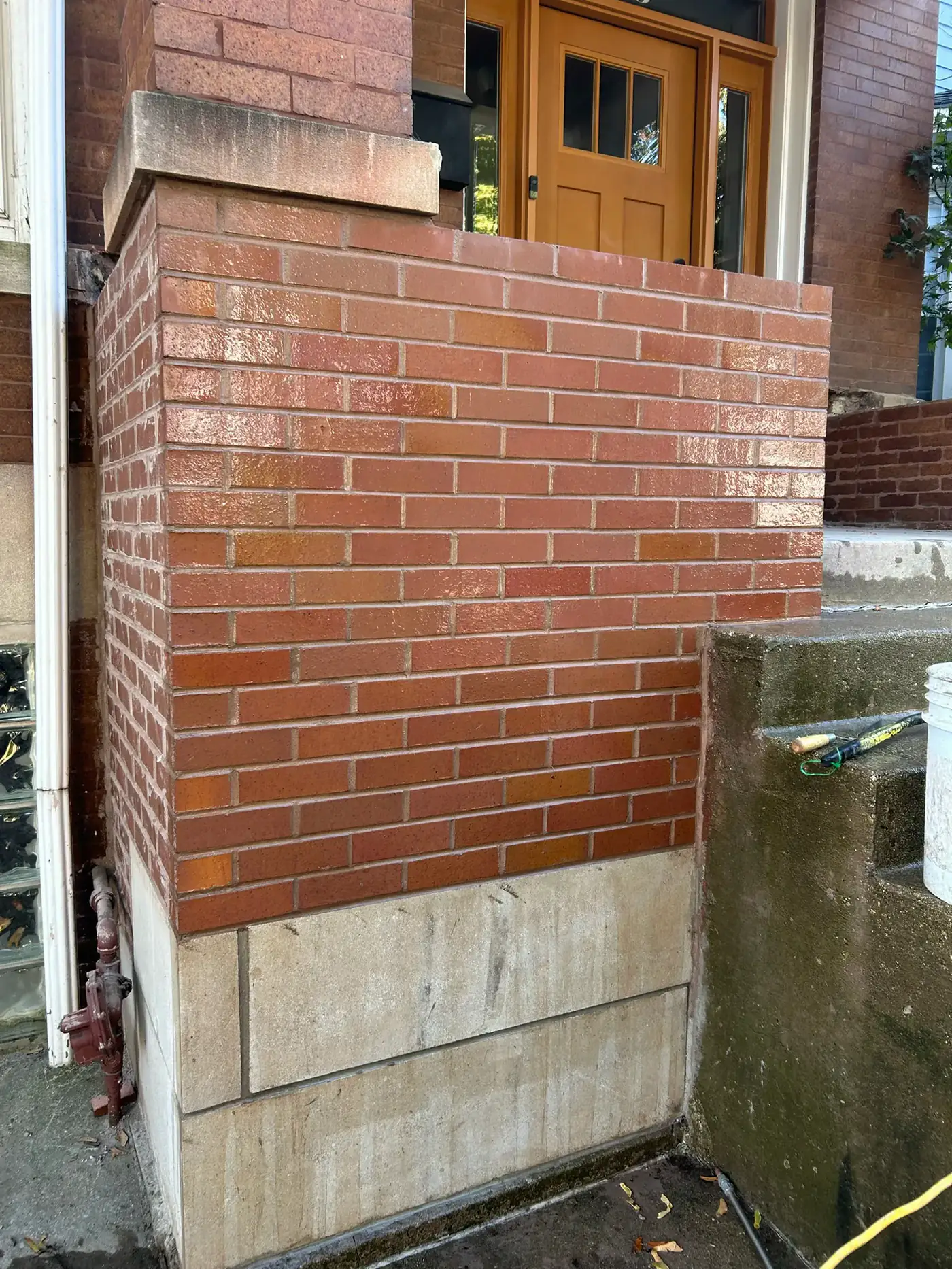
A brick garden wall that has started to lean, or a retaining wall with a belly bulging out of its middle, is telling you something important: water and frost are winning. A freestanding brick or block wall is failing when it leans, bulges, cracks in a stair-step pattern, sheds its capstones, or holds water behind it — and in Chicagoland, the cause is almost always drainage and freeze-thaw, not just worn-out mortar. Catching the signs early is the difference between a targeted repair and a full rebuild. If your wall is moving, call Emerald Masonry LLC at (708) 288-1696 for a free on-site assessment.
Emerald Masonry LLC is a family-owned, licensed and insured masonry contractor serving Chicago and the Chicagoland suburbs led by career masons with decades of hands-on experience in tuckpointing, chimney repair, brick repair and replacement, lintel and parapet repair, foundation and limestone/sill repair, caulking, sealing, and commercial, residential, and historic masonry restoration. Free on-site estimates — call (708) 288-1696.
Why Freestanding Walls Fail Differently Than House Walls
A garden or retaining wall lives a harder life than the wall of a house. It's exposed to weather on multiple sides, it usually sits right in the path of rain runoff and snowmelt, and — if it's a retaining wall — it's holding back a wall of soil that gets heavier every time it rains. Unlike a building wall, it has no roof overhang, no heated interior, and often no proper footing below the frost line. That combination is why these walls are frequently the first masonry on a property to show trouble. The good news is that freestanding walls also broadcast their problems clearly. Here are the seven signs to watch for.
1. The Wall Is Leaning or Tilting
A wall that no longer stands plumb is the most obvious red flag. Sight down the face, or hold a level against it. A retaining wall that tilts away from the soil it holds back is losing the battle against pressure behind it. Even a modest lean means the wall has moved — and walls don't move back on their own.
2. A Bulge in the Middle of the Wall
When the top and bottom of a wall stay put but the middle pushes outward, that bulge ("bellying") is a sign of concentrated pressure — usually water and frost trapped behind the wall pressing on its weakest point. A bulging masonry wall has lost its structural alignment and is at real risk of collapse.
3. Stair-Step or Horizontal Cracking
Cracks that climb through the mortar joints in a stair-step pattern, or long horizontal cracks running along a course, indicate the wall is being pushed or is settling unevenly. Stair-step cracking follows the path of least resistance through the joints; horizontal cracking often signals pressure from behind. Either pattern means movement, not just surface wear.
4. Open, Separating Joints
Mortar joints that have opened up, crumbled, or separated let water pour straight into the heart of the wall. On a freestanding wall this accelerates fast, because water gets in from the top, the back, and both faces. Open joints are both a symptom of movement and a cause of further decay.
5. Water Seeping Through or Pooling Behind the Wall
If you see water weeping through the face of a retaining wall after a storm, or soil staying soggy and pooling behind it, the wall's drainage has failed. Water that can't escape builds hydrostatic pressure against the back of the wall — one of the single biggest reasons retaining walls fail. A wall with no working weep holes or drainage is living on borrowed time.
6. Settling or Heaving at the Base
Look at where the wall meets the ground. A base that has sunk, lifted, or cracked away from the rest of the wall points to footing trouble. In Chicagoland, frost heave is a prime suspect: when saturated soil under or behind the wall freezes, it expands and shoves the wall up and out. A footing that doesn't reach below the frost line will move every winter.
7. Displaced or Falling Capstones
The cap on top of a wall is its umbrella — it keeps water from pouring straight down into the core. When capstones loosen, shift, or fall off, water gets unrestricted access to the inside of the wall, and the deterioration speeds up dramatically. Loose caps are also a literal falling hazard on a garden wall along a walkway.
Why These Walls Fail: Water, Drainage, and Frost
Notice how many of the signs above trace back to the same root causes. The big three are:
- Hydrostatic pressure — water building up behind a retaining wall with nowhere to drain, pushing the wall outward.
- Poor or missing drainage — no gravel backfill, no drainage pipe, and no functioning weep holes to relieve that pressure.
- Frost heave — Chicagoland's freeze-thaw cycles acting on saturated soil and on footings that don't extend below the frost line.
Worn mortar is real, but on freestanding walls it is usually a symptom of these water problems rather than the original cause. That's why simply repointing a leaning wall rarely lasts — if the water and drainage issues aren't corrected, the new mortar fails right along with the old.
Repair or Rebuild? How to Decide
The right call depends on how far the wall has moved and whether its foundation is sound. As a general guide:
- Repairable: the wall is largely plumb, the brick is sound, cracking is isolated, and the footing is stable. Here, rebuilding the affected courses, repointing, resetting caps, and — critically — adding proper drainage and weep holes can give the wall a long second life.
- Rebuild territory: the wall is visibly bulging or leaning, has separated at the base, has lost its footing to frost heave, or shows widespread deterioration. In these cases the durable fix is to take the wall down and rebuild it correctly, with a footing below the frost line, gravel backfill, drainage, and weep holes built in from the start.
The honest answer almost always requires an on-site look, because what's happening behind and beneath the wall matters as much as what you can see on the face.
Drainage Is the Difference Between a Fix and a Do-Over
Whatever the repair, drainage is what makes it last. A properly built retaining wall manages the water behind it: gravel backfill that lets water move, a drainage path at the base, and weep holes that let it escape through the face instead of building pressure. A garden wall needs sound, water-shedding caps and tight joints. Skip the drainage and even beautiful new masonry will lean again within a few Chicagoland winters. Done right, drainage is what turns a repeat repair into a permanent one.
Get a Free Wall Inspection
If your brick or block garden wall is leaning, bulging, cracking, or shedding its caps, it won't get better on its own — and waiting usually moves it from the repair column into the rebuild column. Emerald Masonry repairs and rebuilds freestanding brick walls and addresses the foundation and drainage issues behind them. Contact Emerald Masonry or call (708) 288-1696 for a free on-site assessment across Chicago and the Chicagoland suburbs.
Frequently Asked Questions
Why is my brick retaining wall leaning or bulging?
Almost always because water has built up behind it. Trapped water adds enormous pressure against the back of the wall, and in Chicagoland that water also freezes and pushes the wall outward. Poor drainage and missing weep holes are the usual root cause, not just old mortar.
Can a leaning garden wall be repaired, or does it need rebuilding?
A wall that has only shifted slightly, with sound brick and isolated cracking, can often be repaired and re-anchored. A wall that is visibly bulging, has separated at the base, or has lost its footing usually needs to be taken down and rebuilt with proper drainage. An on-site look tells us which.
What are weep holes and does my wall need them?
Weep holes are small openings near the base of a wall that let water drain out from behind it instead of building up pressure. Any brick retaining wall holding back soil should have functioning drainage and weep holes — adding them is a core part of a lasting repair.
How does Chicago weather damage freestanding brick walls?
Freestanding garden and retaining walls are exposed on multiple sides, so they soak up water and go through more freeze-thaw cycles than house walls. When saturated soil behind a wall freezes, it heaves and shoves the wall outward — which is why leaning and bulging often appear after winter.
Is a failing retaining wall dangerous?
A retaining wall holding back soil or supporting a slope can fail suddenly once it loses stability, which is a safety risk. A low garden wall is less hazardous but will keep deteriorating. Either way it's worth an inspection — Emerald Masonry offers free on-site estimates at (708) 288-1696.