
Brick Repair & Replacement · Chicagoland, IL
Brick Steps and Stoops: When to Repair and When to Rebuild
Brick front steps take more abuse than any other masonry on the house — weather, salt, and constant foot traffic. Here's how to tell whether your steps or stoop can be repaired or need a full rebuild, and what drives the decision in Chicago's climate.
2026-06-21
Quick Answer
Brick steps and stoops can be repaired when the damage is limited to surface spalling, a few loose brick, or eroded mortar joints on an otherwise sound structure. A full rebuild is needed when the steps are settling, pulling away from the house, structurally cracked, or extensively spalled. Emerald Masonry LLC repairs and rebuilds brick steps across Chicagoland. Free estimates — call (708) 288-1696.
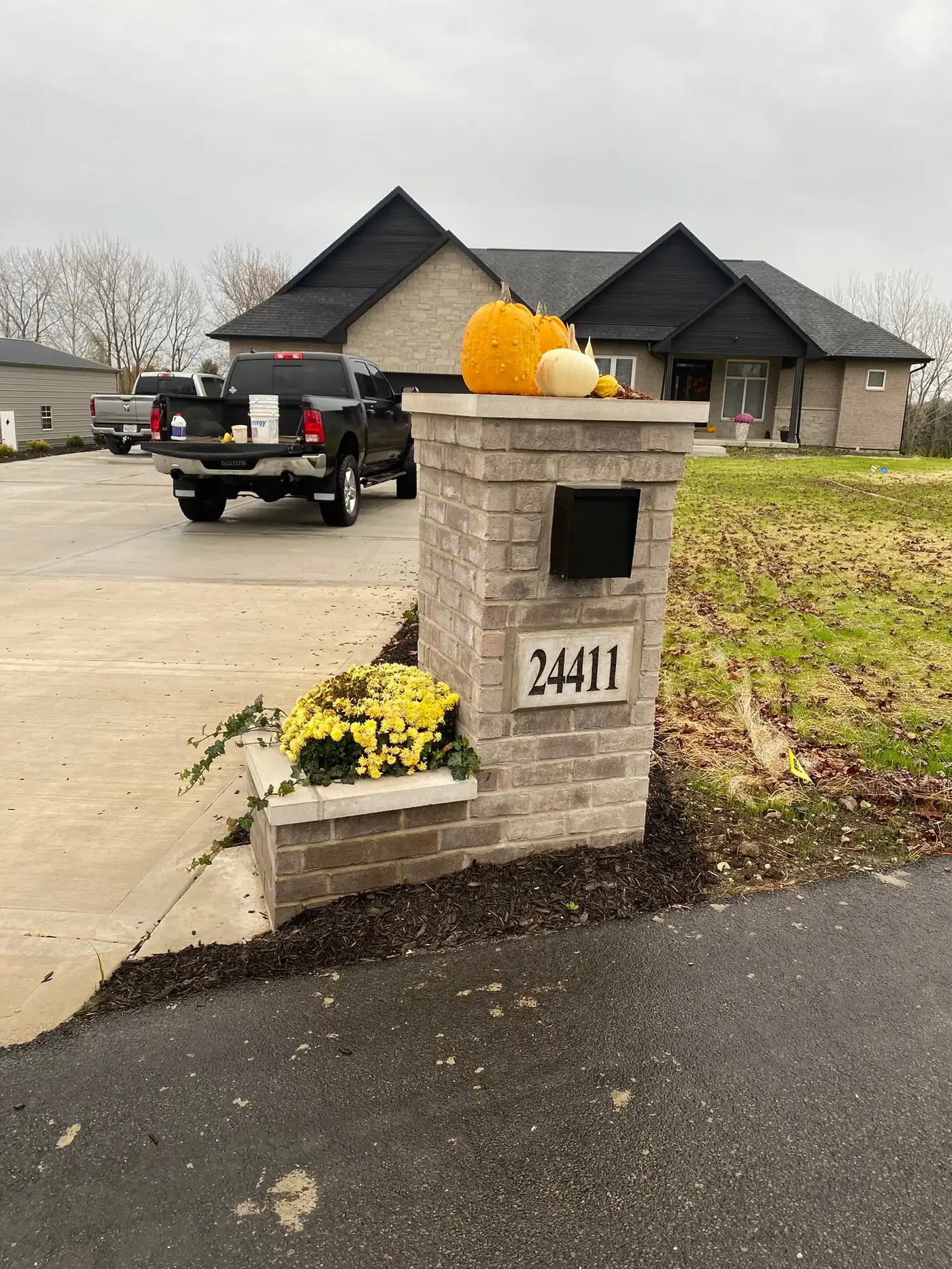
Of all the masonry on a house, brick front steps and stoops take the worst beating — and it isn't close. While the walls stand vertical and shed most of the water, the steps sit there as flat, horizontal surfaces that collect rain and snow, get doused in de-icing salt every Chicago winter, and absorb the impact of every person who walks up to the door. So it's no surprise that crumbling, wobbling, or spalling brick steps are one of the most common masonry problems homeowners across Chicagoland ask us about.
The real question is almost always the same: can these be fixed, or do they need to come out and be rebuilt? It's a meaningful decision, because the cost difference is large and so is the longevity difference if you choose wrong. Here's how a mason actually makes that call.
Why Steps Fail First
Before the repair-or-rebuild question, it helps to understand why steps deteriorate so much faster than the rest of the masonry. They face a uniquely harsh combination:
- Horizontal surfaces hold water. Treads and the top of a stoop don't shed water the way a wall does; rain and snowmelt sit on them and soak in.
- De-icing salt, directly and repeatedly. Steps get salted all winter, and chloride salts are among the most destructive things you can put on brick (more on that in our post on road salt and de-icer brick damage).
- Freeze-thaw from every side. Steps are exposed top, front, and sides, so water in them freezes and expands from multiple directions.
- Constant foot traffic. Mechanical wear loosens brick and grinds at mortar that's already weakened.
Put those together and you have a recipe for spalling brick, washed-out mortar, and movement — faster than anywhere else on the house.
When Brick Steps Can Be Repaired
Repair is the right call when the structure underneath is sound and the damage is limited to the surface or to isolated spots. Good candidates for repair include:
- Surface spalling on a few brick while the steps remain stable and level
- A handful of loose or cracked brick that can be reset and matched
- Eroded or open mortar joints that need repointing but where the brick is otherwise fine
- Minor settling that hasn't compromised the overall structure
In these cases we replace the failed brick with matched units, repoint the joints, and the steps are good for many more years. Repair is far less expensive than a rebuild and, when the bones are solid, just as durable.
The deciding factor isn't how bad the steps look — it's whether the underlying structure is still sound. Sound structure with surface damage means repair; failing structure means rebuild.
When Brick Steps Need a Full Rebuild
A rebuild becomes the honest answer when the problem is structural, not cosmetic. The signs:
- The steps are settling or sinking unevenly, pulling out of level
- They're separating or pulling away from the house — a gap opening at the stoop where it meets the foundation
- Structural cracks running through the body of the steps, not just the joints
- Widespread spalling where a large share of the brick faces have popped — patching becomes endless
- A failed base or footing beneath the brick, which no amount of surface work will cure
- Previous patch jobs that keep failing because the underlying structure was never addressed
When the footing or core has gone, surface repairs just keep falling off. Rebuilding lets us correct the base, restore proper drainage and slope, and lay sound, matched brick that won't repeat the failure.
The Decision Comes Down to the Base
If there's one thing that determines repair versus rebuild, it's the condition of the structure and footing beneath the visible brick. Beautiful-looking steps on a failing base will keep deteriorating no matter how many bricks you replace, while rough-looking steps on a solid base can often be brought back with targeted repair. This is exactly why an on-site assessment matters — the deciding factor is frequently something you can't see from the surface, and an experienced mason knows where to look for it.
Protecting Steps After They're Fixed
However you fix them, you can dramatically slow the next round of damage:
- Rethink the salt. Switch to a masonry-friendlier de-icer like calcium magnesium acetate, or use sand for traction. Shovel first so you need less.
- Keep water moving. Make sure the steps and stoop are sloped to drain and that downspouts aren't discharging onto them.
- Seal sound, dry brick. A breathable masonry sealer slows water absorption — applied to clean, sound, dry brick, never over damaged or wet masonry.
Bottom Line
Brick steps and stoops fail faster than any other masonry on the house because of the brutal combination of standing water, winter salt, freeze-thaw, and foot traffic they endure. Whether yours can be repaired or need a rebuild comes down to one thing: is the underlying structure sound? Surface damage on a solid base means repair; settling, separation, structural cracks, or a failed footing mean a rebuild that actually lasts. The only reliable way to know is to have the structure — not just the surface — looked at.
Emerald Masonry LLC is a family-owned, licensed and insured masonry contractor serving Chicago and the Chicagoland suburbs led by career masons with decades of hands-on experience in tuckpointing, chimney repair, brick repair and replacement, lintel and parapet repair, foundation and limestone/sill repair, caulking, power washing, sealing, and commercial, residential, and historic masonry restoration. If your brick steps are crumbling, loose, or pulling away, contact us for a free on-site estimate — or call (708) 288-1696.
Frequently Asked Questions
Can brick steps be repaired, or do they need to be rebuilt?
It depends on whether the structure is sound. If the steps are stable and the damage is surface spalling, a few loose brick, or eroded joints, they can usually be repaired. If they're settling, separating from the house, structurally cracked, or extensively spalled, a rebuild is the lasting fix. A free on-site look tells you which.
Why do brick steps deteriorate faster than the rest of the house?
Steps take a punishing combination the walls don't: horizontal surfaces that hold water and snow, direct de-icing salt all winter, constant foot traffic, and freeze-thaw cycling from every side. That mix spalls brick and erodes mortar far faster than a vertical wall, which is why steps are often the first masonry to fail.
How much does it cost to rebuild brick steps in Chicago?
It depends on the size and height of the steps, whether the base and footing are sound, the brick match, and access. A repair is far less than a full rebuild. We don't quote exact prices online; a free on-site estimate gives you a real number. Emerald Masonry carries a $5,000 project minimum.
Will salt keep destroying my brick steps after they're fixed?
It can, if nothing changes. De-icing salt is brutal on masonry. After repair or rebuild, switching to a gentler de-icer (or sand), shoveling before salting, and sealing sound, dry brick all slow future damage. Rebuilding without changing the salt habit just restarts the same clock.
Frequently Asked Questions
Can brick steps be repaired, or do they need to be rebuilt?
It depends on whether the structure is sound. If the steps are stable and the damage is surface spalling, a few loose brick, or eroded joints, they can usually be repaired. If they're settling, separating from the house, structurally cracked, or extensively spalled, a rebuild is the lasting fix. A free on-site look tells you which.
Why do brick steps deteriorate faster than the rest of the house?
Steps take a punishing combination the walls don't: horizontal surfaces that hold water and snow, direct de-icing salt all winter, constant foot traffic, and freeze-thaw cycling from every side. That mix spalls brick and erodes mortar far faster than a vertical wall, which is why steps are often the first masonry to fail.
How much does it cost to rebuild brick steps in Chicago?
It depends on the size and height of the steps, whether the base and footing are sound, the brick match, and access. A repair is far less than a full rebuild. We don't quote exact prices online; a free on-site estimate gives you a real number. Emerald Masonry carries a $5,000 project minimum.
Will salt keep destroying my brick steps after they're fixed?
It can, if nothing changes. De-icing salt is brutal on masonry. After repair or rebuild, switching to a gentler de-icer (or sand), shoveling before salting, and sealing sound, dry brick all slow future damage. Rebuilding without changing the salt habit just restarts the same clock.