
Brick Repair · Chicagoland, IL
Concrete vs. Masonry: What's the Difference — and Who Fixes What?
Concrete is a poured mix; masonry is individual brick, block, and stone set in mortar. Here's how each one fails, who repairs what, and how to tell whether you need a mason or a flatwork contractor in Chicagoland.
2026-07-02
Quick Answer
Concrete is a poured mix of cement, sand, aggregate and water used for flatwork, footings and slabs; masonry is individual units — brick, concrete block (CMU) and stone — set in mortar to build walls, chimneys and facades. Masonry contractors like Emerald Masonry LLC repair brick, block, stone, chimneys and tuckpointing across Chicagoland — free estimates (708) 288-1696.
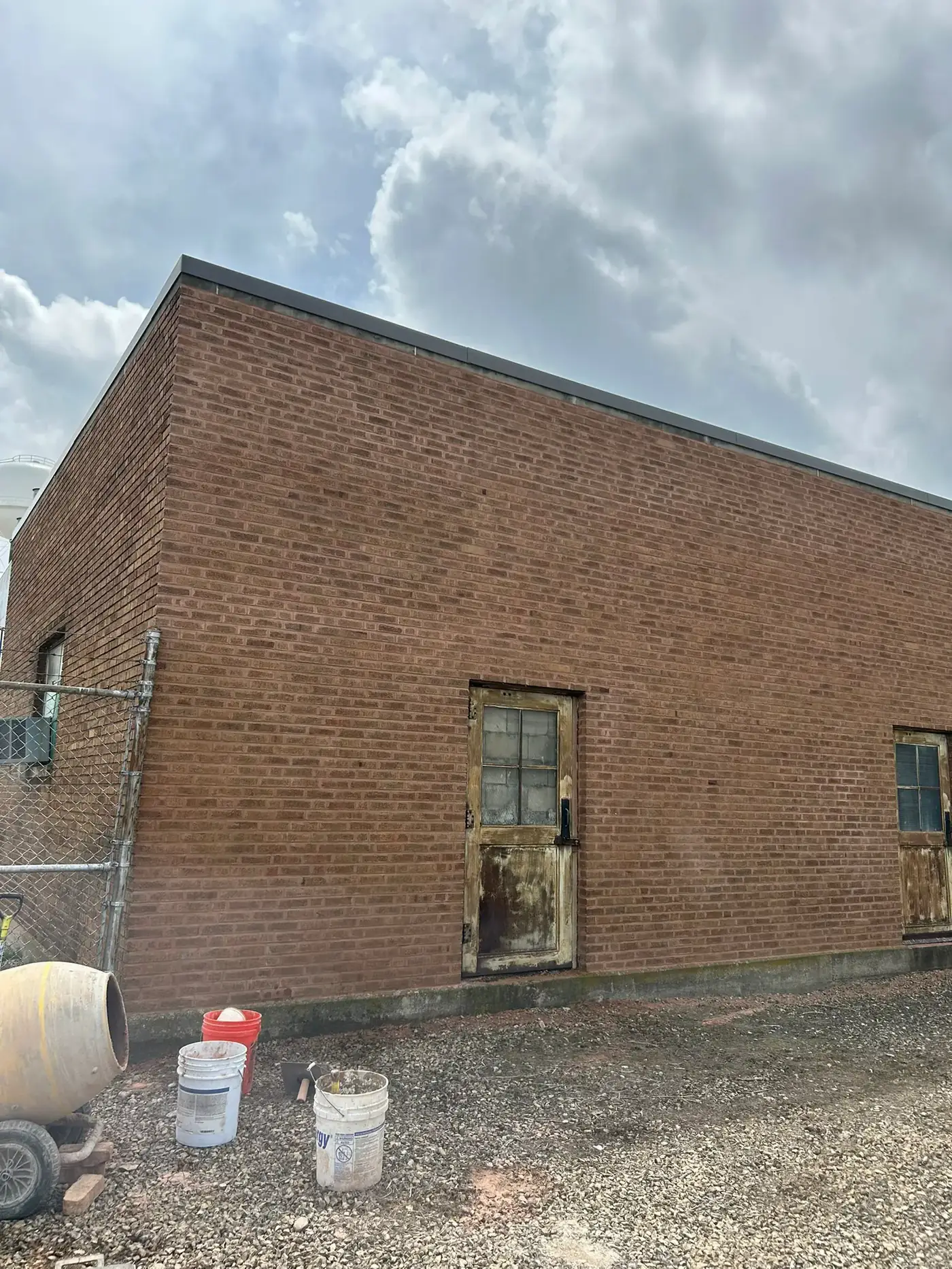
Concrete and masonry get lumped together all the time — but they're two different materials, they fail in two different ways, and they're usually fixed by two different trades. Getting the distinction right saves you from calling the wrong contractor and waiting a week to hear "sorry, that's not what we do."
Here's the plain version. Concrete is a poured mix of cement, sand, aggregate (gravel) and water. You pour it into a form, it cures into one solid mass, and it becomes your driveway, sidewalk, patio slab, garage floor or the footings under a house. Masonry is built from individual units — brick, concrete block (CMU), or stone — bonded together with mortar. Those units are stacked and joined one at a time to form walls, chimneys, facades, retaining walls and foundations. Concrete is poured; masonry is assembled piece by piece.
How the two materials fail differently
Because they're built differently, they break differently.
Concrete fails as a slab. It cracks straight across when the ground shifts or the slab wasn't reinforced. It spalls — the top surface flakes and pops off — when de-icing salt and freeze-thaw water attack it. It heaves when frost lifts one section higher than another, leaving you with a tripping edge on the sidewalk or a driveway panel that no longer sits flush.
Masonry fails at the joints and the units. Mortar between the bricks erodes, cracks and falls out — that's when you need tuckpointing, the process of grinding out failed mortar and packing in fresh. Individual bricks crack, crumble or spall and need to be cut out and replaced. Block walls bow, step-crack along the mortar lines, or shed their face. A chimney sheds bricks and its crown breaks apart. These are unit-by-unit and joint-by-joint problems, not one big crack across a poured surface.
The common thread in Chicagoland is water and cold. Illinois freeze-thaw cycles are brutal on both materials: water seeps into a mortar joint or a hairline concrete crack, freezes, expands about nine percent, and pries the material apart a little more each winter. Do that for twenty winters in Oak Lawn or Tinley Park and small problems turn into structural ones.
What a masonry contractor does vs. a concrete contractor
A masonry contractor works with brick, block, stone and mortar. That's the whole trade — building and repairing anything assembled from units. At Emerald Masonry, the day-to-day is brick repair, tuckpointing, block and stone repair, chimney rebuilds and repointing, lintel replacement, and parapet wall work on commercial buildings.
A concrete or flatwork contractor works with poured surfaces. They form and pour driveways, sidewalks, patios, garage floors and slabs, and they repair, resurface or replace those flat poured areas. Different tools, different skill set, different crews.
The two trades overlap on some projects — a mason may set brick on top of a poured concrete footing, and a concrete crew may pour a slab that a masonry wall sits on — but each owns their own material. If your problem is in the units and joints, it's a masonry job. If it's in a poured surface, it's a concrete job.
If you're staring at a crack and genuinely can't tell which one you're looking at, that's fine — we look at these every day. A quick photo or a free on-site visit settles it fast: call (708) 288-1696 and we'll tell you honestly whether it's ours or a flatwork crew's.
The gray areas that trip people up
A few situations blur the line, so here's how the trade actually sorts them:
- Concrete block (CMU) foundations. The blocks are made of concrete, but they're laid up in mortar as individual units — so a block foundation is masonry. Bowing, step-cracking and deteriorated joints in a block foundation are a masonry repair. That's foundation masonry repair, not flatwork.
- Concrete lintels and sills. The horizontal beam over a window or door may be poured concrete, but it lives inside a masonry wall and fails as part of that wall. When a lintel rusts, cracks and drops the brick above it, a masonry contractor handles the lintel and the surrounding brick together.
- Mortar vs. concrete. People use the words interchangeably, but mortar is the softer, stickier mix that bonds masonry units — it's meant to be the sacrificial layer you repoint over time. Concrete is the harder structural mix you pour in bulk. Patching a mortar joint with bagged concrete is a common DIY mistake that traps water and cracks the brick faster.
- Poured foundation walls. A solid poured concrete foundation wall is technically concrete, but structural foundation crack repair sits in its own specialty. If the wall is block, it's squarely masonry and we handle it.
Which problems Emerald handles — and which we'll point elsewhere
We're a masonry contractor, so here's the honest split.
Call us (masonry): crumbling or missing mortar joints, cracked and spalling brick, bowing or step-cracked block walls, loose or fallen stone, chimney rebuilds and repointing, cracked chimney crowns, failed lintels, and deteriorating parapet walls on commercial buildings. If it's brick, block, stone, mortar or a chimney, it's ours.
Call a flatwork contractor (concrete): cracked or heaved driveways, spalling sidewalks, sunken patio slabs, and garage floor repair. Those are poured surfaces, and a good concrete crew is the right call.
We'd rather tell you straight than sell you a job that isn't ours — after career masons across Chicagoland, our reputation is worth more than one mismatched project.
How to tell who to call, fast
Ask one question: is the damage in something poured as one piece, or in individual units held together with mortar?
- Poured as one flat piece → concrete → flatwork contractor.
- Bricks, blocks, stones or the mortar lines between them → masonry → a mason like us.
And when it's a mix — brick sitting on a slab, a lintel over a doorway, a block foundation — a masonry contractor is usually the safer first call, because we can see how the units and the poured elements interact and tell you exactly which trade needs to touch what.
If you've got failing brick, open mortar joints, a chimney dropping debris, or a block wall that's starting to bow anywhere in Chicagoland, Emerald Masonry LLC is family-owned, non-union, licensed, bonded and insured, led by career masons with decades of hands-on local experience. We offer free on-site estimates — call (708) 288-1696 or reach out through our contact page and we'll take a look, tell you honestly whether it's a masonry or concrete job, and give you a clear plan either way.
Frequently Asked Questions
What is the difference between concrete and masonry?
Concrete is a single poured material — a mix of cement, sand, aggregate and water — that hardens into slabs, footings, driveways and sidewalks. Masonry is built from individual units such as brick, concrete block (CMU) or stone, bonded together with mortar to form walls, chimneys and facades. In short, concrete is poured; masonry is assembled unit by unit.
Do I need a mason or a concrete contractor for my repair?
If the problem is in brick, block, stone, mortar joints, a chimney or a masonry foundation, you need a masonry contractor. If it's a poured surface like a driveway, sidewalk, patio slab or garage floor, that's a concrete or flatwork contractor. When brick meets a slab, a masonry contractor like Emerald Masonry LLC can tell you which trade owns the fix — call (708) 288-1696 for a free look.
Is a concrete block wall considered concrete or masonry?
A concrete block (CMU) wall is masonry, even though the blocks themselves are made of concrete. The blocks are individual units laid up in mortar courses, so they're repaired the same way as brick — by a masonry contractor, not a flatwork crew.
Why do brick and concrete crack in Chicagoland?
Illinois freeze-thaw cycles drive water into mortar joints, brick faces and concrete surfaces, then expand it as ice, prying materials apart over many winters. Concrete tends to crack, spall and heave as slabs; masonry fails at the mortar joints and individual units, which is why the repairs are so different.