
Brick Repair & Replacement · Chicagoland, IL
Efflorescence, Spalling, or Staining? A Property Manager's Guide to Reading Your Brick
White bloom, flaking faces, dark streaks — brick problems can look similar but mean very different things. Here's how to tell efflorescence from spalling from staining, what each one is telling you about your wall, and which ones actually need a contractor.
2026-06-17
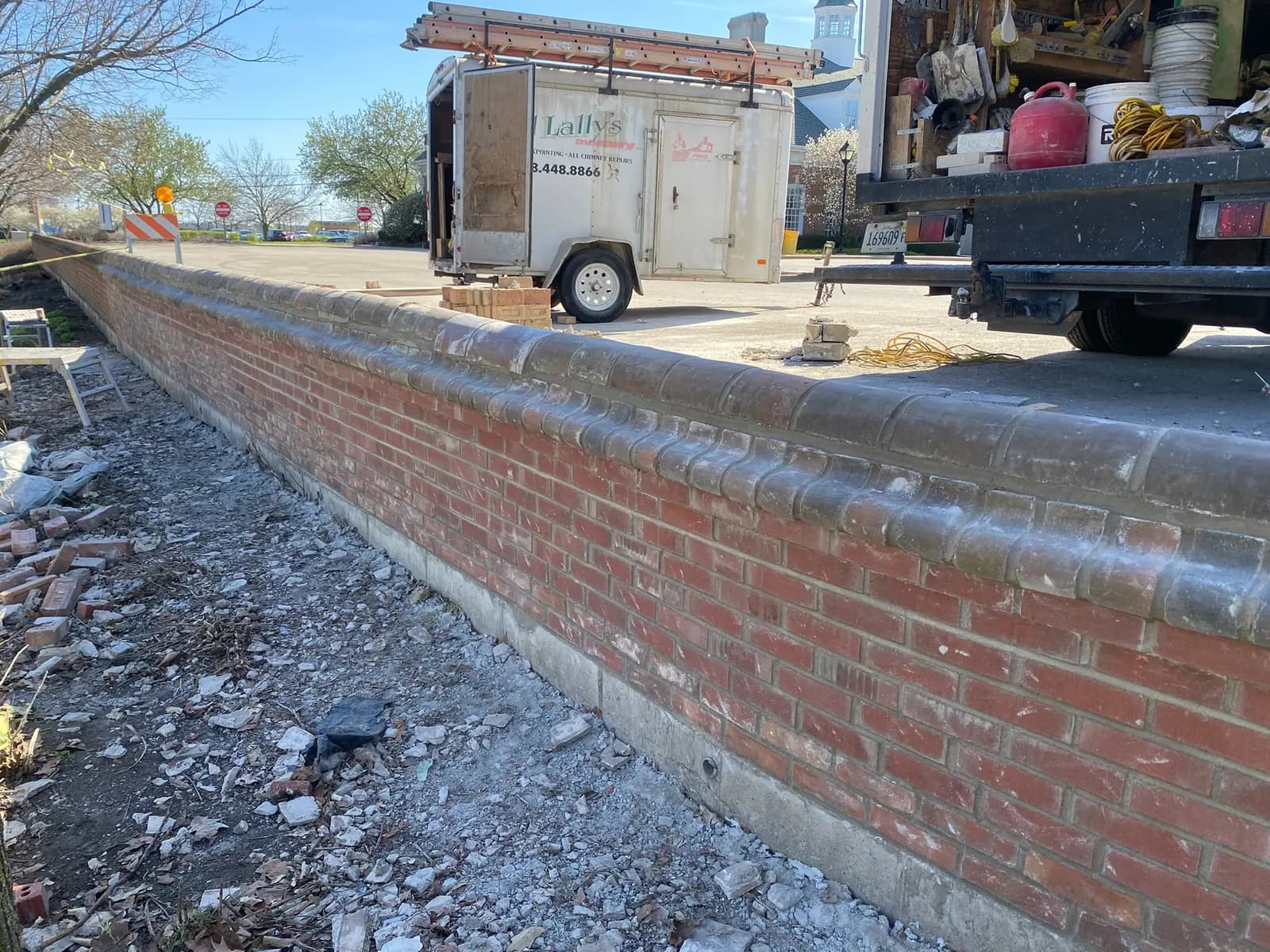
Brick problems all live on the same wall, but they do not all mean the same thing. A white powdery bloom, a flaking and crumbling face, a dark streak running down from a window — to an untrained eye they can blur together into "the brick looks bad." But each one is telling you something specific about what is happening inside the wall, and the right response ranges from "wipe it and watch it" to "call a mason before this spreads."
This guide helps property managers, building owners, and HOA boards tell the three most common brick conditions apart — efflorescence, spalling, and staining — and understand what each is actually signaling.
1. Efflorescence: The White Bloom
What it looks like
A white, chalky, sometimes crystalline film on the brick surface. It often appears in patches, can look like a faint dusting or a heavy crust, and tends to show up after wet weather. Wipe it and some of it comes off as powder.
What it is
Efflorescence is mineral salt left behind by water. Brick and mortar naturally contain soluble salts. When water moves through the masonry, it dissolves those salts, carries them to the surface, and evaporates — leaving the salt as a white deposit.
What it's telling you
Water is moving through your wall. The bloom itself is mostly cosmetic, but it is a reliable early warning that moisture is getting in. The same water that brings salts to the surface is also freezing inside the wall every winter, which is what eventually leads to the more serious problem below.
What to do
Do not just scrub it off and forget it — it will come back as long as the water keeps coming. The real fix is to find and close the water entry point (failed joints, bad coping, missing flashing, clogged weep holes), then clean and protect the wall. Our efflorescence and waterproofing work addresses the cause, not just the bloom, and our post on why efflorescence keeps coming back goes deeper on this exact problem.
Urgency: Low on its own, but treat it as a signal to investigate before it leads to spalling.
2. Spalling: The Flaking, Crumbling Face
What it looks like
The face of the brick flaking, popping off, crumbling, or pitting. You may see the smooth outer surface of bricks lying on the ground below the wall, with rougher, exposed brick behind. In bad cases whole faces shear off.
What it is
Spalling is freeze-thaw damage. Water gets into the brick, freezes, and expands — roughly nine percent every time it freezes. That internal pressure pushes the face of the brick apart from the inside. Over many Chicago-area winters, dozens of freeze-thaw cycles a season, it shatters the brick face.
What it's telling you
Water has been getting into your masonry for a while, and the damage has now moved from the mortar into the brick itself. This is past the early-warning stage. Spalling is also commonly accelerated by the wrong mortar — hard modern mortar on a soft old wall traps water in the brick and makes spalling worse — and by rusting steel lintels expanding behind the brick.
What to do
Spalled brick cannot be patched; the damaged units have to be cut out and replaced with matching brick. Just as important, the water source has to be fixed at the same time — usually repointing failed joints and addressing whatever was letting water in — or the new brick will spall too. Our piece on what causes brick to spall in Illinois covers the mechanism in detail.
Urgency: Moderate to high. It is active damage that spreads, and falling brick can become a safety issue. Address it before the next winter.
3. Staining: The Discoloration
What it looks like
Dark streaks, rust-colored runs, green or black growth, or general discoloration on the brick — without flaking or crumbling. The brick is intact; it just looks wrong.
What it is
Staining has several possible causes, and telling them apart matters:
- Rust staining (orange-brown streaks) often signals corroding steel — lintels, shelf angles, or anchors — inside the wall. This one is not cosmetic; it points to a structural element rusting.
- Organic growth (green, black) is algae, moss, or mildew, usually on damp, shaded, north-facing walls. Mostly cosmetic but a sign of persistent dampness.
- Run-off staining from metal flashing, copings, or dirt washing down the facade — usually cosmetic.
What it's telling you
It depends which kind. Rust staining is the one to take seriously — it may mean the hidden steel that helps hold the wall up is corroding and expanding, which leads to cracked and displaced brick over time. Organic and run-off staining are mostly about appearance and dampness.
What to do
Identify the source before cleaning. Rust staining warrants a look at the lintels and any embedded steel — our overview of the hidden steel that holds your wall up explains why that matters. Organic and dirt staining can be cleaned with masonry-safe methods — never aggressive sandblasting or heavy power-washing, which damages the brick. Persistent dampness causing growth is worth addressing at the source.
Urgency: Low for organic and run-off staining; moderate to high for rust staining, because of what it implies about the steel.
Quick Reference
| Condition | Looks like | Means | Urgency | |-----------|-----------|-------|---------| | Efflorescence | White powdery bloom | Water moving through the wall | Low — but investigate | | Spalling | Flaking, crumbling faces | Freeze-thaw damage in the brick | Moderate–high — active | | Rust staining | Orange-brown streaks | Corroding embedded steel | Moderate–high | | Organic staining | Green/black growth | Persistent dampness | Low — cosmetic |
The Common Thread
Notice what connects almost all of these: water. Efflorescence is water carrying salts out. Spalling is water freezing inside the brick. Rust staining is water reaching the steel. Organic growth is water lingering on the surface. Reading your brick correctly is really about reading where water is getting in — and that is exactly what a real masonry assessment does.
If your building is showing any of these and you are not sure how serious it is, get a professional eye on it before guessing. Contact Emerald Masonry or call (708) 288-1696 for a free on-site assessment anywhere in Chicagoland. With more than decades of masonry experience, we will tell you exactly what your brick is doing — and whether it needs a contractor now or just a watchful eye.