
Masonry Restoration · Chicagoland, IL
A Brick Fell Off My House — What to Do Right Now
Masonry landing on the ground is the one thing in this trade that is genuinely time-sensitive, because whatever released that piece is still holding the pieces next to it. Here is what to do in the first hour, how to tell a nuisance from a hazard, what a contractor will actually do on an emergency call, and what it means for the repair that follows.
2026-08-06
Quick Answer
If masonry has fallen from your building, keep people away from the area beneath it immediately, photograph everything before moving anything, and get a licensed masonry contractor to assess it — because whatever released that piece is still holding the units around it. Leaning chimneys, bulging walls and material above entrances or sidewalks are safety issues, not maintenance. Emerald Masonry LLC assesses urgent masonry across Chicagoland. Family-owned, career masons, licensed and insured. Call (708) 288-1696.
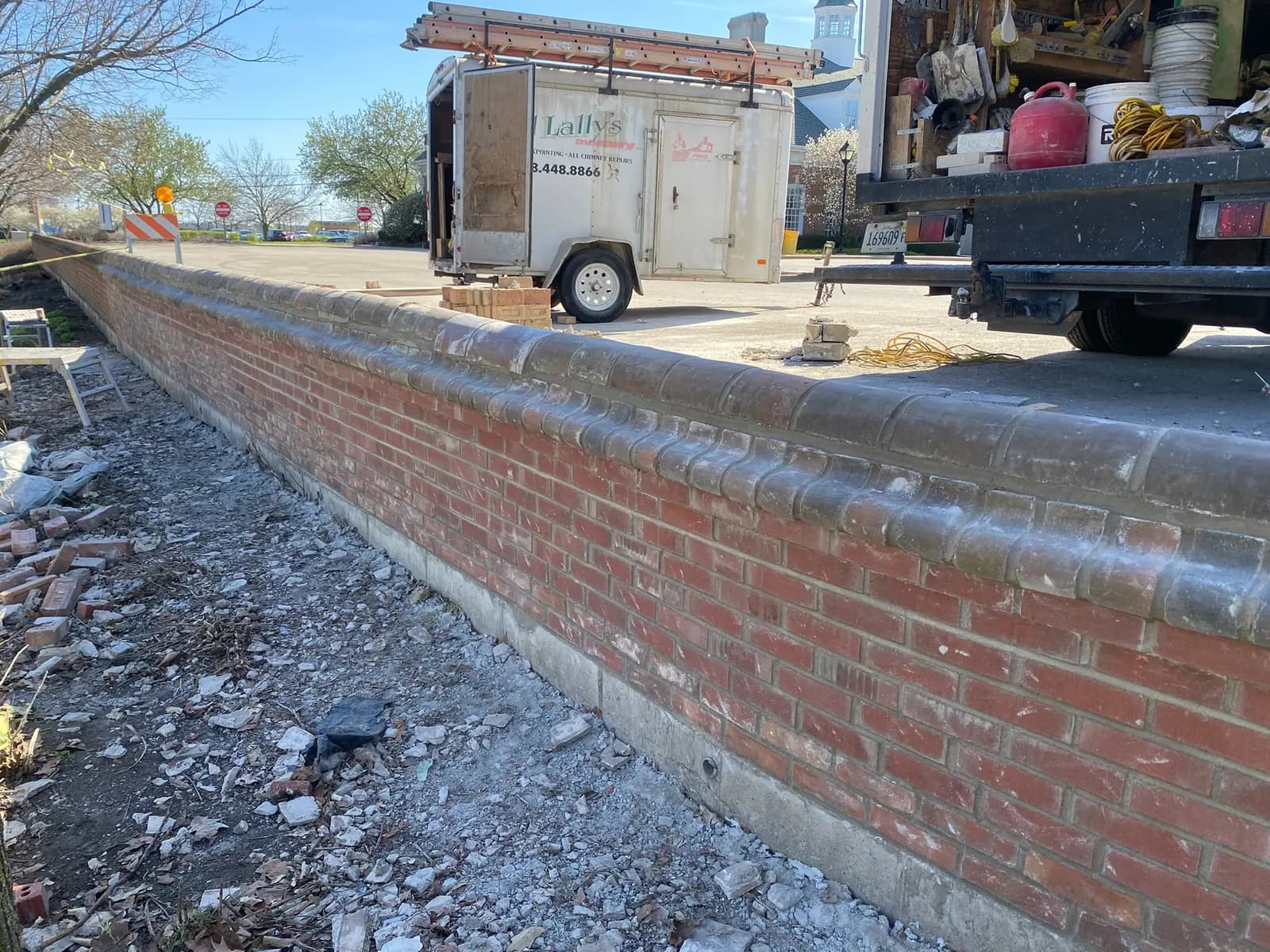
A Brick Fell Off Your House. Do This First.
Keep people away from the area beneath it, photograph everything before moving anything, and get a licensed masonry contractor out to assess it — because whatever released that piece is still holding the units around it. Fallen masonry is the one thing in this trade that is genuinely time-sensitive. Emerald Masonry LLC assesses urgent masonry across Chicago and the Chicagoland suburbs — family-owned, licensed, bonded and insured, career masons with decades of experience. Call (708) 288-1696.
Most masonry problems can wait for the right season. This one cannot, and the reason is simple: a brick does not fall by itself. Something failed — a joint, a tie, a lintel, an anchor — and that same failure is present in the masonry immediately around the piece that came down.
The First Hour
- Clear the area beneath and beside it. People, vehicles, the spot where the kids come out the side door. If it is above a public sidewalk, an entrance, a gangway or a parking area, treat that ground as closed.
- Photograph before you touch anything. The fallen material where it landed, the void it came from, the surrounding wall, and a wide shot showing the whole elevation. This matters for diagnosis and for any insurance conversation.
- Note the weather. A hard freeze, a heavy storm, a wind event or a nearby impact is directly relevant to both the cause and whether an insurer will treat it as sudden damage.
- Move the debris out of the walkway — but keep it. Do not clean the mortar off. The fracture surface and adhering mortar tell a mason a great deal about why it failed, and sound original units are frequently reused in the repair.
- Look up, carefully, from a safe distance. Anything else visibly loose, tilted or projecting?
- Call a masonry contractor and say plainly that material has fallen. That should route you differently than a routine estimate request.
Hazard or Nuisance? How to Tell
Not everything that lands on the ground is an emergency. This is roughly how we triage a call.
| What came down | Likely severity | Why | |---|---|---| | Loose mortar crumbs, sandy debris | Low — but diagnostic | Joints failing; schedule repointing | | A single spalled face fragment | Low to moderate | Brick surface failing; assess the elevation | | A whole brick from a wall | High | A tie, joint or bond failed — neighbors are suspect | | Brick from above an opening | High | Likely a corroding steel lintel lifting masonry | | Cornice, coping or ornamental stone | High | Anchors have failed; more units are anchored the same way | | Anything from a chimney | High | Most exposed masonry; often accompanies a lean | | Anything above a sidewalk or entrance | Highest | Safety and liability, regardless of size |
Three conditions are urgent whether or not anything has fallen yet: a leaning chimney, a bulging or bowing wall, and visibly displaced masonry projecting out of plane.
The Six Conditions That Should Not Wait Until Spring
Most masonry genuinely can wait for better weather. These six cannot, and it is worth being able to recognize them yourself.
1. A leaning chimney. A stack out of plumb has lost structural integrity, and it sits above a roof and usually above ground people use. There is no version of this that improves over a winter.
2. A bulging or bowing wall. Sight along the wall from a corner. A wall that is not flat has lost cohesion or its ties to the structure behind it — and repointing does not address either.
3. Masonry you can move by hand. If a unit shifts under light pressure, it is being held by friction rather than by mortar.
4. Anything displaced above an entrance, sidewalk, gangway or parking area. Size is irrelevant here. A fist-sized piece of cornice from three stories up is a serious object.
5. Cracked or lifted brick above an opening with rust staining. That is a corroding steel lintel actively expanding inside the wall. It does not pause, and the failure mode is masonry dropping over a doorway or window.
6. Fresh debris appearing repeatedly. One event may be a single failed unit. Debris appearing after each freeze means an active, progressing condition.
Everything else — receded joints, isolated spalling, efflorescence, a cracked chimney crown — is genuinely a scheduling question rather than an emergency. Knowing which list your problem is on is most of the decision, and it is a reasonable thing to ask a contractor directly on the phone.
A note on winter specifically. These calls cluster after hard freeze cycles, and that timing is awkward: the conditions that caused the failure are also the conditions that make permanent repair difficult, since mortar must cure above freezing. That is exactly why stabilization and repair are separate steps. Making it safe is a winter job. Repairing it properly is often a spring one. A contractor who tells you that is being straight with you, not stalling.
Why It Fell
Almost always one of five things, and knowing which one determines the repair.
Freeze-thaw and open joints
The most common. Water enters through failed mortar joints, freezes, expands roughly nine percent, and progressively breaks the bond and the brick faces. Chicagoland delivers dozens of those crossings each winter — which is why fallen masonry calls spike after a hard freeze cycle.
A corroding steel lintel
Brick from directly above a window, door or garage opening usually means the steel lintel spanning it is rusting. Corroding steel expands to several times its original volume, lifts the courses above, cracks the joint line and eventually pushes units out. Rust staining below the opening is the warning that precedes this.
Failed ties on veneer
On brick veneer, metal ties anchor the brick skin to the structure behind it. They corrode when the cavity stays wet, and when enough of them go, the veneer loses its attachment. This is the one you cannot see coming.
Failed anchors on ornament
Cornices, coping, terra cotta and cast stone are hung on the building with cramps, dowels and shelf angles. Same mechanism as lintels — corroding steel expanding inside rigid masonry — and the same escalation, on the tallest and most public part of the building.
A parapet losing cohesion
On flat-roofed commercial buildings, the wall above the roofline is weathered on both faces with no interior drying it. Deep joint failure there loosens units directly over the sidewalk.
What a Contractor Actually Does on an Urgent Call
Two visits, two scopes. Worth understanding so the pricing makes sense.
Visit one — stabilization.
- Assess the immediate hazard and the surrounding masonry.
- Remove or secure loose material, working down from the top so nothing is left overhead.
- Install protection below — barricades, netting, or a sidewalk canopy on a commercial building.
- Photograph and document conditions.
- Advise on whether the area can reopen.
Visit two — the actual repair, scoped properly once nothing is falling:
- Full assessment of the elevation, not just the failure point.
- Identify the water path feeding it.
- Written scope with photographs and a priority ranking.
- Repair — repointing, matched brick replacement, lintel repair, anchor replacement, parapet rebuilding or a chimney rebuild as the diagnosis requires.
Stabilization is not the repair. It is what makes the site safe enough to plan the repair without pressure.
The Insurance Question
Be realistic about this. Sudden damage from a covered peril — a storm, wind, vehicle impact, falling tree — may be claimable. Gradual deterioration, freeze-thaw damage and deferred maintenance generally are not, because insurers classify those as maintenance no matter how expensive they have become.
What helps: photographs of the event, dated photographs of the prior condition if you have them, weather records for the date, and a written contractor assessment distinguishing sudden damage from pre-existing deterioration. That last document is what turns an argument into a claim.
Commercial, HOA and Multi-Family
The stakes shift when the ground below is public or shared.
- Falling masonry above a public sidewalk is a life-safety and liability matter first, a repair second.
- Chicago's exterior wall inspection requirements apply to qualifying buildings, and an unsafe finding carries obligations. Requirements vary by municipality and building type.
- Boards and property managers should document the event, the stabilization and the repair, and route it through the insurer and counsel as their governing documents require.
- Protection below stays up until the repair is complete — netting and canopies are containment, not a fix.
What This Means for the Rest of the Building
Here is the part homeowners resist, and it is the most important sentence on this page.
One unit fell because a condition exists. That condition is not local to the unit that fell.
If a joint failure released it, the joints around it are the same age and the same mortar. If a lintel released it, the other openings have lintels of the same era. If ties released it, the ties across that elevation went in the same week in the same weather.
Which is why the right response to a fallen brick is an assessment of the elevation — not a patch of the hole.
If It Is a Shared or Neighboring Wall
On Chicago's narrow lots this comes up constantly. If masonry has fallen from a party wall, from the neighbor's building into your gangway, or from your building into theirs, document it the same way and notify the other owner in writing the same day. Do not begin repairs on shared masonry unilaterally — responsibility usually depends on the deed, any recorded party wall agreement, and where the wall actually sits, and a well-intentioned unilateral repair can complicate both the cost split and any insurance claim. In a condo or HOA, exterior masonry is normally a common element and the association handles it. Protect the ground below immediately regardless of who ultimately pays.
Preventing the Next One
- Walk your perimeter after hard freezes and storms and note what is on the ground. Mortar crumbs are early warning.
- Treat rust staining below any opening as urgent — it is the visible stage of an invisible structural process.
- Keep water off the masonry: gutters clear, downspouts extended, grade sloping away, splash controlled.
- Repoint before spalling starts with mortar matched softer than the brick — tuckpointing is the cheapest rung on the ladder.
- Sight along your walls from a corner once a year, looking for bulges.
- Get chimneys and parapets inspected on a cycle; they fail first and they fail onto things.
- Never let anyone seal weep holes on veneer, or repoint soft old brick with hard modern mortar.
Related Services
Brick repair, brick replacement, tuckpointing and repointing, lintel repair, chimney repair, parapet wall repair, commercial masonry restoration and historic masonry restoration.
The Bottom Line
Clear the ground below. Photograph everything. Keep the pieces. Call somebody licensed and insured, and say the word fell — it should change how the call is handled.
Then, once it is safe, get the whole elevation looked at rather than the hole patched. The brick on your lawn is not the problem. It is the notification.
Emerald Masonry LLC is a family-owned, licensed and insured masonry contractor serving Chicago and the Chicagoland suburbs led by career masons with decades of hands-on experience in tuckpointing, chimney repair, brick repair and replacement, lintel and parapet repair, foundation and limestone/sill repair, caulking, sealing, and commercial, residential and historic masonry restoration. We work with homeowners, property managers, HOAs, churches and insurance companies.
Free on-site estimates. Call (708) 288-1696 or request an estimate.
Frequently Asked Questions
A brick fell off my house — is that an emergency?
Treat it as urgent until somebody qualified says otherwise. A fallen unit means whatever was holding it failed, and the same condition is holding the units around it. The immediate priority is keeping people out from under the area, then getting it assessed rather than waiting to see if more comes down.
What should I do in the first hour?
Keep people and vehicles away from the area beneath the masonry, photograph the fallen material and the spot it came from before moving anything, and note the weather — a hard freeze or storm is relevant to both diagnosis and any insurance claim. Then call a licensed masonry contractor.
Should I pick up the fallen brick?
Photograph it in place first, then move it out of the walkway. Keep the pieces — a mason can learn a great deal from the fracture surface and any mortar still attached, and salvaged original units are often reused in the repair. Do not clean the mortar off them.
Does homeowners insurance cover fallen masonry?
It depends entirely on the cause. Sudden damage from a covered peril such as a storm or vehicle impact may be claimable, while gradual deterioration, freeze-thaw damage and deferred maintenance generally are not, because insurers treat those as maintenance. Documentation of the event and the prior condition matters a great deal here.
Is a leaning chimney an emergency?
Yes. A leaning stack has lost structural integrity, and it sits above a roof and often above a gangway, driveway or walkway. Keep people clear of the area below it and get it assessed promptly — this is one of the few masonry conditions where waiting for spring is genuinely unwise.
What about a bulging or bowing brick wall?
Also urgent. Bulging means the wall has lost cohesion or its ties to the structure behind it, and no amount of repointing addresses that. It needs professional evaluation before anything is scoped, and the area beneath and beside it should be treated as a hazard in the meantime.
Can a contractor make it safe today and repair it later?
Usually, yes — that is the normal sequence. Immediate work means removing or securing loose material and installing protection below, which stabilizes the hazard and buys time to scope and schedule the actual repair properly. Stabilization and repair are two different visits and two different prices.
Is my building required to be inspected if masonry falls?
For qualifying buildings in Chicago, exterior wall inspection and reporting requirements apply and an unsafe condition triggers obligations, so a falling-masonry event on a commercial or multi-story building is not just a repair question. Requirements vary by municipality and building type, so check what applies to your property.
How fast can somebody come out?
For genuine hazards — falling material, a leaning chimney, a bulging wall — this should be treated as a priority call rather than a routine estimate. Emerald Masonry serves Chicago and the Chicagoland suburbs and prioritizes safety assessments. Call (708) 288-1696.