
Masonry Restoration · Chicagoland, IL
Roof, Windows, Gutters or Masonry — Which Trade Goes First?
Homeowners plan exterior projects by budget year and availability, then discover the order mattered. New windows installed before tuckpointing get their perimeters torn back open. A roof done before the chimney means scaffolding twice. Here's the sequence that avoids paying for the same work more than once.
2026-08-11
Quick Answer
The general sequence for exterior work is water management first (gutters, grade), then masonry, then roof, then windows and siding, then final sealant and paint — because masonry is dusty, needs access, and shares details like chimney flashing and parapet coping with roofing. Doing windows or a roof before masonry usually means reopening finished work. Emerald Masonry LLC coordinates sequencing across Chicagoland. Family-owned, career masons, licensed and insured. Call (708) 288-1696.
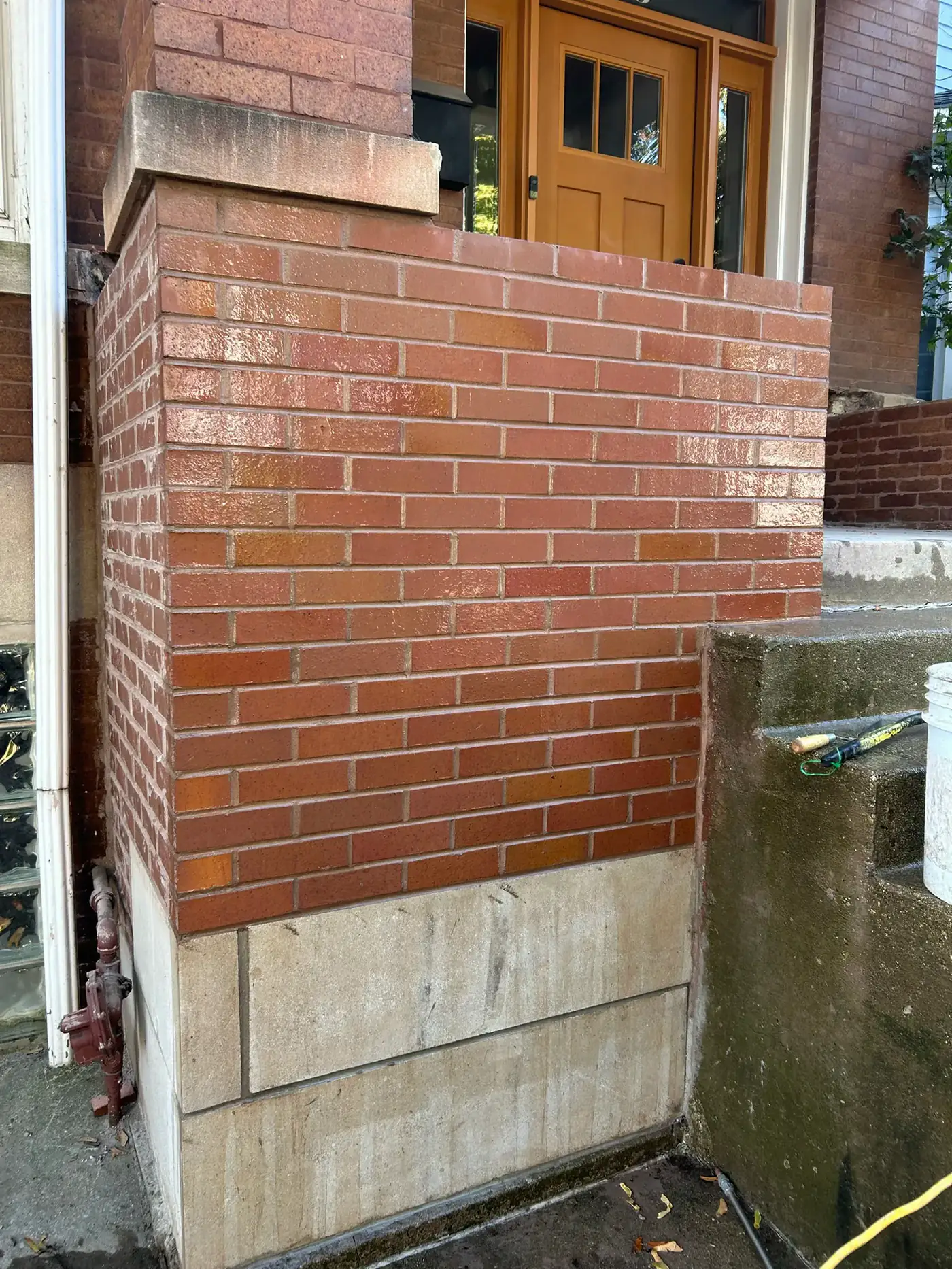
Which Trade Goes First?
The general sequence is: water management, then masonry, then roof, then windows and siding, then final sealant and paint. Masonry is dusty, needs wall access, and shares physical details — chimney flashing, parapet coping, window perimeters — with the trades that come after it. Doing those trades first usually means reopening finished work. Emerald Masonry LLC coordinates sequencing with roofers and other trades across Chicago and the Chicagoland suburbs — family-owned, licensed and insured, career masons with decades of experience, free on-site estimates. Call (708) 288-1696.
Homeowners rarely plan exterior work as a sequence. They plan it by budget year and whoever answered the phone — windows this spring because there was a sale, roof next year because it is due, masonry after that because nobody warned them.
Then the mason grinds out joints eight inches from a four-month-old window and recaulks a perimeter somebody already paid for.
The Default Order
| Order | Work | Why here | |---|---|---| | 1 | Gutters, downspouts, grade | Usually the water source causing everything else; cheapest by far | | 2 | Masonry | Dusty, needs full wall access, sets the substrate other trades attach to | | 3 | Roof | Terminates against masonry; flashing detail completed with the mason | | 4 | Windows and doors | Set into masonry openings; perimeters sealed after | | 5 | Siding, soffit, fascia | Finished surfaces last | | 6 | Final sealant, paint, cleaning | After everything that generates dust and debris |
This is a default, not a law. Two things override it, covered below.
Why Masonry Sits Early
It is the dirtiest work on the list. Grinding out mortar joints produces significant dust and vibration across the whole elevation. Reputable crews mask and protect, but the cleanest sequence puts that before the finished surfaces arrive.
It needs the wall. Staging goes against the elevation, ladders bear on it, and crews work its full height. New gutters, new windows and fresh siding are all things that get in the way and get damaged.
Other trades attach to it. Windows sit in masonry openings. Roofing terminates against masonry chimneys and parapets. If the masonry is going to change, the things fastened to it should come after.
And it reveals things. Masonry work routinely uncovers a corroding steel lintel or a failed sill that nobody could see from the ground — items that affect a window opening. Better to find that before the window is in it.
The Two Details That Cause the Most Trouble
Chimney flashing
This is the single most common gap in an exterior project, because it genuinely belongs to both trades.
Counterflashing is set into a mortar joint in the chimney — masonry work. Step flashing is woven into the roofing courses — roofing work. They have to lap correctly to function, and when neither contractor owns the whole detail, you get a tar-patched compromise that leaks in three years.
Fix: get it explicitly named in one scope before either trade starts. Whoever owns it, own it in writing.
Parapet coping and roof termination
Same problem on flat-roofed commercial and multi-family buildings. The roof membrane terminates at the parapet, through-wall flashing sits inside the masonry, and the coping caps the whole thing. Three components, two trades, one leak path.
This is why buildings keep leaking after a new roof: the water was entering at the parapet, and nobody scoped the masonry.
The Two Overrides
1. An active leak jumps the queue. If the roof is leaking now, or masonry has fallen, or water is coming into occupied space, stabilize that first regardless of ideal sequence. Interior damage compounds faster than exterior damage.
2. Fix the water source before anything. If a leaking gutter is what has been destroying the brick, correcting it comes first — it is inexpensive, it is often DIY, and repairing masonry while the water keeps arriving means a repair with a countdown on it.
Sharing Access
Worth raising early, because access is frequently the largest single line item on a multi-story job.
Scaffolding erected for masonry can sometimes serve roofing, gutter or window work. It requires both contractors to agree on timing, load capacity and insurance, and it needs to be arranged before anybody mobilizes — not after one crew has already struck their staging.
On commercial and association work the savings can be substantial enough to justify shifting a schedule to make it happen.
What Masonry Actually Involves
So you can plan around it:
- Assessment of every elevation, plus chimney, lintels, sills, grade, gutters and flashing.
- Setup and protection — staging, landscaping covered, windows masked.
- Grinding and raking failed joints to sound depth — the loud, dusty phase.
- Cleaning the joints so fresh mortar bonds.
- Mortar matching — color, sand and, critically, hardness. Mortar must be softer than the brick it holds, so joints take the stress instead of the brick faces.
- Repointing in lifts, packed and compacted.
- Tooling to the original joint profile.
- Unit replacement, lintel work, sill repair as scoped.
- Cure and protection — fresh joints need days to weeks and must be protected from freezing and driving rain.
That last step matters for scheduling: the job is not finished when the crew leaves.
When Masonry Reveals Something That Changes the Plan
This is the argument for putting masonry early that homeowners find most persuasive once they hear it.
Masonry work uncovers things nothing else does. Grinding out joints and opening a wall regularly surfaces conditions that were completely invisible from the ground — and several of them affect the trades scheduled after.
A corroding steel lintel over a window is the classic one. Rust staining hints at it from outside, but the extent is unknown until the brick above the opening comes out. If that lintel needs replacing, the opening changes — which matters enormously if a new window was scheduled to go into it next month.
A failed sill discovered during repointing means the sill gets replaced, which affects the window sitting on it and the sealant detail around it.
Rotted sheathing or framing behind a wall that has been taking water for years. Now you have a carpentry scope nobody budgeted, and it has to be resolved before siding or windows.
Chimney condition that turns out to be a rebuild rather than a repoint. That is a different scaffolding requirement and a different roofing coordination.
Blocked or missing weep holes and absent through-wall flashing on veneer — which is a wall-assembly issue that a roofer or window installer will not touch and would not notice.
None of these are surprises the mason invented. They were already true. But finding them before the finished trades go on means adjusting a schedule; finding them after means undoing work somebody already paid for.
A Worked Example: The Three-Year Plan
Say you have a 1920s brick two-flat. The roof is near end of life, the windows are original, the gutters overflow at one corner, the chimney is deteriorating and the joints on the north elevation are failing. Everything needs doing. You can fund roughly one item a year.
Year one — water and masonry. Fix the gutters and downspouts first; that is inexpensive and it stops the mechanism damaging the north wall. Then chimney work and repointing that elevation, with staging up once for both. Cost is concentrated but this is the year that stops active damage.
Year two — roof. New membrane or shingles, with the counterflashing detail completed against a chimney that is now sound. Because the masonry was done first, the roofer terminates against finished work rather than against something that will be torn into next year.
Year three — windows, then final sealant. Openings are known quantities now, any lintel issues were resolved in year one, and perimeter sealant goes on last so it is not disturbed by anything.
Reverse that order — windows first because there was a sale, roof second, masonry last — and you pay to recaulk every window perimeter, you cut into a two-year-old roof to redo the chimney flashing, and you discover the lintel problem after the new window is already in the opening.
Same three years. Same three trades. Materially different total cost.
Commercial, HOA and Multi-Family
The same logic, with more coordination.
- Boards and property managers should sequence capital items with these dependencies in mind rather than by whichever reserve line came due.
- Occupied buildings need phasing around tenants, and two trades in sequence means two phasing plans.
- Public protection — sidewalk canopies and netting — can often serve both trades.
- Name the shared details in the contracts. Parapet, coping, counterflashing and through-wall flashing should each appear in exactly one scope.
- Reserve studies should treat the envelope as a system, not as separate roof and masonry line items that never speak to each other.
What to Get in Writing Before Anyone Starts
Four items, and they take one email each.
Who owns the chimney flashing, named in one contractor's scope by that phrase. Not "flashing as required" — the chimney flashing, counterflashing included.
Who owns the parapet coping and through-wall flashing on a flat-roofed building, same principle.
Whether staging can be shared, and if so who erects it, who insures it, and what the handover date is.
What happens if masonry finds something structural — a corroding lintel, rotted sheathing — and how that affects the schedule for the trades queued behind it.
Getting those four answered costs nothing and prevents the two most common exterior-project failures: a leak at a detail nobody owned, and a trade arriving to find the wall not ready.
Chicagoland Timing
The working window here is genuinely constrained, and it affects sequencing.
Mortar must cure above freezing, so masonry is best scheduled late spring through fall — which is also when both masons and roofers book up. Wet weather stops masonry outright. A two-trade project in the right order needs both calendars, and peak-season lead times mean deciding in winter what happens in spring.
Add dozens of freeze-thaw crossings each winter and the cost of deferring the water-critical item another year is real.
The Cheapest Item on Any Exterior Plan
Worth ending on, because it is consistently underspent.
Gutters, downspout extensions and grade correction are the least expensive work in this entire article, they are frequently DIY, and they address the water source behind most masonry damage in the region. A single overflowing gutter seam delivers concentrated water down one band of wall every storm for years.
Homeowners planning a five-figure exterior project routinely skip the two-hundred-dollar item that caused it. Do that one first, whatever else the sequence says.
Related Services
Tuckpointing and repointing, chimney repair, brick repair, lintel repair, parapet wall repair, limestone and sill repair, caulking and joint sealant and commercial masonry restoration.
The Bottom Line
Water first, masonry early, finished surfaces last.
And whatever else you do, name who owns the chimney flashing and the parapet coping before anybody starts. Those two details cause more repeat leaks and more finger-pointing than every other coordination issue on an exterior project combined — not because either trade is careless, but because the detail sits exactly on the line between them.
Emerald Masonry LLC is a family-owned, licensed and insured masonry contractor serving Chicago and the Chicagoland suburbs led by career masons with decades of hands-on experience in tuckpointing, chimney repair, brick repair and replacement, lintel and parapet repair, foundation and limestone/sill repair, caulking, sealing, and commercial, residential and historic masonry restoration. We coordinate with your other trades rather than working around them.
Free on-site estimates. Call (708) 288-1696 or request an estimate.
Frequently Asked Questions
Should I do the roof or the masonry first?
Generally masonry first when a chimney or parapet is involved, because the flashing where roof meets masonry belongs to both trades and you want the masonry sound before the new membrane terminates against it. If the roof is actively leaking, that changes the order — stop the active leak, then do the masonry, then finish the flashing detail together.
Can I get new windows before tuckpointing?
You can, but expect the perimeter sealant to be disturbed. Repointing works right up to the window opening and generates dust and vibration, so the perimeter usually gets recaulked afterward regardless. Doing masonry first and windows second avoids paying for that detail twice.
Who is responsible for chimney flashing — the roofer or the mason?
It genuinely sits between them, which is why it is the most common gap in an exterior project. Counterflashing is set into a mortar joint in the chimney while step flashing is woven into the roofing, so somebody has to own the whole detail. Get it named explicitly in one contractor's scope before either starts.
Should gutters go before or after masonry?
Correct the gutters and downspouts first if they are the water source causing the masonry damage, because otherwise the repair starts with a countdown. New gutter installation itself is usually best scheduled after masonry, since crews need wall access and gutters are easily damaged.
Can two trades share scaffolding to save money?
Sometimes, and it is worth asking, because access is frequently the largest line item on a multi-story job. It requires both contractors to agree on timing, load and insurance, so raise it early rather than after one has already mobilized.
What if I can only afford one thing this year?
Fix whatever is actively letting water into the building. That is usually a chimney crown, failed flashing, a bad sill or open joints on the weather-beaten elevation — and it is almost always cheaper than the damage it prevents. Cosmetic work waits.
Does masonry work damage new roofing or windows?
It can, which is another argument for sequencing. Grinding produces significant dust, staging bears on surfaces, and debris falls. Reputable crews protect everything, but the cleanest answer is to do the dusty, access-heavy work before the finished surfaces go on.
How far ahead should I plan an exterior project?
A season, ideally. Peak-season lead times for both masonry and roofing run longer than homeowners expect, and coordinating two trades in the right order needs both calendars. Getting assessments in winter for spring work is the reliable way to control the sequence rather than take whatever slots remain.
Who coordinates the trades if I'm hiring separately?
You do, unless you hire a general contractor. That is workable on a two-trade project provided you get each scope in writing, name who owns the shared details, and introduce the contractors to each other before work starts rather than during.